English


Ballet
Ballet is a classical dance form that originated in the Italian Renaissance courts of the 15th century and…
Reads at Grades 6–8 Listens at Grades 4–8
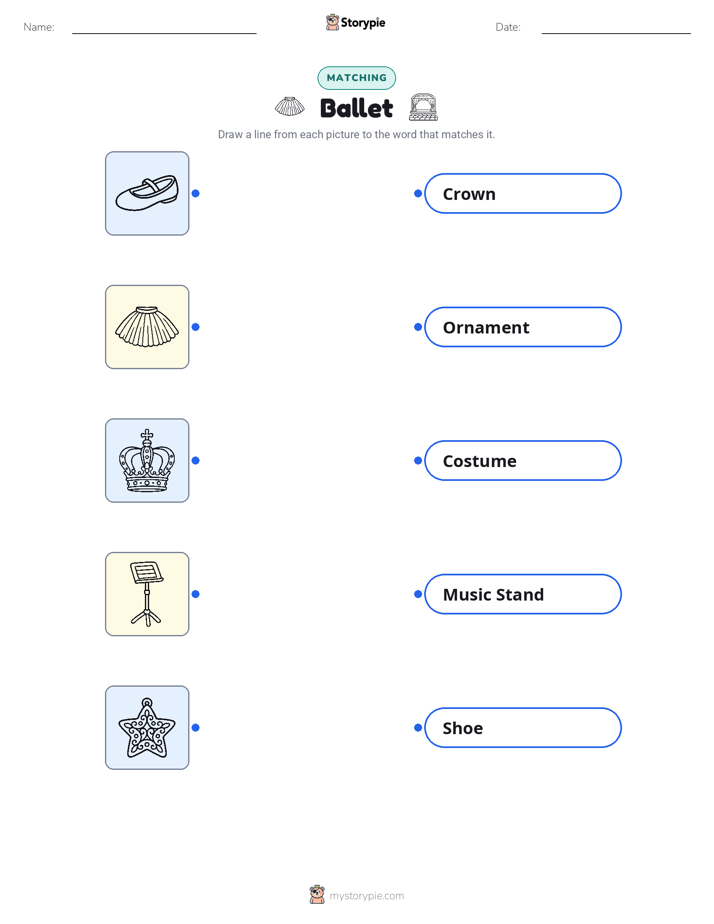
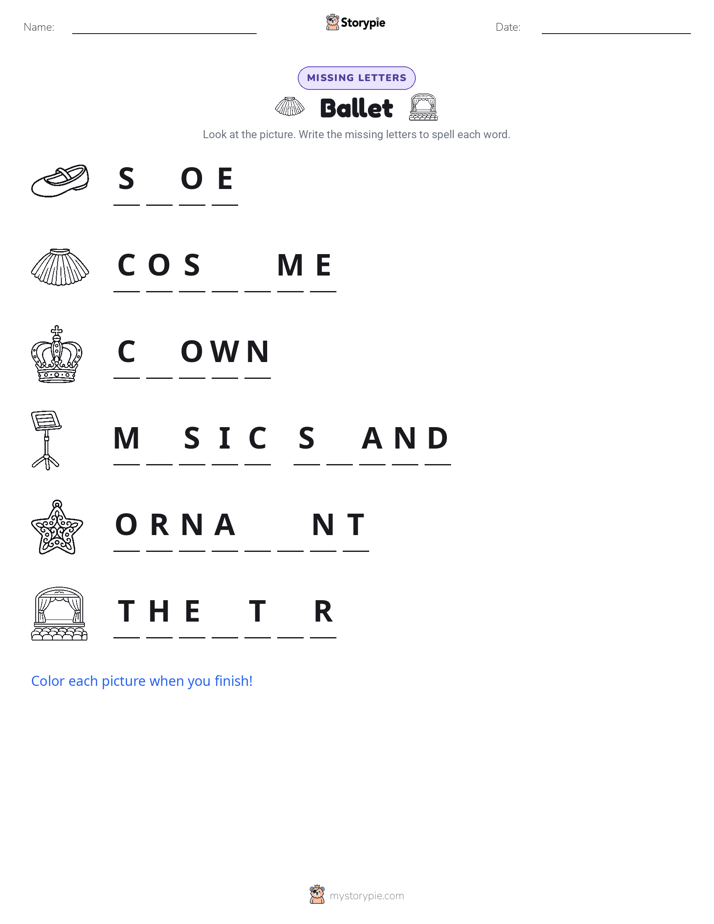
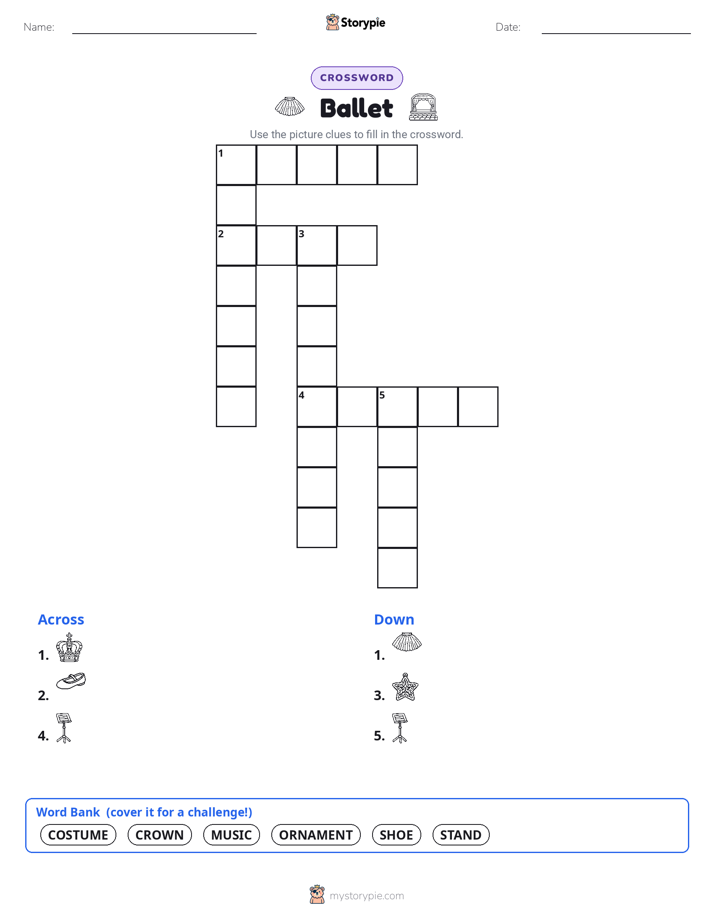
Print & create
Answer keys·No prep·Free with an account
28 worksheets · answer keys · full story · quiz · Ages 10-12 · CEFR B2
Plus adds 244,000+ more stories in 27 languages, audio for every one, and printables for all of them.
Just want Ballet?
Imagine a story told not with a voice, but with a leap. Picture a feeling expressed not with a word, but with a graceful turn. I am the whisper of soft shoes on a polished wood floor, the silent breath held by an audience as a dancer spins in a perfect pirouette. I am the swell of music from an orchestra that lifts performers into the air, making them seem as light as feathers. Through me, tales of enchanted swans, brave princes, and magical sugar plum fairies come to life without a single spoken line. I am the language of the body, a conversation of strength, discipline, and extraordinary grace. Before stages had curtains and audiences bought tickets, I was born from a desire to celebrate, to entertain, and to find beauty in human movement. I am an art form that has traveled through centuries and across continents, collecting stories and inspiring dreams. I am Ballet.
My life began in the grand, bustling courts of the Italian Renaissance during the 15th century. In those days, I was not what you see on a grand stage today. I was a special treat, a sophisticated entertainment for nobles during their magnificent feasts and elaborate celebrations. My name itself is a clue to my origins; it comes from the Italian word 'balletto,' which simply means 'a little dance.' I was a series of delicate steps and elegant figures performed by the courtiers themselves, a way to show their poise and social standing. My journey truly began when a powerful Italian noblewoman, Catherine de' Medici, traveled to France in 1533 to marry a king. She brought me with her, and I quickly became the height of fashion in the sophisticated French court. Catherine adored me and sponsored lavish productions that combined dance, music, and poetry. It was in France that I began to grow from a simple courtly pastime into the complex and beautiful art form I was destined to become.
The Story of Ballet
Imagine a story told not with a voice, but with a leap. Picture a feeling expressed not with a word, but with a graceful turn. I am the whisper of soft shoes on a polished wood floor, the silent breath held by an audience as a dancer spins in a perfect pirouette. I am the swell of music from an orchestra that lifts performers into the air, making them seem as light as feathers. Through me, tales of enchanted swans, brave princes, and magical sugar plum fairies come to life without a single spoken line. I am the language of the body, a conversation of strength, discipline, and extraordinary grace. Before stages had curtains and audiences bought tickets, I was born from a desire to celebrate, to entertain, and to find beauty in human movement. I am an art form that has traveled through centuries and across continents, collecting stories and inspiring dreams. I am Ballet.
My life began in the grand, bustling courts of the Italian Renaissance during the 15th century. In those days, I was not what you see on a grand stage today. I was a special treat, a sophisticated entertainment for nobles during their magnificent feasts and elaborate celebrations. My name itself is a clue to my origins; it comes from the Italian word 'balletto,' which simply means 'a little dance.' I was a series of delicate steps and elegant figures performed by the courtiers themselves, a way to show their poise and social standing. My journey truly began when a powerful Italian noblewoman, Catherine de' Medici, traveled to France in 1533 to marry a king. She brought me with her, and I quickly became the height of fashion in the sophisticated French court. Catherine adored me and sponsored lavish productions that combined dance, music, and poetry. It was in France that I began to grow from a simple courtly pastime into the complex and beautiful art form I was destined to become.
My most devoted and influential supporter was a king. King Louis XIV of France was not just a spectator; he was a passionate dancer himself. He loved performing so much that he took on a leading role in a performance where he portrayed the sun, earning him the famous nickname 'The Sun King.' He saw my potential to be more than just court entertainment. He believed I was a serious art, deserving of rules, structure, and dedicated study. So, in 1661, he did something that changed my life forever: he established the very first ballet academy, the Académie Royale de Danse. This was a monumental turning point. For the first time, my steps and movements were no longer just passed down from person to person; they were codified, written down, and taught by professional masters. This academy standardized the core of my technique, including the five basic positions of the feet that every single ballet dancer learns to this day. Thanks to The Sun King's vision, I transformed from a hobby for aristocrats into a professional discipline that required immense skill and dedication.
As I danced into the 19th century, the world around me was changing, and so was I. This period, known as the Romantic Era, was filled with a fascination for nature, emotion, and the supernatural. My stories shifted from royal celebrations to magical fairy tales about ethereal spirits, heartbroken ghosts, and faraway, enchanted lands. To help tell these stories, a breathtaking new technique emerged: dancing 'en pointe.' Dancers began to rise onto the very tips of their toes, supported by special reinforced shoes. This incredible feat made them look weightless, as if they were floating or hovering just above the stage, perfectly capturing the otherworldly essence of the characters they portrayed. My journey then took me to the grand imperial theaters of Russia, where I was embraced with passion and splendor. It was there that a brilliant choreographer named Marius Petipa took me to new heights. He created some of my most enduring and beloved stories, including the magical Christmas dream of 'The Nutcracker,' which first enchanted audiences on December 18th, 1892, and the timeless, beautiful tragedy of 'Swan Lake.'
I have never been one to stand still. My story is one of constant evolution. In the 20th century, I crossed the Atlantic Ocean and found a new home in America. There, choreographers began to experiment, pushing my boundaries further than ever before. A visionary named George Balanchine created a new style called neoclassical ballet. He stripped away the heavy costumes and elaborate sets of my past, focusing instead on pure movement. He made me faster, sharper, and more athletic, showing the world that I could tell stories about energy and music itself, not just fairy tales. Today, I am more diverse than ever. I can be classical and traditional, preserving the masterpieces of Petipa, or I can be contemporary and bold, exploring modern themes and ideas. I am a living, breathing art form, a universal language spoken by the body that connects people across cultures. My story proves that with discipline, passion, and creativity, a simple dance can become a timeless tale. I am always ready for the next dancer to take their place, to leap onto the stage and share their own dream with the world through me.
Wow facts
About
Ballet is a classical dance form that originated in the Italian Renaissance courts of the 15th century and later developed into a concert dance form in France and Russia, characterized by its graceful, precise movements and elaborate storytelling.
Take a Quiz
Question 1 of 5
What problem did King Louis XIV's creation of the Académie Royale de Danse in 1661 solve for Ballet?
Explore next






Want to do even more?
Go beyond exploring. Unlock tools that turn every story into real learning.

Storypie Plus for families
Full stories, quizzes, and printables. Nights and car rides, sorted.
- Unlimited audio stories
- Create Mode: your child stars in the story
- Offline downloads
- Printable worksheets & coloring pages

Why Storypie for Schools
Students engaged. Prep in seconds. Evenings back to you.
- Worksheets & Quizzes
- Classroom Management
- Formative Assessment
- Custom Curriculum & Lesson Plans
- 27 Languages

Why Storypie for Homeschool
Curriculum done. They'll ask for more. Hours back in your day.
- Worksheet Generator
- First-Person Audio Stories
- Built-in Comprehension Quizzes
- Custom Curriculum & Lesson Plans
- Print & Go Activities