English

Biomimicry
Biomimicry is an approach to innovation that seeks sustainable solutions to human challenges by emulating…
Reads at Grades K-2 Listens at K–3
Print & create
Answer keys·No prep·Free with an account
28 worksheets · answer keys · full story · quiz · Ages 6-8 · CEFR A2
Plus adds 102,000+ more stories in 27 languages, audio for every one, and printables for all of them.
Just want Biomimicry?
Have you ever wondered how a spider’s web can be so sticky and strong, even though it looks so delicate. Or how a little gecko can scurry right up a wall without falling down. All around you, nature is full of secret ideas and clever tricks. It's like a giant library of inventions, just waiting to be read. I am the little whisper in your ear that says, "Hey, look at how that seed spins like a helicopter. Maybe we can learn from that.". I am the idea of borrowing nature's best plans to help people build amazing things. When an engineer looks at a shiny leaf to make a better solar panel, that's me. I am Biomimicry, and I help humans learn from nature's best inventions.
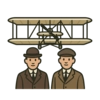
For a very long time, people have been listening to my whispers. More than 500 years ago, around the year 1500, a brilliant artist and inventor named Leonardo da Vinci spent hours watching birds soar through the sky. He was fascinated by how their wings caught the air. He filled his notebooks with sketches of incredible flying machines, all inspired by his feathered friends. Much later, two brothers named Orville and Wilbur Wright were also dreaming of flight. They watched pigeons carefully and noticed how they twisted their wingtips to steer. That little observation was the secret they needed. On December 17th, 1903, they used that idea to help them control the very first airplane as it lifted off the ground. Sometimes, my ideas pop up by surprise. In 1941, an engineer named George de Mestral took his dog for a walk in the woods. When they got home, he was covered in tiny, sticky burrs. Instead of just getting annoyed, he got curious. He looked at one of the burrs under a microscope and saw it was covered in hundreds of tiny hooks that grabbed onto the loops in his dog’s fur. That gave him a fantastic idea. He invented a fastener with one side of hooks and another of loops, and he called it Velcro. Even big, fast trains have learned from me. In the 1990s, engineers in Japan looked at the long, smooth beak of a kingfisher bird to design a quieter, faster bullet train that could zip through tunnels without making a loud boom.
Nature's Amazing Ideas
Have you ever wondered how a spider’s web can be so sticky and strong, even though it looks so delicate. Or how a little gecko can scurry right up a wall without falling down. All around you, nature is full of secret ideas and clever tricks. It's like a giant library of inventions, just waiting to be read. I am the little whisper in your ear that says, "Hey, look at how that seed spins like a helicopter. Maybe we can learn from that.". I am the idea of borrowing nature's best plans to help people build amazing things. When an engineer looks at a shiny leaf to make a better solar panel, that's me. I am Biomimicry, and I help humans learn from nature's best inventions.
For a very long time, people have been listening to my whispers. More than 500 years ago, around the year 1500, a brilliant artist and inventor named Leonardo da Vinci spent hours watching birds soar through the sky. He was fascinated by how their wings caught the air. He filled his notebooks with sketches of incredible flying machines, all inspired by his feathered friends. Much later, two brothers named Orville and Wilbur Wright were also dreaming of flight. They watched pigeons carefully and noticed how they twisted their wingtips to steer. That little observation was the secret they needed. On December 17th, 1903, they used that idea to help them control the very first airplane as it lifted off the ground. Sometimes, my ideas pop up by surprise. In 1941, an engineer named George de Mestral took his dog for a walk in the woods. When they got home, he was covered in tiny, sticky burrs. Instead of just getting annoyed, he got curious. He looked at one of the burrs under a microscope and saw it was covered in hundreds of tiny hooks that grabbed onto the loops in his dog’s fur. That gave him a fantastic idea. He invented a fastener with one side of hooks and another of loops, and he called it Velcro. Even big, fast trains have learned from me. In the 1990s, engineers in Japan looked at the long, smooth beak of a kingfisher bird to design a quieter, faster bullet train that could zip through tunnels without making a loud boom.
Today, I am busier than ever, helping people solve all sorts of new problems. Inventors are looking at the special skin of a shark, which has tiny grooves that help it glide through the water, to make faster swimsuits for athletes. They are studying how termites build giant mounds that stay cool inside, even in a hot desert, to learn how to make buildings that don't need so much air conditioning. The next great idea could be anywhere. It might be in the way a flower opens its petals, how a beetle collects water, or how a seashell is so strong. All you have to do is look closely at the world around you and ask, "What secret can you teach me.". Nature is the best teacher, and I am always here to help you listen to its amazing ideas.
Wow facts
About
Biomimicry is an approach to innovation that seeks sustainable solutions to human challenges by emulating nature's time-tested patterns and strategies.
Take a Quiz
Question 1 of 4
Why did the engineers in Japan study a kingfisher's beak?
Explore next



Want to do even more?
Go beyond exploring. Unlock tools that turn every story into real learning.

Storypie Plus for families
Full stories, quizzes, and printables. Nights and car rides, sorted.
- Unlimited audio stories
- Create Mode: your child stars in the story
- Offline downloads
- Printable worksheets & coloring pages

Why Storypie for Schools
Students engaged. Prep in seconds. Evenings back to you.
- Worksheets & Quizzes
- Classroom Management
- Formative Assessment
- Custom Curriculum & Lesson Plans
- 27 Languages

Why Storypie for Homeschool
Curriculum done. They'll ask for more. Hours back in your day.
- Worksheet Generator
- First-Person Audio Stories
- Built-in Comprehension Quizzes
- Custom Curriculum & Lesson Plans
- Print & Go Activities