English

Buddhism
Buddhism is a spiritual tradition and philosophy founded by Siddhartha Gautama (the Buddha) around the 5th…
Reads at Grades 6–8 Listens at Grades 4–8
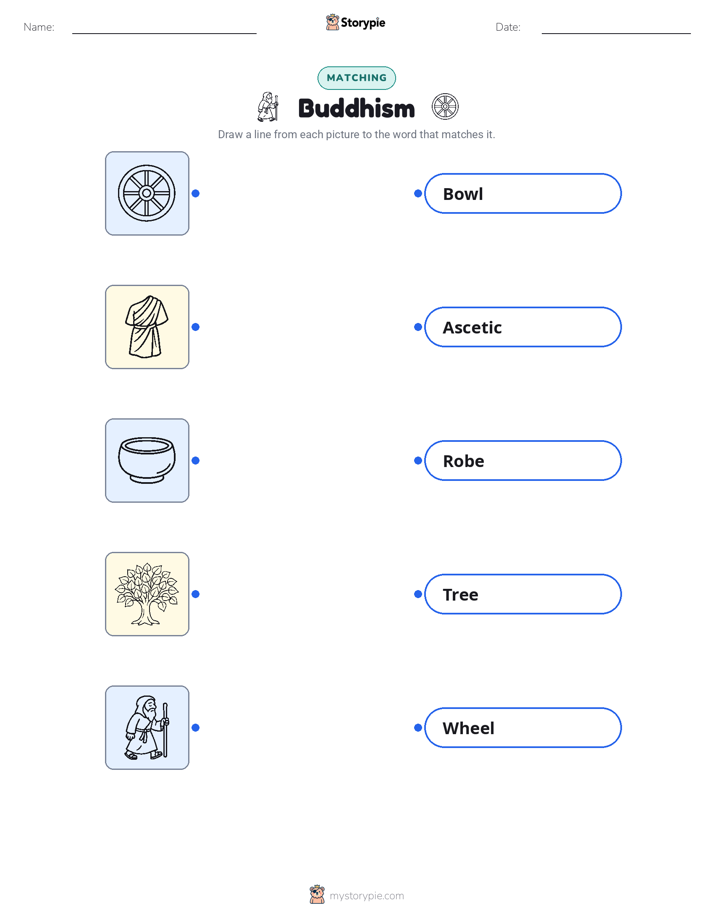
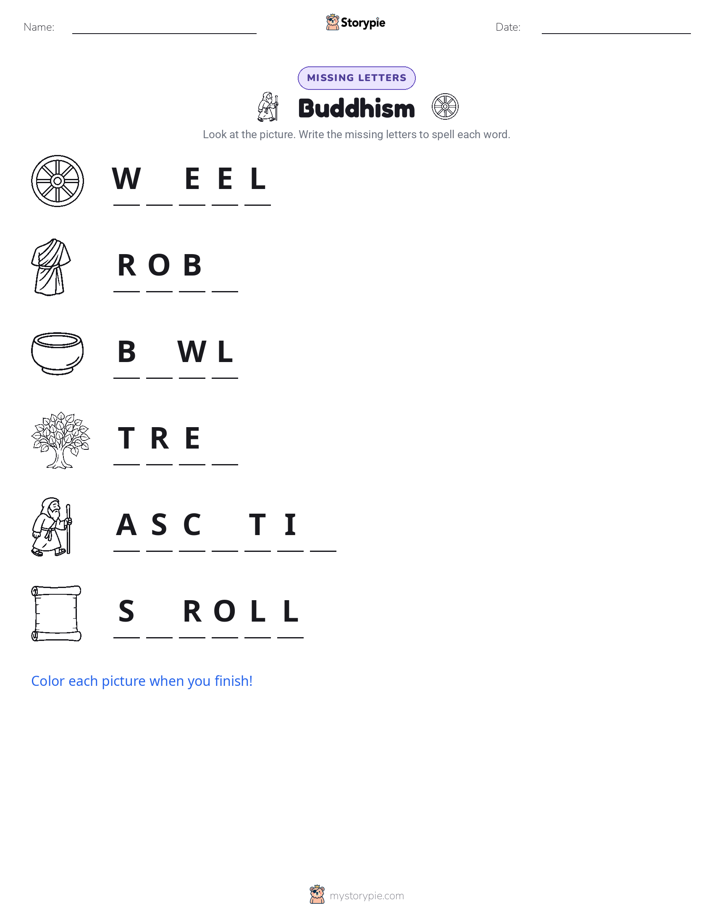
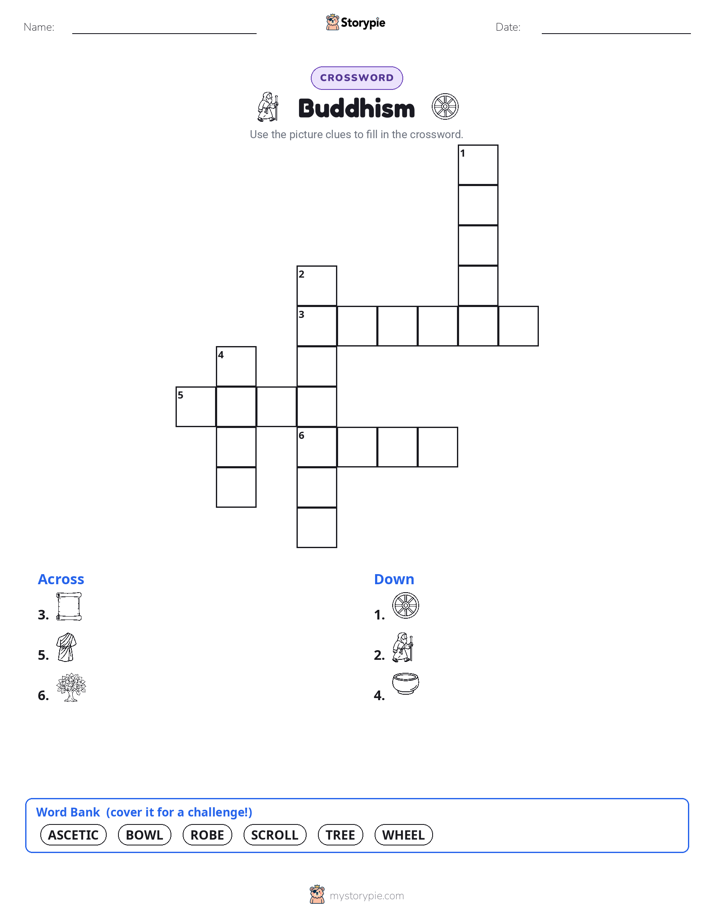
Print & create
Answer keys·No prep·Free with an account
28 worksheets · answer keys · full story · quiz · Ages 10-12 · CEFR B2
Plus adds 102,000+ more stories in 27 languages, audio for every one, and printables for all of them.
Just want Buddhism?

Have you ever sat quietly and wondered why some days feel bright and full of joy, while others feel heavy and clouded with sadness? Before there were complex answers written in books, there was just this feeling—a deep, human curiosity about the nature of our own minds. I am not a set of rules you must follow or a story you must believe without question. I am a path, a way of looking at the world that begins with a single, honest question. My own story began with a young prince who lived a life of incredible luxury in ancient India, shielded from all the world’s troubles. He had everything a person could desire, yet he felt a profound sense that something was missing. He saw the fleeting nature of happiness and wondered if there was a more lasting peace to be found. That prince’s question gave birth to me. I am Buddhism, a way of finding peace right in the middle of a busy, complicated world.
My journey began with that prince, Siddhartha Gautama, who was born into a royal family around 563 BCE in a beautiful garden in Lumbini, near the border of modern-day Nepal. His father, the king, was determined to protect him from any form of suffering. Siddhartha grew up in magnificent palaces, never seeing old age, sickness, or death. But this perfect bubble could not last forever. When he was 29 years old, he ventured outside the palace walls and saw what has become known as the ‘Four Sights.’ He saw an old man, frail and bent with age. He saw a sick person, weak and in pain. He saw a dead body being carried for cremation. These sights shocked him to his core; he realized that no amount of wealth or power could protect him or his loved ones from these truths of life. Then, he saw a fourth sight: a calm, peaceful wandering ascetic, a holy man who had given up worldly possessions. Inspired, Siddhartha made a monumental decision. He left his wife, his newborn son, and his life of luxury to seek the answer to a universal problem: how to end suffering for all beings. For six years, he traveled and studied, even practicing extreme self-denial, believing that harsh discipline would lead to enlightenment. He nearly starved himself, but he only grew weaker, not wiser. It was then he realized that the path to understanding was not in extreme luxury or extreme hardship, but somewhere in between. He called this the ‘Middle Way.’ He sat beneath a Bodhi tree in Bodh Gaya, India, and meditated deeply, finally understanding the nature of reality. Around 528 BCE, he achieved enlightenment. He was no longer just Siddhartha; he was the Buddha, which means ‘the awakened one.’
The Path That Began with a Question
Have you ever sat quietly and wondered why some days feel bright and full of joy, while others feel heavy and clouded with sadness? Before there were complex answers written in books, there was just this feeling—a deep, human curiosity about the nature of our own minds. I am not a set of rules you must follow or a story you must believe without question. I am a path, a way of looking at the world that begins with a single, honest question. My own story began with a young prince who lived a life of incredible luxury in ancient India, shielded from all the world’s troubles. He had everything a person could desire, yet he felt a profound sense that something was missing. He saw the fleeting nature of happiness and wondered if there was a more lasting peace to be found. That prince’s question gave birth to me. I am Buddhism, a way of finding peace right in the middle of a busy, complicated world.
My journey began with that prince, Siddhartha Gautama, who was born into a royal family around 563 BCE in a beautiful garden in Lumbini, near the border of modern-day Nepal. His father, the king, was determined to protect him from any form of suffering. Siddhartha grew up in magnificent palaces, never seeing old age, sickness, or death. But this perfect bubble could not last forever. When he was 29 years old, he ventured outside the palace walls and saw what has become known as the ‘Four Sights.’ He saw an old man, frail and bent with age. He saw a sick person, weak and in pain. He saw a dead body being carried for cremation. These sights shocked him to his core; he realized that no amount of wealth or power could protect him or his loved ones from these truths of life. Then, he saw a fourth sight: a calm, peaceful wandering ascetic, a holy man who had given up worldly possessions. Inspired, Siddhartha made a monumental decision. He left his wife, his newborn son, and his life of luxury to seek the answer to a universal problem: how to end suffering for all beings. For six years, he traveled and studied, even practicing extreme self-denial, believing that harsh discipline would lead to enlightenment. He nearly starved himself, but he only grew weaker, not wiser. It was then he realized that the path to understanding was not in extreme luxury or extreme hardship, but somewhere in between. He called this the ‘Middle Way.’ He sat beneath a Bodhi tree in Bodh Gaya, India, and meditated deeply, finally understanding the nature of reality. Around 528 BCE, he achieved enlightenment. He was no longer just Siddhartha; he was the Buddha, which means ‘the awakened one.’
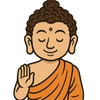
After his awakening, the Buddha wanted to share what he had discovered. He traveled to a deer park in Sarnath, India, and gave his first sermon to the five companions who had once practiced asceticism with him. This teaching formed my very heart. He explained that his entire discovery could be understood through what he called the Four Noble Truths. The first truth is that life inevitably involves suffering, or dissatisfaction. This isn't meant to be pessimistic, but realistic—we all experience disappointment, loss, and discomfort. The second truth is that this suffering has a cause: our own craving, attachment, and desire for things to be different than they are. We constantly want things we don’t have or want to avoid things we don’t like, and this struggle is the root of our unhappiness. The third truth is the good news: there is a way to end this suffering. It is possible to achieve a state of lasting peace and liberation, known as Nirvana. And the fourth truth is the practical guide to get there, which he called the Noble Eightfold Path. This path is like a map with eight lanes, all working together. It includes things like Right Understanding, which is seeing the world clearly as it is; Right Action, which means acting with kindness and compassion; and Right Mindfulness, which is being aware of your thoughts and feelings without judgment. I was never meant to be a doctrine of blind faith. The Buddha invited everyone to ‘come and see for yourself,’ to test these teachings in their own lives and see if they led to greater peace and wisdom.
After the Buddha’s death around 483 BCE, his teachings might have faded away if not for the Sangha, the community of monks and nuns who memorized and passed them down for generations. At first, I remained mostly in India, a quiet philosophy growing steadily. But my journey to the wider world truly began with a powerful emperor named Ashoka the Great. In the 3rd century BCE, Ashoka was a fierce conqueror who won a devastatingly bloody war against the kingdom of Kalinga. The immense suffering he had caused horrified him, and he underwent a profound transformation. He embraced my message of non-violence and compassion, vowing to rule with kindness instead of force. He built hospitals, cared for his people, and sent missionaries to share the Buddha’s teachings across Asia. This was my first great leap. A few centuries later, starting around the 1st century CE, I began a new adventure, traveling with merchants and monks along the winding, dusty trails of the Silk Road. I crossed mountains and deserts, making my way to China, where I blended with local philosophies like Taoism. From there, I journeyed to Korea and then across the sea to Japan, where I inspired the development of Zen. In the Himalayas, I became Tibetan Buddhism. In each new home, I adapted, weaving myself into the culture while keeping my core truths intact, showing that the path to awakening could be walked by anyone, anywhere.
Today, I am still that same path. I live in the quiet moments of meditation when someone watches their breath to calm their mind. I am present in a simple act of kindness from one person to another. My ideas have even found their way into modern science and psychology through the practice of mindfulness, which helps people reduce stress and live more fully in the present moment. I am a tool, a guide for developing compassion for others and for yourself. The search for understanding, which began with a prince’s question over 2,500 years ago, continues in the heart of every person who seeks a more peaceful and meaningful life. That path is open to you, too.
Wow facts
About
Buddhism is a spiritual tradition and philosophy founded by Siddhartha Gautama (the Buddha) around the 5th century BCE in ancient India. It focuses on achieving enlightenment and ending suffering through practices like meditation and following the Four Noble Truths and the Eightfold Path.
Take a Quiz
Question 1 of 5
According to the story, why did Prince Siddhartha Gautama decide to leave his luxurious palace life?
Explore next




Want to do even more?
Go beyond exploring. Unlock tools that turn every story into real learning.

Storypie Plus for families
Full stories, quizzes, and printables. Nights and car rides, sorted.
- Unlimited audio stories
- Create Mode: your child stars in the story
- Offline downloads
- Printable worksheets & coloring pages

Why Storypie for Schools
Students engaged. Prep in seconds. Evenings back to you.
- Worksheets & Quizzes
- Classroom Management
- Formative Assessment
- Custom Curriculum & Lesson Plans
- 27 Languages

Why Storypie for Homeschool
Curriculum done. They'll ask for more. Hours back in your day.
- Worksheet Generator
- First-Person Audio Stories
- Built-in Comprehension Quizzes
- Custom Curriculum & Lesson Plans
- Print & Go Activities