English

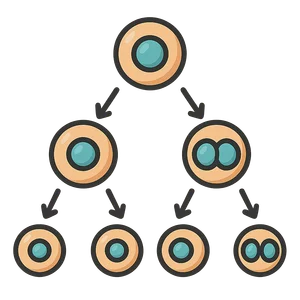
Cell Division (Mitosis and Meiosis)
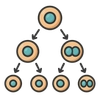
Cell division is the fundamental biological process by which a parent cell divides into two or more daughter…
Reads at Grades 6–8 Listens at Grades 4–8
Print & create
Answer keys·No prep·Free with an account
28 worksheets · answer keys · full story · quiz · Ages 10-12 · CEFR B2
Plus adds 244,000+ more stories in 27 languages, audio for every one, and printables for all of them.
Just want Cell Division (Mitosis and Meiosis)?
Have you ever wondered about the quiet magic happening all around you, and even inside you? Think about how a tiny, planted seed can push its way through the dark soil and grow into a towering tree, or how a scraped knee, red and sore one day, can look smooth and new a week later. There is an invisible force at work, a secret architect building and rebuilding everything that lives. I am that architect. I am the tiny construction crew that mends your skin, the master choreographer that directs your growth from a single, microscopic speck into the person you are today. I am a constant, silent process, a performance happening in trillions of places at once. I am the quiet, constant dance of life. My name is Cell Division.
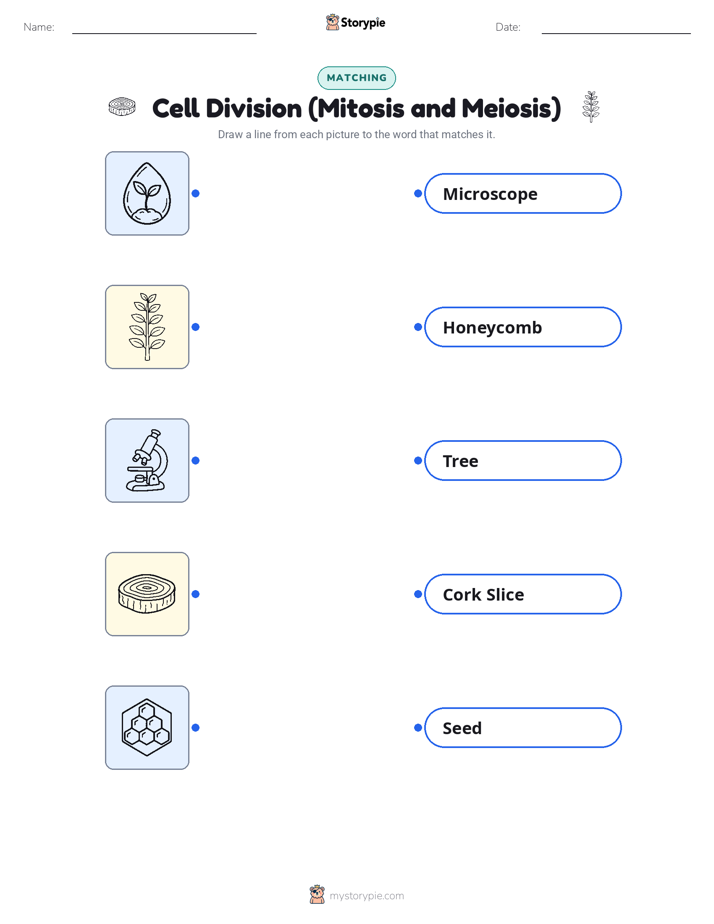
For most of human history, my world was a complete secret, too small for any eye to see. People knew things grew and healed, but they couldn't imagine the intricate universe where I perform. That all changed with the invention of the microscope. A curious English scientist named Robert Hooke was one of the first to peek into my realm. On a day in 1665, he placed a thin slice of cork under his microscope and was astonished. He saw a honeycomb of tiny, empty boxes. Because they reminded him of the small rooms where monks lived, he called them 'cells.' He was only seeing the empty walls of dead plant cells, but he had given my home a name. A few years later, in the late 1600s, a Dutch cloth merchant named Antonie van Leeuwenhoek crafted microscopes so powerful he could see living things swimming in a single drop of pond water. He saw a world teeming with single-celled life. These discoveries were revolutionary, but they created an even bigger question: if everything was made of cells, where did new cells come from? The stage was set for my dance to be revealed.
The Dance of Life
Have you ever wondered about the quiet magic happening all around you, and even inside you? Think about how a tiny, planted seed can push its way through the dark soil and grow into a towering tree, or how a scraped knee, red and sore one day, can look smooth and new a week later. There is an invisible force at work, a secret architect building and rebuilding everything that lives. I am that architect. I am the tiny construction crew that mends your skin, the master choreographer that directs your growth from a single, microscopic speck into the person you are today. I am a constant, silent process, a performance happening in trillions of places at once. I am the quiet, constant dance of life. My name is Cell Division.
For most of human history, my world was a complete secret, too small for any eye to see. People knew things grew and healed, but they couldn't imagine the intricate universe where I perform. That all changed with the invention of the microscope. A curious English scientist named Robert Hooke was one of the first to peek into my realm. On a day in 1665, he placed a thin slice of cork under his microscope and was astonished. He saw a honeycomb of tiny, empty boxes. Because they reminded him of the small rooms where monks lived, he called them 'cells.' He was only seeing the empty walls of dead plant cells, but he had given my home a name. A few years later, in the late 1600s, a Dutch cloth merchant named Antonie van Leeuwenhoek crafted microscopes so powerful he could see living things swimming in a single drop of pond water. He saw a world teeming with single-celled life. These discoveries were revolutionary, but they created an even bigger question: if everything was made of cells, where did new cells come from? The stage was set for my dance to be revealed.
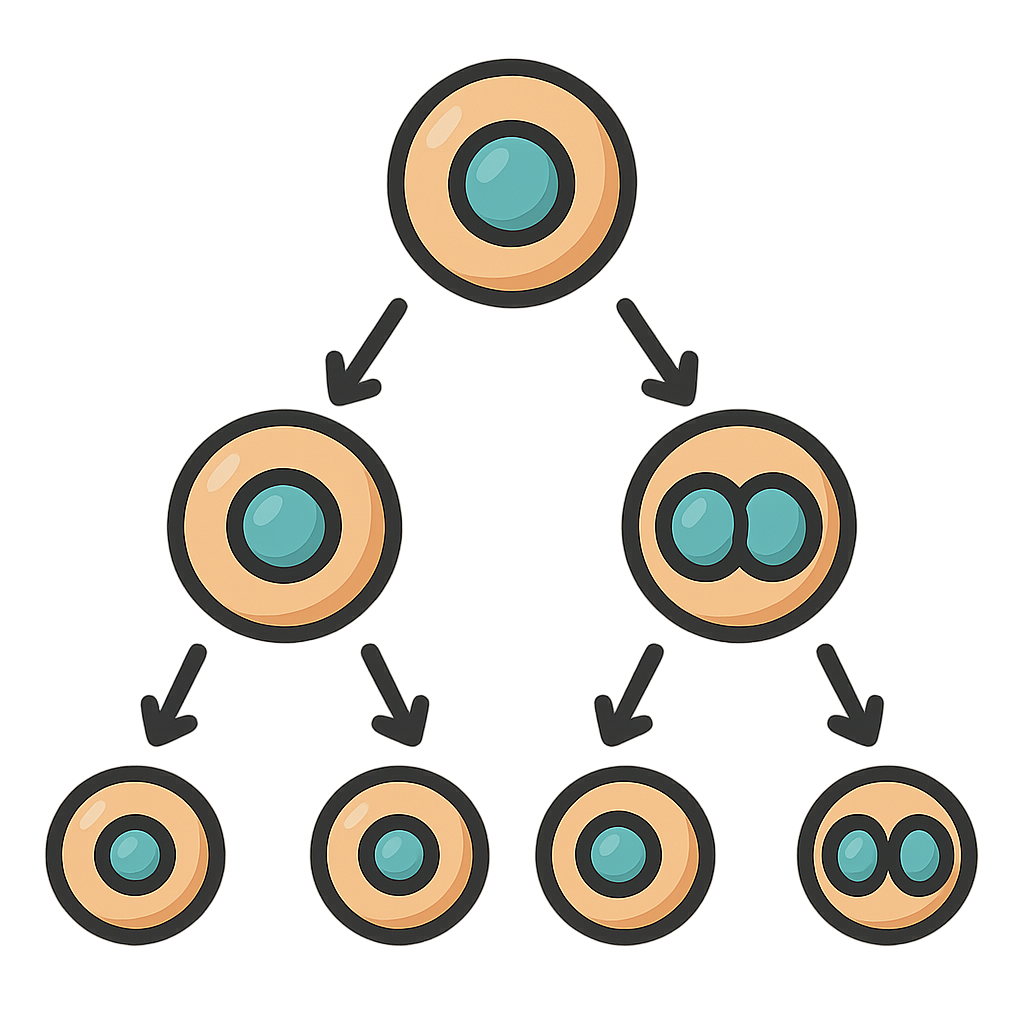
For nearly two hundred years, that question puzzled the greatest minds. Then, in 1855, a German doctor named Rudolf Virchow declared a simple, powerful idea: 'Omnis cellula e cellula,' which means 'all cells come from other cells.' He was right, but no one had ever seen it happen. That honor went to another German biologist, Walther Flemming. In the late 1870s, working with new chemical dyes, he found a way to make the inside of a cell burst with color. Deep within the cell's command center, the nucleus, he saw a tangle of material that soaked up the dye. He called it 'chromatin,' meaning 'colored stuff.' As he watched, he saw something incredible. The threads of chromatin organized themselves, and then, miraculously, they made perfect copies of themselves. These pairs of threads lined up precisely in the middle of the cell, like partners in a perfectly rehearsed performance. Then, they gracefully pulled apart, moving to opposite ends. Finally, the cell itself pinched in the middle and split into two identical twins, each with a complete set of the precious threads. In 1882, Flemming published his amazing observations, giving my first performance a name: Mitosis. This is my copying dance, the one I perform for growth and repair.
But I have another, very different dance, one reserved for a special purpose: creating the wonderful variety of life. A Belgian zoologist named Edouard Van Beneden was the first to get a clue about this second performance. In 1883, while studying the cells of a roundworm, he noticed something peculiar. He saw that the body cells had a certain number of those thread-like chromosomes, but the reproductive cells—the egg and sperm—had exactly half that number. Why? It was because I was doing a different dance. This dance is called Meiosis. Instead of making an exact copy, my goal here is to shuffle the genetic deck. I take the chromosomes from an organism, mix them up in new ways, and then divide the cell twice, creating four unique cells, each with half the original information. This shuffling is what makes you a unique person. You are not a perfect copy of either of your parents; you are a brand-new combination of their genetic information, all thanks to the clever, shuffling steps of my second dance.
So you see, I am the engine of everything. From the mending of a simple paper cut to the unfurling of a new leaf on a tree, I am always at work. Understanding my two dances, Mitosis and Meiosis, was a key that unlocked the secrets of genetics, heredity, and how traits are passed down through generations. It also helped humans understand what happens when my dance goes wrong, which can lead to diseases like cancer. But my performance is overwhelmingly a force for good, for creation, and for continuity. I am the engine of life itself, a continuous, beautiful process of renewal and creation. Every time you see something grow, you are seeing my work. I am the tiny, powerful dance that connects every living thing on Earth, from the smallest bacteria to you.
Wow facts
About
Cell division is the fundamental biological process by which a parent cell divides into two or more daughter cells. It is essential for growth, repair, and reproduction in all living organisms.
Take a Quiz
Question 1 of 5
In your own words, what was the central question that scientists like Rudolf Virchow and Walther Flemming were trying to answer about cells?
Explore next


Want to do even more?
Go beyond exploring. Unlock tools that turn every story into real learning.

Storypie Plus for families
Full stories, quizzes, and printables. Nights and car rides, sorted.
- Unlimited audio stories
- Create Mode: your child stars in the story
- Offline downloads
- Printable worksheets & coloring pages

Why Storypie for Schools
Students engaged. Prep in seconds. Evenings back to you.
- Worksheets & Quizzes
- Classroom Management
- Formative Assessment
- Custom Curriculum & Lesson Plans
- 27 Languages

Why Storypie for Homeschool
Curriculum done. They'll ask for more. Hours back in your day.
- Worksheet Generator
- First-Person Audio Stories
- Built-in Comprehension Quizzes
- Custom Curriculum & Lesson Plans
- Print & Go Activities