English

Civilian Conservation Corps
A U.S.
Reads at Grades 6–8 Listens at Grades 4–8
Print & create
Answer keys·No prep·Free with an account
28 worksheets · answer keys · full story · quiz · Ages 10-12 · CEFR B2
Plus adds 102,000+ more stories in 27 languages, audio for every one, and printables for all of them.
Just want Civilian Conservation Corps?

Imagine a time when the whole country seemed to hold its breath. It was the 1930s, during a hard time called the Great Depression. Factories were quiet, their chimneys releasing no smoke into the sky. Farms were struggling under great clouds of dust that blotted out the sun, and millions of families worried about where their next meal would come from. The land itself was tired. For decades, forests had been cut down without a second thought, and without tree roots to hold it, the precious topsoil was washing away into rivers. In the middle of all this worry, a new idea began to form—an idea about bringing two things together that both desperately needed help: the land, and the millions of strong, young people who had no work. I was that idea, a whisper of hope that you could heal a nation by healing its nature. Before anyone knew my name, I was a plan to put shovels and axes in empty hands, to plant the seeds of both trees and economic recovery, and to give young men a purpose, a place to live, and a paycheck to send home to their families.
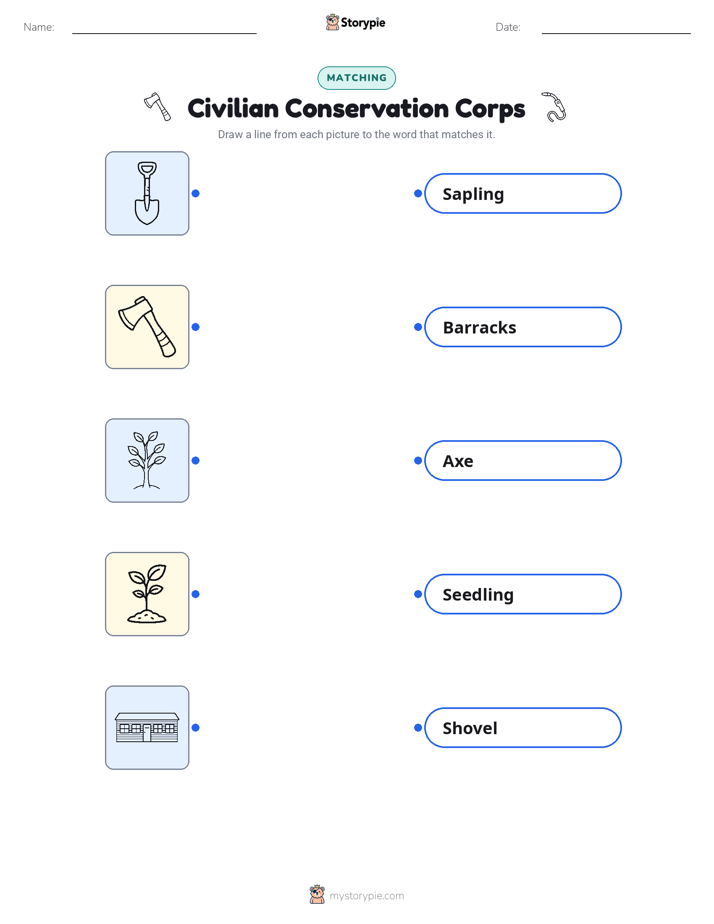
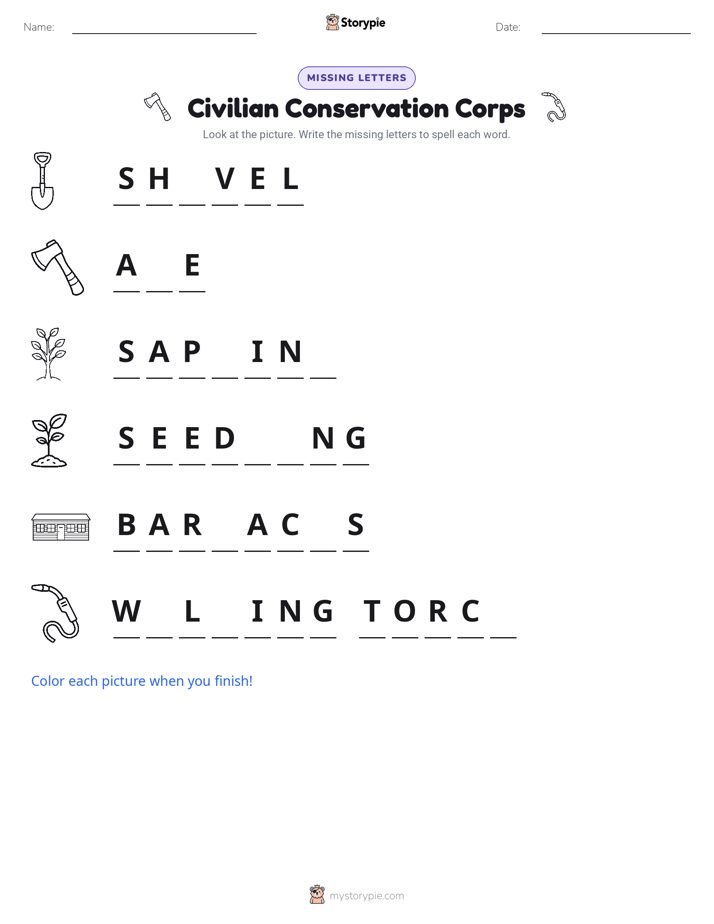
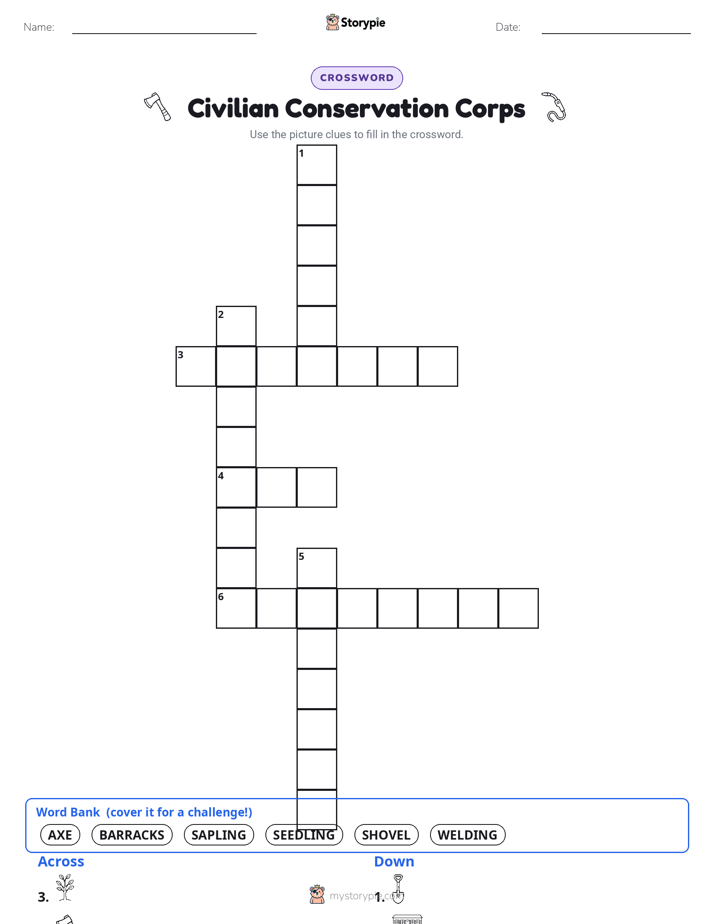
On March 31st, 1933, that whisper became a roar. President Franklin D. Roosevelt, as part of his sweeping series of programs called the New Deal, officially brought me to life. I am the Civilian Conservation Corps, but it wasn’t long before most people just called me the CCC. The response was immediate. From every corner of the country, hundreds of thousands of young men, mostly between the ages of 17 and 28, signed up to join me. They left behind cities where jobs had vanished and towns where hope was scarce. They traveled to camps set up in the wilderness, living together in barracks, working hard all day in the fresh air, and in the evening, many took classes to learn how to read, write, or practice a trade like welding or auto mechanics. For their monumental efforts, they earned $30 a month, which was a significant amount of money back then. But they didn't keep it all. A full $25 of it was sent directly home to their families, helping them pay for rent and put food on the table. My 'boys,' as they were affectionately called, planted so many trees—more than three billion of them in nine years—that people started calling us 'Roosevelt's Tree Army.' We were on a mission to reforest America, one sapling at a time.
Roosevelt's Tree Army
Imagine a time when the whole country seemed to hold its breath. It was the 1930s, during a hard time called the Great Depression. Factories were quiet, their chimneys releasing no smoke into the sky. Farms were struggling under great clouds of dust that blotted out the sun, and millions of families worried about where their next meal would come from. The land itself was tired. For decades, forests had been cut down without a second thought, and without tree roots to hold it, the precious topsoil was washing away into rivers. In the middle of all this worry, a new idea began to form—an idea about bringing two things together that both desperately needed help: the land, and the millions of strong, young people who had no work. I was that idea, a whisper of hope that you could heal a nation by healing its nature. Before anyone knew my name, I was a plan to put shovels and axes in empty hands, to plant the seeds of both trees and economic recovery, and to give young men a purpose, a place to live, and a paycheck to send home to their families.
On March 31st, 1933, that whisper became a roar. President Franklin D. Roosevelt, as part of his sweeping series of programs called the New Deal, officially brought me to life. I am the Civilian Conservation Corps, but it wasn’t long before most people just called me the CCC. The response was immediate. From every corner of the country, hundreds of thousands of young men, mostly between the ages of 17 and 28, signed up to join me. They left behind cities where jobs had vanished and towns where hope was scarce. They traveled to camps set up in the wilderness, living together in barracks, working hard all day in the fresh air, and in the evening, many took classes to learn how to read, write, or practice a trade like welding or auto mechanics. For their monumental efforts, they earned $30 a month, which was a significant amount of money back then. But they didn't keep it all. A full $25 of it was sent directly home to their families, helping them pay for rent and put food on the table. My 'boys,' as they were affectionately called, planted so many trees—more than three billion of them in nine years—that people started calling us 'Roosevelt's Tree Army.' We were on a mission to reforest America, one sapling at a time.
But my work was about so much more than just trees. My crews, organized with military-like efficiency, fanned out across the entire country and got to work on the land itself. We were a force for conservation on a scale never seen before. We fought destructive forest fires, creating firebreaks and lookout towers to protect vast woodlands. We built dams to stop precious soil from eroding into rivers and created fish hatcheries to restock lakes and streams. If you've ever hiked a beautiful, winding trail in a state or national park, there's a very good chance my teams helped build it. From 1933 to 1942, we developed over 800 state parks from the ground up and worked tirelessly in national treasures like Shenandoah, Glacier, and the Grand Canyon. We built magnificent lodges, sturdy cabins, and picnic shelters from native stone and timber, creating a rustic style of architecture that blended seamlessly with the nature around it. The young men learned valuable, lifelong skills like carpentry, stone masonry, and surveying. While most of my camps were for young white men, I also had separate, segregated camps for African American and Native American enrollees who did equally important work restoring lands and building parks across the nation. My purpose was to restore the land and, in doing so, restore the nation's spirit, one project at a time.
My official work came to an end in 1942. The world was in the middle of a massive conflict, World War II, and the country needed its young men for a different kind of service. My camps were closed down, and my enrollees, now older, stronger, and more disciplined, went on to become soldiers, builders, and leaders in their communities, using the skills and work ethic they learned with me. But I never really went away. My legacy is written on the American landscape itself. It's in the towering forests that stand today because we planted them as tiny saplings nearly a century ago. It's in the sturdy stone bridges you cross on a scenic drive and the winding paths that lead you to a breathtaking mountain view. I am proof that when people work together for the common good, they can create something beautiful and lasting for generations to come. I am a living reminder that taking care of our environment and taking care of each other are two parts of the very same job. And that is an idea that will never, ever grow old.
Wow facts
About
A U.S. federal work relief program established during the Great Depression by President Franklin D. Roosevelt, which employed millions of young men to work on conservation and natural resource development projects.
Take a Quiz
Question 1 of 5
In your own words, what was the main problem the Civilian Conservation Corps (CCC) was created to solve?
Explore next






Want to do even more?
Go beyond exploring. Unlock tools that turn every story into real learning.

Storypie Plus for families
Full stories, quizzes, and printables. Nights and car rides, sorted.
- Unlimited audio stories
- Create Mode: your child stars in the story
- Offline downloads
- Printable worksheets & coloring pages

Why Storypie for Schools
Students engaged. Prep in seconds. Evenings back to you.
- Worksheets & Quizzes
- Classroom Management
- Formative Assessment
- Custom Curriculum & Lesson Plans
- 27 Languages

Why Storypie for Homeschool
Curriculum done. They'll ask for more. Hours back in your day.
- Worksheet Generator
- First-Person Audio Stories
- Built-in Comprehension Quizzes
- Custom Curriculum & Lesson Plans
- Print & Go Activities