English

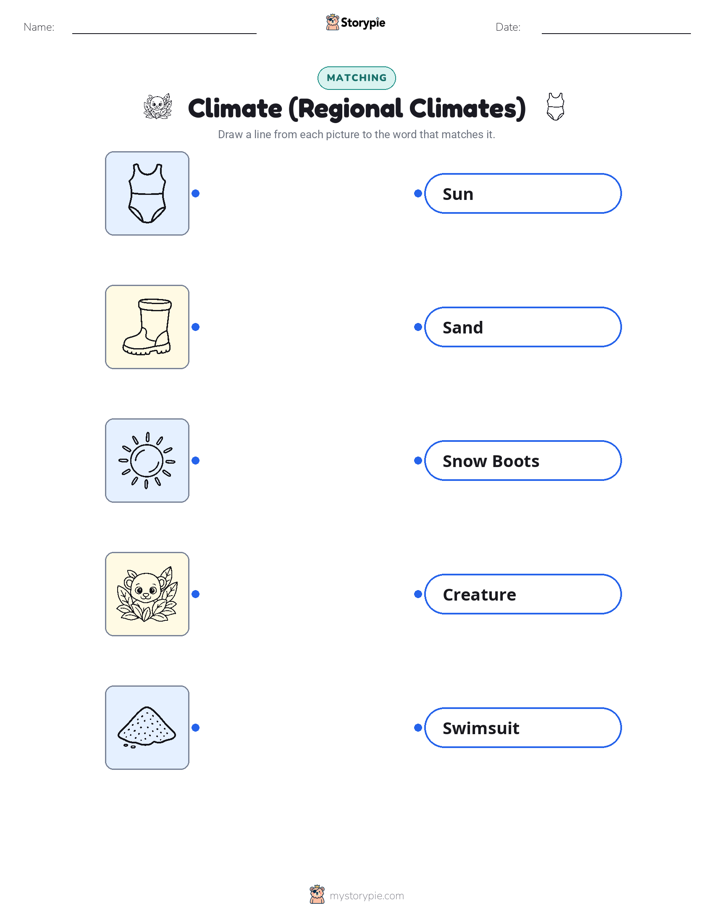
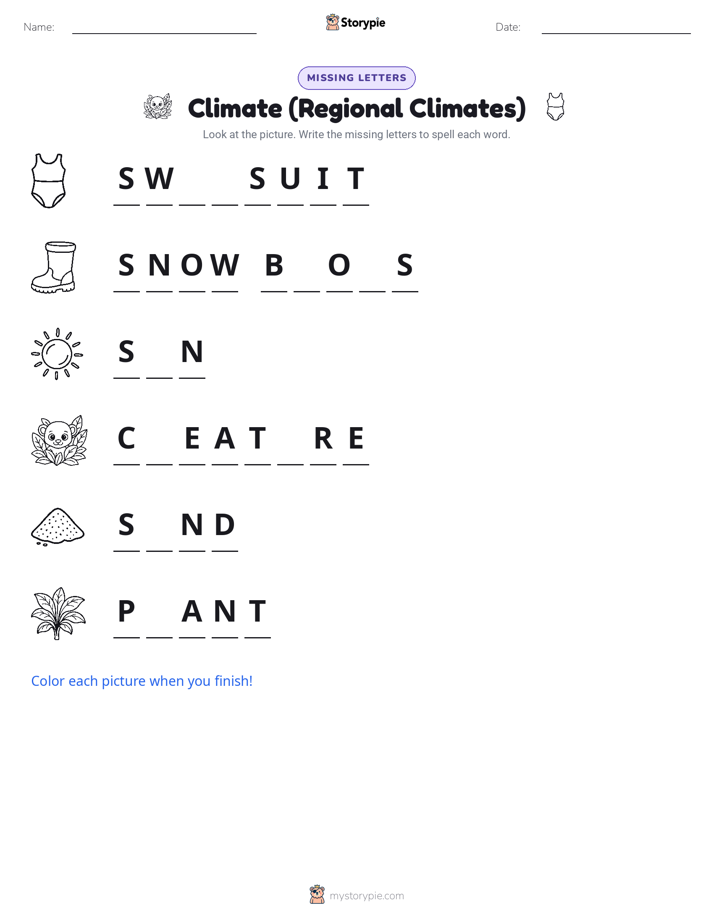
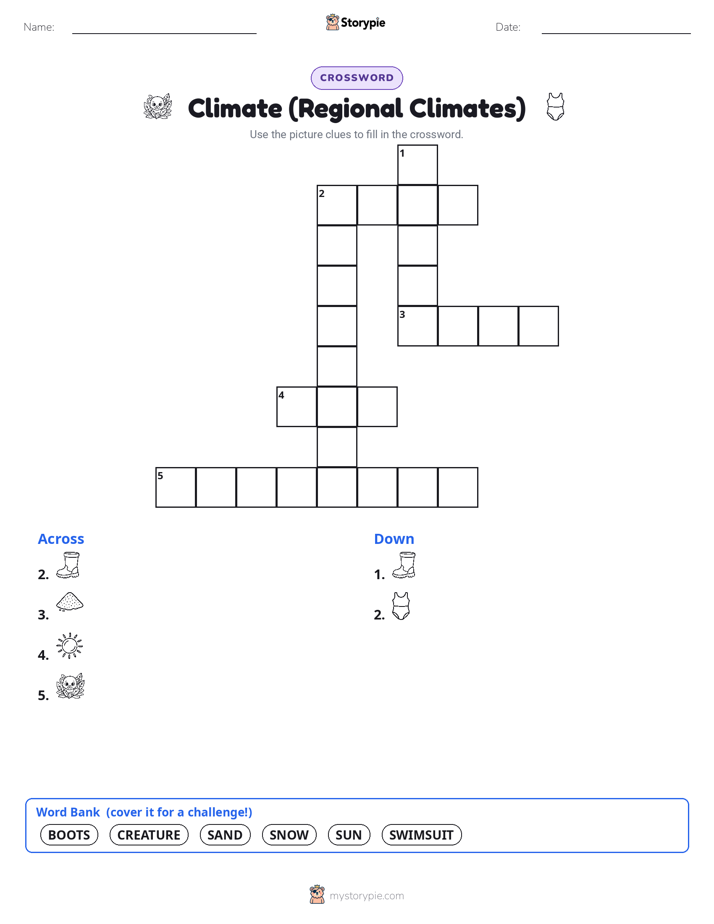
Climate (Regional Climates)
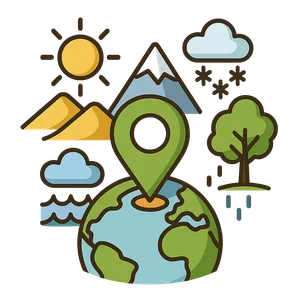
The long-term pattern of weather in a particular area…
Reads at Grades K-2 Listens at K–3
Print & create
Answer keys·No prep·Free with an account
28 worksheets · answer keys · full story · quiz · Ages 6-8 · CEFR A2
Plus adds 244,000+ more stories in 27 languages, audio for every one, and printables for all of them.
Just want Climate (Regional Climates)?
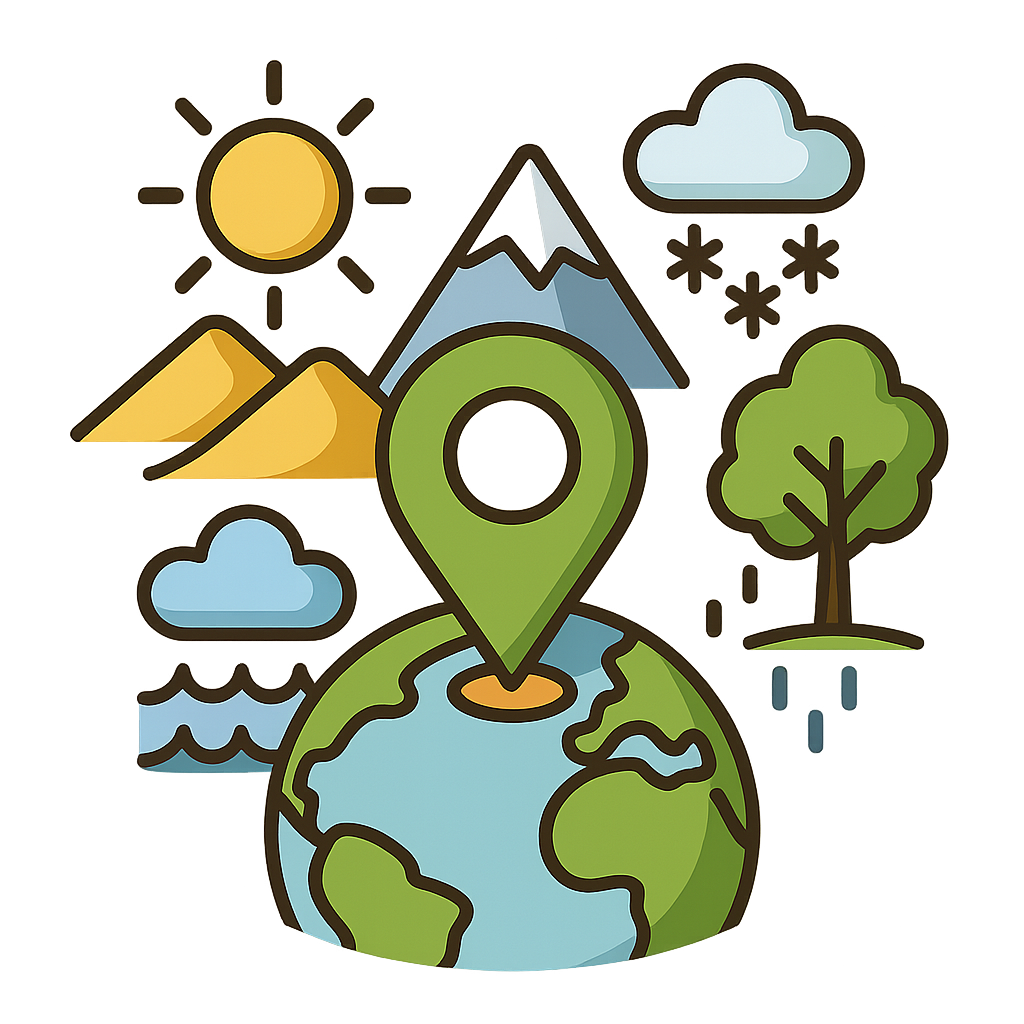
Have you ever wondered why some places are snowy and perfect for polar bears, while others are hot and sunny, perfect for parrots? That’s me at work. In some parts of the world, I wear a warm, humid blanket all year, helping giant trees grow in lush rainforests. In other places, I wear a dry, sandy coat where camels trek across deserts. I am the reason you might build a snowman in December or splash in the pool on the 4th of July. I decide if farmers grow bananas or apples, and whether you wear fluffy mittens or cool sunglasses. I am the world's big, invisible wardrobe, choosing the right outfit for every corner of the globe. I am Regional Climate.
For a very long time, people just knew that some places were hot and others were cold. But they didn't know why. Then, thousands of years ago in a place called ancient Greece, some very curious thinkers started to figure me out. Around the 5th century BCE, a philosopher named Parmenides had a big idea. He imagined the Earth was split into five big belts. He called the part around the middle a 'torrid' zone, which means very hot. At the very top and bottom, he imagined two 'frigid' zones, which means very cold. And in between the hot and cold parts, he pictured two 'temperate' zones, which were just right, not too hot and not too cold. A little later, in the 4th century BCE, another famous thinker named Aristotle agreed and wrote all about it. They realized it was all about the sun. The sun’s warm rays shine directly on the middle of the Earth, but they only give a little wink to the top and bottom. As people explored more of the world, they saw these patterns everywhere. Much, much later, in 1884, a scientist named Wladimir Köppen made a detailed map of me, giving names to all my different personalities, like 'Tropical' for the hot and rainy places or 'Polar' for the icy cold ones.
The World's Invisible Wardrobe
Have you ever wondered why some places are snowy and perfect for polar bears, while others are hot and sunny, perfect for parrots? That’s me at work. In some parts of the world, I wear a warm, humid blanket all year, helping giant trees grow in lush rainforests. In other places, I wear a dry, sandy coat where camels trek across deserts. I am the reason you might build a snowman in December or splash in the pool on the 4th of July. I decide if farmers grow bananas or apples, and whether you wear fluffy mittens or cool sunglasses. I am the world's big, invisible wardrobe, choosing the right outfit for every corner of the globe. I am Regional Climate.
For a very long time, people just knew that some places were hot and others were cold. But they didn't know why. Then, thousands of years ago in a place called ancient Greece, some very curious thinkers started to figure me out. Around the 5th century BCE, a philosopher named Parmenides had a big idea. He imagined the Earth was split into five big belts. He called the part around the middle a 'torrid' zone, which means very hot. At the very top and bottom, he imagined two 'frigid' zones, which means very cold. And in between the hot and cold parts, he pictured two 'temperate' zones, which were just right, not too hot and not too cold. A little later, in the 4th century BCE, another famous thinker named Aristotle agreed and wrote all about it. They realized it was all about the sun. The sun’s warm rays shine directly on the middle of the Earth, but they only give a little wink to the top and bottom. As people explored more of the world, they saw these patterns everywhere. Much, much later, in 1884, a scientist named Wladimir Köppen made a detailed map of me, giving names to all my different personalities, like 'Tropical' for the hot and rainy places or 'Polar' for the icy cold ones.
Today, understanding me is super important. I help farmers know what crops will grow best and when to plant them so we all have delicious food to eat. I help people who build houses know how to make them cozy and warm in my chilly places, and cool and breezy in my hot spots. I am a beautiful pattern that connects every part of our planet. When you learn about me, you learn why a cactus grows in the desert and a penguin lives in Antarctica. Understanding my different moods helps you understand our amazing world and all the wonderful ways people, plants, and animals live on it. And by knowing me, you can help take care of our amazing home, Earth, for years to come.
Wow facts
About
The long-term pattern of weather in a particular area, which scientists classify into distinct zones or regions based on temperature, precipitation, and native vegetation.
Take a Quiz
Question 1 of 4
Why did the ancient Greeks think the middle of the Earth was a very hot, or 'torrid', zone?
Explore next




Want to do even more?
Go beyond exploring. Unlock tools that turn every story into real learning.

Storypie Plus for families
Full stories, quizzes, and printables. Nights and car rides, sorted.
- Unlimited audio stories
- Create Mode: your child stars in the story
- Offline downloads
- Printable worksheets & coloring pages

Why Storypie for Schools
Students engaged. Prep in seconds. Evenings back to you.
- Worksheets & Quizzes
- Classroom Management
- Formative Assessment
- Custom Curriculum & Lesson Plans
- 27 Languages

Why Storypie for Homeschool
Curriculum done. They'll ask for more. Hours back in your day.
- Worksheet Generator
- First-Person Audio Stories
- Built-in Comprehension Quizzes
- Custom Curriculum & Lesson Plans
- Print & Go Activities