English

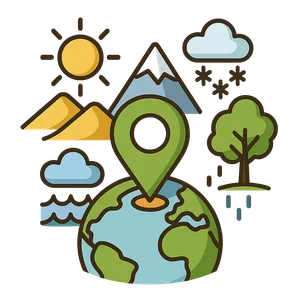
Climate (Regional Climates)
The long-term pattern of weather in a particular area…
Reads at Grades 3–5 Listens at Grades 1–5
Print & create
Answer keys·No prep·Free with an account
28 worksheets · answer keys · full story · quiz · Ages 8-10 · CEFR B1
Plus adds 244,000+ more stories in 27 languages, audio for every one, and printables for all of them.
Just want Climate (Regional Climates)?
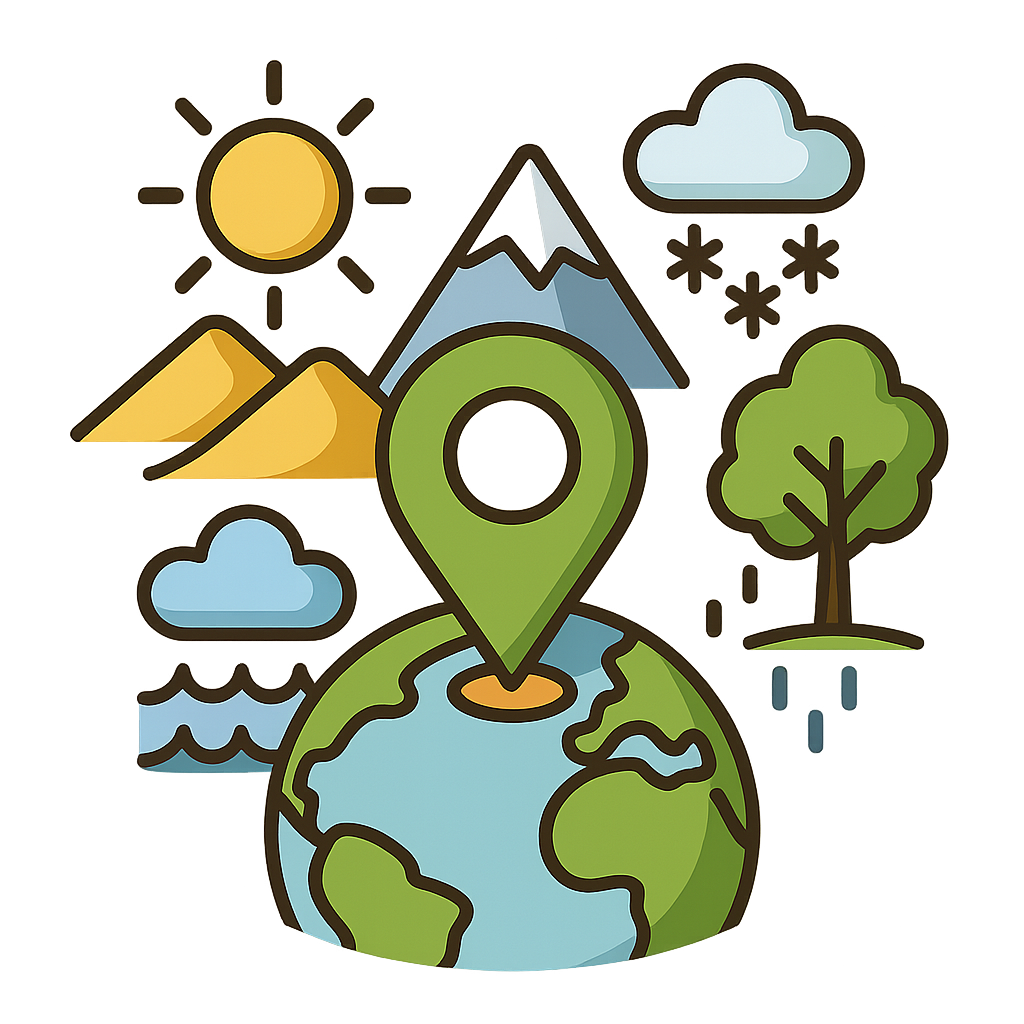
Have you ever wondered why you might build a snowman in winter while someone on the other side of the world is building a sandcastle? Or why some places are covered in lush, green rainforests while others are vast, sandy deserts? That’s me at work. In some places, I am chilly and crisp, dusting the world with snow. In others, I am warm and damp, letting tropical flowers bloom all year long. I am the reason polar bears have thick fur and camels have long eyelashes to protect them from the sand. Before you knew my name, you felt me in the air every single day. I am the world’s personality, its long-term mood that shapes everything from the trees that grow to the houses people build. Can you imagine a world where every single place was exactly the same? It would be so boring. I make sure every corner of the Earth has its own special character. So, what am I?
That’s right, I’m Climate. Not to be confused with my cousin, Weather, who changes its mind every single day. Weather is a passing shower or a sunny afternoon, but I’m the bigger picture—the story of what the weather is like over many, many years. For a long time, people only knew their little piece of me. But as they started to explore, they began to wonder how I worked. The ancient Greeks were some of the first to try and draw a map of my moods. A philosopher named Parmenides, way back in the 5th century BCE, suggested that the world was split into different zones: a fiery, “torrid” zone at the equator, two icy, “frigid” zones at the poles, and two mild, “temperate” zones in between. Later, around 350 BCE, another famous thinker named Aristotle agreed, writing about it in his book Meteorologica. It was a simple idea, but it was the very first step in understanding my global patterns.
The World's Many Moods
Have you ever wondered why you might build a snowman in winter while someone on the other side of the world is building a sandcastle? Or why some places are covered in lush, green rainforests while others are vast, sandy deserts? That’s me at work. In some places, I am chilly and crisp, dusting the world with snow. In others, I am warm and damp, letting tropical flowers bloom all year long. I am the reason polar bears have thick fur and camels have long eyelashes to protect them from the sand. Before you knew my name, you felt me in the air every single day. I am the world’s personality, its long-term mood that shapes everything from the trees that grow to the houses people build. Can you imagine a world where every single place was exactly the same? It would be so boring. I make sure every corner of the Earth has its own special character. So, what am I?
That’s right, I’m Climate. Not to be confused with my cousin, Weather, who changes its mind every single day. Weather is a passing shower or a sunny afternoon, but I’m the bigger picture—the story of what the weather is like over many, many years. For a long time, people only knew their little piece of me. But as they started to explore, they began to wonder how I worked. The ancient Greeks were some of the first to try and draw a map of my moods. A philosopher named Parmenides, way back in the 5th century BCE, suggested that the world was split into different zones: a fiery, “torrid” zone at the equator, two icy, “frigid” zones at the poles, and two mild, “temperate” zones in between. Later, around 350 BCE, another famous thinker named Aristotle agreed, writing about it in his book Meteorologica. It was a simple idea, but it was the very first step in understanding my global patterns.
For centuries, the Greek idea of these simple zones was what most people believed. But then, starting in the 15th century, brave explorers began sailing across the oceans on grand adventures. They discovered that my personality was far more complex and interesting than anyone had guessed. They found places near the equator that weren’t just hot, but also incredibly rainy, creating giant, steaming rainforests full of amazing creatures. They found huge deserts that were dry and hot during the day but freezing cold at night, and vast grasslands where herds of animals roamed. The old map just wasn’t detailed enough. It took a very curious scientist named Wladimir Köppen to finally give the world a way to see my true colors. In 1884, this German-Russian scientist created a beautiful new map. He didn't just look at how far a place was from the equator; he carefully studied the temperature and how much rain or snow fell there throughout the year. He used this information to divide me into five main groups: tropical, dry, temperate, continental, and polar. His system was so good that scientists still use updated versions of it today, like the one he finished with another scientist, Rudolf Geiger, in 1936.
Understanding me, your regional climate, is more important than ever. My patterns tell farmers the best time to plant their crops and what will grow best in their fields. They help engineers design buildings that can stay cool in the desert or strong enough to hold heavy snow. Knowing me helps us protect the amazing variety of animals and plants that have adapted to live in all my different zones, from the toucans in the rainforest to the penguins in the polar regions. I am a giant, beautiful puzzle that connects every part of our world. By studying my history and paying attention to my moods today, you are helping to take care of our planet and ensuring it stays a wonderful home for everyone, everywhere, for a long, long time to come.
Wow facts
About
The long-term pattern of weather in a particular area, which scientists classify into distinct zones or regions based on temperature, precipitation, and native vegetation.
Take a Quiz
Question 1 of 5
Who was the scientist who created a new climate map in 1884 using temperature and rainfall?
Explore next




Want to do even more?
Go beyond exploring. Unlock tools that turn every story into real learning.

Storypie Plus for families
Full stories, quizzes, and printables. Nights and car rides, sorted.
- Unlimited audio stories
- Create Mode: your child stars in the story
- Offline downloads
- Printable worksheets & coloring pages

Why Storypie for Schools
Students engaged. Prep in seconds. Evenings back to you.
- Worksheets & Quizzes
- Classroom Management
- Formative Assessment
- Custom Curriculum & Lesson Plans
- 27 Languages

Why Storypie for Homeschool
Curriculum done. They'll ask for more. Hours back in your day.
- Worksheet Generator
- First-Person Audio Stories
- Built-in Comprehension Quizzes
- Custom Curriculum & Lesson Plans
- Print & Go Activities