English

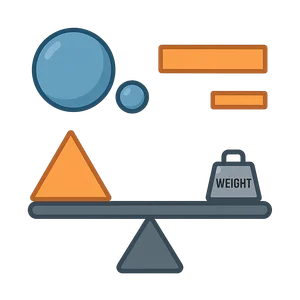
Comparing Sizes and Weights (Big/Small, Long/Short, Heavy/Light)
The fundamental concept of observing and quantifying differences in size, length, and weight…
Reads at Grades 3–5 Listens at Grades 1–5
Print & create
Answer keys·No prep·Free with an account
28 worksheets · answer keys · full story · quiz · Ages 8-10 · CEFR B1
Plus adds 244,000+ more stories in 27 languages, audio for every one, and printables for all of them.
Just want Comparing Sizes and Weights (Big/Small, Long/Short, Heavy/Light)?
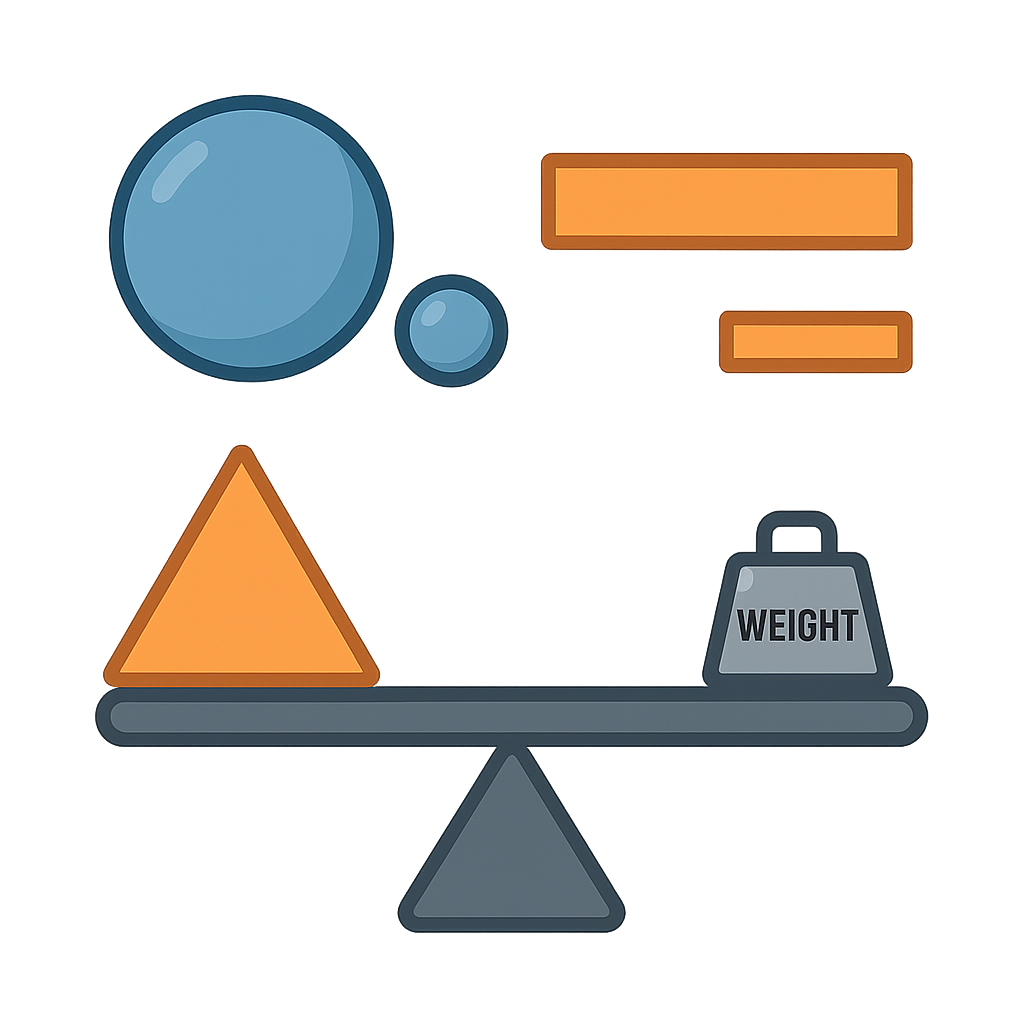
Have you ever wondered which slice of pizza is the biggest? Or which slide at the playground is the longest? Have you ever picked up a big rock and felt how much heavier it was than a small pebble? When you notice these differences, you are using a special idea that has been around for a very, very long time. It’s a way of looking at two things and seeing how they are similar or different in size, weight, or length. I am that special idea. You can call me Comparison, and I am one of the oldest and most useful ideas in the world. I help you see if something is bigger or smaller, heavier or lighter, faster or slower. Without me, the world would be a very confusing place.
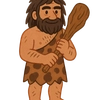
Let’s travel way back in time, long before there were rulers, scales, or clocks. In the Paleolithic era, thousands of years ago, early humans relied on me every single day just to survive. Can you imagine a world without any measuring tools? They had to live by eye. To make a good tool, a person had to find a rock that was heavier than another. To build a strong shelter, they had to find a branch that was longer and thicker than the rest. They would compare the size of berries to see which were the best to eat and the length of shadows to guess the time of day. But there was a problem. One person’s idea of a “big handful” of nuts might be very different from someone else’s. A “long step” for a tall person was much longer than a step for a short person. This made it very hard to trade things fairly or work together to build something big. It was time for me to get a little more organized.
The Story of Comparison
Have you ever wondered which slice of pizza is the biggest? Or which slide at the playground is the longest? Have you ever picked up a big rock and felt how much heavier it was than a small pebble? When you notice these differences, you are using a special idea that has been around for a very, very long time. It’s a way of looking at two things and seeing how they are similar or different in size, weight, or length. I am that special idea. You can call me Comparison, and I am one of the oldest and most useful ideas in the world. I help you see if something is bigger or smaller, heavier or lighter, faster or slower. Without me, the world would be a very confusing place.
Let’s travel way back in time, long before there were rulers, scales, or clocks. In the Paleolithic era, thousands of years ago, early humans relied on me every single day just to survive. Can you imagine a world without any measuring tools? They had to live by eye. To make a good tool, a person had to find a rock that was heavier than another. To build a strong shelter, they had to find a branch that was longer and thicker than the rest. They would compare the size of berries to see which were the best to eat and the length of shadows to guess the time of day. But there was a problem. One person’s idea of a “big handful” of nuts might be very different from someone else’s. A “long step” for a tall person was much longer than a step for a short person. This made it very hard to trade things fairly or work together to build something big. It was time for me to get a little more organized.
Everything started to change in the great ancient civilizations. Around 5,000 years ago, people realized they needed rules for measuring so everyone could agree. In ancient Egypt, around 3000 BCE, they came up with a fantastic idea called the “royal cubit.” It was a standard length, based on the measurement of the Pharaoh’s arm from his elbow to the tip of his middle finger. Builders used this royal cubit to measure stones and plan their work, which is how they built the magnificent and enormous pyramids so precisely. Each block fit perfectly because everyone was using the same measurement. Around the same time, in places like Mesopotamia and the Indus Valley Civilization, around 2500 BCE, people made the first standard weights. They carved stones into specific sizes to weigh things like grain, wool, and precious metals. This meant that when someone traded a bag of wheat, everyone could agree on its weight and its value. I was finally making things fair and clear for everyone.
My journey continued, and I got to meet some brilliant thinkers. One of them was a man named Archimedes who lived in ancient Greece during the 3rd century BCE. He was given a tricky puzzle by his king. The king had a new crown and wanted to know if it was made of pure gold, but he didn't want to damage it. Archimedes thought and thought, and the answer came to him in the bath. He noticed that when he got in, the water level rose. Eureka. He realized he could compare the amount of water the crown pushed aside, or displaced, to the amount of water a real block of pure gold of the same weight displaced. Because they were different, he knew the crown was not pure gold. Many centuries later, I helped people create even better systems. In the 1790s, scientists in France developed the metric system, and on May 20th, 1875, many countries signed an agreement to use the same standards. This helped scientists, engineers, and builders all over the world speak the same language of measurement.
Now, look around you. You use me every single day without even thinking about it. When you help bake cookies, you compare the amount of flour to the recipe. When you visit the doctor, you compare your height to how tall you were last year. When you race your friends, you are comparing who is the fastest. I am more than just numbers on a ruler. I am the power of understanding. I help you make sense of the world, make fair choices, and build amazing things. When you compare, you are using one of humanity's oldest tools for discovery.
Wow facts
About
The fundamental concept of observing and quantifying differences in size, length, and weight, which led to the development of standardized measurement systems throughout human history.
Take a Quiz
Question 1 of 5
Who was Archimedes and what problem did he solve using comparison?
Explore next



Want to do even more?
Go beyond exploring. Unlock tools that turn every story into real learning.

Storypie Plus for families
Full stories, quizzes, and printables. Nights and car rides, sorted.
- Unlimited audio stories
- Create Mode: your child stars in the story
- Offline downloads
- Printable worksheets & coloring pages

Why Storypie for Schools
Students engaged. Prep in seconds. Evenings back to you.
- Worksheets & Quizzes
- Classroom Management
- Formative Assessment
- Custom Curriculum & Lesson Plans
- 27 Languages

Why Storypie for Homeschool
Curriculum done. They'll ask for more. Hours back in your day.
- Worksheet Generator
- First-Person Audio Stories
- Built-in Comprehension Quizzes
- Custom Curriculum & Lesson Plans
- Print & Go Activities