English


Counting
Counting is the fundamental mathematical process of determining the number of elements in a group.
Reads at Grades K-2 Listens at K–3
Print & create
Answer keys·No prep·Free with an account
28 worksheets · answer keys · full story · quiz · Ages 6-8 · CEFR A2
Plus adds 102,000+ more stories in 27 languages, audio for every one, and printables for all of them.
Just want Counting?
How many stars do you think are in the sky? How many fingers are on your hand? How many cookies are on the plate? That little question you feel inside, the one that wants to know “how many,” that’s me. Before people even had words for numbers, they still knew me. They could look at a forest and see one wolf or a whole pack of them. They could find one yummy berry or a whole bush full of them. I am the tiny voice inside your head that asks, “Is there enough?” or “How many more do we need?”. I help you see the world in ones, twos, and lots and lots. It’s so nice to meet you. I am Counting.
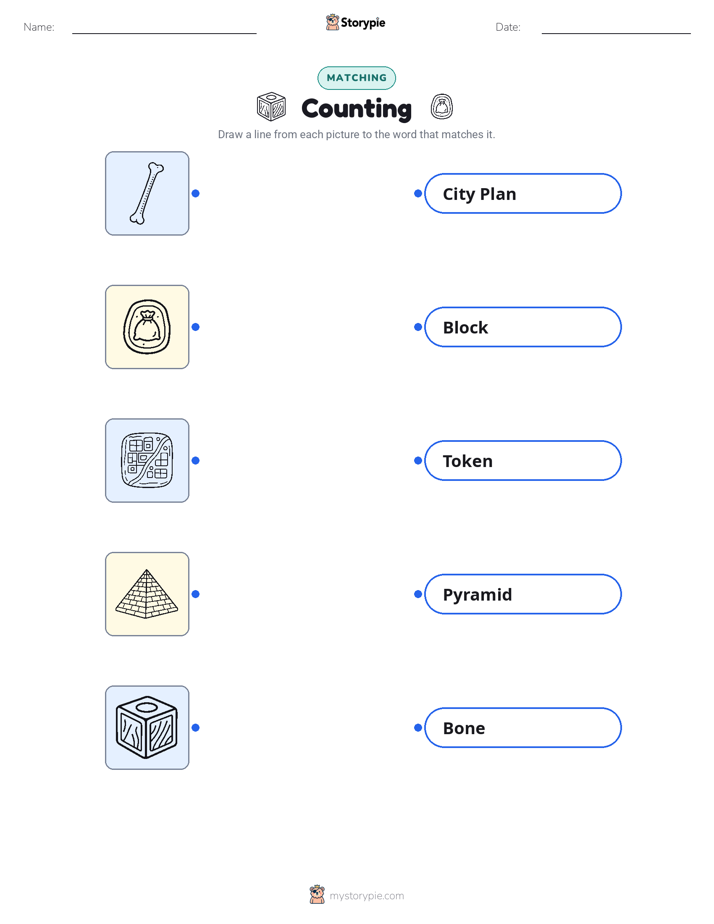
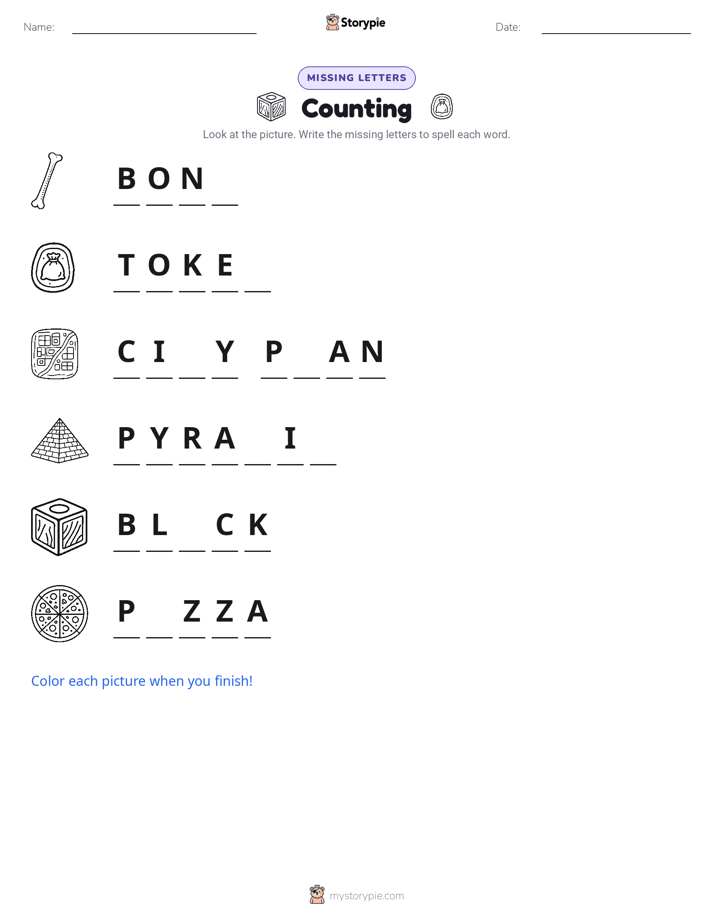
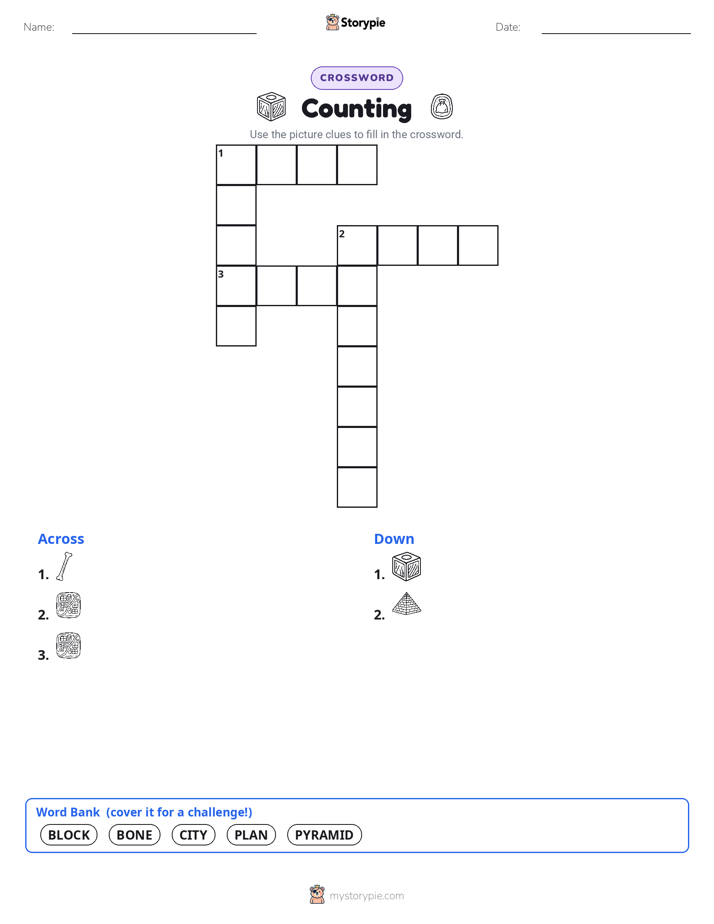
A very, very long time ago, maybe even 20,000 years ago during the Stone Age, people would scratch lines on bones to keep track of me. One little scratch for each day that passed, or for each big animal they saw. It was their special way of remembering. Thousands of years later, around 8,000 BCE in a place called Mesopotamia, farmers used tiny clay shapes to help them. A little clay cone might mean one jar of grain, and a clay sphere might mean a bigger basket of it. Then, in ancient Egypt around 3,000 BCE, people started drawing pictures for numbers. A simple line was one, but a picture of a beautiful flower meant one thousand. The numbers you use every day are extra special. They were invented in India over 1,500 years ago. The most amazing part of their idea was the number zero. Zero was like a superhero. It made it easy to write down really big numbers like 10 or 100, which was very tricky to do before.
The Story of Counting
How many stars do you think are in the sky? How many fingers are on your hand? How many cookies are on the plate? That little question you feel inside, the one that wants to know “how many,” that’s me. Before people even had words for numbers, they still knew me. They could look at a forest and see one wolf or a whole pack of them. They could find one yummy berry or a whole bush full of them. I am the tiny voice inside your head that asks, “Is there enough?” or “How many more do we need?”. I help you see the world in ones, twos, and lots and lots. It’s so nice to meet you. I am Counting.
A very, very long time ago, maybe even 20,000 years ago during the Stone Age, people would scratch lines on bones to keep track of me. One little scratch for each day that passed, or for each big animal they saw. It was their special way of remembering. Thousands of years later, around 8,000 BCE in a place called Mesopotamia, farmers used tiny clay shapes to help them. A little clay cone might mean one jar of grain, and a clay sphere might mean a bigger basket of it. Then, in ancient Egypt around 3,000 BCE, people started drawing pictures for numbers. A simple line was one, but a picture of a beautiful flower meant one thousand. The numbers you use every day are extra special. They were invented in India over 1,500 years ago. The most amazing part of their idea was the number zero. Zero was like a superhero. It made it easy to write down really big numbers like 10 or 100, which was very tricky to do before.
Today, I am everywhere you look. I am in the numbers on a clock that tell you when it’s time to play. I am in the recipe that tells your grown-up how many cups of flour to use for a yummy cake. I help scientists launch rockets all the way to the moon, and I help you share your toys fairly with a friend so everyone gets a turn. Every time you play a board game and move your piece, build with blocks and see how tall your tower is, or sing a song with a steady beat, I am there with you. I am your partner in exploring, creating, and understanding everything around you. With me, you can always figure out just how many.
Wow facts
About
Counting is the fundamental mathematical process of determining the number of elements in a group. Its history spans from prehistoric tally marks to the development of complex numeral systems and the revolutionary concept of zero.
Take a Quiz
Question 1 of 4
Why did people in the Stone Age scratch lines on bones?
Explore next


Want to do even more?
Go beyond exploring. Unlock tools that turn every story into real learning.

Storypie Plus for families
Full stories, quizzes, and printables. Nights and car rides, sorted.
- Unlimited audio stories
- Create Mode: your child stars in the story
- Offline downloads
- Printable worksheets & coloring pages

Why Storypie for Schools
Students engaged. Prep in seconds. Evenings back to you.
- Worksheets & Quizzes
- Classroom Management
- Formative Assessment
- Custom Curriculum & Lesson Plans
- 27 Languages

Why Storypie for Homeschool
Curriculum done. They'll ask for more. Hours back in your day.
- Worksheet Generator
- First-Person Audio Stories
- Built-in Comprehension Quizzes
- Custom Curriculum & Lesson Plans
- Print & Go Activities