English

Cricket
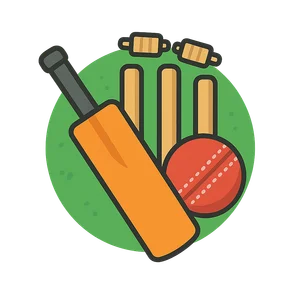
Cricket is a bat-and-ball game played between two teams of eleven players on a field with a 22-yard pitch.
Reads at Grades 6–8 Listens at Grades 4–8
Print & create
Answer keys·No prep·Free with an account
28 worksheets · answer keys · full story · quiz · Ages 10-12 · CEFR B2
Plus adds 244,000+ more stories in 27 languages, audio for every one, and printables for all of them.
Just want Cricket?

Imagine a vast, green field under a wide-open sky. The air is still, filled with a quiet tension you can almost touch. Then, a figure begins to run, faster and faster, before launching a small, hard, red ball through the air. At the other end, a person stands ready with a flat-faced willow bat. There is a sharp, satisfying crack as wood meets leather, sending the ball speeding across the grass. Players in crisp white uniforms sprint, dive, and throw, their movements a mix of explosive energy and graceful precision. The crowd murmurs, then erupts in a roar of applause. It is a game that can last for hours, even days, a slow-burning drama built on strategy and skill. A single mistake can change everything, yet a moment of brilliance can create a legend. I am a game of patience and power, of friendship and fierce competition. I am Cricket.
My childhood was spent in the grassy fields of south-east England during the 16th century. Long before grand stadiums and cheering crowds, I was a simple pastime for children in rural villages. They would use a matted lump of wool as a ball and a stick as a bat, playing on land where sheep had grazed. For a long time, my existence was just a whisper on the breeze, a game passed down through generations. The first time my name was ever written down was in a court case in the year 1597. A man named John Derrick, who was then fifty-nine years old, testified that he and his friends had played a game called 'creckett' on a particular piece of land way back around the year 1550. As the 17th century unfolded, adults began to see the fun and challenge in me, and I started to grow up. The stakes got higher, and people wanted to ensure everyone played by the same standards. This led to a very important moment for me in 1744, when my first official rulebook, the 'Laws of Cricket,' was written down. Suddenly, I had structure and consistency. My transformation wasn't complete until 1787, when the Marylebone Cricket Club, or MCC, was founded in London. They became my official guardian, a role they still hold today, carefully watching over my laws and ensuring my spirit is preserved.
The Story of Cricket
Imagine a vast, green field under a wide-open sky. The air is still, filled with a quiet tension you can almost touch. Then, a figure begins to run, faster and faster, before launching a small, hard, red ball through the air. At the other end, a person stands ready with a flat-faced willow bat. There is a sharp, satisfying crack as wood meets leather, sending the ball speeding across the grass. Players in crisp white uniforms sprint, dive, and throw, their movements a mix of explosive energy and graceful precision. The crowd murmurs, then erupts in a roar of applause. It is a game that can last for hours, even days, a slow-burning drama built on strategy and skill. A single mistake can change everything, yet a moment of brilliance can create a legend. I am a game of patience and power, of friendship and fierce competition. I am Cricket.
My childhood was spent in the grassy fields of south-east England during the 16th century. Long before grand stadiums and cheering crowds, I was a simple pastime for children in rural villages. They would use a matted lump of wool as a ball and a stick as a bat, playing on land where sheep had grazed. For a long time, my existence was just a whisper on the breeze, a game passed down through generations. The first time my name was ever written down was in a court case in the year 1597. A man named John Derrick, who was then fifty-nine years old, testified that he and his friends had played a game called 'creckett' on a particular piece of land way back around the year 1550. As the 17th century unfolded, adults began to see the fun and challenge in me, and I started to grow up. The stakes got higher, and people wanted to ensure everyone played by the same standards. This led to a very important moment for me in 1744, when my first official rulebook, the 'Laws of Cricket,' was written down. Suddenly, I had structure and consistency. My transformation wasn't complete until 1787, when the Marylebone Cricket Club, or MCC, was founded in London. They became my official guardian, a role they still hold today, carefully watching over my laws and ensuring my spirit is preserved.
From my home in England, a great adventure began. During the 18th and 19th centuries, I traveled across the oceans, carried in the hearts of sailors, soldiers, and colonists. I found new homes on the dusty grounds of India, the sun-baked pitches of Australia, the vibrant islands of the West Indies, and the sweeping landscapes of South Africa. In each new place, I was adopted and adapted, yet I remained myself. My first international match was not where you might expect. It took place in 1844 between the United States and Canada, showing just how far I had already traveled. But my most famous rivalry was born from my journey to the southern hemisphere. On March 15th, 1877, in Melbourne, Australia, the first-ever official Test match began between Australia and England. This was the ultimate challenge, a game played over five days to truly test the skill, stamina, and mental strength of the two teams. A few years later, in 1882, this rivalry was given a legendary name. After Australia defeated England on English soil for the first time, a London newspaper printed a joke obituary, stating that English cricket had died and 'the body will be cremated and the ashes taken to Australia'. This sparked the legendary contest known as 'The Ashes,' a symbol of the deep and passionate rivalry between the two nations that continues to capture the world's imagination.
Even with such a long history, I have never been one to stand still. The world changes, and I change with it. As life became faster, people wanted a version of me that could be completed in a single day. So, on January 5th, 1971, the first One-Day International (ODI) was played, packing all my drama into a shorter, more explosive format. This led to one of my proudest moments: the first Cricket World Cup in 1975, where nations from all over the globe came together to compete. More recently, I evolved again. In 2003, my youngest and fastest form was born: Twenty20, or T20, a whirlwind of a game lasting only a few hours. Through all these changes, my core purpose remains the same. I am more than just runs and wickets; I am about the 'spirit of cricket'. This is the unwritten code of fair play, respect for your opponents, and unwavering teamwork. It is this spirit that truly connects people, creating friendships and memories that last a lifetime, long after the final ball has been bowled.
Wow facts
About
Cricket is a bat-and-ball game played between two teams of eleven players on a field with a 22-yard pitch. It is one of the world's most popular sports in certain countries, particularly in South Asia, Australia, and England, known for its rich history and emphasis on fair play.
Take a Quiz
Question 1 of 5
Summarize how cricket evolved from a children's pastime into a globally recognized sport, mentioning at least two key historical moments from the story.
Explore next






Want to do even more?
Go beyond exploring. Unlock tools that turn every story into real learning.

Storypie Plus for families
Full stories, quizzes, and printables. Nights and car rides, sorted.
- Unlimited audio stories
- Create Mode: your child stars in the story
- Offline downloads
- Printable worksheets & coloring pages

Why Storypie for Schools
Students engaged. Prep in seconds. Evenings back to you.
- Worksheets & Quizzes
- Classroom Management
- Formative Assessment
- Custom Curriculum & Lesson Plans
- 27 Languages

Why Storypie for Homeschool
Curriculum done. They'll ask for more. Hours back in your day.
- Worksheet Generator
- First-Person Audio Stories
- Built-in Comprehension Quizzes
- Custom Curriculum & Lesson Plans
- Print & Go Activities