English

Cubism
An early-20th-century art movement, developed primarily by Pablo Picasso and Georges Braque…
Reads at Grades 6–8 Listens at Grades 4–8
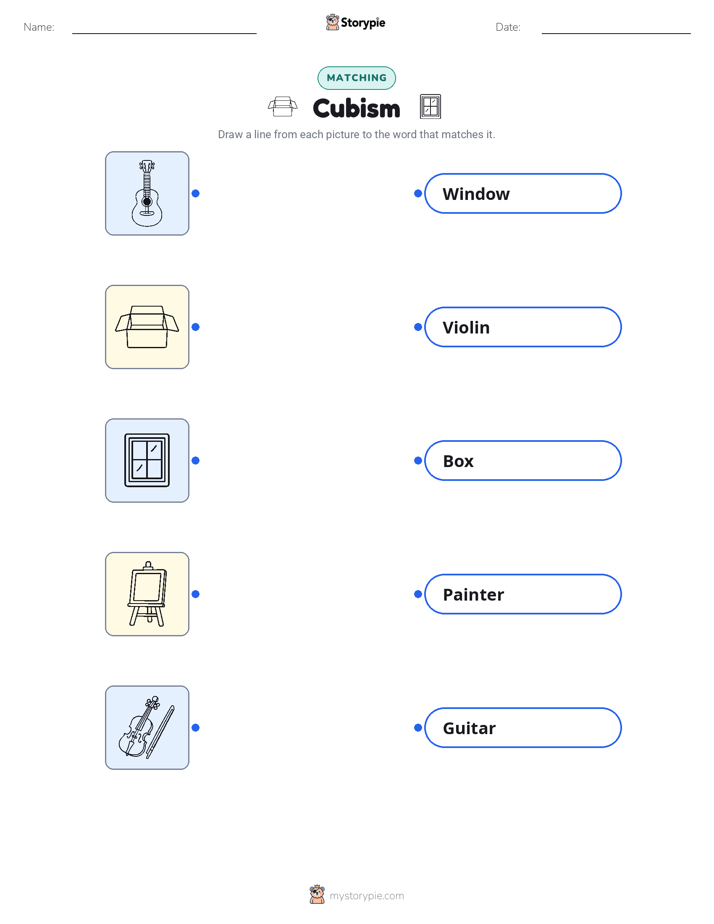
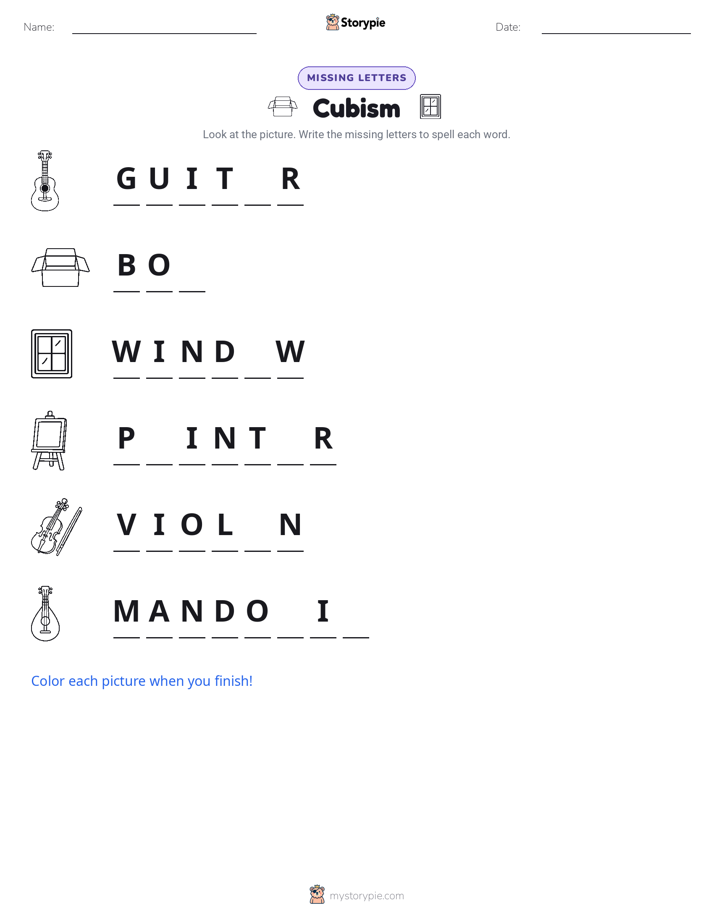
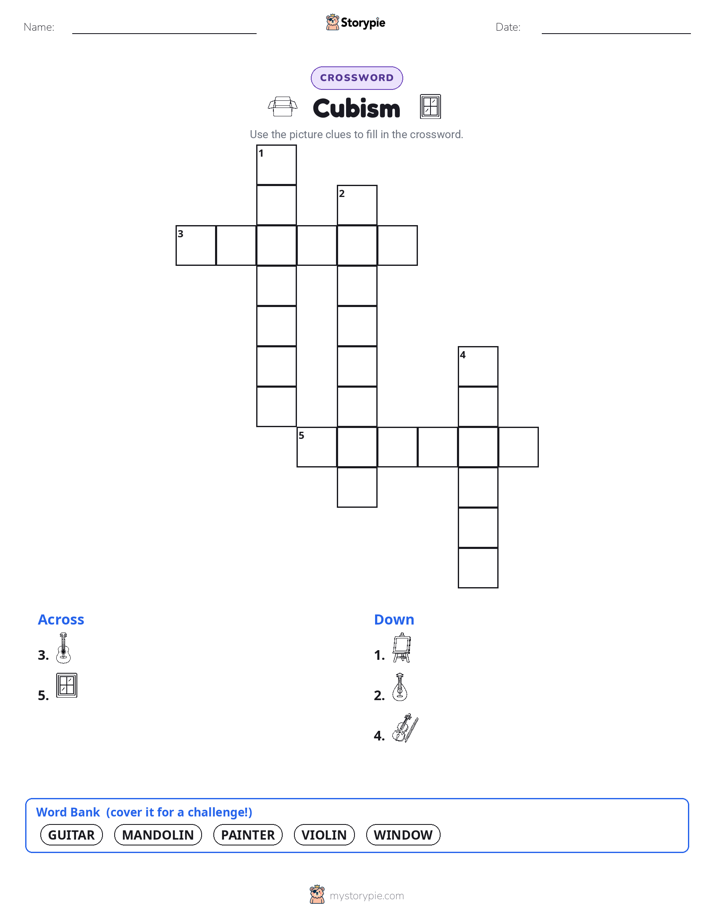
Print & create
Answer keys·No prep·Free with an account
28 worksheets · answer keys · full story · quiz · Ages 10-12 · CEFR B2
Plus adds 164,000+ more stories in 27 languages, audio for every one, and printables for all of them.
Just want Cubism?
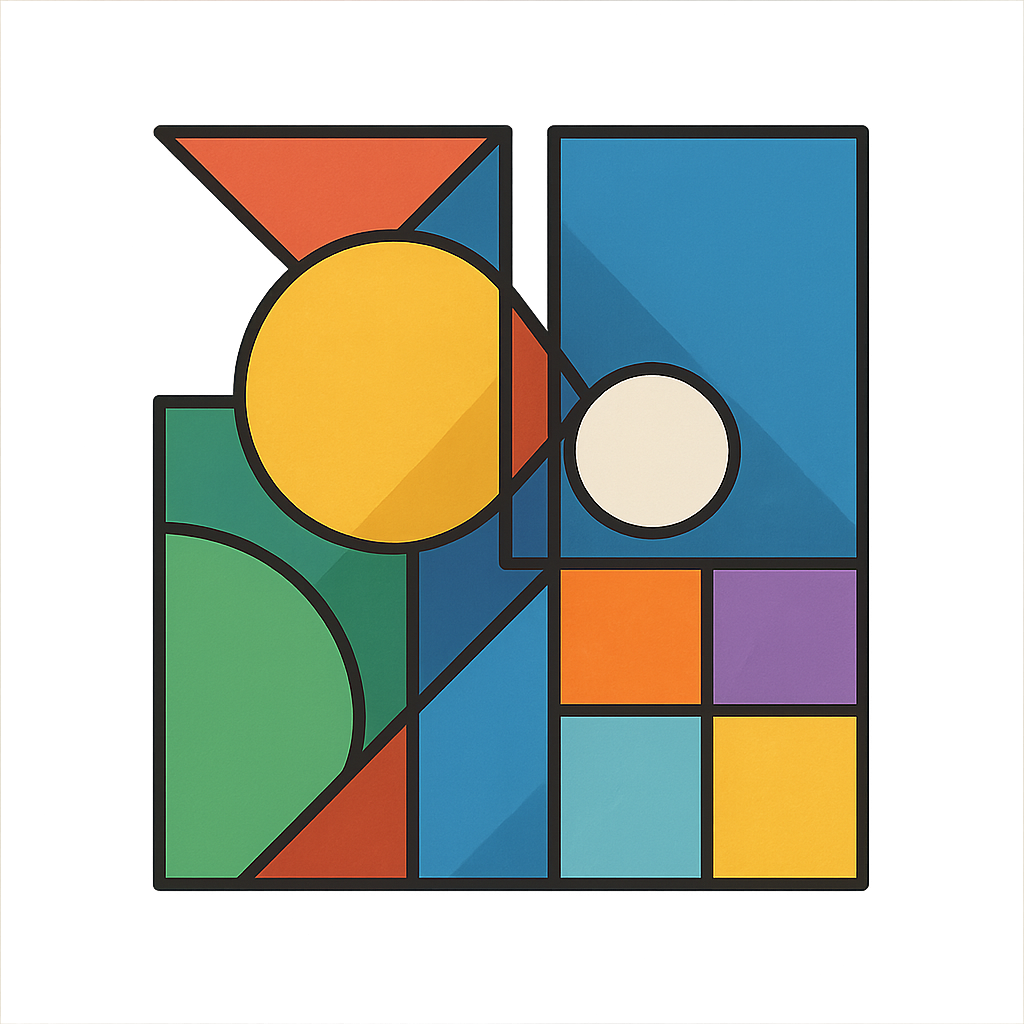
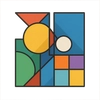
Imagine you are holding a guitar. You can see its smooth, curved front. You can turn it to see its flat back, and then its long, narrow side. But what if you could see all those parts at the very same moment? Picture a cardboard box, neatly folded. Now, imagine unfolding it until it lies completely flat. Suddenly, you can see the top, the bottom, and all four sides simultaneously, arranged on one surface. For centuries, art tried to show the world from a single window, a single viewpoint. A painter would stand in one spot and paint a person or a landscape exactly as they saw it from that position. It was realistic, yes, but was it the whole truth? Does a single glance truly capture everything an object is? I didn't think so. I believed that to truly know something—a face, a violin, a village on a hill—you had to see it from the front, the back, the side, from above, and from below, all at once. I wanted to show the memory of an object, the experience of it. Hello, I am Cubism. I am not a painting, but the revolutionary idea behind thousands of paintings. I am a new way of seeing, a style of art that decided to shatter the old rules and show you the world from every possible angle in a single glance.
My story begins in the bustling, artistic heart of Paris, France, around the year 1907. I was born from the minds of two brilliant and daring young artists who were also the best of friends: a fiery Spaniard named Pablo Picasso and a thoughtful Frenchman named Georges Braque. They were tired of the old ways. They had seen the work of an older painter, Paul Cézanne, who treated nature in terms of the cylinder, the sphere, and the cone. This idea—that everything could be broken down into basic geometric shapes—sparked something in them. The moment I truly exploded into the world was in 1907, with Picasso's shocking painting, 'Les Demoiselles d'Avignon.' It showed five figures with sharp, angular bodies and fragmented faces that looked like African masks. It was bold, jarring, and unlike anything seen before. This was the beginning. From about 1909 to 1912, my first phase, known as Analytic Cubism, took shape. Picasso and Braque worked so closely they said they were like two mountaineers roped together. They would take a subject, like a person playing a mandolin, and deconstruct it on the canvas, breaking it into countless geometric planes and facets. They used a palette of muted browns, grays, and ochres so that color wouldn't distract from the form. They were analyzing the subject, piece by piece. Then, starting around 1912, I evolved. In my second phase, called Synthetic Cubism, my creators began to build images back up. They introduced brighter colors and, most radically, they started adding real-world materials to their canvases. Scraps of newspaper, wallpaper, and labels were glued right onto the painting, a brand-new technique they called collage. They were no longer just analyzing the world; they were synthesizing it, creating something entirely new from different parts.
I Am Cubism
Imagine you are holding a guitar. You can see its smooth, curved front. You can turn it to see its flat back, and then its long, narrow side. But what if you could see all those parts at the very same moment? Picture a cardboard box, neatly folded. Now, imagine unfolding it until it lies completely flat. Suddenly, you can see the top, the bottom, and all four sides simultaneously, arranged on one surface. For centuries, art tried to show the world from a single window, a single viewpoint. A painter would stand in one spot and paint a person or a landscape exactly as they saw it from that position. It was realistic, yes, but was it the whole truth? Does a single glance truly capture everything an object is? I didn't think so. I believed that to truly know something—a face, a violin, a village on a hill—you had to see it from the front, the back, the side, from above, and from below, all at once. I wanted to show the memory of an object, the experience of it. Hello, I am Cubism. I am not a painting, but the revolutionary idea behind thousands of paintings. I am a new way of seeing, a style of art that decided to shatter the old rules and show you the world from every possible angle in a single glance.
My story begins in the bustling, artistic heart of Paris, France, around the year 1907. I was born from the minds of two brilliant and daring young artists who were also the best of friends: a fiery Spaniard named Pablo Picasso and a thoughtful Frenchman named Georges Braque. They were tired of the old ways. They had seen the work of an older painter, Paul Cézanne, who treated nature in terms of the cylinder, the sphere, and the cone. This idea—that everything could be broken down into basic geometric shapes—sparked something in them. The moment I truly exploded into the world was in 1907, with Picasso's shocking painting, 'Les Demoiselles d'Avignon.' It showed five figures with sharp, angular bodies and fragmented faces that looked like African masks. It was bold, jarring, and unlike anything seen before. This was the beginning. From about 1909 to 1912, my first phase, known as Analytic Cubism, took shape. Picasso and Braque worked so closely they said they were like two mountaineers roped together. They would take a subject, like a person playing a mandolin, and deconstruct it on the canvas, breaking it into countless geometric planes and facets. They used a palette of muted browns, grays, and ochres so that color wouldn't distract from the form. They were analyzing the subject, piece by piece. Then, starting around 1912, I evolved. In my second phase, called Synthetic Cubism, my creators began to build images back up. They introduced brighter colors and, most radically, they started adding real-world materials to their canvases. Scraps of newspaper, wallpaper, and labels were glued right onto the painting, a brand-new technique they called collage. They were no longer just analyzing the world; they were synthesizing it, creating something entirely new from different parts.
At first, the world didn't know what to make of me. When Georges Braque first exhibited his landscapes made of geometric forms, a critic named Louis Vauxcelles mockingly said it looked like it was full of 'little cubes.' The name stuck, and I became Cubism. Many people were confused, even angered. They said my paintings didn't look like reality. But that was precisely my point. I wasn't trying to be a photograph. I was showing a deeper reality, an intellectual and visual experience. My influence was enormous and spread like wildfire. I taught artists and thinkers that there is no single, objective truth, only different viewpoints. This idea leaped from the canvas into other arts. Sculptors began creating three-dimensional works that looked different from every angle, and architects designed buildings with geometric planes and intersecting forms. I changed the course of art forever, paving the way for countless other modern movements. My lesson is not just for artists. I am a reminder to you, every day, that the world is complex. When you face a problem or disagree with a friend, remember me. Try to see the situation from their side, from above, from a completely different angle. By combining different perspectives, you can deconstruct a problem and synthesize a new, more complete, and often more beautiful solution. I am more than just shapes and colors on a canvas; I am an invitation to see the whole picture.
Wow facts
About
An early-20th-century art movement, developed primarily by Pablo Picasso and Georges Braque, that depicts subjects from multiple viewpoints simultaneously using geometric shapes.
Take a Quiz
Question 1 of 5
In your own words, describe the two main phases of Cubism mentioned in the story and how they were different.
Explore next


Want to do even more?
Go beyond exploring. Unlock tools that turn every story into real learning.

Storypie Plus for families
Full stories, quizzes, and printables. Nights and car rides, sorted.
- Unlimited audio stories
- Create Mode: your child stars in the story
- Offline downloads
- Printable worksheets & coloring pages

Why Storypie for Schools
Students engaged. Prep in seconds. Evenings back to you.
- Worksheets & Quizzes
- Classroom Management
- Formative Assessment
- Custom Curriculum & Lesson Plans
- 27 Languages

Why Storypie for Homeschool
Curriculum done. They'll ask for more. Hours back in your day.
- Worksheet Generator
- First-Person Audio Stories
- Built-in Comprehension Quizzes
- Custom Curriculum & Lesson Plans
- Print & Go Activities