English

Currency
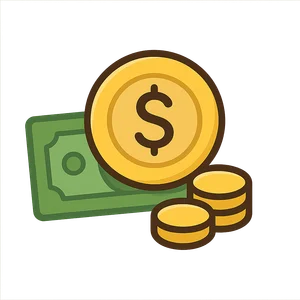
Currency is a system of money in general use in a particular country or economic system…
Reads at Grades 3–5 Listens at Grades 1–5
 Screen-free speaker. Built for your kids.
No card, no commitment. One email when there is real news, and one click to stop.
Print & create
Answer keys·No prep·Free with an account
28 worksheets · answer keys · full story · quiz · Ages 8-10 · CEFR B1
Plus adds 102,000+ more stories in 27 languages, audio for every one, and printables for all of them.
Just want Currency?

Have you ever held a secret power in your hand? Sometimes I’m a cool, round piece of metal, shiny and smooth. Other times, I’m a crisp piece of paper, covered in pictures and important-looking words. You might trade me for a sweet, cold ice cream cone on a hot day, or for a book that takes you on an adventure. I can be saved up in a jar, growing bit by bit, until there’s enough of me to get that toy you’ve been dreaming of. What am I? I’m the ticket to a movie, the price of a bus ride, and the gift in a birthday card. I am Currency.
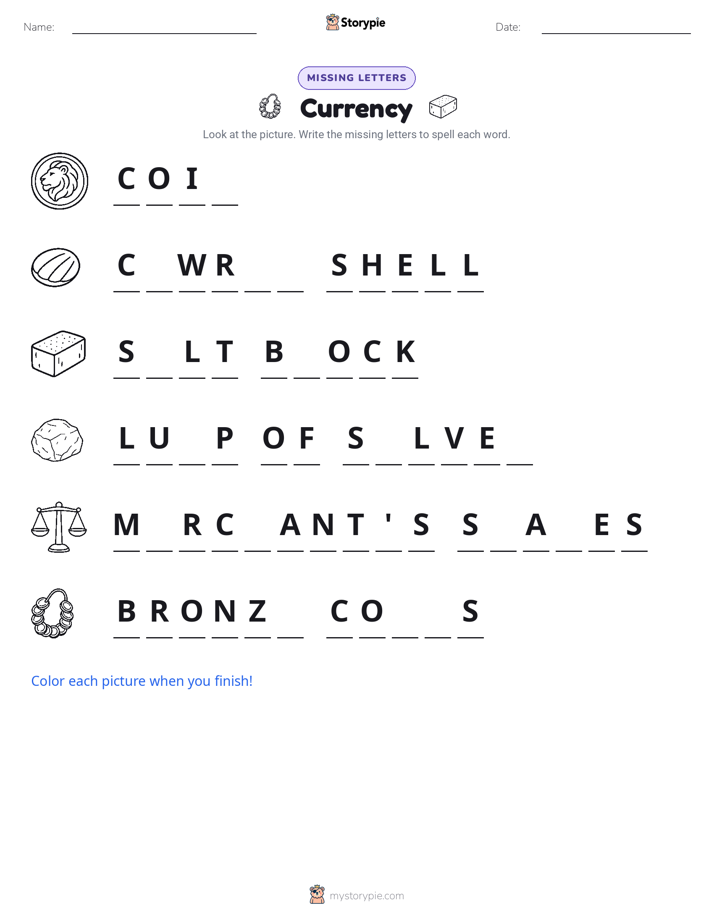
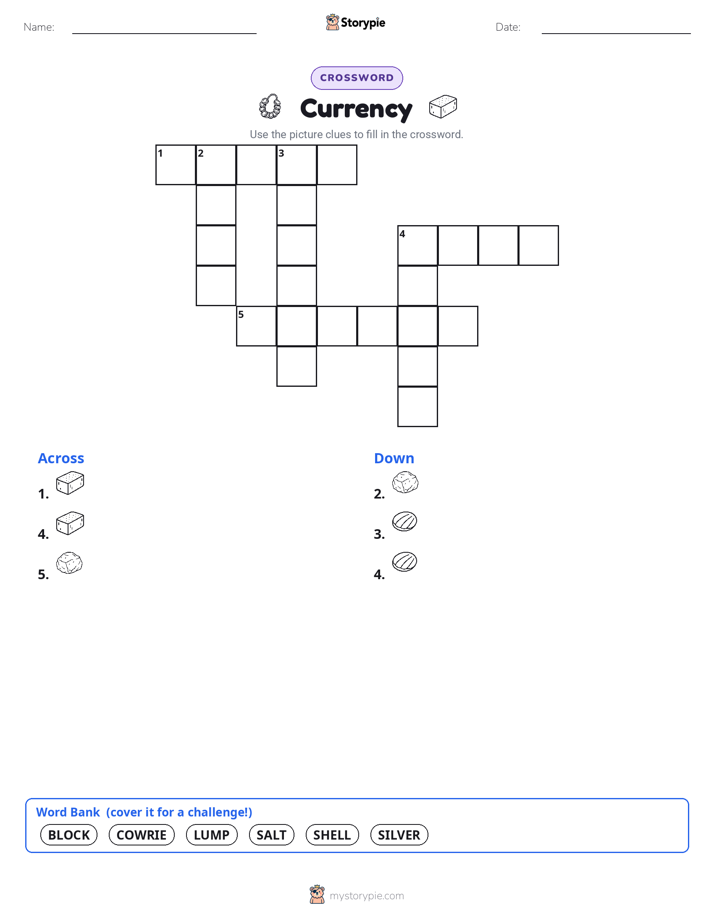
Before I existed, life was a bit tricky. Imagine you were a chicken farmer who needed new shoes. You’d have to find a shoemaker who wanted chickens. This way of trading things directly is called bartering, and it could be very complicated. That’s when people got a clever idea. They decided to use special items that everyone agreed were valuable. In China, as far back as 1200 BCE, people used beautiful cowrie shells. In other places, people used salt, grain, or cattle. I was simple back then, but I made trading much easier. Then, around 600 BCE, the Lydians, who lived in a kingdom in modern-day Turkey, had a revolutionary thought. They started making me into small, round coins from a metal called electrum. They stamped each coin to prove it was a certain weight and value. Suddenly, everyone knew exactly what I was worth, and I could jingle in your pocket.
As exciting as being a coin was, I could also be very heavy. Imagine carrying a hundred coins to the market. So, I had to change again. In China, during the Tang Dynasty around the 7th century, merchants started leaving their heavy coins with a trusted person. In return, they got a paper note promising they could get their coins back anytime. These notes were much lighter and easier to carry. People started trading these paper promises instead of the coins themselves. By the 11th century, during the Song Dynasty, the government began printing the world’s first official paper money. When the Italian explorer Marco Polo traveled to China in the late 13th century, he was astonished. He had never seen people using paper as a form of payment, and he wrote all about me in his famous book.
A Pocket Full of Possibilities
Have you ever held a secret power in your hand? Sometimes I’m a cool, round piece of metal, shiny and smooth. Other times, I’m a crisp piece of paper, covered in pictures and important-looking words. You might trade me for a sweet, cold ice cream cone on a hot day, or for a book that takes you on an adventure. I can be saved up in a jar, growing bit by bit, until there’s enough of me to get that toy you’ve been dreaming of. What am I? I’m the ticket to a movie, the price of a bus ride, and the gift in a birthday card. I am Currency.
Before I existed, life was a bit tricky. Imagine you were a chicken farmer who needed new shoes. You’d have to find a shoemaker who wanted chickens. This way of trading things directly is called bartering, and it could be very complicated. That’s when people got a clever idea. They decided to use special items that everyone agreed were valuable. In China, as far back as 1200 BCE, people used beautiful cowrie shells. In other places, people used salt, grain, or cattle. I was simple back then, but I made trading much easier. Then, around 600 BCE, the Lydians, who lived in a kingdom in modern-day Turkey, had a revolutionary thought. They started making me into small, round coins from a metal called electrum. They stamped each coin to prove it was a certain weight and value. Suddenly, everyone knew exactly what I was worth, and I could jingle in your pocket.
As exciting as being a coin was, I could also be very heavy. Imagine carrying a hundred coins to the market. So, I had to change again. In China, during the Tang Dynasty around the 7th century, merchants started leaving their heavy coins with a trusted person. In return, they got a paper note promising they could get their coins back anytime. These notes were much lighter and easier to carry. People started trading these paper promises instead of the coins themselves. By the 11th century, during the Song Dynasty, the government began printing the world’s first official paper money. When the Italian explorer Marco Polo traveled to China in the late 13th century, he was astonished. He had never seen people using paper as a form of payment, and he wrote all about me in his famous book.
Today, I’ve transformed in ways Marco Polo could never have imagined. I still exist as coins and paper bills, but I’m also invisible. I’m the numbers that flash on a screen when your parents buy groceries with a card. I can zip across the world in an instant as a digital transfer to help someone far away. I help people save for the future, start new businesses, and support causes they believe in. I’m not just a thing; I’m an idea—an agreement between people that helps us work together, share our talents, and build a better world. I am a tool that helps turn your hard work and bright ideas into reality.
Wow facts
About
Currency is a system of money in general use in a particular country or economic system, used as a medium of exchange for goods and services.
Take a Quiz
Question 1 of 5
In the story, what does the word 'bartering' mean?
Explore next




Want to do even more?
Go beyond exploring. Unlock tools that turn every story into real learning.

Storypie Plus for families
Full stories, quizzes, and printables. Nights and car rides, sorted.
- Unlimited audio stories
- Create Mode: your child stars in the story
- Offline downloads
- Printable worksheets & coloring pages

Why Storypie for Schools
Students engaged. Prep in seconds. Evenings back to you.
- Worksheets & Quizzes
- Classroom Management
- Formative Assessment
- Custom Curriculum & Lesson Plans
- 27 Languages

Why Storypie for Homeschool
Curriculum done. They'll ask for more. Hours back in your day.
- Worksheet Generator
- First-Person Audio Stories
- Built-in Comprehension Quizzes
- Custom Curriculum & Lesson Plans
- Print & Go Activities