English

Dance (Why People Dance)
Dance is the art of moving the body rhythmically, usually to music, used as a form of emotional expression…
Reads at Grades 6–8 Listens at Grades 4–8
Print & create
Answer keys·No prep·Free with an account
28 worksheets · answer keys · full story · quiz · Ages 10-12 · CEFR B2
Plus adds 244,000+ more stories in 27 languages, audio for every one, and printables for all of them.
Just want Dance (Why People Dance)?
Have you ever felt a beat so strong your heart seemed to thump along with it? Has a soaring melody ever made you want to spin in circles, arms outstretched, just for the joy of it? That feeling, that undeniable urge to move your body to a rhythm, to express a feeling without a single word, is me. It’s a pulse that has lived inside people since the very beginning, a secret language shared between the body and the soul. For thousands of years, I was a feeling without a name, a natural response to joy, sorrow, fear, and celebration. I was the stomp of a hunter's foot, the sway of a mother soothing her child, the leap of a person celebrating a good harvest. I existed in the sinews and muscles of every human, waiting for a reason to emerge. It was only after centuries of moving together that people finally gave me a name. I am Dance.
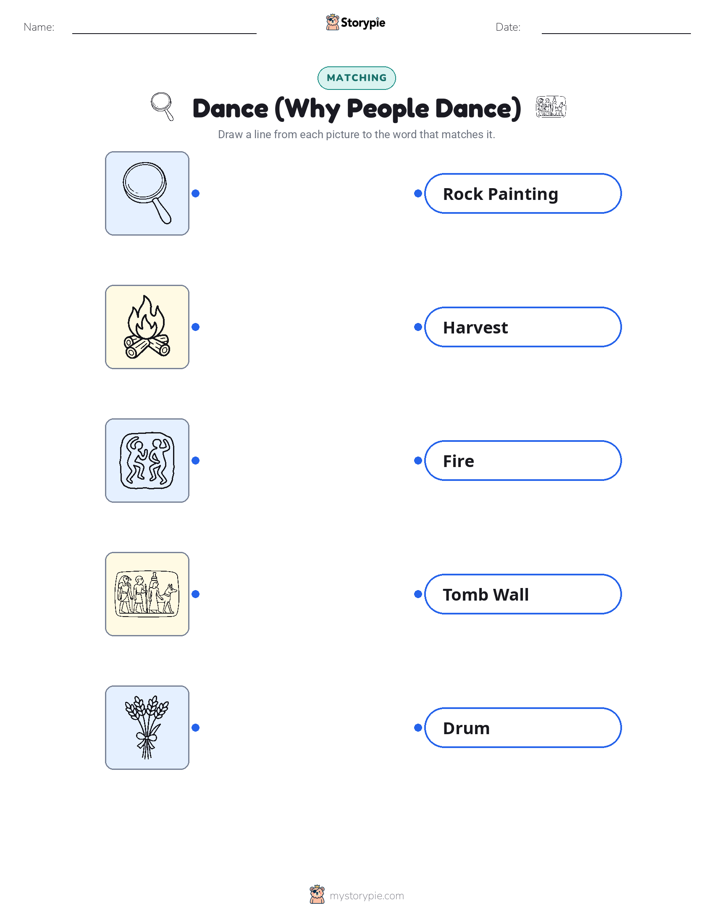
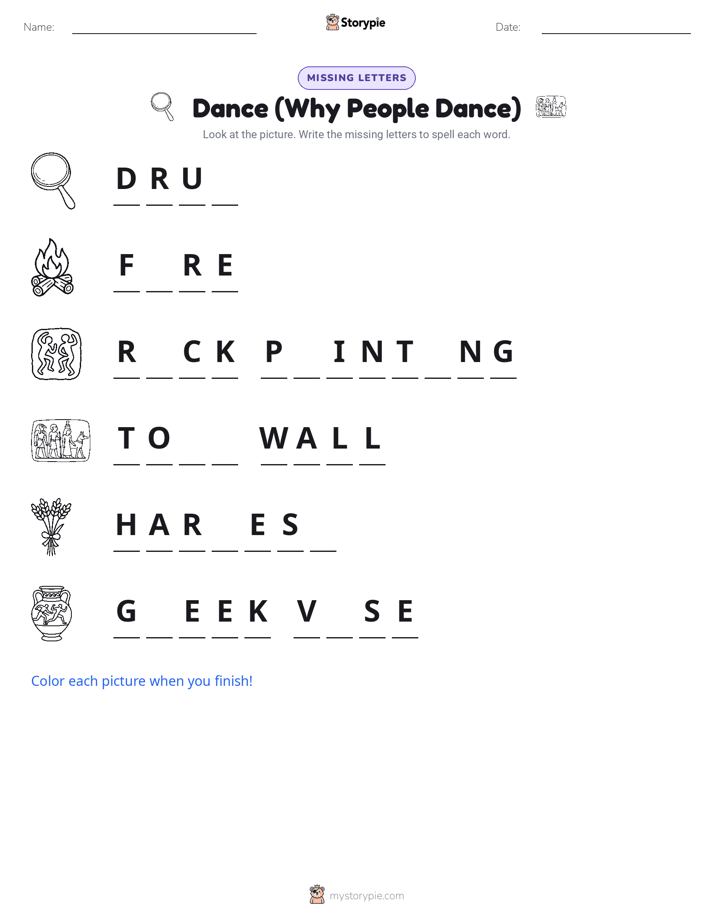
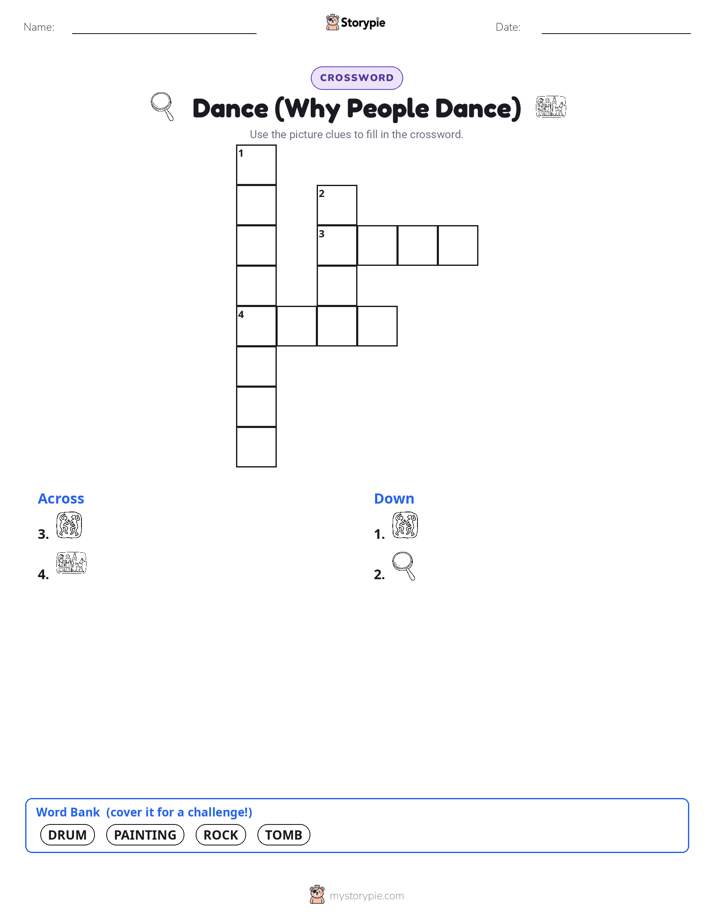
My first real steps with humanity were not taken on polished floors or grand stages. They happened on dusty earth, around crackling fires, and inside the shelter of caves. Long before there were written words, I was the library of human history. To see my earliest portraits, you would have to travel back in time about 9,000 years to the Bhimbetka rock shelters in India. There, painted on ancient stone, are figures of people moving together, their bodies captured in rhythmic poses. They used me to tell the stories of their lives. A little later, in ancient Egypt around 3300 BCE, I appeared on the walls of tombs. There, you can see people in lines and circles, their movements part of solemn rituals for their gods and elaborate ceremonies honoring their pharaohs. For these early civilizations, I was not simply entertainment. I was a vital connection to the spiritual world, a way to ensure a good harvest, a method for preparing warriors for battle, and the glue that held a community together. I was how they remembered their past and prayed for their future.
The Story of Dance
Have you ever felt a beat so strong your heart seemed to thump along with it? Has a soaring melody ever made you want to spin in circles, arms outstretched, just for the joy of it? That feeling, that undeniable urge to move your body to a rhythm, to express a feeling without a single word, is me. It’s a pulse that has lived inside people since the very beginning, a secret language shared between the body and the soul. For thousands of years, I was a feeling without a name, a natural response to joy, sorrow, fear, and celebration. I was the stomp of a hunter's foot, the sway of a mother soothing her child, the leap of a person celebrating a good harvest. I existed in the sinews and muscles of every human, waiting for a reason to emerge. It was only after centuries of moving together that people finally gave me a name. I am Dance.
My first real steps with humanity were not taken on polished floors or grand stages. They happened on dusty earth, around crackling fires, and inside the shelter of caves. Long before there were written words, I was the library of human history. To see my earliest portraits, you would have to travel back in time about 9,000 years to the Bhimbetka rock shelters in India. There, painted on ancient stone, are figures of people moving together, their bodies captured in rhythmic poses. They used me to tell the stories of their lives. A little later, in ancient Egypt around 3300 BCE, I appeared on the walls of tombs. There, you can see people in lines and circles, their movements part of solemn rituals for their gods and elaborate ceremonies honoring their pharaohs. For these early civilizations, I was not simply entertainment. I was a vital connection to the spiritual world, a way to ensure a good harvest, a method for preparing warriors for battle, and the glue that held a community together. I was how they remembered their past and prayed for their future.
As societies grew more complex, so did I. I found my way out of the fields and temples and onto the stage. In ancient Greece, around the 6th century BCE, I became a star. I was an essential part of their famous theatrical plays and their enormous religious festivals, especially the ones held to honor Dionysus, the god of wine and celebration. I helped tell the dramatic stories of heroes and gods to thousands of citizens. Centuries later, I took a great leap into the glittering royal courts of the Italian Renaissance during the 15th century. It was there that a very structured and elegant version of me was born: ballet. Noblemen and women performed intricate, coordinated movements at their lavish parties. This new form of me was so admired that when an Italian noblewoman named Catherine de' Medici became the queen of France in the 16th century, she brought her Italian dancing masters with her. The French court fell in love with me. In fact, King Louis XIV of France adored me so much that he danced in many performances himself, earning the nickname the “Sun King.” He believed I was so important that in 1661, he founded the Royal Academy of Dance, the world's first ballet school, turning me from a courtly pastime into a professional art form with rules, techniques, and a language all my own.
While ballet was pointing its toes and leaping across European stages, I was alive and well in thousands of other forms all over the globe. Each culture shaped me into a unique reflection of its own story and spirit. In New Zealand, I became the powerful and intimidating Haka, a ceremonial performance of the Māori people used to welcome distinguished guests or to challenge opponents. In India, I took the form of the graceful and expressive Bharatanatyam, where dancers use intricate hand gestures and facial expressions to tell ancient stories of Hindu gods. In the vibrant streets of Brazil, I became the joyful and energetic Samba, a symbol of national celebration and identity. I was constantly changing, a mirror to the people who embraced me. Then, in the 20th century, some performers felt that the strict rules of classical ballet were like a cage. A brave American pioneer named Martha Graham decided to break free. She created a new way of moving—what we now call modern dance—that was grounded, direct, and full of raw emotion. She and others like her proved that I could be reinvented again and again to express the complicated feelings of the modern world, from fear and anger to profound joy.
Today, I am still moving with you, more present than ever. You can see me in the viral challenges that sweep across your phones, connecting millions of people in a shared moment of fun. You can find me on the stage at your school talent show, in the grand halls where professional ballet companies perform, and in the joyful circles at family weddings. I am there when you put on your headphones and move to the music in the privacy of your own room, letting the rhythm take over. My story is as long as human history, but it is also as new as the latest song. I am a universal language that needs no translation. I am a way to share a story, celebrate a culture, and connect with another person without saying a word. I remind you that sometimes, a simple step, a powerful leap, or a joyful twirl can be one of the most honest and powerful ways to feel alive.
Wow facts
About
Dance is the art of moving the body rhythmically, usually to music, used as a form of emotional expression, social interaction, or in a spiritual or performance setting.
Take a Quiz
Question 1 of 5
According to the story, why did pioneers like Martha Graham create modern dance?
Explore next





Want to do even more?
Go beyond exploring. Unlock tools that turn every story into real learning.

Storypie Plus for families
Full stories, quizzes, and printables. Nights and car rides, sorted.
- Unlimited audio stories
- Create Mode: your child stars in the story
- Offline downloads
- Printable worksheets & coloring pages

Why Storypie for Schools
Students engaged. Prep in seconds. Evenings back to you.
- Worksheets & Quizzes
- Classroom Management
- Formative Assessment
- Custom Curriculum & Lesson Plans
- 27 Languages

Why Storypie for Homeschool
Curriculum done. They'll ask for more. Hours back in your day.
- Worksheet Generator
- First-Person Audio Stories
- Built-in Comprehension Quizzes
- Custom Curriculum & Lesson Plans
- Print & Go Activities