English

Diamond
Diamond is a solid form of the element carbon with its atoms arranged in a crystal structure…
Reads at Grades 6–8 Listens at Grades 4–8
Print & create
Answer keys·No prep·Free with an account
28 worksheets · answer keys · full story · quiz · Ages 10-12 · CEFR B2
Plus adds 244,000+ more stories in 27 languages, audio for every one, and printables for all of them.
Just want Diamond?
For billions of years, I slept deep within the Earth's mantle, a quiet dream of potential. I am made of the most common stuff of life, but I am nothing like it. Down there, more than a hundred miles beneath the ground, immense pressure and scorching heat took hold of simple carbon atoms and squeezed them into a crystal lattice of incredible strength and perfect order. I was born in darkness and silence, waiting. My journey to the world of light was violent and fast, a passenger inside a fiery magma plume that erupted through the planet's crust. When the volcanic rock cooled, I was left behind, eventually washed into a riverbed in ancient India. To the people who first picked me up from the gravel around the 4th century BCE, I didn't look like much. I was a rough, oily-looking stone, not yet the sparkling gem you know. But they sensed my power. They could not scratch or break me. They called me Vajra, which means 'thunderbolt' in their language, a name for my divine and indestructible power. You know me as Diamond.
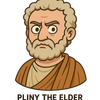
My first job was not to be beautiful, but to be strong. In India, people treasured my unmatched hardness. They used me to engrave other gems and to drill holes in hard beads, a task no other tool could perform. Soon, merchants and traders heard of my power, and I began a long journey. Tucked into pouches and carried by caravans, I traveled the winding paths of the Silk Road, crossing deserts and mountains to reach the great empires of the West. In ancient Greece and Rome, I was a curiosity of immense value. The Greeks gave me a new name, 'adamas,' which means 'unconquerable' or 'invincible.' Around 77 CE, the Roman naturalist Pliny the Elder wrote about me in his encyclopedia, 'Naturalis Historia.' He described me as the most valuable of all possessions, not just for my rarity, but because I could conquer fire and steel. For centuries, I remained a talisman of strength for kings and a tool for artisans. It was not until the Middle Ages that European royalty began to wear me as a jewel, often in my raw, unpolished form. Then, on August 17th, 1477, my destiny changed forever. Archduke Maximilian of Austria gave a ring to his beloved, Mary of Burgundy, with tiny, rough diamonds set in the shape of her initial, 'M.' It was the first recorded diamond engagement ring, and it began a tradition that would forever link my image with love and commitment.
The Story of the Unconquerable Stone
For billions of years, I slept deep within the Earth's mantle, a quiet dream of potential. I am made of the most common stuff of life, but I am nothing like it. Down there, more than a hundred miles beneath the ground, immense pressure and scorching heat took hold of simple carbon atoms and squeezed them into a crystal lattice of incredible strength and perfect order. I was born in darkness and silence, waiting. My journey to the world of light was violent and fast, a passenger inside a fiery magma plume that erupted through the planet's crust. When the volcanic rock cooled, I was left behind, eventually washed into a riverbed in ancient India. To the people who first picked me up from the gravel around the 4th century BCE, I didn't look like much. I was a rough, oily-looking stone, not yet the sparkling gem you know. But they sensed my power. They could not scratch or break me. They called me Vajra, which means 'thunderbolt' in their language, a name for my divine and indestructible power. You know me as Diamond.
My first job was not to be beautiful, but to be strong. In India, people treasured my unmatched hardness. They used me to engrave other gems and to drill holes in hard beads, a task no other tool could perform. Soon, merchants and traders heard of my power, and I began a long journey. Tucked into pouches and carried by caravans, I traveled the winding paths of the Silk Road, crossing deserts and mountains to reach the great empires of the West. In ancient Greece and Rome, I was a curiosity of immense value. The Greeks gave me a new name, 'adamas,' which means 'unconquerable' or 'invincible.' Around 77 CE, the Roman naturalist Pliny the Elder wrote about me in his encyclopedia, 'Naturalis Historia.' He described me as the most valuable of all possessions, not just for my rarity, but because I could conquer fire and steel. For centuries, I remained a talisman of strength for kings and a tool for artisans. It was not until the Middle Ages that European royalty began to wear me as a jewel, often in my raw, unpolished form. Then, on August 17th, 1477, my destiny changed forever. Archduke Maximilian of Austria gave a ring to his beloved, Mary of Burgundy, with tiny, rough diamonds set in the shape of her initial, 'M.' It was the first recorded diamond engagement ring, and it began a tradition that would forever link my image with love and commitment.
As my fame grew, so did humanity's desire for me. For thousands of years, India was my only known home. But then, in the early 18th century, my siblings were discovered in the rivers of Brazil, and the world's supply surged. An even bigger change came in 1867, when a massive deposit was found in South Africa, making me more accessible than ever before. With more of me to study, scientists began to ask a fundamental question: what was I actually made of? The answer was a complete shock. In 1797, an English chemist named Smithson Tennant conducted a brilliant experiment. Using a powerful lens to focus sunlight, he heated me in a sealed glass vessel filled with pure oxygen. I didn't melt; I simply vanished, leaving behind only carbon dioxide gas. His conclusion was revolutionary: I, the hardest substance known to man, was made of pure carbon. That meant I was composed of the very same element as the soft, gray graphite used in pencils. The only difference was the arrangement of our atoms—my carbon atoms were locked in a tight, three-dimensional structure, while graphite's were in loose sheets. This secret unlocked, the next challenge was to reveal my inner light. For centuries, cutters had only polished my natural faces. But in 1919, a gemologist and engineer named Marcel Tolkowsky used mathematics to calculate the perfect angles and proportions for a diamond cut. His 'brilliant cut' design, with its precise arrangement of 58 facets, was engineered to capture light and reflect it in a dazzling display of fire and sparkle. He had finally taught me how to shine.
My story does not end in a jewelry box. While I am still a cherished symbol of love, my true nature—my unconquerable strength—has given me a second life in the modern world. I work on the cutting edge of technology and industry. My sharp edges are on the tips of drills that bore deep into the Earth, on massive saws that slice through concrete and steel, and on the delicate scalpels used by surgeons for the most precise operations. My ability to withstand extreme conditions makes me essential in scientific equipment and electronics. In the 1950s, scientists even learned how to recreate the intense pressure and heat of my birthplace, creating my synthetic siblings in laboratories. These lab-grown diamonds are just as strong and pure as I am, and they do much of the heavy lifting in factories and research centers around the world. From a simple carbon atom to a symbol of enduring connection and a tool of incredible innovation, I am a reminder that beauty and strength can come from the most humble origins. I am proof that under pressure, something ordinary can become extraordinary, ready to build, discover, and shine.
Wow facts
About
Diamond is a solid form of the element carbon with its atoms arranged in a crystal structure, renowned for its extreme hardness and high dispersion of light, making it valuable as both a gemstone and an industrial abrasive.
Take a Quiz
Question 1 of 5
What is the main idea of the section 'Unlocking My Secrets'?
Explore next





Want to do even more?
Go beyond exploring. Unlock tools that turn every story into real learning.

Storypie Plus for families
Full stories, quizzes, and printables. Nights and car rides, sorted.
- Unlimited audio stories
- Create Mode: your child stars in the story
- Offline downloads
- Printable worksheets & coloring pages

Why Storypie for Schools
Students engaged. Prep in seconds. Evenings back to you.
- Worksheets & Quizzes
- Classroom Management
- Formative Assessment
- Custom Curriculum & Lesson Plans
- 27 Languages

Why Storypie for Homeschool
Curriculum done. They'll ask for more. Hours back in your day.
- Worksheet Generator
- First-Person Audio Stories
- Built-in Comprehension Quizzes
- Custom Curriculum & Lesson Plans
- Print & Go Activities