English

Echolocation
Echolocation is the biological process of using sound waves and their returning echoes to determine the…
Reads at Grades 6–8 Listens at Grades 4–8
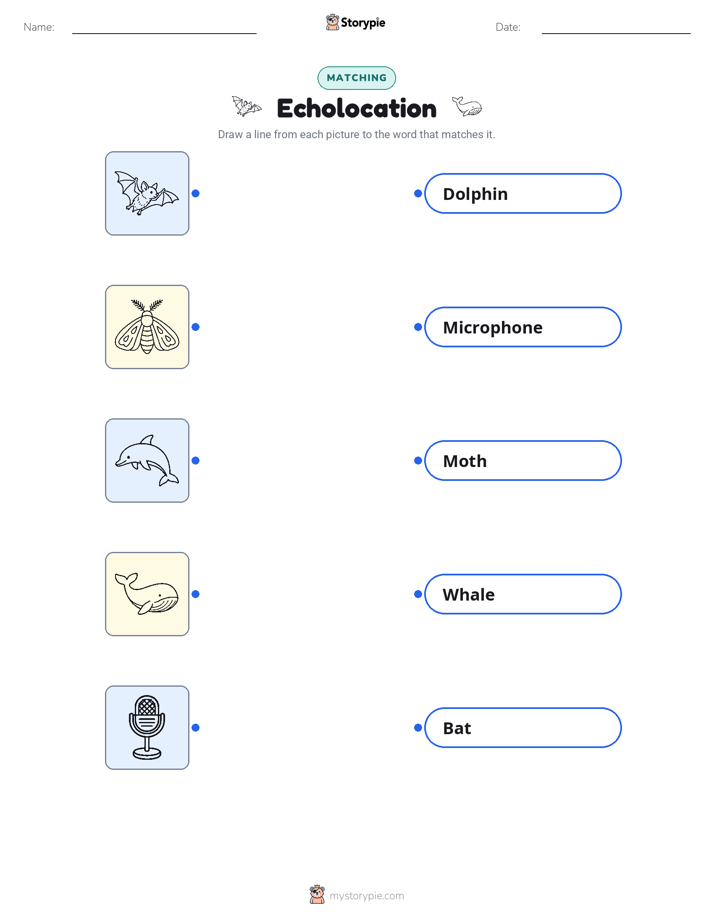
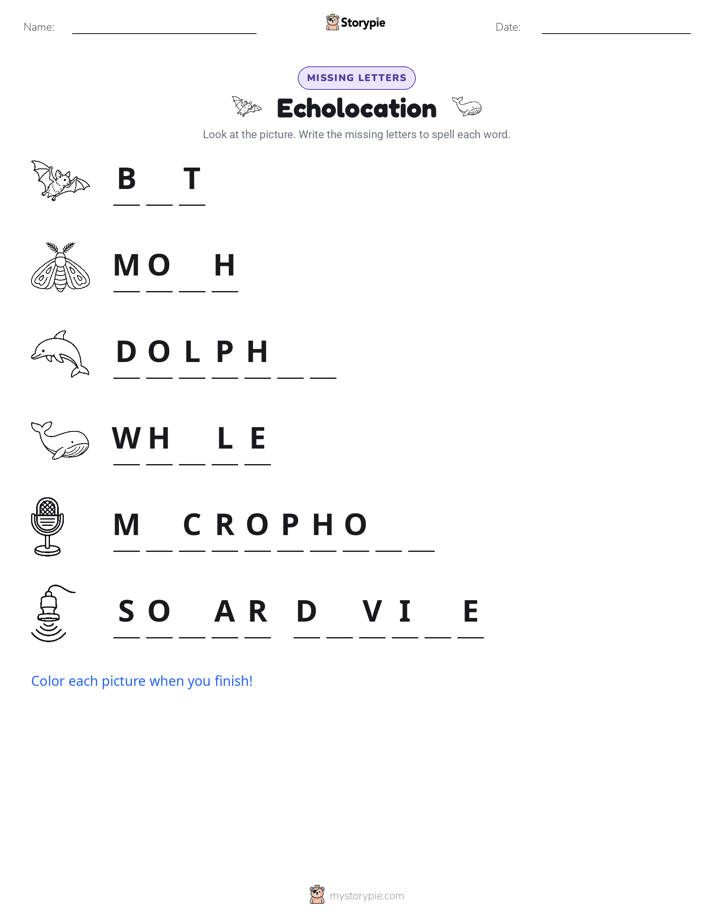
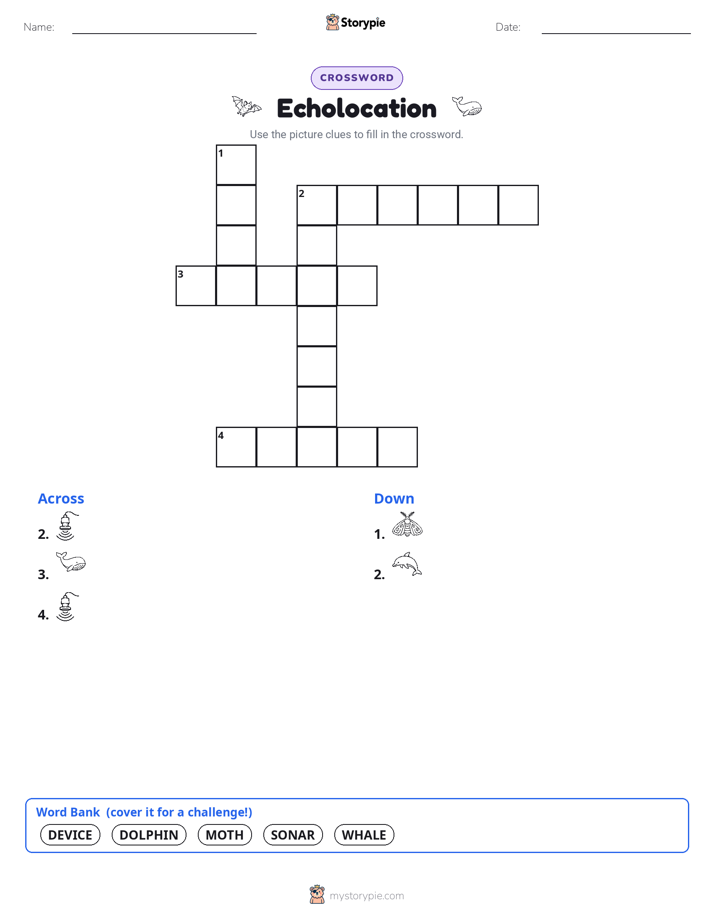
Print & create
Answer keys·No prep·Free with an account
28 worksheets · answer keys · full story · quiz · Ages 10-12 · CEFR B2
Plus adds 164,000+ more stories in 27 languages, audio for every one, and printables for all of them.
Just want Echolocation?
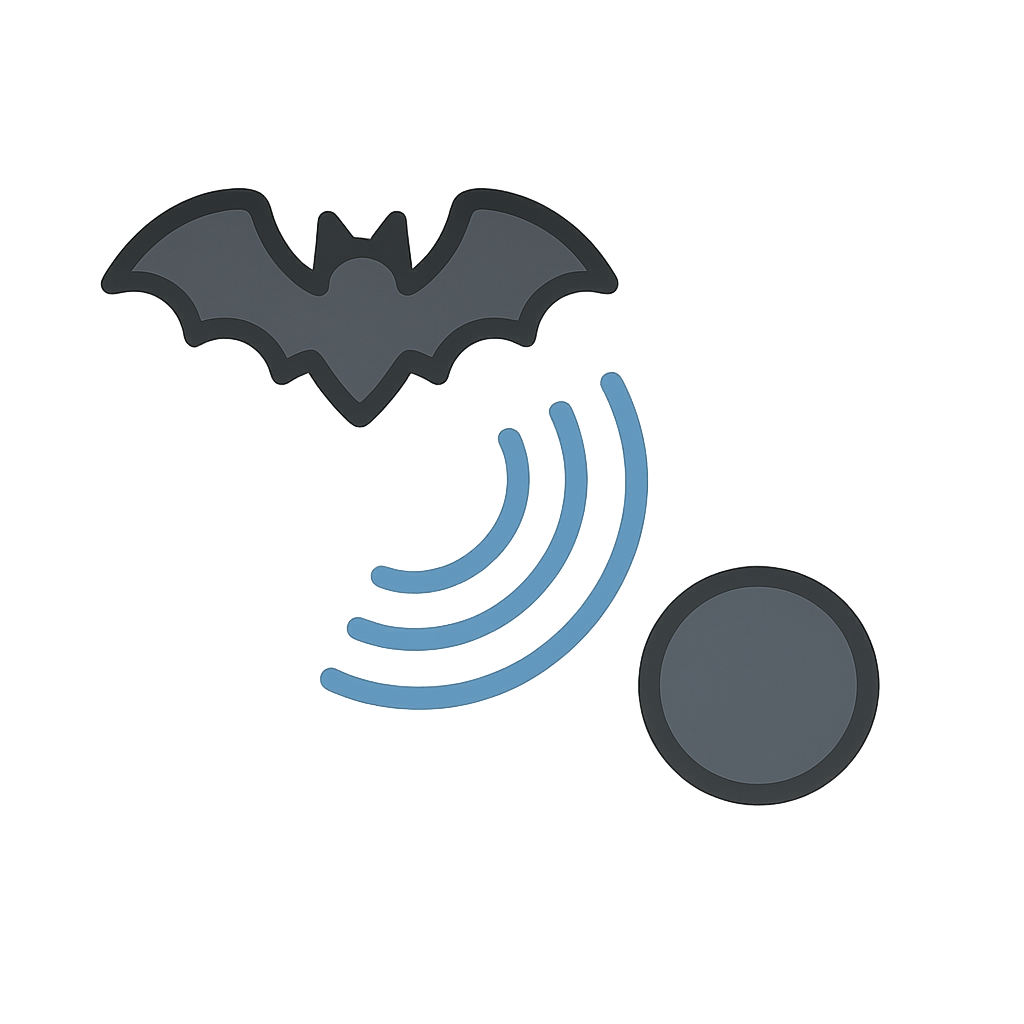
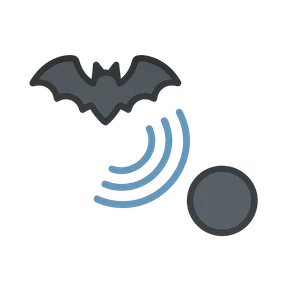
Imagine you are flying through a pitch-black cave, the air cool and damp around you. You can't see a thing, yet you move with perfect confidence. You send out a tiny, high-pitched click from your mouth, a sound so high that human ears can't even register it. Then, you wait, listening with incredible focus. A moment later, a whisper returns to your sensitive ears—an echo. This echo isn't just a returned sound; it's a detailed picture painted in your mind. It tells you there's a solid rock wall ten feet ahead, a sharp stalactite hanging from the ceiling to your left, and, most excitingly, a juicy moth fluttering just a few feet away. From that single, returned vibration, you can tell the moth's size, its speed, and the exact direction it's flying. This is my magic, my purpose. I allow animals to see the world with sound. I am Echolocation.
For thousands of years, I was a secret that animals kept to themselves. Humans watched bats darting through the twilight sky, catching insects with unbelievable skill, and they could only wonder how it was possible. In the 1790s, an Italian scientist named Lazzaro Spallanzani grew intensely curious about this mystery. He, like many others, assumed that bats must possess incredibly sharp eyesight to hunt in near-total darkness. To test his hypothesis, he captured several bats and covered their eyes with tiny, harmless hoods. To his utter astonishment, the blinded bats flew around his room just as gracefully as before, never bumping into a single obstacle. He then tried a different experiment. He gently plugged their ears with soft wax. This time, the bats were completely lost. They bumped into walls and furniture, unable to fly properly at all. Spallanzani carefully wrote down his findings around the year 1793. He knew, with scientific certainty, that the bats' secret was tied to their ears, not their eyes. He had proven they could somehow 'see' with sound, but he couldn't explain how. It was a fascinating puzzle, and for over a century, I remained one of science's most compelling mysteries.
The Echo That Paints a Picture
Imagine you are flying through a pitch-black cave, the air cool and damp around you. You can't see a thing, yet you move with perfect confidence. You send out a tiny, high-pitched click from your mouth, a sound so high that human ears can't even register it. Then, you wait, listening with incredible focus. A moment later, a whisper returns to your sensitive ears—an echo. This echo isn't just a returned sound; it's a detailed picture painted in your mind. It tells you there's a solid rock wall ten feet ahead, a sharp stalactite hanging from the ceiling to your left, and, most excitingly, a juicy moth fluttering just a few feet away. From that single, returned vibration, you can tell the moth's size, its speed, and the exact direction it's flying. This is my magic, my purpose. I allow animals to see the world with sound. I am Echolocation.
For thousands of years, I was a secret that animals kept to themselves. Humans watched bats darting through the twilight sky, catching insects with unbelievable skill, and they could only wonder how it was possible. In the 1790s, an Italian scientist named Lazzaro Spallanzani grew intensely curious about this mystery. He, like many others, assumed that bats must possess incredibly sharp eyesight to hunt in near-total darkness. To test his hypothesis, he captured several bats and covered their eyes with tiny, harmless hoods. To his utter astonishment, the blinded bats flew around his room just as gracefully as before, never bumping into a single obstacle. He then tried a different experiment. He gently plugged their ears with soft wax. This time, the bats were completely lost. They bumped into walls and furniture, unable to fly properly at all. Spallanzani carefully wrote down his findings around the year 1793. He knew, with scientific certainty, that the bats' secret was tied to their ears, not their eyes. He had proven they could somehow 'see' with sound, but he couldn't explain how. It was a fascinating puzzle, and for over a century, I remained one of science's most compelling mysteries.
The world had to wait for human technology to catch up with nature's ancient genius. In the late 1930s, a young, curious student at Harvard University named Donald Griffin became obsessed with Spallanzani's old puzzle. By this time, scientists had invented special microphones capable of hearing sounds far higher than any human could—ultrasonic sounds. Griffin, working alongside his professor Robert Galambos, brought bats into their laboratory and pointed one of these new microphones at them as they flew. What they detected was astounding. The microphone revealed that the bats were constantly sending out streams of high-frequency clicks and chirps, shouting into the darkness and listening for my replies. Griffin had finally captured the 'voice' that Spallanzani knew must exist but could never hear. On July 15th, 1944, he officially gave me the name I have today: 'echolocation,' a perfect blend of 'echo' and 'location.' The mystery was finally solved. Humans at last understood how I work, not just for bats, but for dolphins and whales who use me to navigate the vast, dark depths of the ocean.
Once people understood my fundamental principle, they realized how incredibly powerful I could be. My basic idea—sending out a wave and using its echo to map the world—inspired some of humanity's most incredible inventions. During World War I and World War II, a time of great conflict and innovation, scientists developed a technology called Sonar, which stands for Sound Navigation and Ranging. Ships would send out audible 'pings' of sound into the water and listen carefully for the echoes. This allowed them to map the hidden contours of the ocean floor and, crucially for the war effort, detect enemy submarines hiding deep beneath the surface. I went from helping a tiny bat find a moth to helping sailors navigate safely and defend their vessels. My influence didn't stop in the ocean. Doctors wanted a way to see inside the human body without resorting to surgery. They developed ultrasound machines, which use my exact same principle. Safe, high-frequency sound waves are sent into the body, and the echoes that bounce back from different tissues and organs are translated by a computer into an image on a screen. This is how doctors can check on the health of a baby before it's born, a gentle and safe way to see the unseen.
Today, I continue to inspire new ideas and solve modern problems. Engineers have designed special canes for visually impaired people that use ultrasonic pulses—my clicks and chirps—to detect obstacles like walls, furniture, or stairs, vibrating to warn the user and making it safer to walk around. Autonomous robots use me to navigate crowded warehouses, avoiding collisions as they carry out their tasks. Scientists still use my principles to study the deepest, most mysterious parts of the ocean that light will never touch. I am a constant reminder that sometimes, the most brilliant and elegant solutions are already all around us, perfected by nature over millions of years of trial and error. I show that there is more than one way to see the world. By sending out a little bit of yourself and listening carefully to what comes back, you can build a map of your surroundings and find your way through even the darkest night. All you have to do is listen.
Wow facts
About
Echolocation is the biological process of using sound waves and their returning echoes to determine the location of objects. It is used by animals like bats, dolphins, and whales for navigation and hunting, and has inspired human technologies like sonar.
Take a Quiz
Question 1 of 5
In your own words, describe the two main experiments Lazzaro Spallanzani conducted and what each one proved.
Explore next





Want to do even more?
Go beyond exploring. Unlock tools that turn every story into real learning.

Storypie Plus for families
Full stories, quizzes, and printables. Nights and car rides, sorted.
- Unlimited audio stories
- Create Mode: your child stars in the story
- Offline downloads
- Printable worksheets & coloring pages

Why Storypie for Schools
Students engaged. Prep in seconds. Evenings back to you.
- Worksheets & Quizzes
- Classroom Management
- Formative Assessment
- Custom Curriculum & Lesson Plans
- 27 Languages

Why Storypie for Homeschool
Curriculum done. They'll ask for more. Hours back in your day.
- Worksheet Generator
- First-Person Audio Stories
- Built-in Comprehension Quizzes
- Custom Curriculum & Lesson Plans
- Print & Go Activities