English

Echolocation
Echolocation is the biological process of using sound waves and their returning echoes to determine the…
Reads at Grades 3–5 Listens at Grades 1–5
Print & create
Answer keys·No prep·Free with an account
28 worksheets · answer keys · full story · quiz · Ages 8-10 · CEFR B1
Plus adds 164,000+ more stories in 27 languages, audio for every one, and printables for all of them.
Just want Echolocation?
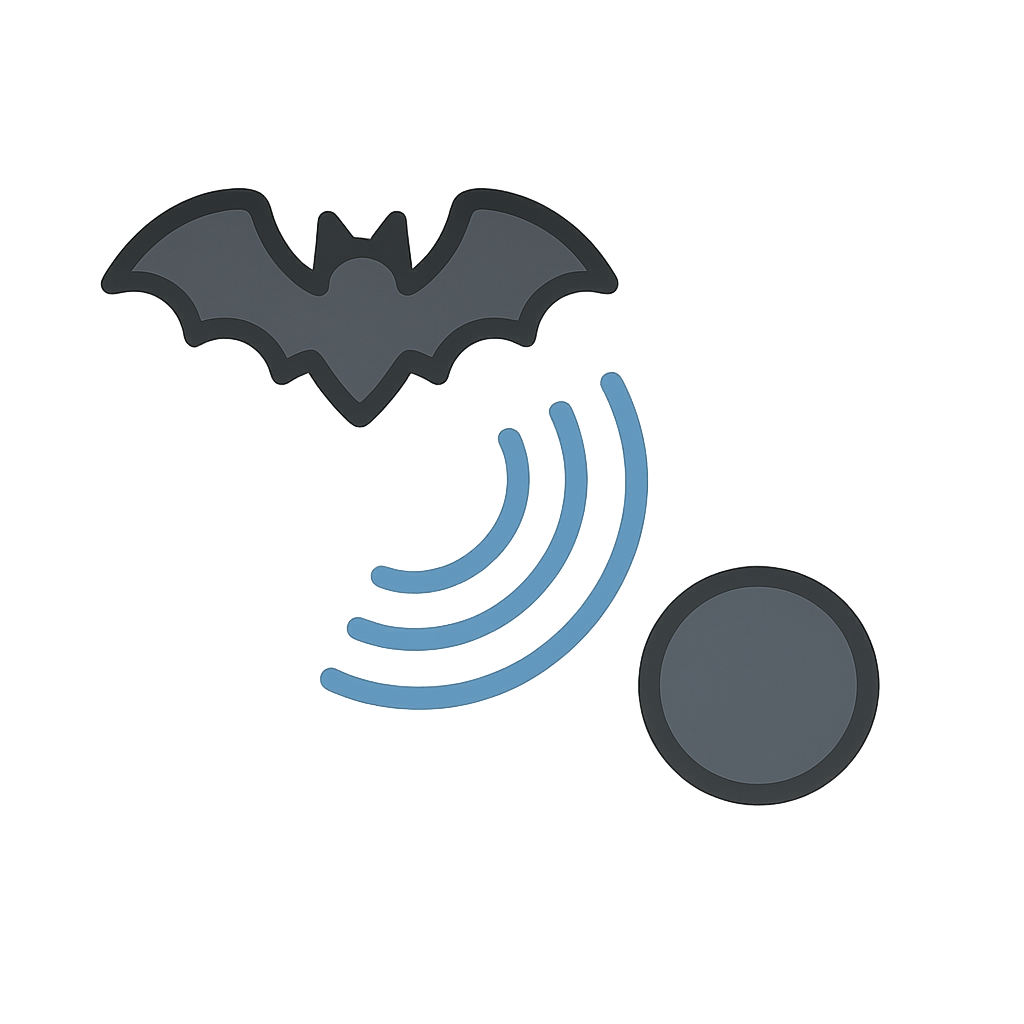
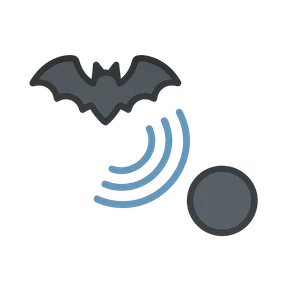
Imagine flying through a forest so dark you can’t see your own wings. All around you are tall trees with scratchy branches and the soft flutter of juicy moths. How do you zip through the air, catching dinner without crashing into a single twig? You let me guide you. You send out a tiny, high-pitched click—a sound so high that people can’t even hear it. Then you listen. A moment later, a faint sound comes back to you. An echo. But it’s not just one echo; it’s many. The echo from the moth is soft and fuzzy, while the echo from the tree is sharp and strong. Together, they create a map in your mind, a picture made entirely of sound. Now, dive into the deep, murky ocean where sunlight struggles to reach. How does a dolphin find a tiny fish hiding in the gloom? It sends out a stream of clicks and whistles, and I carry them through the water. The returning echoes tell the dolphin exactly where that fish is, how big it is, and which way it’s swimming. I am the secret sense that lets these amazing animals see with sound in places where eyes are not enough. I am Echolocation.
For centuries, humans watched my bat friends and scratched their heads in wonder. How could a creature fly so perfectly in total darkness? It seemed like magic. One curious man, an Italian scientist named Lazzaro Spallanzani, decided to investigate. Around the year 1794, he conducted some clever experiments. He discovered that if he covered a bat’s eyes with a tiny, harmless hood, it could still fly perfectly. But if he gently plugged its ears, the poor bat would become clumsy and bump into things. This was the first major clue. He proved that bats needed their hearing, not their sight, to find their way. Still, no one knew exactly *how* they were doing it. The mystery remained for more than a hundred years. Then, in 1938, a young American scientist named Donald Griffin brought a new invention to the bats’ cave. It was an ultrasonic detector, a special microphone that could hear sounds far too high-pitched for human ears. When he turned it on, his machine was flooded with sound. The bats were filling the air with constant, rapid-fire clicks. He had discovered their secret shouts. For the first time, a human understood that the bats were using the echoes from their own voices to create a detailed map of the world. A few years later, in 1944, Donald Griffin finally gave me the name you know me by today. He called me Echolocation.
The Story of Echolocation
Imagine flying through a forest so dark you can’t see your own wings. All around you are tall trees with scratchy branches and the soft flutter of juicy moths. How do you zip through the air, catching dinner without crashing into a single twig? You let me guide you. You send out a tiny, high-pitched click—a sound so high that people can’t even hear it. Then you listen. A moment later, a faint sound comes back to you. An echo. But it’s not just one echo; it’s many. The echo from the moth is soft and fuzzy, while the echo from the tree is sharp and strong. Together, they create a map in your mind, a picture made entirely of sound. Now, dive into the deep, murky ocean where sunlight struggles to reach. How does a dolphin find a tiny fish hiding in the gloom? It sends out a stream of clicks and whistles, and I carry them through the water. The returning echoes tell the dolphin exactly where that fish is, how big it is, and which way it’s swimming. I am the secret sense that lets these amazing animals see with sound in places where eyes are not enough. I am Echolocation.
For centuries, humans watched my bat friends and scratched their heads in wonder. How could a creature fly so perfectly in total darkness? It seemed like magic. One curious man, an Italian scientist named Lazzaro Spallanzani, decided to investigate. Around the year 1794, he conducted some clever experiments. He discovered that if he covered a bat’s eyes with a tiny, harmless hood, it could still fly perfectly. But if he gently plugged its ears, the poor bat would become clumsy and bump into things. This was the first major clue. He proved that bats needed their hearing, not their sight, to find their way. Still, no one knew exactly how they were doing it. The mystery remained for more than a hundred years. Then, in 1938, a young American scientist named Donald Griffin brought a new invention to the bats’ cave. It was an ultrasonic detector, a special microphone that could hear sounds far too high-pitched for human ears. When he turned it on, his machine was flooded with sound. The bats were filling the air with constant, rapid-fire clicks. He had discovered their secret shouts. For the first time, a human understood that the bats were using the echoes from their own voices to create a detailed map of the world. A few years later, in 1944, Donald Griffin finally gave me the name you know me by today. He called me Echolocation.
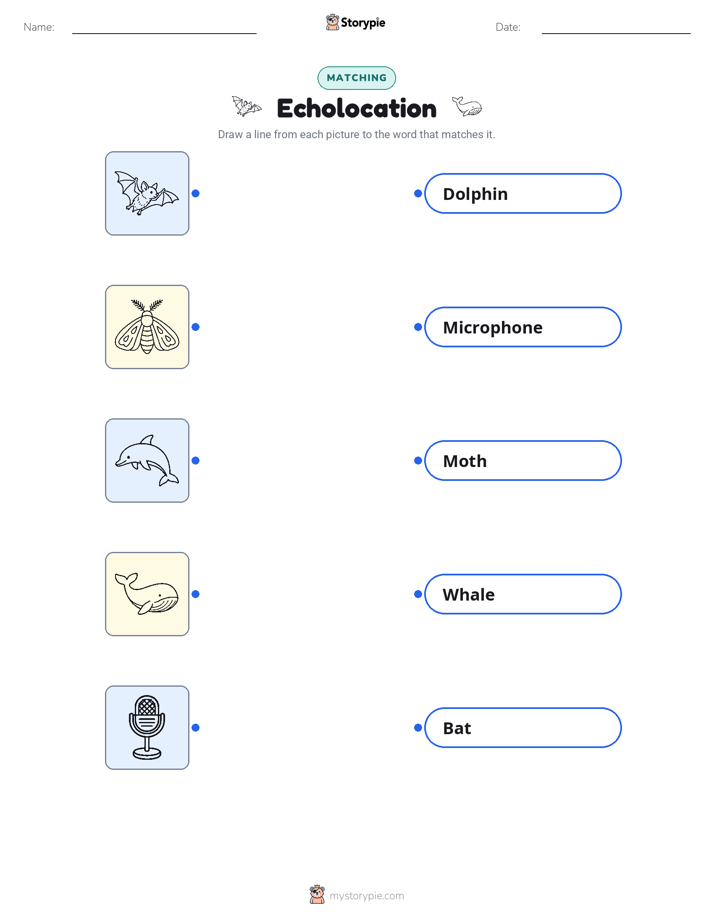
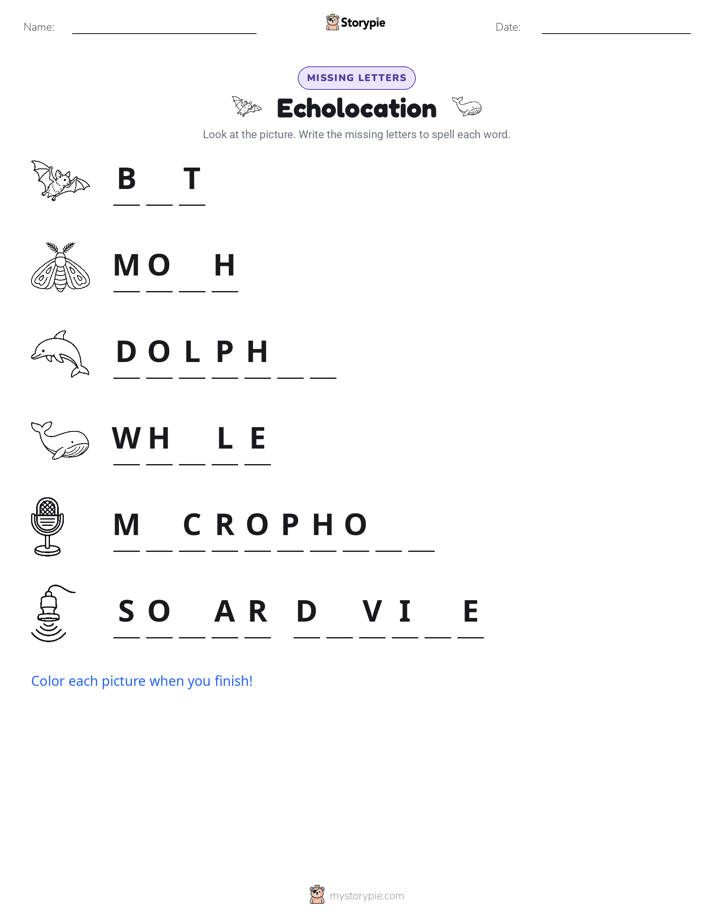
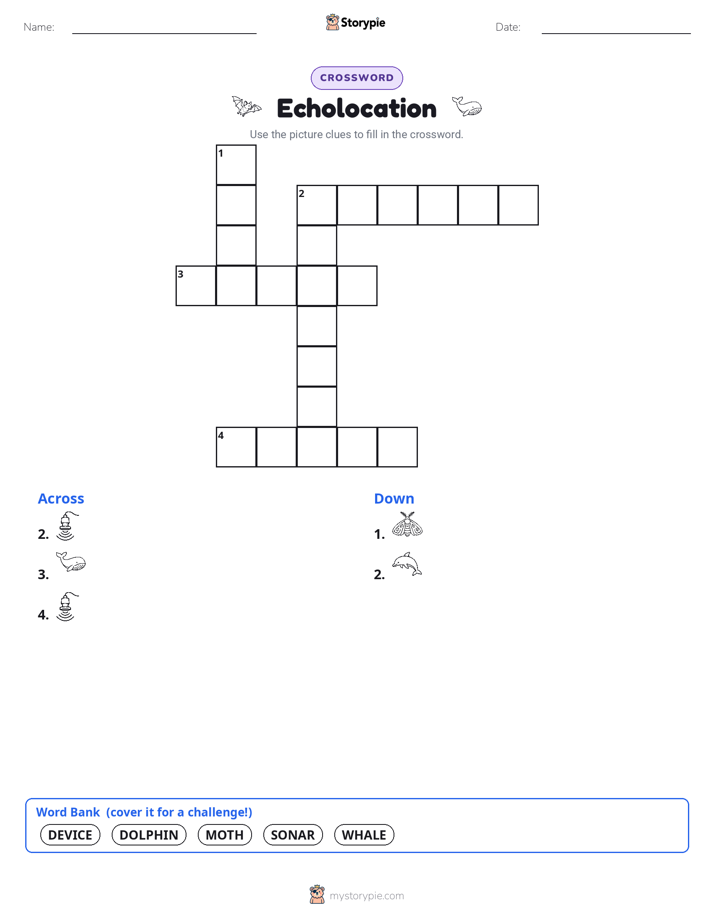
Once people understood how I worked, they were inspired. They thought, if bats and dolphins can use sound to see, maybe we can too. This idea led to the invention of something amazing called SONAR. SONAR works just like I do, but underwater. A ship or a submarine sends out a sound 'ping' into the deep ocean and listens for the echoes to return. During a great human conflict called World War II, SONAR was incredibly important for submarines to navigate the dark waters and detect other ships. My story doesn't end with big machines, though. I help people in their everyday lives, too. Some people who are visually impaired learn to use me by tapping a long cane. The clicks from the cane bounce off walls, cars, and doorways, creating echoes that help them build a mental map of their surroundings. They are seeing the world with sound, just like my bat and dolphin friends. I am proof that there are many amazing ways to perceive the world. All you have to do is listen carefully, and you might discover something wonderful that was hidden all along.
Wow facts
About
Echolocation is the biological process of using sound waves and their returning echoes to determine the location of objects. It is used by animals like bats, dolphins, and whales for navigation and hunting, and has inspired human technologies like sonar.
Take a Quiz
Question 1 of 5
Why was Lazzaro Spallanzani's experiment around 1794 so important?
Explore next





Want to do even more?
Go beyond exploring. Unlock tools that turn every story into real learning.

Storypie Plus for families
Full stories, quizzes, and printables. Nights and car rides, sorted.
- Unlimited audio stories
- Create Mode: your child stars in the story
- Offline downloads
- Printable worksheets & coloring pages

Why Storypie for Schools
Students engaged. Prep in seconds. Evenings back to you.
- Worksheets & Quizzes
- Classroom Management
- Formative Assessment
- Custom Curriculum & Lesson Plans
- 27 Languages

Why Storypie for Homeschool
Curriculum done. They'll ask for more. Hours back in your day.
- Worksheet Generator
- First-Person Audio Stories
- Built-in Comprehension Quizzes
- Custom Curriculum & Lesson Plans
- Print & Go Activities