English

Echolocation
Echolocation is the biological process of using sound waves and their returning echoes to determine the…
Reads at Grades K-2 Listens at K–3
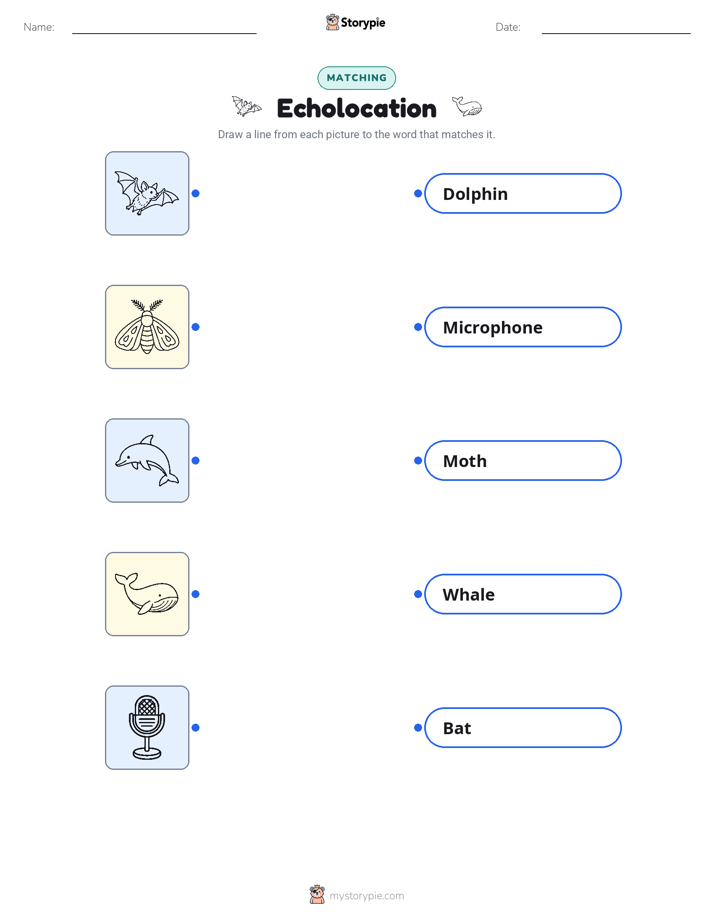
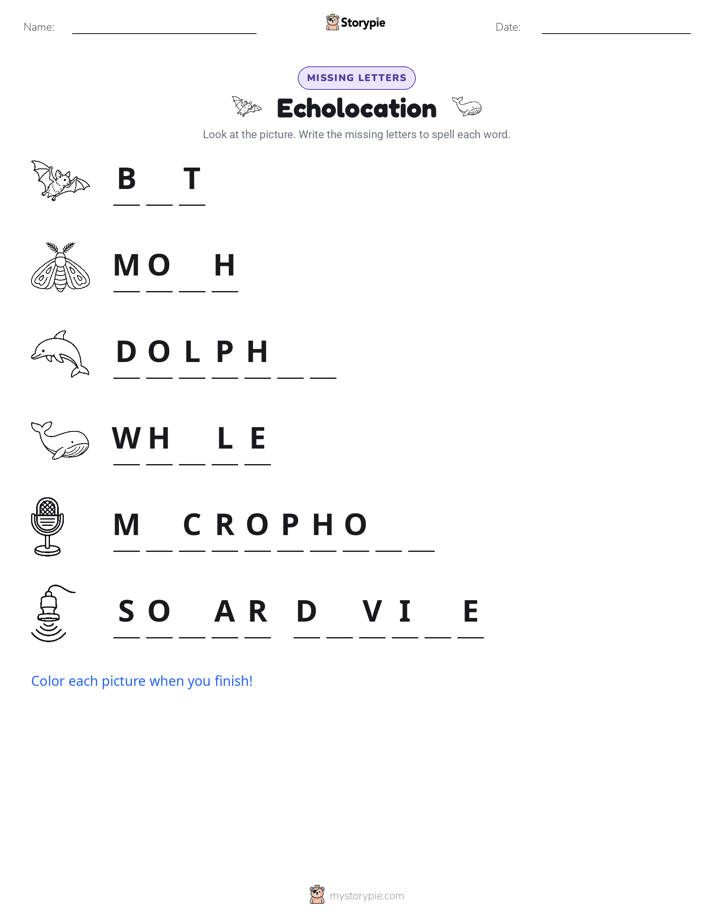
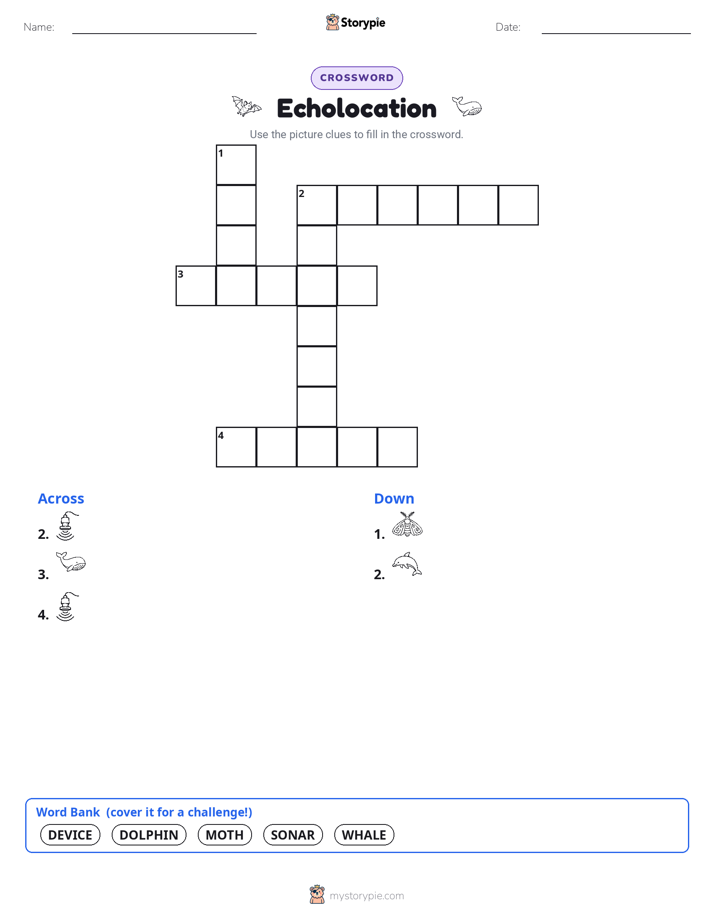
Print & create
Answer keys·No prep·Free with an account
28 worksheets · answer keys · full story · quiz · Ages 6-8 · CEFR A2
Plus adds 164,000+ more stories in 27 languages, audio for every one, and printables for all of them.
Just want Echolocation?
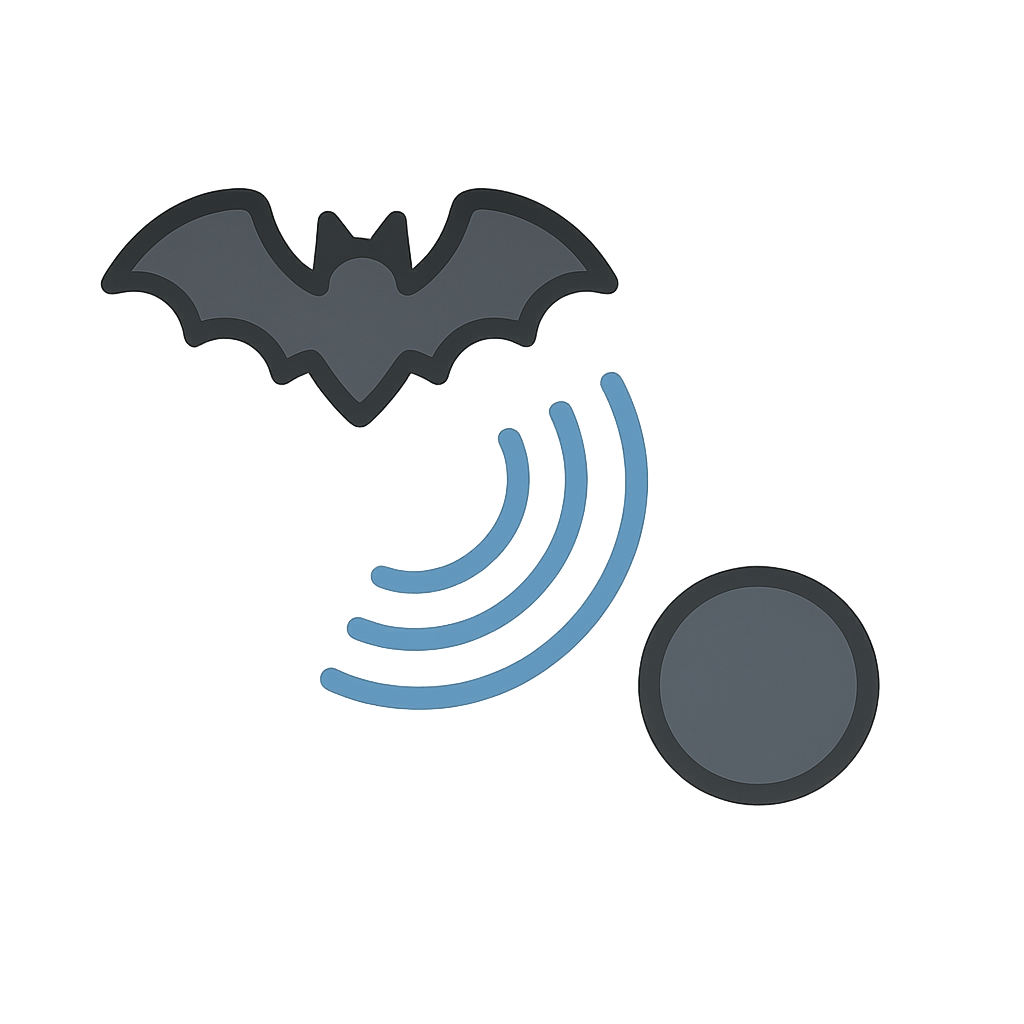
Imagine a world that is completely dark. In the deep, dark night sky, a tiny bat is hunting for its dinner, a fluttery moth. The bat can’t see the moth, but it knows exactly where it is. How. It opens its mouth and lets out a tiny, high-pitched squeak, too high for you to hear. That little sound zooms through the air until it bumps right into the moth. Then, like a tiny bouncy ball, the sound bounces back to the bat’s big, listening ears. This bounced-back sound is a secret message, an echo that paints a picture in the bat's mind. The echo tells the bat where the moth is, how big it is, and which way it is flying. It’s like seeing with your ears. I am that amazing secret. I am the power to see with sound.
Hello. My name is Echolocation. I am a very special skill that some animals use to understand the world around them. It works like this: an animal makes a sound, like a click or a chirp. That sound travels out and hits something, like a tree, a rock, or a yummy fish. When the sound hits the object, it bounces back as an echo. The animal’s ears catch that echo, and its brain is smart enough to turn that sound into a picture. For a very long time, people were puzzled by how bats could fly so perfectly in total darkness. A scientist from Italy named Lazzaro Spallanzani was very curious. In the year 1794, he did a clever experiment. He put bats in a dark room with strings hanging from the ceiling. The bats zipped around without hitting a single one. But when he gently covered their ears, they started bumping into everything. He discovered that they were using their ears, not their eyes, to navigate.
Seeing with Sound
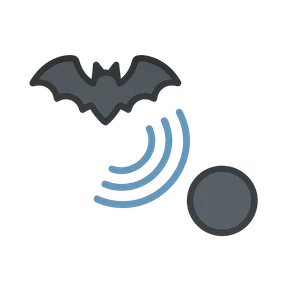
Imagine a world that is completely dark. In the deep, dark night sky, a tiny bat is hunting for its dinner, a fluttery moth. The bat can’t see the moth, but it knows exactly where it is. How. It opens its mouth and lets out a tiny, high-pitched squeak, too high for you to hear. That little sound zooms through the air until it bumps right into the moth. Then, like a tiny bouncy ball, the sound bounces back to the bat’s big, listening ears. This bounced-back sound is a secret message, an echo that paints a picture in the bat's mind. The echo tells the bat where the moth is, how big it is, and which way it is flying. It’s like seeing with your ears. I am that amazing secret. I am the power to see with sound.
Hello. My name is Echolocation. I am a very special skill that some animals use to understand the world around them. It works like this: an animal makes a sound, like a click or a chirp. That sound travels out and hits something, like a tree, a rock, or a yummy fish. When the sound hits the object, it bounces back as an echo. The animal’s ears catch that echo, and its brain is smart enough to turn that sound into a picture. For a very long time, people were puzzled by how bats could fly so perfectly in total darkness. A scientist from Italy named Lazzaro Spallanzani was very curious. In the year 1794, he did a clever experiment. He put bats in a dark room with strings hanging from the ceiling. The bats zipped around without hitting a single one. But when he gently covered their ears, they started bumping into everything. He discovered that they were using their ears, not their eyes, to navigate.
People were so inspired by what Mr. Spallanzani discovered. They knew I was important, and they wanted to understand me even better. Years and years later, a zoologist, which is a scientist who studies animals, named Donald Griffin studied bats very closely. He spent so much time learning about their special skill that in 1944, he gave me my official name: Echolocation. Because people like him understood me, they were able to invent amazing new tools. One of them is called sonar. Big ships and submarines use sonar to send sound waves down into the deep ocean. The echoes that return help them make maps of the ocean floor and find things hidden in the dark water. Today, I continue to help people think of new ideas. There are now special canes that use sound to help people who cannot see well to walk around safely. I am a reminder that there are many different ways to see the world, and sometimes, the best way is to listen very, very closely.
Wow facts
About
Echolocation is the biological process of using sound waves and their returning echoes to determine the location of objects. It is used by animals like bats, dolphins, and whales for navigation and hunting, and has inspired human technologies like sonar.
Take a Quiz
Question 1 of 4
Why did Lazzaro Spallanzani cover the bats' ears in his experiment?
Explore next





Want to do even more?
Go beyond exploring. Unlock tools that turn every story into real learning.

Storypie Plus for families
Full stories, quizzes, and printables. Nights and car rides, sorted.
- Unlimited audio stories
- Create Mode: your child stars in the story
- Offline downloads
- Printable worksheets & coloring pages

Why Storypie for Schools
Students engaged. Prep in seconds. Evenings back to you.
- Worksheets & Quizzes
- Classroom Management
- Formative Assessment
- Custom Curriculum & Lesson Plans
- 27 Languages

Why Storypie for Homeschool
Curriculum done. They'll ask for more. Hours back in your day.
- Worksheet Generator
- First-Person Audio Stories
- Built-in Comprehension Quizzes
- Custom Curriculum & Lesson Plans
- Print & Go Activities