English

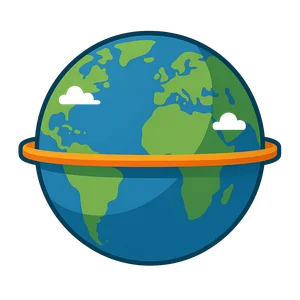
Equator
The Equator is an imaginary line on the Earth's surface, equidistant from the North and South Poles…
Reads at Grades 6–8 Listens at Grades 4–8
 Screen-free speaker. Built for your kids.
No card, no commitment. One email when there is real news, and one click to stop.
Print & create
Answer keys·No prep·Free with an account
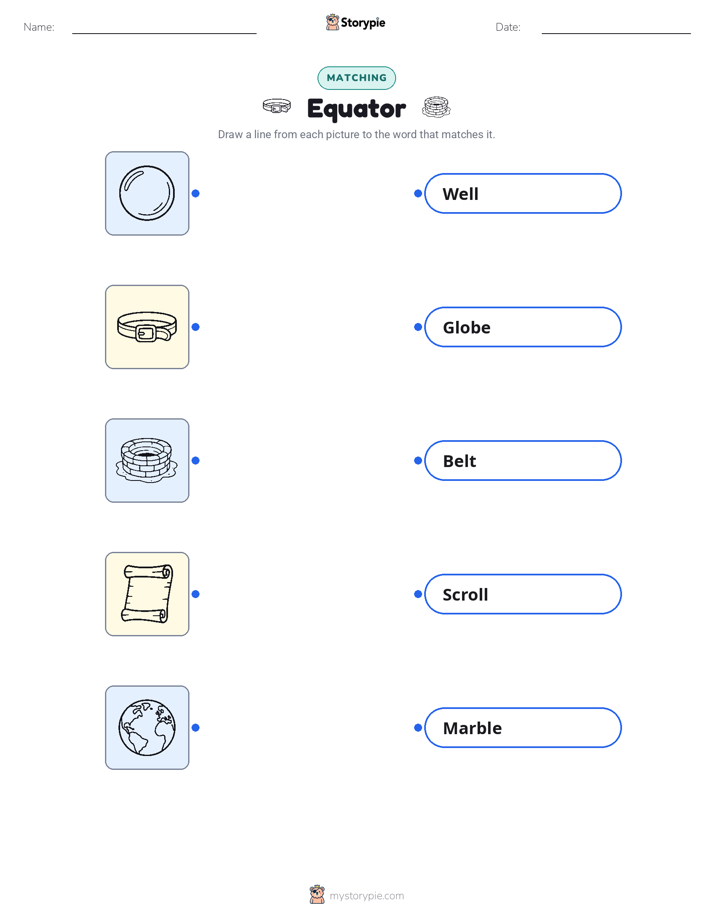
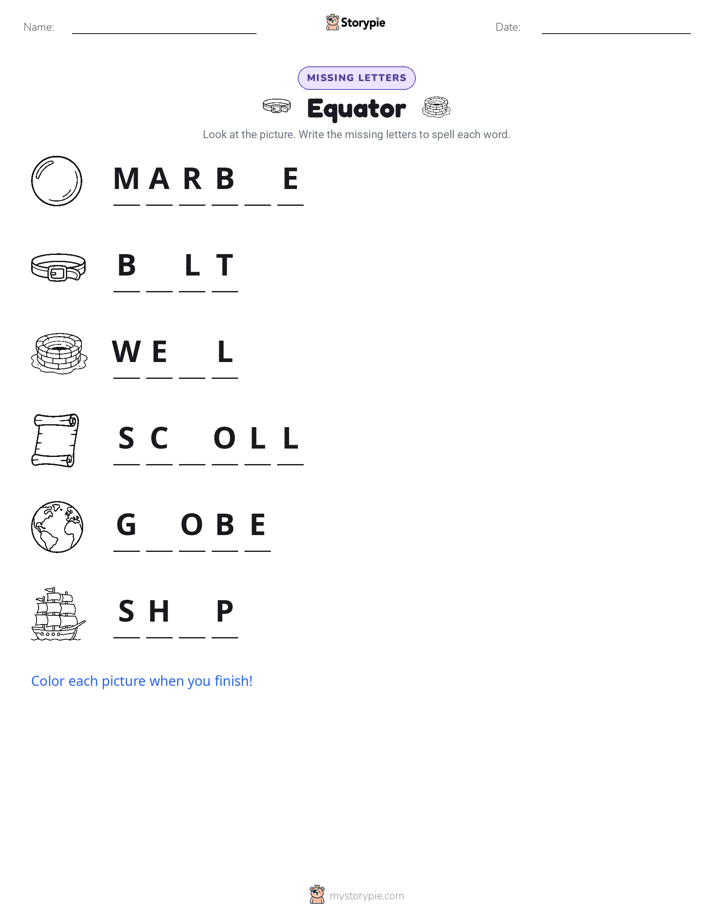
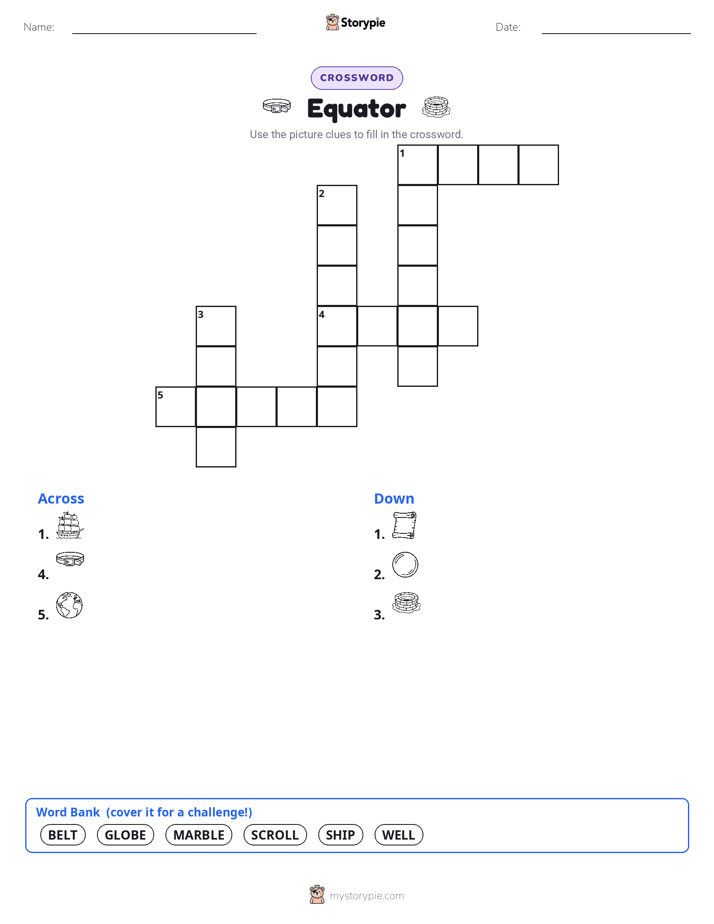
28 worksheets · answer keys · full story · quiz · Ages 10-12 · CEFR B2
Plus adds 102,000+ more stories in 27 languages, audio for every one, and printables for all of them.
Just want Equator?
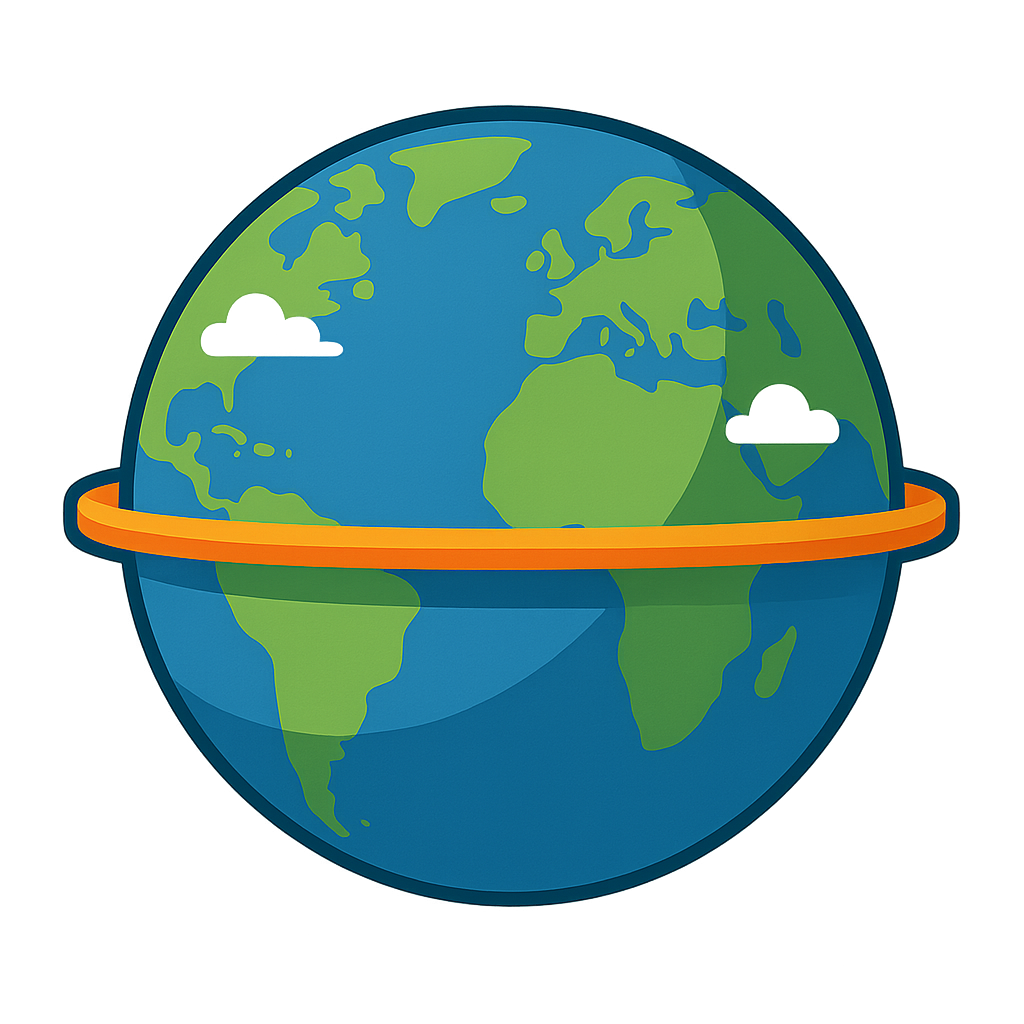
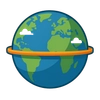
Imagine the Earth spinning in space like a giant, beautiful marble. Now, picture an invisible belt wrapped snugly around its middle. That’s me. You can’t see me or touch me, but I am very real and very important. I stretch for nearly 25,000 miles, crossing oceans, rainforests, and even snowy mountains. In places I pass through, the sun shines almost directly overhead every day of the year, making them some of the warmest spots on the planet. For a long time, humans didn’t know I existed. They just saw the world around them, but they were curious. They noticed that the farther north or south they traveled, the more the climate changed and the different the stars in the night sky looked. They wondered if there was a pattern, a secret order to the world. They were on the right track, and their journey to find me was just beginning. Before they gave me a name, they had to figure out the shape of their own world. I am the Equator, and this is my story.
My story really begins with an idea in ancient Greece. Long before anyone had sailed all the way around the world, clever thinkers started to believe the Earth wasn't flat. A philosopher named Aristotle, around the 4th century BCE, used his eyes and his brain. He noticed that during an eclipse, the Earth’s shadow on the moon was always round. He also saw that as travelers went south, new stars appeared above the horizon. This could only happen, he reasoned, if the Earth was a sphere. Once people accepted the world was a globe, they could start to imagine lines on it. A thinker named Parmenides, even earlier in the 5th century BCE, suggested the Earth could be divided into climate zones: a frigid zone at the poles, a temperate zone, and a scorching 'torrid' zone in the middle. He didn't know my exact location, but he had imagined a hot middle for the Earth—that was me. The biggest breakthrough came around 240 BCE with a brilliant librarian in Alexandria, Egypt, named Eratosthenes. He heard that on a certain day in a city to the south, the sun shone directly down a deep well, meaning it was straight overhead. But on that same day in his city, Alexandria, the sun made a slight shadow. By measuring the angle of that shadow and knowing the distance between the two cities, he did some amazing math and calculated the size of the entire planet. His calculation was incredibly close to what we know today. He proved the Earth was huge, and his work helped everyone understand that an imaginary line dividing it in half must exist.
An Invisible Line Around the World
Imagine the Earth spinning in space like a giant, beautiful marble. Now, picture an invisible belt wrapped snugly around its middle. That’s me. You can’t see me or touch me, but I am very real and very important. I stretch for nearly 25,000 miles, crossing oceans, rainforests, and even snowy mountains. In places I pass through, the sun shines almost directly overhead every day of the year, making them some of the warmest spots on the planet. For a long time, humans didn’t know I existed. They just saw the world around them, but they were curious. They noticed that the farther north or south they traveled, the more the climate changed and the different the stars in the night sky looked. They wondered if there was a pattern, a secret order to the world. They were on the right track, and their journey to find me was just beginning. Before they gave me a name, they had to figure out the shape of their own world. I am the Equator, and this is my story.
My story really begins with an idea in ancient Greece. Long before anyone had sailed all the way around the world, clever thinkers started to believe the Earth wasn't flat. A philosopher named Aristotle, around the 4th century BCE, used his eyes and his brain. He noticed that during an eclipse, the Earth’s shadow on the moon was always round. He also saw that as travelers went south, new stars appeared above the horizon. This could only happen, he reasoned, if the Earth was a sphere. Once people accepted the world was a globe, they could start to imagine lines on it. A thinker named Parmenides, even earlier in the 5th century BCE, suggested the Earth could be divided into climate zones: a frigid zone at the poles, a temperate zone, and a scorching 'torrid' zone in the middle. He didn't know my exact location, but he had imagined a hot middle for the Earth—that was me. The biggest breakthrough came around 240 BCE with a brilliant librarian in Alexandria, Egypt, named Eratosthenes. He heard that on a certain day in a city to the south, the sun shone directly down a deep well, meaning it was straight overhead. But on that same day in his city, Alexandria, the sun made a slight shadow. By measuring the angle of that shadow and knowing the distance between the two cities, he did some amazing math and calculated the size of the entire planet. His calculation was incredibly close to what we know today. He proved the Earth was huge, and his work helped everyone understand that an imaginary line dividing it in half must exist.
For centuries, I remained just an idea on a map. Many European sailors in the Middle Ages were afraid to travel too far south. They had heard old stories that the 'torrid zone' I run through was a place of boiling seas and unbearable heat where life was impossible. But in the 15th century, during the Age of Discovery, brave Portuguese explorers decided to find out for themselves. Around the 1470s, sailors pushed their ships farther and farther down the coast of Africa. Finally, one day, they sailed right across me. The sea didn't boil. Instead, they noticed strange and wonderful things. The North Star, which they had always used to guide them, sank below the horizon. The sun at noon was so high in the sky that it cast almost no shadow. For sailors, crossing 'the line' became a huge milestone. It was such a special event that they started a tradition—a fun and wild ceremony for any sailor crossing me for the first time. They were no longer in the Northern Hemisphere, the half of the world they knew. They had entered the Southern Hemisphere, a new world of different stars, seasons, and currents. By physically crossing me, these explorers proved that the ancient Greek ideas were right and that the world was one connected globe.
Today, I'm more important than ever. I am the 0-degree line of latitude, the starting point for measuring how far north or south any place is on the globe. This grid system, which I anchor, allows your phone’s GPS to tell you exactly where you are. My location also has a huge impact on climate, creating the lush, diverse ecosystems of the world’s rainforests, like the Amazon and the Congo. And here’s a cool secret: I give rockets a boost. Because the Earth spins fastest at its middle—where I am—space agencies build their launch sites near me to save fuel when sending satellites and astronauts into orbit. I may be invisible, but I am a line that connects everyone. I split the world into two halves, the Northern and Southern Hemispheres, but I also remind you that they are part of the same planet. I am a symbol of balance, the place where north meets south. I hope I inspire you to stay curious about our amazing world, to explore its different climates and cultures, and to remember that we all share this one beautiful home, spinning together in space.
Wow facts
About
The Equator is an imaginary line on the Earth's surface, equidistant from the North and South Poles, that divides the planet into the Northern and Southern Hemispheres.
Take a Quiz
Question 1 of 5
According to the story, what problem did Portuguese explorers solve by crossing the Equator in the 15th century?
Explore next

Want to do even more?
Go beyond exploring. Unlock tools that turn every story into real learning.

Storypie Plus for families
Full stories, quizzes, and printables. Nights and car rides, sorted.
- Unlimited audio stories
- Create Mode: your child stars in the story
- Offline downloads
- Printable worksheets & coloring pages

Why Storypie for Schools
Students engaged. Prep in seconds. Evenings back to you.
- Worksheets & Quizzes
- Classroom Management
- Formative Assessment
- Custom Curriculum & Lesson Plans
- 27 Languages

Why Storypie for Homeschool
Curriculum done. They'll ask for more. Hours back in your day.
- Worksheet Generator
- First-Person Audio Stories
- Built-in Comprehension Quizzes
- Custom Curriculum & Lesson Plans
- Print & Go Activities