English


Fiction vs. Nonfiction
The fundamental distinction in literature and storytelling between imaginative…
Reads at Grades 6–8 Listens at Grades 4–8
Print & create
Answer keys·No prep·Free with an account
28 worksheets · answer keys · full story · quiz · Ages 10-12 · CEFR B2
Plus adds 244,000+ more stories in 27 languages, audio for every one, and printables for all of them.
Just want Fiction vs. Nonfiction?
Have you ever felt yourself pulled between two different worlds, just by opening a book?. One moment, you are soaring on the back of a dragon through a sky with two suns, your heart pounding with the thrill of a magical quest. The air smells of pine and old magic. The next, you are deep inside a laboratory, watching a scientist discover a cure for a disease, the scent of antiseptic and bubbling chemicals in the air. You can feel the weight of a history book in your lap, one that tells the true story of a brave queen or a brilliant inventor, its pages filled with facts that built the world you know. I am the silent presence in both of these experiences. I am the quiet guide who helps you understand which world you are about to enter. I am the invisible boundary that separates a story born entirely from a writer’s mind from a story pieced together with evidence and truth. I am the line between the made-up and the real. You can call me the difference between Fiction and Nonfiction.
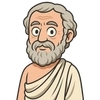
For most of human history, that line was blurry, like a path seen through a thick fog. In ancient Greece, storytellers would weave tales of gods and monsters into the history of their cities. Was the Trojan War a real event, a brilliant story, or a little of both?. It was hard to say. The stories were so powerful that the facts and the imagination seemed to be part of the same grand tapestry. It was a philosopher, a great thinker named Aristotle, who first tried to draw me more clearly. Around 335 BCE, he wrote a book called 'Poetics.' In it, he carefully considered the difference between a historian, who writes about what has happened, and a poet, who writes about what *could* happen. He argued that imaginative stories, what he called poetry, could reveal deep truths about human nature in a way that a simple list of facts could not. He saw that a made-up story about courage could teach you more about being brave than just reading that a specific battle was won. Even after Aristotle, I remained a bit fuzzy. For centuries, stories continued to mix the real and the fantastic. Think of the epic poem 'Beowulf,' first written down around the 9th century. It describes a brave hero in a real part of the world—Scandinavia—fighting a very unreal monster named Grendel. The story felt true to the people who heard it, even if they knew monsters weren't real. My two sides were still walking hand in hand.
The Line Between Worlds
Have you ever felt yourself pulled between two different worlds, just by opening a book?. One moment, you are soaring on the back of a dragon through a sky with two suns, your heart pounding with the thrill of a magical quest. The air smells of pine and old magic. The next, you are deep inside a laboratory, watching a scientist discover a cure for a disease, the scent of antiseptic and bubbling chemicals in the air. You can feel the weight of a history book in your lap, one that tells the true story of a brave queen or a brilliant inventor, its pages filled with facts that built the world you know. I am the silent presence in both of these experiences. I am the quiet guide who helps you understand which world you are about to enter. I am the invisible boundary that separates a story born entirely from a writer’s mind from a story pieced together with evidence and truth. I am the line between the made-up and the real. You can call me the difference between Fiction and Nonfiction.
For most of human history, that line was blurry, like a path seen through a thick fog. In ancient Greece, storytellers would weave tales of gods and monsters into the history of their cities. Was the Trojan War a real event, a brilliant story, or a little of both?. It was hard to say. The stories were so powerful that the facts and the imagination seemed to be part of the same grand tapestry. It was a philosopher, a great thinker named Aristotle, who first tried to draw me more clearly. Around 335 BCE, he wrote a book called 'Poetics.' In it, he carefully considered the difference between a historian, who writes about what has happened, and a poet, who writes about what could happen. He argued that imaginative stories, what he called poetry, could reveal deep truths about human nature in a way that a simple list of facts could not. He saw that a made-up story about courage could teach you more about being brave than just reading that a specific battle was won. Even after Aristotle, I remained a bit fuzzy. For centuries, stories continued to mix the real and the fantastic. Think of the epic poem 'Beowulf,' first written down around the 9th century. It describes a brave hero in a real part of the world—Scandinavia—fighting a very unreal monster named Grendel. The story felt true to the people who heard it, even if they knew monsters weren't real. My two sides were still walking hand in hand.
Everything changed around the year 1440. A man named Johannes Gutenberg invented the printing press, a marvelous machine that could make copies of books quickly and cheaply. Before this, books were rare treasures, painstakingly copied by hand. But now, they could be shared with everyone. This invention caused an explosion of reading and writing. Suddenly, there were more stories and more information available than ever before, and people needed a way to make sense of it all. In the 1700s, a new kind of story became incredibly popular: the novel. But here’s a funny thing—early novelists often pretended their stories were real. When Daniel Defoe wrote his famous book 'Robinson Crusoe,' published on April 25th, 1719, he presented it as the true diary of a shipwrecked sailor. He knew that pretending the story was real made it more thrilling for his audience. This shows my line was still being played with. At the same time, a period called the Enlightenment was sweeping across Europe. It was an age of science, reason, and a deep love for facts. My nonfiction side grew stronger and more defined. People wanted to collect all human knowledge, leading to the creation of the first encyclopedias. Biographies, telling the true life stories of important people, became essential reading. By the 19th century, libraries and bookstores began organizing their shelves using me as their guide. They created one section for imagined stories and another for factual books. For the first time, you could walk into a room full of books and choose your world: the real one, or one from a dream.
Today, I am your partner in discovery, and both of my sides are more important than ever. My fiction side allows you to step into someone else’s shoes. You can understand what it’s like to live in a different country, a different time, or even a different galaxy. This builds empathy, the amazing human ability to understand the feelings of others. My nonfiction side gives you the knowledge to understand and build the world around you. A nonfiction book can teach you how our government works, how to identify the trees in your backyard, or how to write computer code to create your own video game. And often, my two sides work together. That nonfiction book on coding gives you the skills, but a thrilling fiction story might inspire the world, the characters, and the adventure for the game you create. So whether you are opening a book to explore the vast, real universe of stars and planets, or an imaginary one born from a writer’s mind, I am here. I am the line that gives you a choice, your faithful guide on an endless and exciting journey of discovery.
Wow facts
About
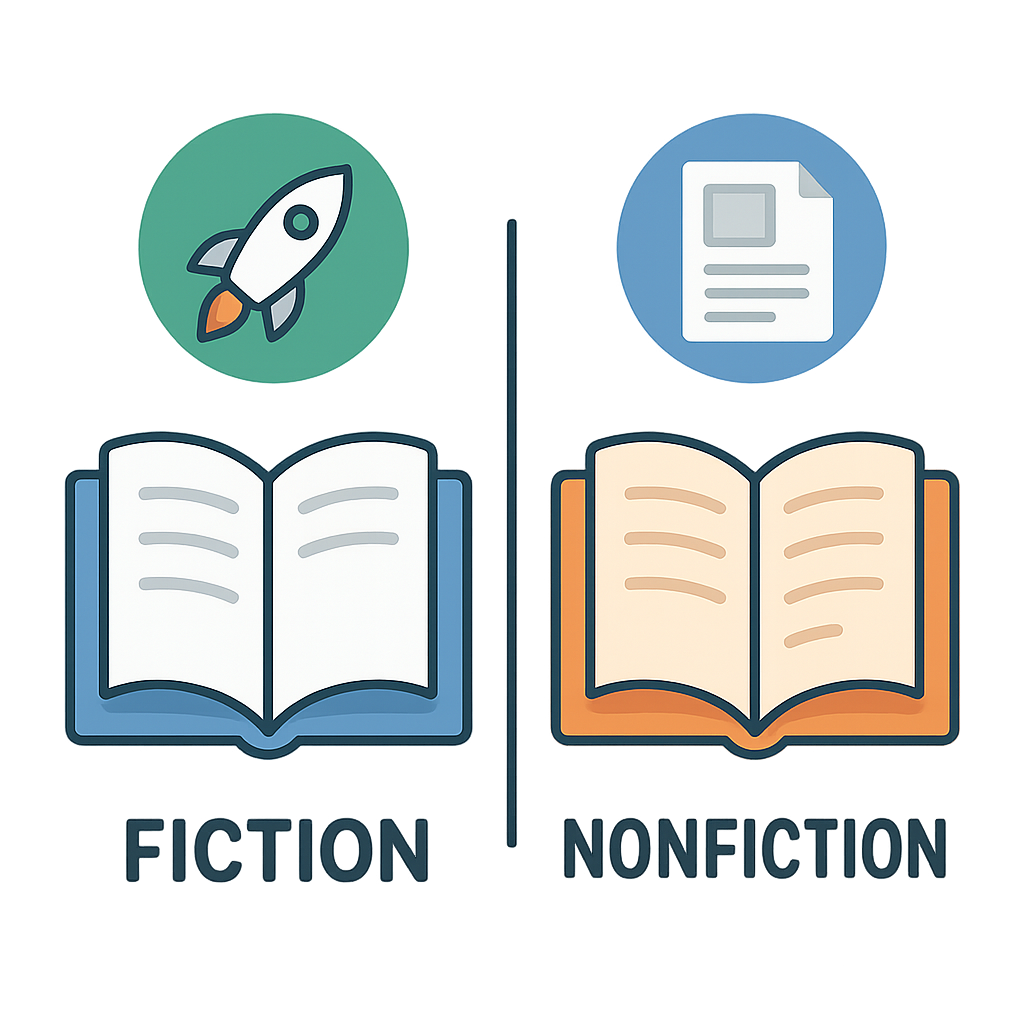
The fundamental distinction in literature and storytelling between imaginative, invented narratives (fiction) and factual, reality-based accounts (nonfiction).
Take a Quiz
Question 1 of 5
According to the section 'The Thinkers and the Storytellers,' what was Aristotle's main contribution to the concept of fiction and nonfiction?
Explore next




Want to do even more?
Go beyond exploring. Unlock tools that turn every story into real learning.

Storypie Plus for families
Full stories, quizzes, and printables. Nights and car rides, sorted.
- Unlimited audio stories
- Create Mode: your child stars in the story
- Offline downloads
- Printable worksheets & coloring pages

Why Storypie for Schools
Students engaged. Prep in seconds. Evenings back to you.
- Worksheets & Quizzes
- Classroom Management
- Formative Assessment
- Custom Curriculum & Lesson Plans
- 27 Languages

Why Storypie for Homeschool
Curriculum done. They'll ask for more. Hours back in your day.
- Worksheet Generator
- First-Person Audio Stories
- Built-in Comprehension Quizzes
- Custom Curriculum & Lesson Plans
- Print & Go Activities