English


Fiction vs. Nonfiction
The fundamental distinction in literature and storytelling between imaginative…
Reads at Grades 3–5 Listens at Grades 1–5
Print & create
Answer keys·No prep·Free with an account
28 worksheets · answer keys · full story · quiz · Ages 8-10 · CEFR B1
Plus adds 244,000+ more stories in 27 languages, audio for every one, and printables for all of them.
Just want Fiction vs. Nonfiction?
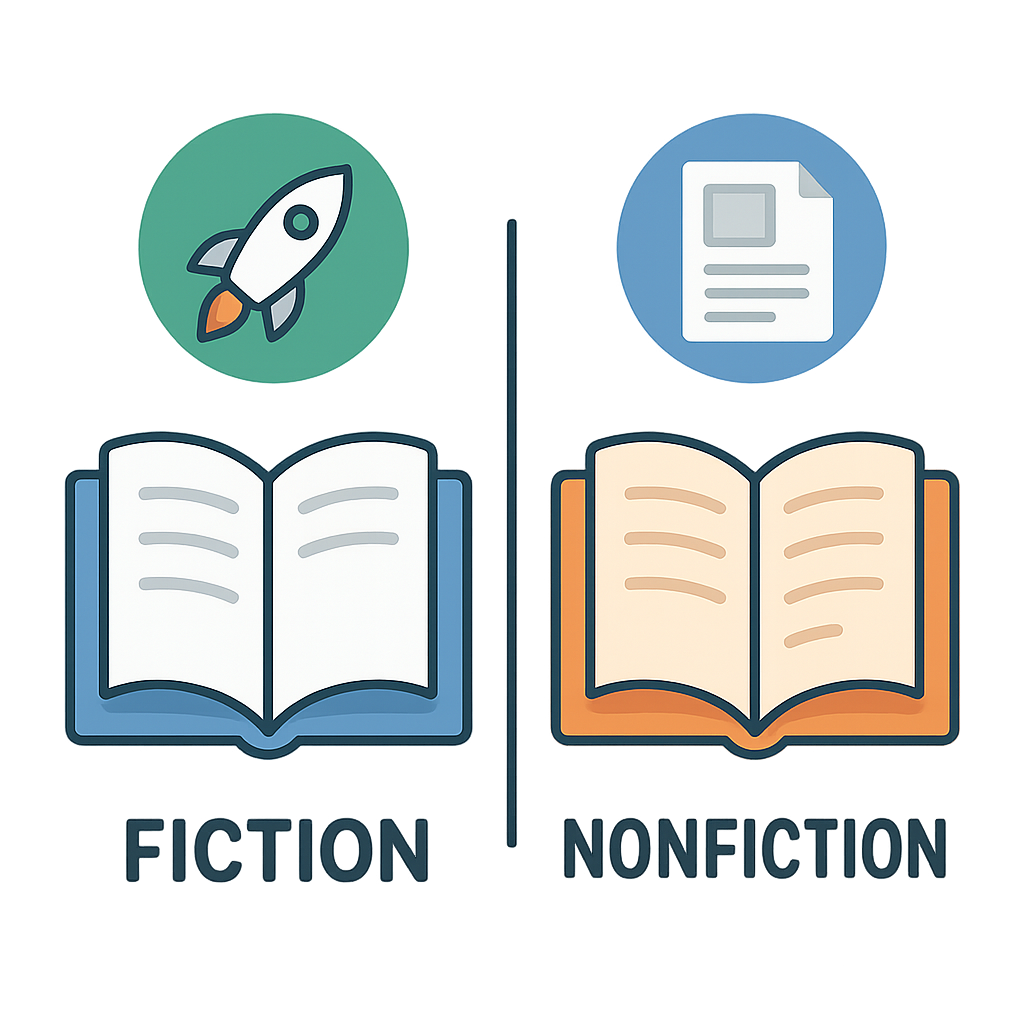
Have you ever felt the thrill of soaring through the clouds on the back of a glittering dragon, or solving a mystery with a clever talking fox. Have you felt the quiet wonder of learning a real fact, like how a tiny seed can grow into a giant tree, or how deep the ocean truly is. It might seem like these are just different kinds of stories, but there is a powerful idea that sorts every single tale, every fact, and every poem you have ever heard. I am that idea, and I separate everything into two big, wonderful families. You can call me Fiction and Nonfiction.
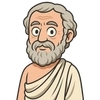
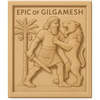
I have been around for as long as people have told stories. Can you imagine a world thousands of years ago, with no books or internet. People would gather around crackling campfires, their faces glowing in the firelight, and share tales. These stories were often part of my Fiction family. They were imaginative tales of brave heroes fighting monsters or powerful gods who threw lightning bolts from the sky. They helped people explain things they didn't understand, like thunder and the stars. One of the oldest written stories ever found, called the 'Epic of Gilgamesh' from a land called Mesopotamia around 2100 BCE, is a proud member of my Fiction family. At the very same time, people were using my other side. My Nonfiction family was busy recording true things. They carved records of their kings' battles and counted how much grain they harvested on clay tablets. This was history in the making. A few thousand years later, around the 5th century BCE, a Greek man named Herodotus traveled the world, asking questions and writing down the true stories of wars and different cultures. He became known as 'The Father of History,' and my Nonfiction side was so proud to help him share what really happened.
The Two Families of Stories
Have you ever felt the thrill of soaring through the clouds on the back of a glittering dragon, or solving a mystery with a clever talking fox. Have you felt the quiet wonder of learning a real fact, like how a tiny seed can grow into a giant tree, or how deep the ocean truly is. It might seem like these are just different kinds of stories, but there is a powerful idea that sorts every single tale, every fact, and every poem you have ever heard. I am that idea, and I separate everything into two big, wonderful families. You can call me Fiction and Nonfiction.
I have been around for as long as people have told stories. Can you imagine a world thousands of years ago, with no books or internet. People would gather around crackling campfires, their faces glowing in the firelight, and share tales. These stories were often part of my Fiction family. They were imaginative tales of brave heroes fighting monsters or powerful gods who threw lightning bolts from the sky. They helped people explain things they didn't understand, like thunder and the stars. One of the oldest written stories ever found, called the 'Epic of Gilgamesh' from a land called Mesopotamia around 2100 BCE, is a proud member of my Fiction family. At the very same time, people were using my other side. My Nonfiction family was busy recording true things. They carved records of their kings' battles and counted how much grain they harvested on clay tablets. This was history in the making. A few thousand years later, around the 5th century BCE, a Greek man named Herodotus traveled the world, asking questions and writing down the true stories of wars and different cultures. He became known as 'The Father of History,' and my Nonfiction side was so proud to help him share what really happened.
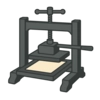
For a long, long time, sharing stories was slow. Books had to be copied by hand, one letter at a time. But then, a man named Johannes Gutenberg invented the printing press around the year 1440, and everything changed. Suddenly, books could be made much faster, and my two families could travel to homes all over the world. My Fiction family got a huge boost with the rise of something called the novel, which is a long, made-up story. A very famous early one was 'Don Quixote,' written by Miguel de Cervantes and published in 1605. It’s a hilarious story about a man who reads so many adventure stories that he decides to become a knight himself and thinks windmills are giants. Meanwhile, my Nonfiction family was getting busy, too. The first newspapers started appearing in the 17th century, telling people the real news of the day. Then, in the 18th century, smart thinkers decided to gather all the known facts about the world into giant books called encyclopedias. They wanted everyone to have access to true information about science, art, and history.
Today, I am your secret guide in a world overflowing with words. When you walk into a library or a bookstore, I am there to help you. Because of me, you know that a book with the title 'How to Build a Robot' will have real instructions and diagrams. That's my Nonfiction family at work. But a book called 'The Robot Who Went to School' is a fun adventure from someone's imagination, a member of my Fiction family. Both of my families are equally important, and you need both to grow. Nonfiction helps you understand the world as it is, teaching you how things work and what happened in the past. Fiction helps you understand feelings, explore new ideas, and imagine how the world could be. I am here to help you explore both, to learn amazing facts and to get lost in incredible adventures. So go ahead, pick a story, and see where it takes you.
Wow facts
About
The fundamental distinction in literature and storytelling between imaginative, invented narratives (fiction) and factual, reality-based accounts (nonfiction).
Take a Quiz
Question 1 of 5
According to the story, what is one of the oldest written stories from the Fiction family?
Explore next



Want to do even more?
Go beyond exploring. Unlock tools that turn every story into real learning.

Storypie Plus for families
Full stories, quizzes, and printables. Nights and car rides, sorted.
- Unlimited audio stories
- Create Mode: your child stars in the story
- Offline downloads
- Printable worksheets & coloring pages

Why Storypie for Schools
Students engaged. Prep in seconds. Evenings back to you.
- Worksheets & Quizzes
- Classroom Management
- Formative Assessment
- Custom Curriculum & Lesson Plans
- 27 Languages

Why Storypie for Homeschool
Curriculum done. They'll ask for more. Hours back in your day.
- Worksheet Generator
- First-Person Audio Stories
- Built-in Comprehension Quizzes
- Custom Curriculum & Lesson Plans
- Print & Go Activities