English


Figurative Language
Figurative Language is a way of using words and expressions with a meaning that is different from the literal…
Reads at Grades 6–8 Listens at Grades 4–8
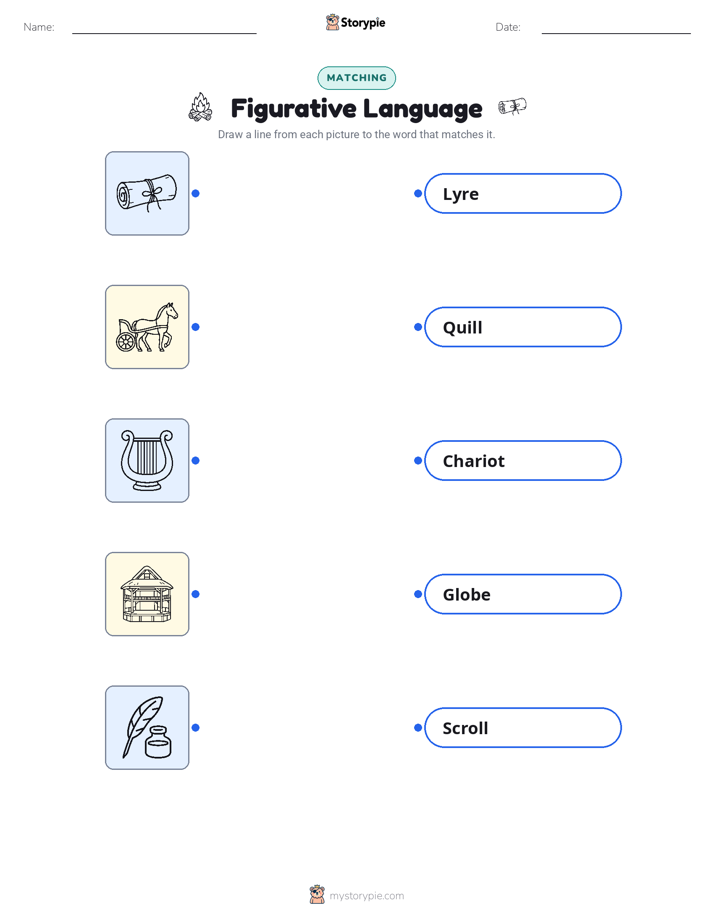
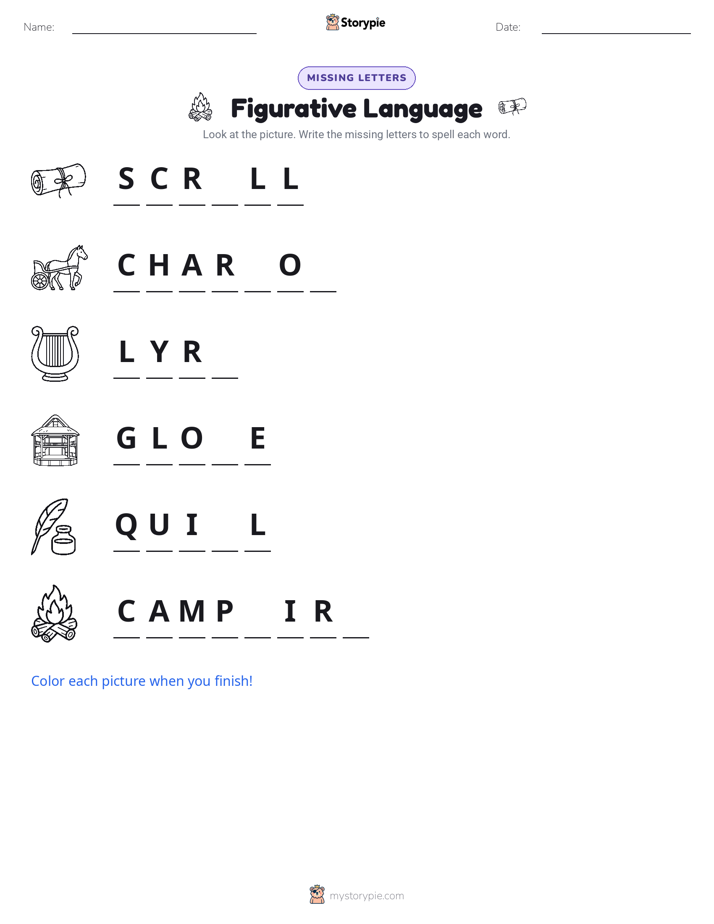
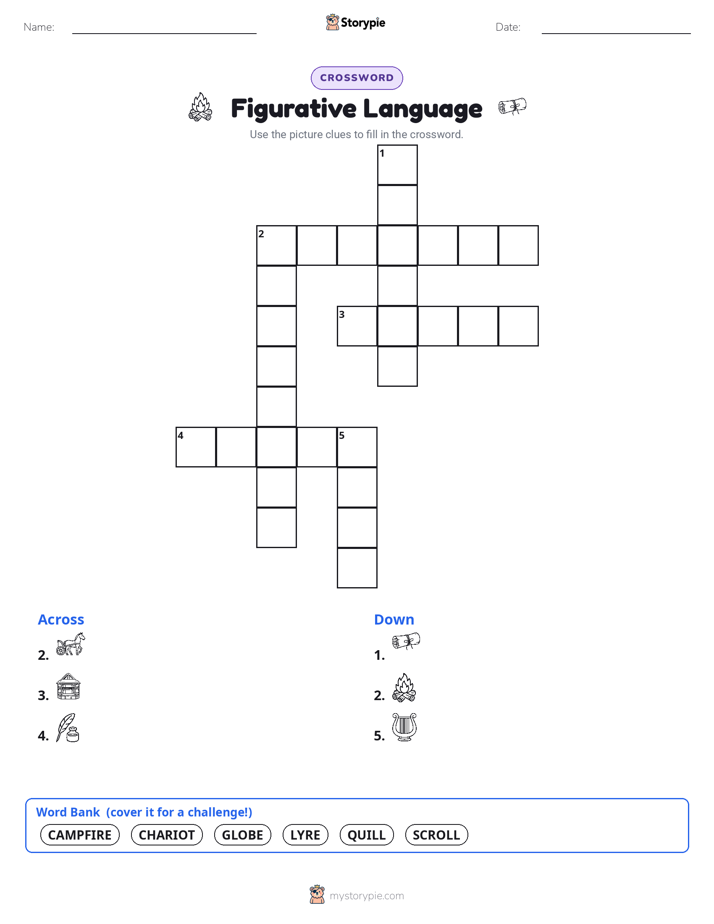
Print & create
Answer keys·No prep·Free with an account
28 worksheets · answer keys · full story · quiz · Ages 10-12 · CEFR B2
Plus adds 244,000+ more stories in 27 languages, audio for every one, and printables for all of them.
Just want Figurative Language?

Imagine a world painted only in shades of gray. A world where you could say 'the sun is a star' but never 'the sun is a golden eye in the sky'. You could state that 'the person is sad', but you couldn't say 'a storm of sadness raged inside him'. It would be a world of plain facts, clear and simple, but missing something. It would lack color, flavor, and the spark of imagination. That missing ingredient is me. I am the reason you can say your friend is a ray of sunshine on a cloudy day, or that the wind whispered secrets through the rustling leaves. I help you build bridges between two completely different things to show how they are secretly alike. I am the tool that lets you give human feelings to a lonely house or an angry sea. I help you paint pictures, compose music, and build entire worlds with nothing more than words. I make jokes funnier, poems more powerful, and stories unforgettable. I am the magic that makes language leap off the page. You can call me Figurative Language.
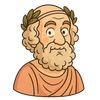
I am as old as the first stories told around a crackling campfire. Before people had science to explain the world, they had me. They would say the thunder was the sound of giants bowling in the clouds, or that the sun was a fiery chariot racing across the sky. I helped them make sense of a big and mysterious world. But for thousands of years, I was just a natural part of speaking, like breathing. Nobody thought to study me until a brilliant man in Ancient Greece, around the 4th century BCE, turned his curious mind toward me. His name was Aristotle. He sat at his desk, surrounded by scrolls, and was the first person to truly analyze how I worked. In his famous books, 'Poetics' and 'Rhetoric,' he gave names to my different forms. He was especially fascinated by the metaphor, the trick of calling one thing another. He wrote that the ability to create a good metaphor was a true sign of genius because it showed an eye for seeing similarities that no one else had noticed. After the Greeks, the Romans also became my devoted students, using me to craft powerful speeches that could sway entire crowds. I then traveled through time, waiting for my next great champion. I found him in England during the late 16th and early 17th centuries. His name was William Shakespeare. In his bustling Globe Theatre, he used me like a master painter uses his colors. He wrote the famous line, 'All the world's a stage, and all the men and women merely players'. He wasn't saying you were literally in a play. He was using me to reveal a deep and beautiful truth about life itself, with its entrances and its exits. I helped him explore jealousy as a 'green-eyed monster' and love as a guiding star. I wasn't just for fancy plays, though. I was also growing in the everyday speech of ordinary people. Phrases like 'break a leg' or 'spill the beans' became common. These are my children, too, called idioms, and they show that I belong to everyone.
The Spice of Words
Imagine a world painted only in shades of gray. A world where you could say 'the sun is a star' but never 'the sun is a golden eye in the sky'. You could state that 'the person is sad', but you couldn't say 'a storm of sadness raged inside him'. It would be a world of plain facts, clear and simple, but missing something. It would lack color, flavor, and the spark of imagination. That missing ingredient is me. I am the reason you can say your friend is a ray of sunshine on a cloudy day, or that the wind whispered secrets through the rustling leaves. I help you build bridges between two completely different things to show how they are secretly alike. I am the tool that lets you give human feelings to a lonely house or an angry sea. I help you paint pictures, compose music, and build entire worlds with nothing more than words. I make jokes funnier, poems more powerful, and stories unforgettable. I am the magic that makes language leap off the page. You can call me Figurative Language.
I am as old as the first stories told around a crackling campfire. Before people had science to explain the world, they had me. They would say the thunder was the sound of giants bowling in the clouds, or that the sun was a fiery chariot racing across the sky. I helped them make sense of a big and mysterious world. But for thousands of years, I was just a natural part of speaking, like breathing. Nobody thought to study me until a brilliant man in Ancient Greece, around the 4th century BCE, turned his curious mind toward me. His name was Aristotle. He sat at his desk, surrounded by scrolls, and was the first person to truly analyze how I worked. In his famous books, 'Poetics' and 'Rhetoric,' he gave names to my different forms. He was especially fascinated by the metaphor, the trick of calling one thing another. He wrote that the ability to create a good metaphor was a true sign of genius because it showed an eye for seeing similarities that no one else had noticed. After the Greeks, the Romans also became my devoted students, using me to craft powerful speeches that could sway entire crowds. I then traveled through time, waiting for my next great champion. I found him in England during the late 16th and early 17th centuries. His name was William Shakespeare. In his bustling Globe Theatre, he used me like a master painter uses his colors. He wrote the famous line, 'All the world's a stage, and all the men and women merely players'. He wasn't saying you were literally in a play. He was using me to reveal a deep and beautiful truth about life itself, with its entrances and its exits. I helped him explore jealousy as a 'green-eyed monster' and love as a guiding star. I wasn't just for fancy plays, though. I was also growing in the everyday speech of ordinary people. Phrases like 'break a leg' or 'spill the beans' became common. These are my children, too, called idioms, and they show that I belong to everyone.
Today, you can find me everywhere you look and listen. I am hiding in the lyrics of your favorite songs, where love might be a 'battlefield' or a 'burning flame'. I am in advertisements that promise a product will make you 'fly' or feel like you're 'on top of the world'. I'm not just for art and entertainment, either. Scientists use me to explain enormous and complicated ideas. They talk about the 'web of life' to show how all living things are connected, or the 'Big Bang' to describe the origin of the universe. These are metaphors that help the human mind grasp concepts too vast to see. It wasn't until 1980 that two modern thinkers, George Lakoff and Mark Johnson, published a book that changed how people thought about me. They argued that I am not just a decoration added to language. They realized I am a fundamental part of how you think. You understand arguments by thinking of them as a 'war' to be won or lost. You understand time by thinking of it as 'money' that can be spent or saved. I am woven into the very fabric of your thoughts. I am a bridge between what you know and what you are trying to understand. I am a tool for empathy, allowing you to step into someone else's shoes and feel what they feel. I am the spark that ignites your imagination. So go ahead, use me. Compare your feelings to a season, describe a sound with a color, and tell a story that only you can tell. Help me make our world a more creative, connected, and understanding place.
Wow facts
About
Figurative Language is a way of using words and expressions with a meaning that is different from the literal interpretation, creating more vivid, persuasive, and impactful communication.
Take a Quiz
Question 1 of 5
In the story, Figurative Language calls William Shakespeare its 'greatest champion.' Why was Shakespeare so important to the narrator?
Explore next




Want to do even more?
Go beyond exploring. Unlock tools that turn every story into real learning.

Storypie Plus for families
Full stories, quizzes, and printables. Nights and car rides, sorted.
- Unlimited audio stories
- Create Mode: your child stars in the story
- Offline downloads
- Printable worksheets & coloring pages

Why Storypie for Schools
Students engaged. Prep in seconds. Evenings back to you.
- Worksheets & Quizzes
- Classroom Management
- Formative Assessment
- Custom Curriculum & Lesson Plans
- 27 Languages

Why Storypie for Homeschool
Curriculum done. They'll ask for more. Hours back in your day.
- Worksheet Generator
- First-Person Audio Stories
- Built-in Comprehension Quizzes
- Custom Curriculum & Lesson Plans
- Print & Go Activities