English

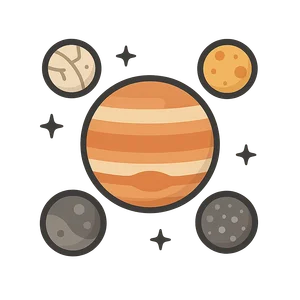
Galilean Moons
The four largest moons of Jupiter—Io, Europa, Ganymede, and Callisto—discovered by Galileo Galilei in 1610.
Reads at Pre-K Listens at Pre-K–1
Print & create
Answer keys·No prep·Free with an account
28 worksheets · answer keys · full story · quiz · Ages 3-5 · CEFR A1
Plus adds 164,000+ more stories in 27 languages, audio for every one, and printables for all of them.
Just want Galilean Moons?
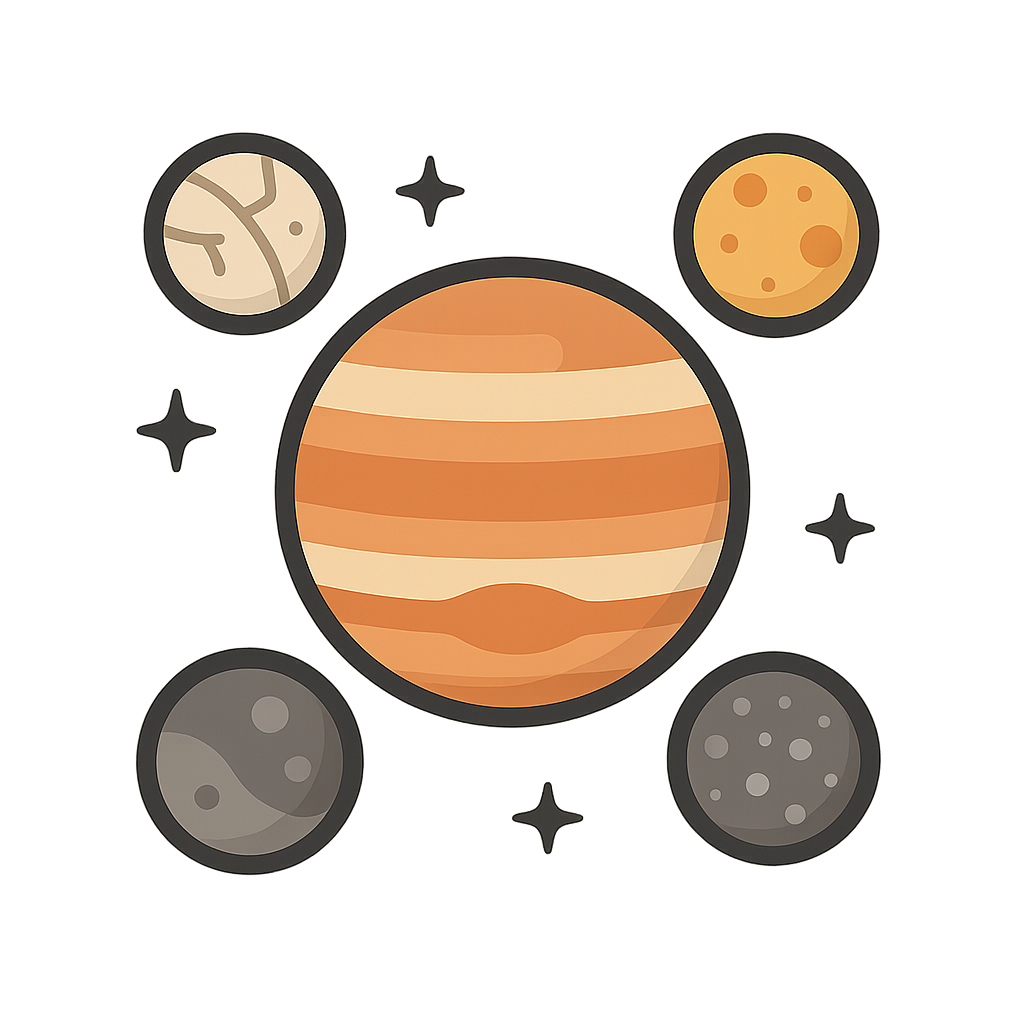
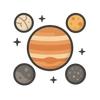
Hello there. We are four best friends who love to dance in the big, dark sky. We spin and twirl and play hide-and-seek with our giant, stripey dance partner. Do you know who it is. It's Jupiter. We are Jupiter's biggest moons. Our names are Io, Europa, Ganymede, and Callisto. We love playing together. People on Earth call us the Galilean Moons, and we are so happy to meet you.
For a very, very long time, we were a secret. No one on Earth knew we were here, dancing so far away in the quiet sky. But one night, a man named Galileo Galilei pointed a special looking-glass, called a telescope, toward our giant friend Jupiter. It was a chilly night on January 7th, 1610. Peeking through his telescope, he saw us. At first, he thought we were tiny, sparkly stars. But he was a very curious man, so he watched us for a few more nights. He saw that we weren't staying still—we were dancing around Jupiter, just like we always do. He was so excited. He was the very first person to see moons playing with another planet.
Seeing us was a big surprise for everyone on Earth. It was a wonderful secret revealed. It showed them that not everything in the universe circled the Earth. It was a brand-new idea that made people think about the sky in a whole new way and wonder what other secrets were out there. We are still out here, spinning and twirling around our big friend Jupiter. So the next time you look up at the night sky, remember us and our happy dance. There are so many wonderful, sparkling secrets in the universe, just waiting for you to discover them.
The Dancing Moons of Jupiter
Hello there. We are four best friends who love to dance in the big, dark sky. We spin and twirl and play hide-and-seek with our giant, stripey dance partner. Do you know who it is. It's Jupiter. We are Jupiter's biggest moons. Our names are Io, Europa, Ganymede, and Callisto. We love playing together. People on Earth call us the Galilean Moons, and we are so happy to meet you.
For a very, very long time, we were a secret. No one on Earth knew we were here, dancing so far away in the quiet sky. But one night, a man named Galileo Galilei pointed a special looking-glass, called a telescope, toward our giant friend Jupiter. It was a chilly night on January 7th, 1610. Peeking through his telescope, he saw us. At first, he thought we were tiny, sparkly stars. But he was a very curious man, so he watched us for a few more nights. He saw that we weren't staying still—we were dancing around Jupiter, just like we always do. He was so excited. He was the very first person to see moons playing with another planet.
Seeing us was a big surprise for everyone on Earth. It was a wonderful secret revealed. It showed them that not everything in the universe circled the Earth. It was a brand-new idea that made people think about the sky in a whole new way and wonder what other secrets were out there. We are still out here, spinning and twirling around our big friend Jupiter. So the next time you look up at the night sky, remember us and our happy dance. There are so many wonderful, sparkling secrets in the universe, just waiting for you to discover them.
Wow facts
About
The four largest moons of Jupiter—Io, Europa, Ganymede, and Callisto—discovered by Galileo Galilei in 1610. Their discovery was pivotal in changing humanity's understanding of the cosmos.
Take a Quiz
Question 1 of 3
Who was the giant, stripey dance partner in the story?
Explore next

Want to do even more?
Go beyond exploring. Unlock tools that turn every story into real learning.

Storypie Plus for families
Full stories, quizzes, and printables. Nights and car rides, sorted.
- Unlimited audio stories
- Create Mode: your child stars in the story
- Offline downloads
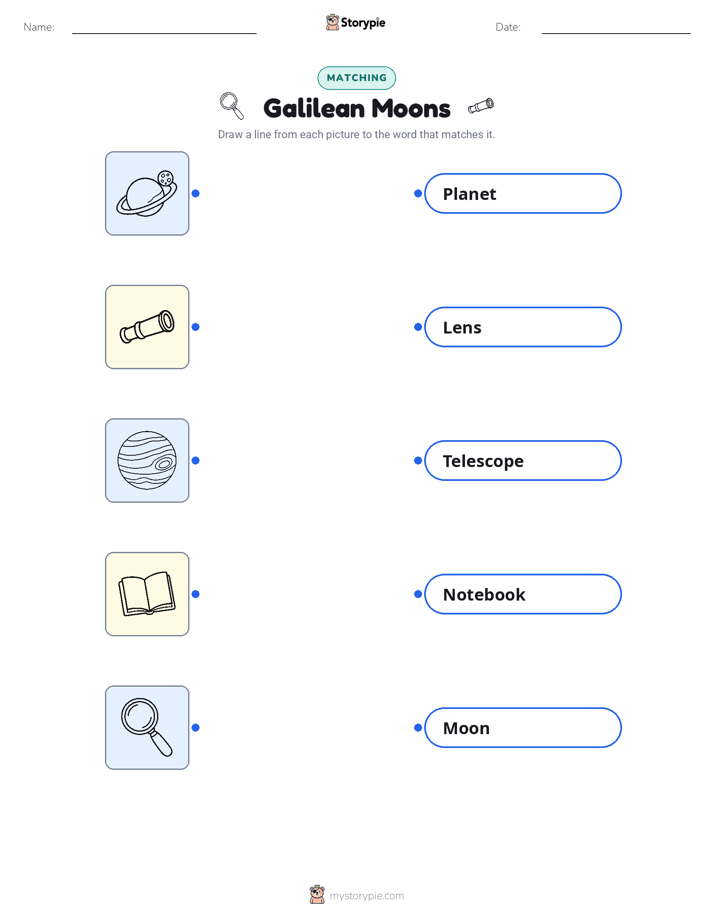
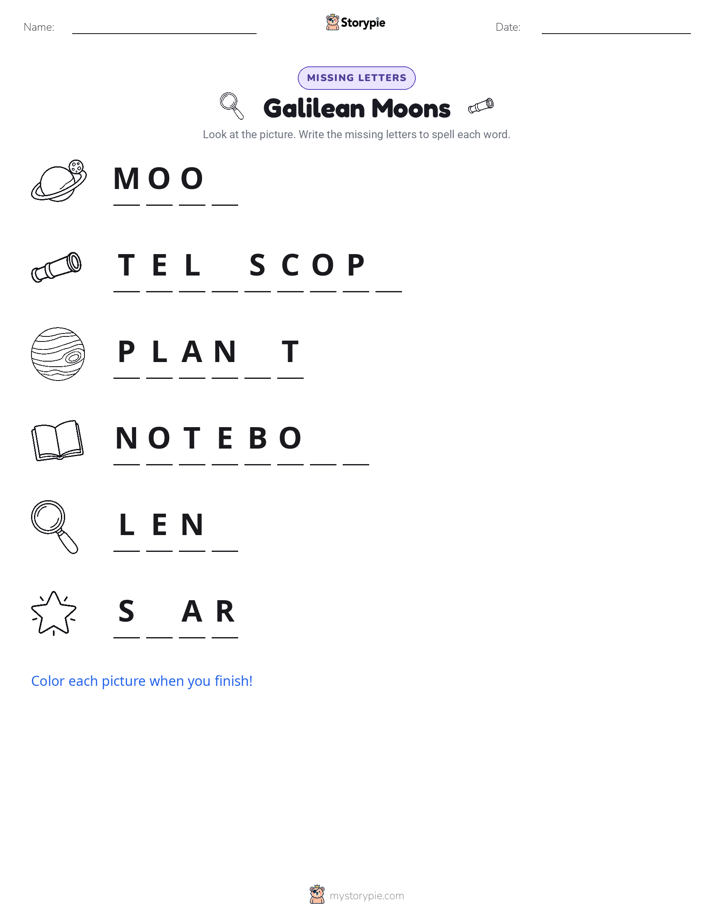
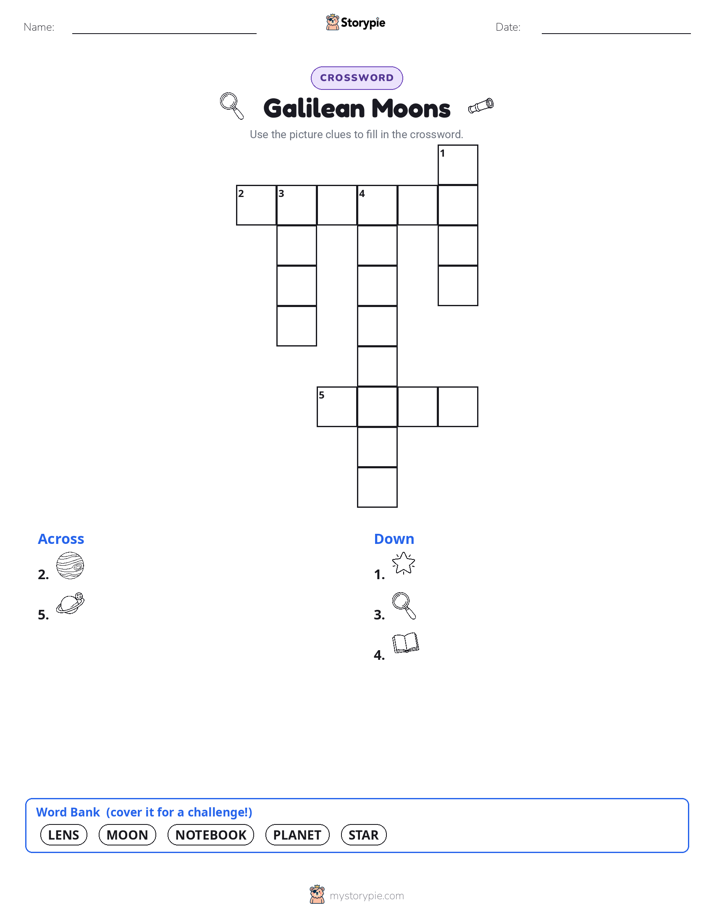
- Printable worksheets & coloring pages

Why Storypie for Schools
Students engaged. Prep in seconds. Evenings back to you.
- Worksheets & Quizzes
- Classroom Management
- Formative Assessment
- Custom Curriculum & Lesson Plans
- 27 Languages

Why Storypie for Homeschool
Curriculum done. They'll ask for more. Hours back in your day.
- Worksheet Generator
- First-Person Audio Stories
- Built-in Comprehension Quizzes
- Custom Curriculum & Lesson Plans
- Print & Go Activities