English

Haudenosaunee Confederacy
The Haudenosaunee Confederacy, also known as the Iroquois Confederacy…
Reads at Grades 3–5 Listens at Grades 1–5
Print & create
Answer keys·No prep·Free with an account
28 worksheets · answer keys · full story · quiz · Ages 8-10 · CEFR B1
Plus adds 164,000+ more stories in 27 languages, audio for every one, and printables for all of them.
Just want Haudenosaunee Confederacy?
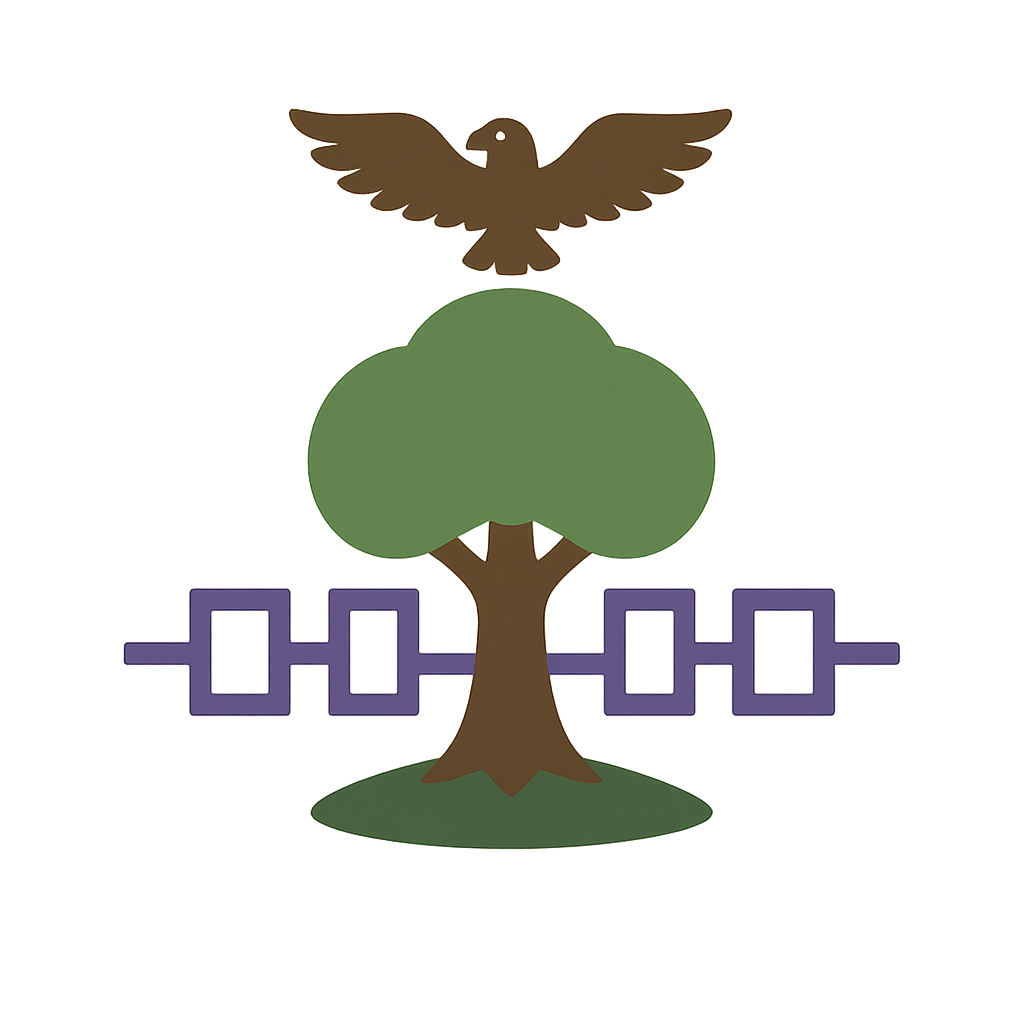
Before I had a name, the world was a scary place for the five nations living near the great lakes and rivers of what is now New York. The Mohawk, Oneida, Onondaga, Cayuga, and Seneca people spoke similar languages, but they were not friends. They fought constantly, and fear was everywhere. Families mourned, villages were burned, and no one felt safe. The cycle of revenge felt like it would never end. Can you imagine a world where your neighbors were your enemies?
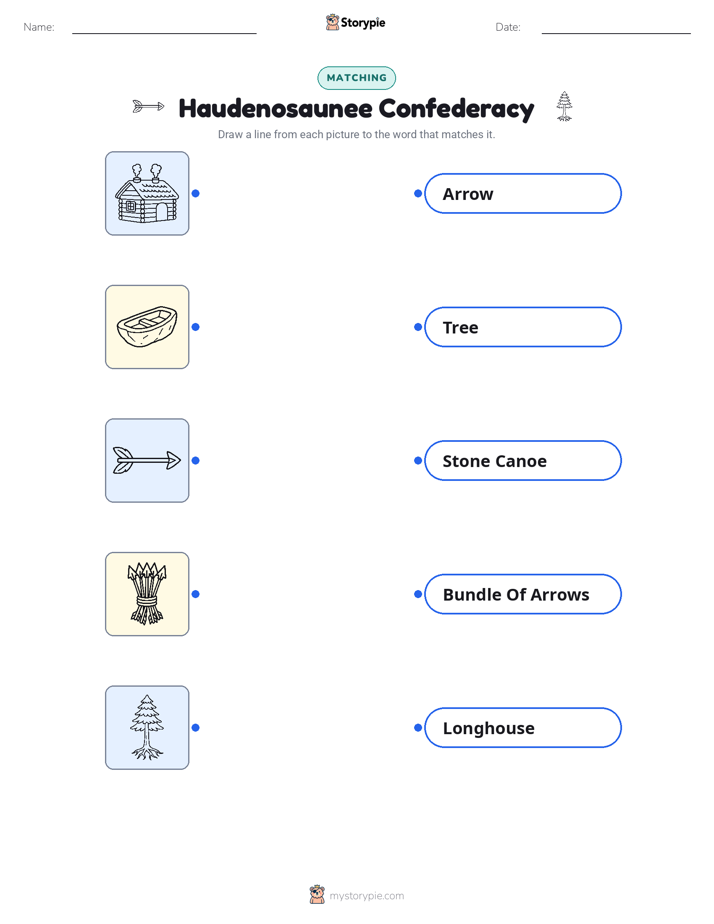
But even in that darkness, a tiny idea began to glow. It was a whisper that asked, 'What if you were stronger together?'. Imagine trying to break a single arrow—snap. It's easy. But what if you held five arrows bundled together? They wouldn't break. That idea of strength in unity... that was me, waiting to be born.
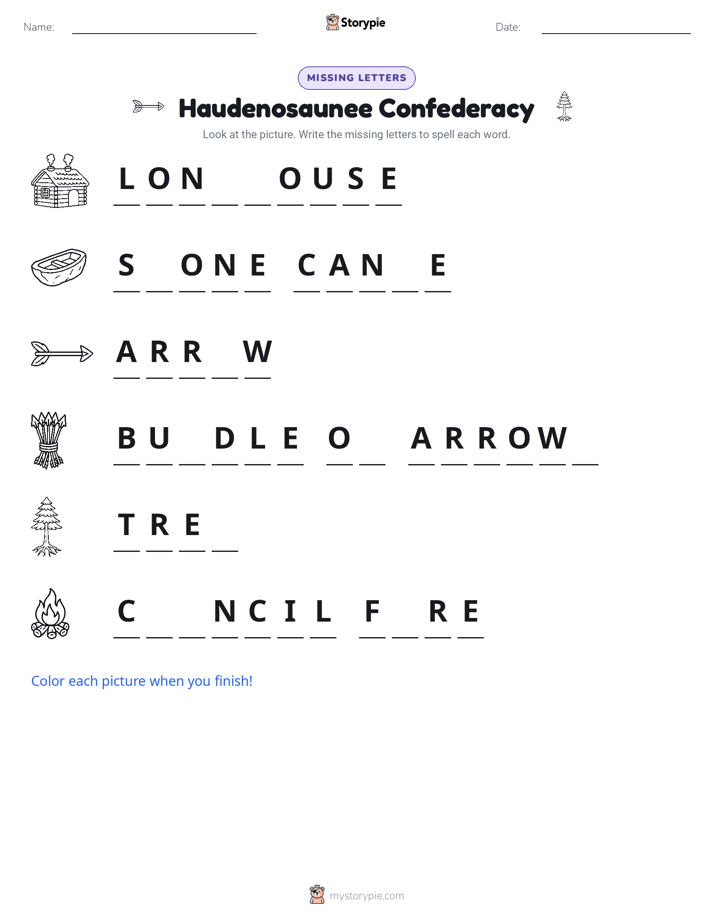
Sometime between the 12th and 15th centuries, a man known as the Great Peacemaker arrived with a message. He traveled in a canoe made of white stone, a symbol of his pure goal: peace. He couldn't speak the people's languages perfectly, so he found a helper, a man named Hiawatha who was filled with grief from losing his family in the wars. Together, they shared the message of the Great Law of Peace. They explained that all people were connected and that war was a terrible poison.
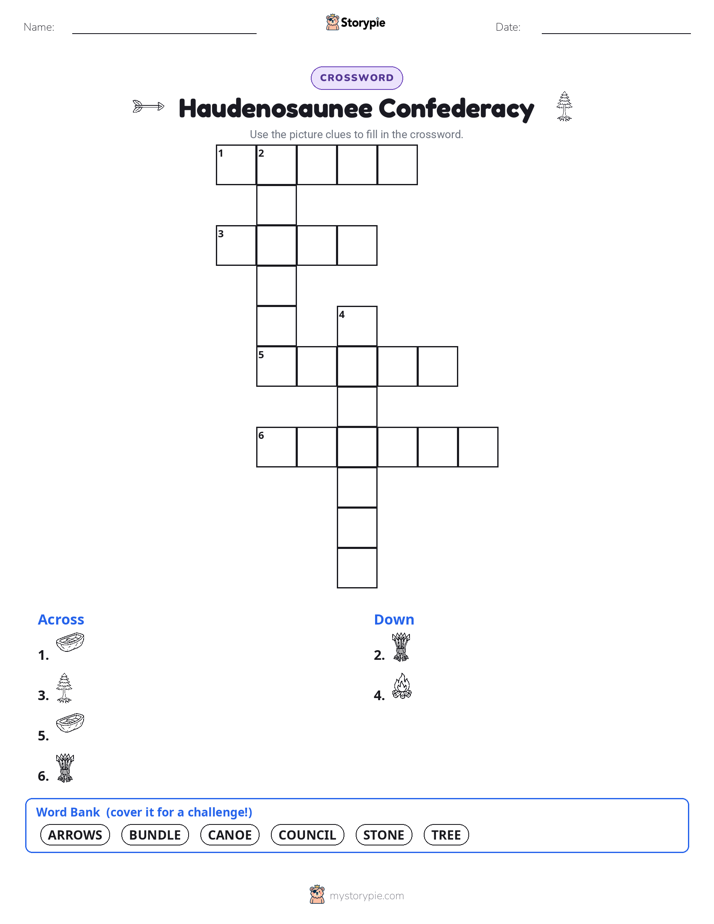
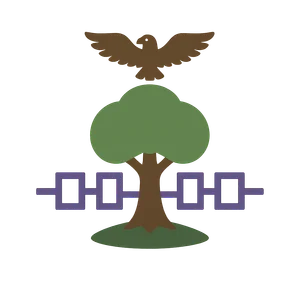
They visited each of the five nations, convincing them to stop the fighting and join in a great council. They offered wampum—belts made of purple and white shells—to record their promises and laws. Each bead and pattern held a meaning. When the nations finally agreed, they buried their weapons under a great white pine tree, the Tree of Peace. They gave me my name: the Haudenosaunee, which means 'People of the Longhouse.' I was born from their promise to live in peace.
The Great Law of Peace
Before I had a name, the world was a scary place for the five nations living near the great lakes and rivers of what is now New York. The Mohawk, Oneida, Onondaga, Cayuga, and Seneca people spoke similar languages, but they were not friends. They fought constantly, and fear was everywhere. Families mourned, villages were burned, and no one felt safe. The cycle of revenge felt like it would never end. Can you imagine a world where your neighbors were your enemies?
But even in that darkness, a tiny idea began to glow. It was a whisper that asked, 'What if you were stronger together?'. Imagine trying to break a single arrow—snap. It's easy. But what if you held five arrows bundled together? They wouldn't break. That idea of strength in unity... that was me, waiting to be born.
Sometime between the 12th and 15th centuries, a man known as the Great Peacemaker arrived with a message. He traveled in a canoe made of white stone, a symbol of his pure goal: peace. He couldn't speak the people's languages perfectly, so he found a helper, a man named Hiawatha who was filled with grief from losing his family in the wars. Together, they shared the message of the Great Law of Peace. They explained that all people were connected and that war was a terrible poison.
They visited each of the five nations, convincing them to stop the fighting and join in a great council. They offered wampum—belts made of purple and white shells—to record their promises and laws. Each bead and pattern held a meaning. When the nations finally agreed, they buried their weapons under a great white pine tree, the Tree of Peace. They gave me my name: the Haudenosaunee, which means 'People of the Longhouse.' I was born from their promise to live in peace.
I wasn't just an agreement; I was a new way to live. I became a government where everyone had a voice. Think of a longhouse, a traditional home with many families living under one roof, sharing a fire and protecting one another. That's what I am. The five nations became one big family living in a symbolic longhouse that stretched across their entire territory. The Mohawk people became the Keepers of the Eastern Door, and the Seneca became the Keepers of the Western Door, protecting our home from danger.
In the middle, the Onondaga became the Keepers of the Central Fire, where the Great Council of fifty leaders met to make decisions. The Cayuga and Oneida were the Younger Brothers, who also had an important voice. No big decision could be made unless everyone agreed. For many years, I was the League of Five Nations. Then, around the year 1722, another nation, the Tuscarora, traveled north to join our family. I grew and became the League of Six Nations, stronger than ever.
My ideas of freedom, unity, and representative government traveled far. Years later, when leaders like Benjamin Franklin were thinking about how to create a new country called the United States, they looked at me. They saw how six separate nations could work together as one, and it inspired them to think about how thirteen different colonies could do the same. My Great Law of Peace showed that people with differences could find common ground and govern themselves fairly.
Today, I am not just a story from the past. I am a living, breathing confederacy. The Haudenosaunee people continue to honor the Great Law, making decisions by thinking of the next seven generations to make sure the future is healthy and peaceful. I am a reminder that peace is always possible when people decide to bundle their arrows and become one strong family.
Wow facts
About
The Haudenosaunee Confederacy, also known as the Iroquois Confederacy, is often described as one of the world's oldest participatory democracies. Its special rules, called the Great Law of Peace, were made in the 12th century. It was originally formed by five Indigenous nations: the Mohawk, Oneida, Onondaga, Cayuga, and Seneca.
Take a Quiz
Question 1 of 5
Why did the Haudenosaunee become known as the 'People of the Longhouse'?
Explore next




Want to do even more?
Go beyond exploring. Unlock tools that turn every story into real learning.

Storypie Plus for families
Full stories, quizzes, and printables. Nights and car rides, sorted.
- Unlimited audio stories
- Create Mode: your child stars in the story
- Offline downloads
- Printable worksheets & coloring pages

Why Storypie for Schools
Students engaged. Prep in seconds. Evenings back to you.
- Worksheets & Quizzes
- Classroom Management
- Formative Assessment
- Custom Curriculum & Lesson Plans
- 27 Languages

Why Storypie for Homeschool
Curriculum done. They'll ask for more. Hours back in your day.
- Worksheet Generator
- First-Person Audio Stories
- Built-in Comprehension Quizzes
- Custom Curriculum & Lesson Plans
- Print & Go Activities