English


Herbivore
A herbivore is an animal anatomically and physiologically adapted to eating plant material…
Reads at Grades 6–8 Listens at Grades 4–8
Print & create
Answer keys·No prep·Free with an account
28 worksheets · answer keys · full story · quiz · Ages 10-12 · CEFR B2
Plus adds 208,000+ more stories in 27 languages, audio for every one, and printables for all of them.
Just want Herbivore?

A World of Green
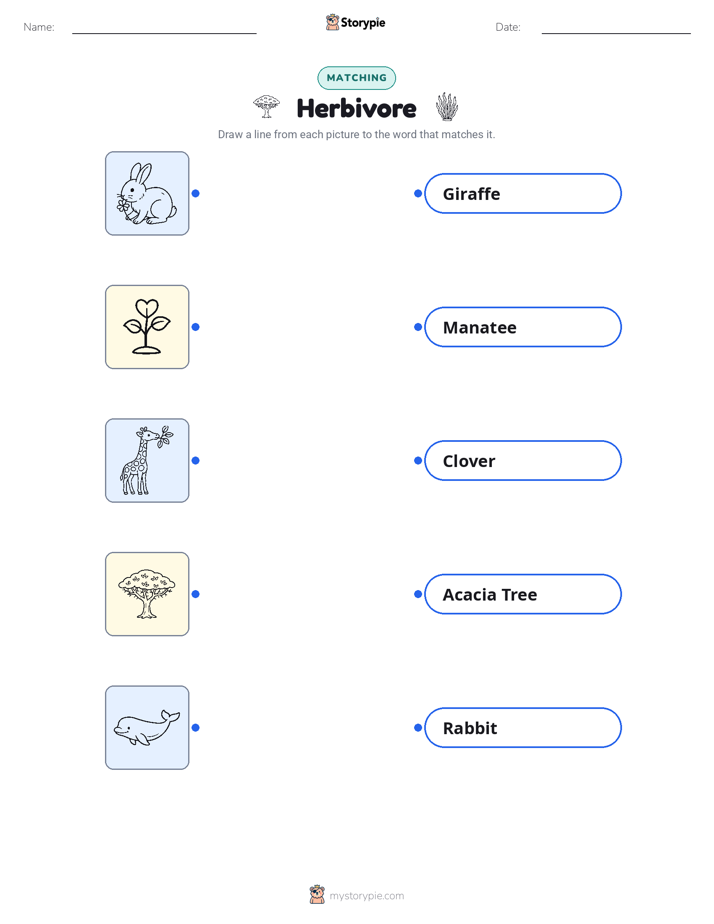
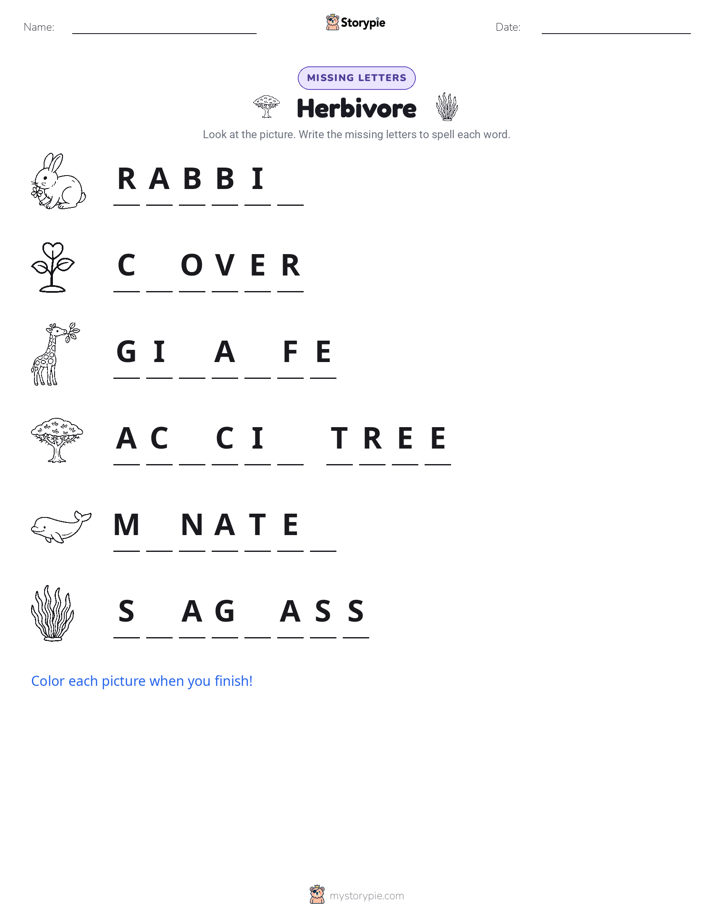
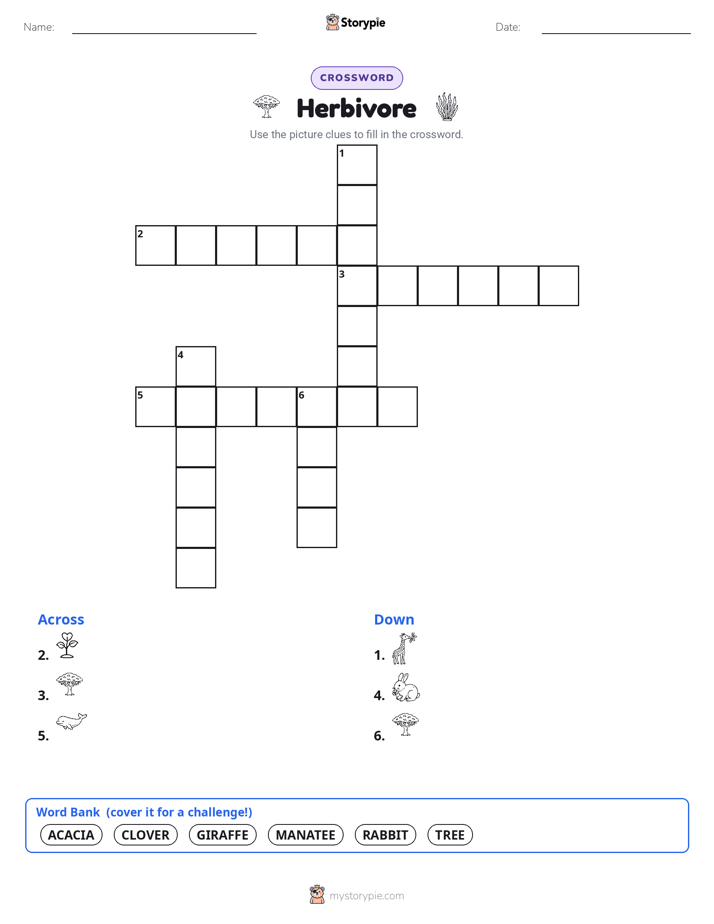
Before you knew my name, you felt my presence in the quiet rhythm of the world. I am there in the gentle, persistent nibbling of a rabbit in a moonlit meadow, its nose twitching as it snips clover. I am the immense, steady power in the neck of a giraffe as it pulls leaves from the highest branches of an acacia tree. You can find me in the slow, peaceful grazing of a manatee through underwater gardens of seagrass, its movements calm and deliberate. I am the driving force behind the strong jaws of a giant panda, which can crush tough bamboo stalks with a satisfying crackle, and I am the delicate precision in the flickering tongue of a hummingbird as it sips sweet nectar from a flower’s heart. For countless creatures, I am not just a meal; I am an entire way of life, a choice made by those who find all the energy and nourishment they need in the leaves, stems, fruits, and roots that spring from the earth. I represent a vast and varied community, from the smallest insect to the most colossal land mammal, all united by a common diet. I am the peaceful, powerful path of the plant-eater. My name is Herbivore.
Giving My Work a Name
For most of human history, people simply saw my work without giving it a formal name. They observed that some animals, like deer and cattle, spent their days grazing in fields, while others, like wolves and lions, hunted for their meals. It was a fundamental truth of the natural world, as obvious as the rising sun. It wasn't until a brilliant thinker in ancient Greece began to write everything down that I was given a place in the records of science. This man was Aristotle, and during the 4th century BCE, he undertook a monumental task: to describe and categorize the entire animal kingdom. In his famous collection of writings, 'History of Animals,' he carefully detailed the different diets and behaviors of creatures, officially noting that some animals subsisted entirely on vegetation. He saw me as a distinct category, a fundamental way of being. Many centuries passed, and while people continued to observe me, it took another great organizer to truly define my role. In the 18th century, a Swedish botanist named Carl Linnaeus decided to create a system for all of nature. In his revolutionary book, 'Systema Naturae,' first published in 1735, he developed a method of classification that scientists still use today. He gave my plant-eating friends a formal place in the grand order of life. It was around this time that I also received my modern name, a perfect description derived from the Latin words 'herba,' meaning 'plant,' and 'vorare,' meaning 'to devour.'
The Green-Powered World
A World of Green
Before you knew my name, you felt my presence in the quiet rhythm of the world. I am there in the gentle, persistent nibbling of a rabbit in a moonlit meadow, its nose twitching as it snips clover. I am the immense, steady power in the neck of a giraffe as it pulls leaves from the highest branches of an acacia tree. You can find me in the slow, peaceful grazing of a manatee through underwater gardens of seagrass, its movements calm and deliberate. I am the driving force behind the strong jaws of a giant panda, which can crush tough bamboo stalks with a satisfying crackle, and I am the delicate precision in the flickering tongue of a hummingbird as it sips sweet nectar from a flower’s heart. For countless creatures, I am not just a meal; I am an entire way of life, a choice made by those who find all the energy and nourishment they need in the leaves, stems, fruits, and roots that spring from the earth. I represent a vast and varied community, from the smallest insect to the most colossal land mammal, all united by a common diet. I am the peaceful, powerful path of the plant-eater. My name is Herbivore.
Giving My Work a Name
For most of human history, people simply saw my work without giving it a formal name. They observed that some animals, like deer and cattle, spent their days grazing in fields, while others, like wolves and lions, hunted for their meals. It was a fundamental truth of the natural world, as obvious as the rising sun. It wasn't until a brilliant thinker in ancient Greece began to write everything down that I was given a place in the records of science. This man was Aristotle, and during the 4th century BCE, he undertook a monumental task: to describe and categorize the entire animal kingdom. In his famous collection of writings, 'History of Animals,' he carefully detailed the different diets and behaviors of creatures, officially noting that some animals subsisted entirely on vegetation. He saw me as a distinct category, a fundamental way of being. Many centuries passed, and while people continued to observe me, it took another great organizer to truly define my role. In the 18th century, a Swedish botanist named Carl Linnaeus decided to create a system for all of nature. In his revolutionary book, 'Systema Naturae,' first published in 1735, he developed a method of classification that scientists still use today. He gave my plant-eating friends a formal place in the grand order of life. It was around this time that I also received my modern name, a perfect description derived from the Latin words 'herba,' meaning 'plant,' and 'vorare,' meaning 'to devour.'
Clues from a Lost World
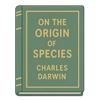
For a long time, people thought my largest followers were elephants and rhinos. But deep within the earth, clues to a much grander past were waiting. Around the year 1822, a woman named Mary Ann Mantell was walking in Sussex, England, when she discovered some unusually large teeth embedded in a rock. They were ridged and worn flat, unlike any predator’s teeth. Her husband, a geologist, showed them to scientists who were puzzled until a brilliant anatomist named Richard Owen studied them. He realized they belonged to a gigantic, extinct reptile that ate plants, much like a modern iguana. He helped name this creature Iguanodon. This discovery opened up a lost world. In 1842, Owen proposed a name for this whole new group of incredible ancient creatures: 'Dinosaur,' meaning 'terrible lizard.' The fossil record proved that I had been fueling some of the largest animals ever to walk the Earth for millions of years. But why did these animals have such specific features? The answer came from another revolutionary thinker, Charles Darwin. On November 24th, 1859, he published his book, 'On the Origin of Species.' Darwin's theory of evolution by natural selection explained that the traits of my followers weren't random. Their broad, flat teeth were perfect grinding stones for tough leaves and stems. Their long, complex digestive systems were specialized factories for breaking down cellulose. These features were adaptations, developed over countless generations, giving them the tools they needed to survive and thrive on a diet of greens.
Your Green-Powered Partners
Today, my story continues all around you. I am present in the gentle lowing of cows in a pasture, turning grass into milk. I am in the busy scurrying of a squirrel in a city park, burying an acorn for the winter. I am the thunderous herds of zebras and wildebeests migrating across the vast African savanna, their lives a constant search for fresh grazing. In the language of science, my followers are called 'primary consumers.' This is a vital job in the food web. Plants, the producers, capture energy from the sun. I am the essential link that takes that solar energy, stored in leaves and stems, and makes it available to the rest of the animal kingdom. Without me, the energy would remain locked away. I am a reminder that there is tremendous strength in gentleness, and that the quiet, daily work of eating green things is what helps power our beautiful, living planet. I am a fundamental and indispensable part of the circle of life.
Wow facts
About
A herbivore is an animal anatomically and physiologically adapted to eating plant material, such as foliage or marine algae, for the main component of its diet.
Take a Quiz
Question 1 of 5
In your own words, summarize the main idea of this story.
Explore next





Want to do even more?
Go beyond exploring. Unlock tools that turn every story into real learning.

Storypie Plus for families
Full stories, quizzes, and printables. Nights and car rides, sorted.
- Unlimited audio stories
- Create Mode: your child stars in the story
- Offline downloads
- Printable worksheets & coloring pages

Why Storypie for Schools
Students engaged. Prep in seconds. Evenings back to you.
- Worksheets & Quizzes
- Classroom Management
- Formative Assessment
- Custom Curriculum & Lesson Plans
- 27 Languages

Why Storypie for Homeschool
Curriculum done. They'll ask for more. Hours back in your day.
- Worksheet Generator
- First-Person Audio Stories
- Built-in Comprehension Quizzes
- Custom Curriculum & Lesson Plans
- Print & Go Activities