English

Herbivore
A herbivore is an animal anatomically and physiologically adapted to eating plant material…
Reads at Grades 3–5 Listens at Grades 1–5
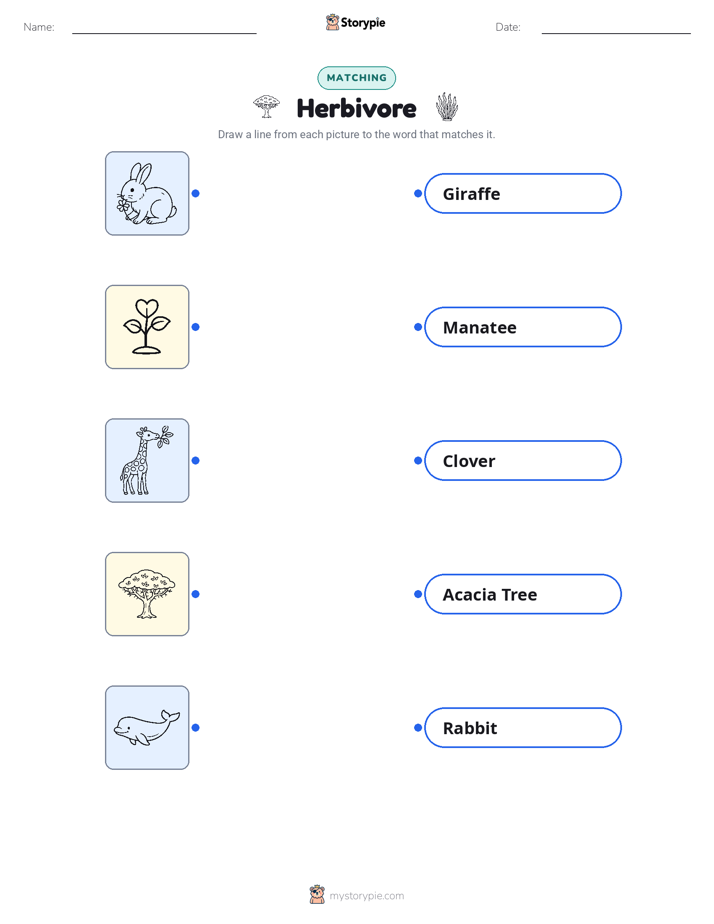
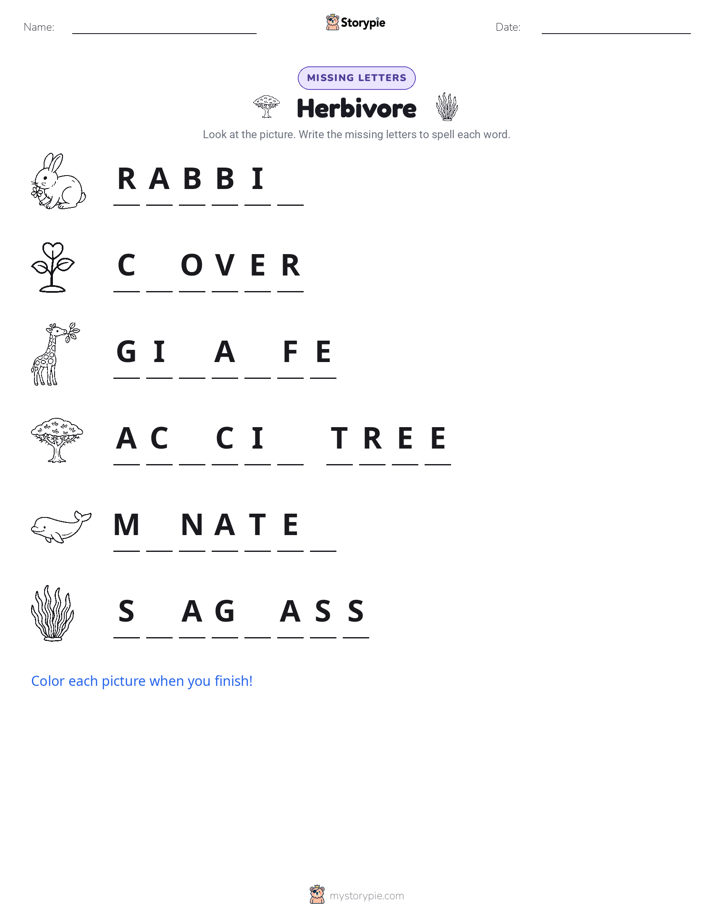
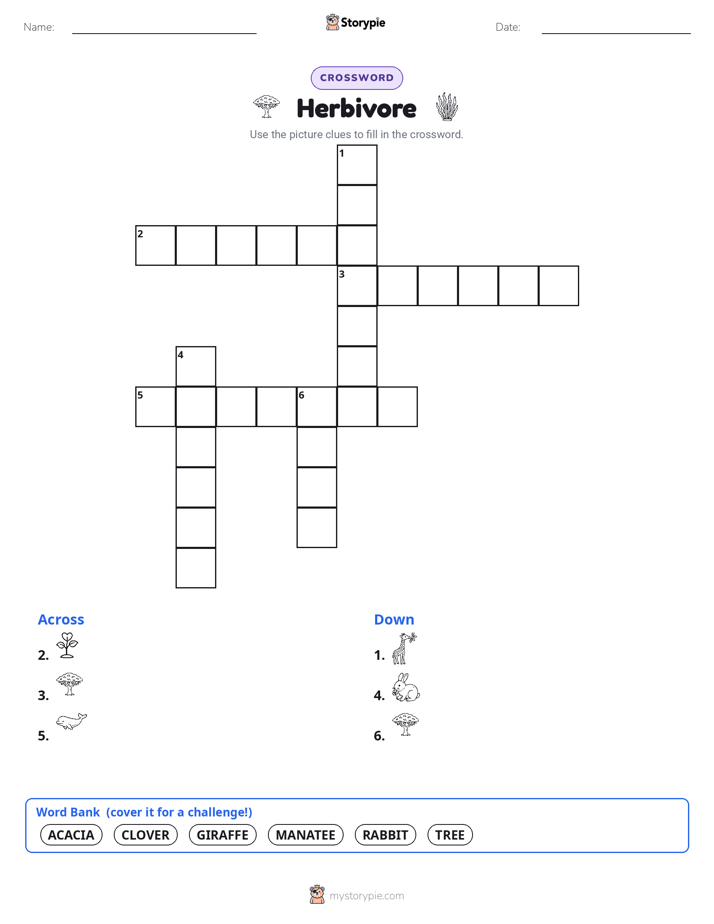
Print & create
Answer keys·No prep·Free with an account
28 worksheets · answer keys · full story · quiz · Ages 8-10 · CEFR B1
Plus adds 208,000+ more stories in 27 languages, audio for every one, and printables for all of them.
Just want Herbivore?
Imagine reaching high, high up with a long neck, stretching past thorny branches to nibble the most tender green leaves at the top of a tree. That's me. Now, picture yourself low to the ground, a tiny rabbit with a twitching nose, finding a sweet patch of clover and munching it with a satisfying crunch. That's me, too. Can you feel the cool water as you float lazily, a gentle manatee grazing on long ribbons of sea grass? I am there as well. In every animal that eats only plants, I am present. I am the quiet work of flat teeth grinding tough grasses into mush and the gurgle of special stomachs that can turn leaves and stems into energy. For thousands of years, animals have done this without a special name, simply living and eating and growing strong from the power of the sun, which is stored inside every leaf, berry, and blade of grass. You see me in every meadow, forest, and ocean. I am the quiet power that turns sunshine and leaves into life. Hello, I am Herbivore.
For as long as people have watched animals, they have known about me. They saw cows chewing cud in the fields, deer nibbling on bushes in the woods, and caterpillars munching on milkweed. Long ago, in ancient Greece, a very smart thinker named Aristotle watched the world around him. Around the 4th century BCE, he spent his time studying animals and writing down everything he learned. He sorted them into groups based on what they did, where they lived, and, of course, what they ate. He didn't call me Herbivore, but he understood the idea that some animals get their food from plants. Many centuries passed, and people kept learning more and more. By the 1800s, scientists were discovering amazing fossils of giant creatures from the past, like dinosaurs. An English scientist named Sir Richard Owen was one of the best at studying these ancient bones. He realized that to understand these animals and share his ideas with other scientists, he needed better, more precise words. It wasn't enough to just say 'plant-eater.' Science needed a universal language. So, around the year 1854, he created a new, official name for me. He took two words from the old Latin language: 'herba,' which means plant, and 'vorare,' which means to devour or eat up. He put them together to make 'Herbivore.' Suddenly, I had a proper name that scientists all over the world could use. Now, when they found the flat-topped teeth of a Triceratops fossil, they could write, 'This was a Herbivore,' and everyone knew exactly what they meant. My name helped organize the great puzzle of nature.
The World's Great Munchers
Imagine reaching high, high up with a long neck, stretching past thorny branches to nibble the most tender green leaves at the top of a tree. That's me. Now, picture yourself low to the ground, a tiny rabbit with a twitching nose, finding a sweet patch of clover and munching it with a satisfying crunch. That's me, too. Can you feel the cool water as you float lazily, a gentle manatee grazing on long ribbons of sea grass? I am there as well. In every animal that eats only plants, I am present. I am the quiet work of flat teeth grinding tough grasses into mush and the gurgle of special stomachs that can turn leaves and stems into energy. For thousands of years, animals have done this without a special name, simply living and eating and growing strong from the power of the sun, which is stored inside every leaf, berry, and blade of grass. You see me in every meadow, forest, and ocean. I am the quiet power that turns sunshine and leaves into life. Hello, I am Herbivore.
For as long as people have watched animals, they have known about me. They saw cows chewing cud in the fields, deer nibbling on bushes in the woods, and caterpillars munching on milkweed. Long ago, in ancient Greece, a very smart thinker named Aristotle watched the world around him. Around the 4th century BCE, he spent his time studying animals and writing down everything he learned. He sorted them into groups based on what they did, where they lived, and, of course, what they ate. He didn't call me Herbivore, but he understood the idea that some animals get their food from plants. Many centuries passed, and people kept learning more and more. By the 1800s, scientists were discovering amazing fossils of giant creatures from the past, like dinosaurs. An English scientist named Sir Richard Owen was one of the best at studying these ancient bones. He realized that to understand these animals and share his ideas with other scientists, he needed better, more precise words. It wasn't enough to just say 'plant-eater.' Science needed a universal language. So, around the year 1854, he created a new, official name for me. He took two words from the old Latin language: 'herba,' which means plant, and 'vorare,' which means to devour or eat up. He put them together to make 'Herbivore.' Suddenly, I had a proper name that scientists all over the world could use. Now, when they found the flat-topped teeth of a Triceratops fossil, they could write, 'This was a Herbivore,' and everyone knew exactly what they meant. My name helped organize the great puzzle of nature.
My job is so much more than just eating. I am a super important link in the food web. Scientists call me a primary consumer, which is a fancy way of saying I am one of the first to eat the energy that plants make from sunlight. When I, as a big moose, eat a willow branch, I store that sun energy in my body. Then, if a wolf comes along, that energy gets passed on. Without me, many other animals would have nothing to eat. I am also one of nature's best gardeners. Have you ever eaten a juicy berry? Well, so do bears and birds. After they enjoy the sweet fruit, they travel. Later, when they leave their droppings, the seeds from the fruit are dropped in a brand new place, ready to grow into a new bush. That's me at work. In wide-open grasslands, huge herds of bison or wildebeest munch on endless grass. By eating so much, they keep the grass short and healthy, which can even help prevent big wildfires from spreading. From the tiniest caterpillar to the biggest elephant, I am always at work, connecting the sun, the soil, and the sky. I am a vital link in the great, green chain of life, helping our world stay healthy and full of wonder.
Wow facts
About
A herbivore is an animal anatomically and physiologically adapted to eating plant material, such as foliage or marine algae, for the main component of its diet.
Take a Quiz
Question 1 of 5
Why was it important for Sir Richard Owen to give the concept of plant-eating a specific name like 'Herbivore'?
Explore next

Want to do even more?
Go beyond exploring. Unlock tools that turn every story into real learning.

Storypie Plus for families
Full stories, quizzes, and printables. Nights and car rides, sorted.
- Unlimited audio stories
- Create Mode: your child stars in the story
- Offline downloads
- Printable worksheets & coloring pages

Why Storypie for Schools
Students engaged. Prep in seconds. Evenings back to you.
- Worksheets & Quizzes
- Classroom Management
- Formative Assessment
- Custom Curriculum & Lesson Plans
- 27 Languages

Why Storypie for Homeschool
Curriculum done. They'll ask for more. Hours back in your day.
- Worksheet Generator
- First-Person Audio Stories
- Built-in Comprehension Quizzes
- Custom Curriculum & Lesson Plans
- Print & Go Activities