English

Hinduism
One of the world's oldest religions, also known as Sanātana Dharma…
Reads at Grades 3–5 Listens at Grades 1–5
Print & create
Answer keys·No prep·Free with an account
28 worksheets · answer keys · full story · quiz · Ages 8-10 · CEFR B1
Plus adds 102,000+ more stories in 27 languages, audio for every one, and printables for all of them.
Just want Hinduism?
Hello there. Before I tell you my name, I want you to imagine a sound—the gentle ringing of a temple bell. Picture the sweet smell of incense smoke curling in the air, or the bright, joyful colors of a festival where friends and family toss powders of red, yellow, and blue. I am the feeling behind these moments. I am a question that has echoed in people's hearts for thousands of years: 'How can I live a good life?'. I am like a great, ancient river, flowing through time, carrying stories, ideas, and traditions. My waters have nourished one of the oldest civilizations on Earth. People who follow my path have a special name for me, 'Sanātana Dharma,' which means the eternal way. It’s a path that is open and welcoming, with room for many different beliefs. But you probably know me by a name that comes from a real river, the mighty Indus, which flows through Asia. For thousands of years, people living near this river shared my stories and ideas. That is why the world came to know me as Hinduism.
My story began so long ago that no one remembers the exact day. My earliest whispers were heard in the Indus Valley more than four thousand years ago, around 2500 BCE, in a civilization of bustling cities and clever builders. Can you imagine a time before most books were even written?. That’s when my first ideas began to bloom. Later, starting around 1500 BCE, wise poets called Rishis sat in quiet forests and felt a deep connection to the world. They composed thousands of beautiful hymns and poems to honor nature and the spirit of the universe. These became my oldest sacred books, the Vedas. For a thousand years, these songs were never written down. Instead, they were passed from teacher to student, memorized perfectly, spoken aloud so they would never be forgotten. It was a library carried in people's minds. As time flowed on, around 800 BCE, people began to ask even deeper questions. In books called the Upanishads, they explored big ideas. They wondered about the soul, which they called 'Atman,' and the great spirit of the universe, which they called 'Brahman.' They had an amazing realization: that every person, animal, and star has a tiny piece of this spirit inside them—that we are all connected. From these powerful thoughts came three important ideas that guide my followers to this day. Dharma is your special purpose or duty in the world, the right way for you to live. Karma is the idea that every action you take, good or bad, comes back to you, like a boomerang. And Samsara is the cycle of life, where a soul is born again and again, learning new lessons each time, until it rejoins the great spirit of Brahman.
The River of Stories
Hello there. Before I tell you my name, I want you to imagine a sound—the gentle ringing of a temple bell. Picture the sweet smell of incense smoke curling in the air, or the bright, joyful colors of a festival where friends and family toss powders of red, yellow, and blue. I am the feeling behind these moments. I am a question that has echoed in people's hearts for thousands of years: 'How can I live a good life?'. I am like a great, ancient river, flowing through time, carrying stories, ideas, and traditions. My waters have nourished one of the oldest civilizations on Earth. People who follow my path have a special name for me, 'Sanātana Dharma,' which means the eternal way. It’s a path that is open and welcoming, with room for many different beliefs. But you probably know me by a name that comes from a real river, the mighty Indus, which flows through Asia. For thousands of years, people living near this river shared my stories and ideas. That is why the world came to know me as Hinduism.
My story began so long ago that no one remembers the exact day. My earliest whispers were heard in the Indus Valley more than four thousand years ago, around 2500 BCE, in a civilization of bustling cities and clever builders. Can you imagine a time before most books were even written?. That’s when my first ideas began to bloom. Later, starting around 1500 BCE, wise poets called Rishis sat in quiet forests and felt a deep connection to the world. They composed thousands of beautiful hymns and poems to honor nature and the spirit of the universe. These became my oldest sacred books, the Vedas. For a thousand years, these songs were never written down. Instead, they were passed from teacher to student, memorized perfectly, spoken aloud so they would never be forgotten. It was a library carried in people's minds. As time flowed on, around 800 BCE, people began to ask even deeper questions. In books called the Upanishads, they explored big ideas. They wondered about the soul, which they called 'Atman,' and the great spirit of the universe, which they called 'Brahman.' They had an amazing realization: that every person, animal, and star has a tiny piece of this spirit inside them—that we are all connected. From these powerful thoughts came three important ideas that guide my followers to this day. Dharma is your special purpose or duty in the world, the right way for you to live. Karma is the idea that every action you take, good or bad, comes back to you, like a boomerang. And Samsara is the cycle of life, where a soul is born again and again, learning new lessons each time, until it rejoins the great spirit of Brahman.
To help people understand these big ideas, I began to tell stories—epic adventures filled with brave heroes, wise kings, and powerful gods and goddesses. These tales made the lessons of Dharma and Karma feel real and exciting. Between 400 BCE and 400 CE, two of my most famous stories, the Ramayana and the Mahabharata, were written down. The Ramayana tells of Prince Rama's quest to rescue his wife Sita from a demon king, teaching lessons about love, loyalty, and doing the right thing, no matter how hard it is. The Mahabharata is a huge story about a great war between cousins, but it also contains a beautiful song called the Bhagavad Gita. In this part, the god Krishna teaches a warrior named Arjuna about his dharma, explaining why he must be brave and follow his duty. You might hear that I have many gods, like Vishnu the preserver, Shiva the transformer, and Devi the great goddess. But many of my followers see these different gods and goddesses as different ways of understanding the one, single, universal spirit, Brahman. Think of it like this: the sun is one star, but its light can shine through many different colored windows, creating beautiful patterns. In the same way, Brahman is one spirit with many amazing forms and personalities.
Today, my river of stories continues to flow all over the world. I am not just in ancient books that sit on a shelf. I am alive in the colorful celebrations of Diwali, the festival of lights that shows how good always wins over evil, with families lighting lamps and sharing sweets. I am there in the practice of yoga, which helps connect the body and mind, making people feel strong and peaceful. I am in the quietness of meditation, which helps people listen for the calm spark of Brahman within themselves. I remind people to be kind to all living things, to honor their families, and to find their own unique path to being a good person. I don't give everyone the same set of rules to follow. Instead, I offer a thousand different paths up the same mountain, each one leading to truth, understanding, and kindness. And my greatest hope is that I continue to inspire people to ask big questions, to live with courage, and to see the wonder of the universe in every single person they meet.
Wow facts
About
One of the world's oldest religions, also known as Sanātana Dharma, which originated in the Indian subcontinent. It is a diverse family of beliefs, philosophies, and traditions with core concepts including Dharma, Karma, and Samsara.
Take a Quiz
Question 1 of 5
The story says the Vedas were passed down 'orally' for a thousand years. What does 'orally' mean in this sentence?
Explore next



Want to do even more?
Go beyond exploring. Unlock tools that turn every story into real learning.

Storypie Plus for families
Full stories, quizzes, and printables. Nights and car rides, sorted.
- Unlimited audio stories
- Create Mode: your child stars in the story
- Offline downloads
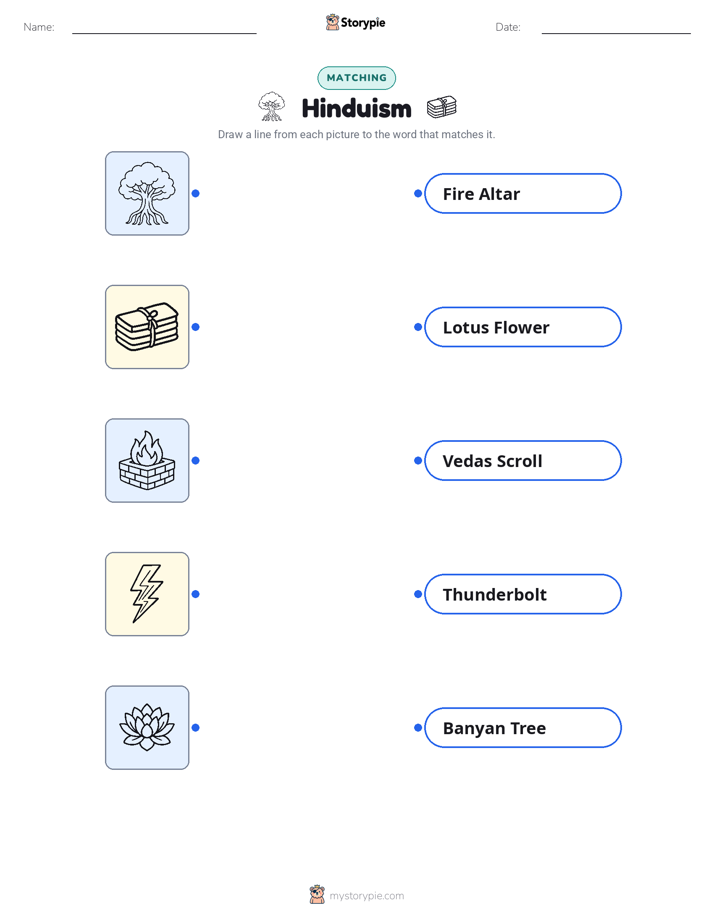
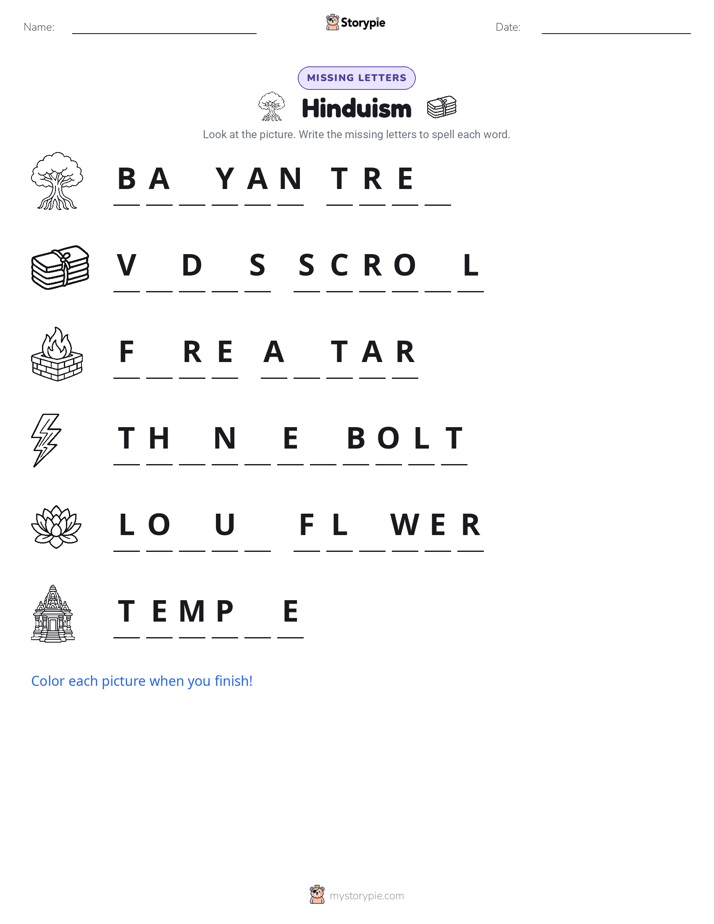
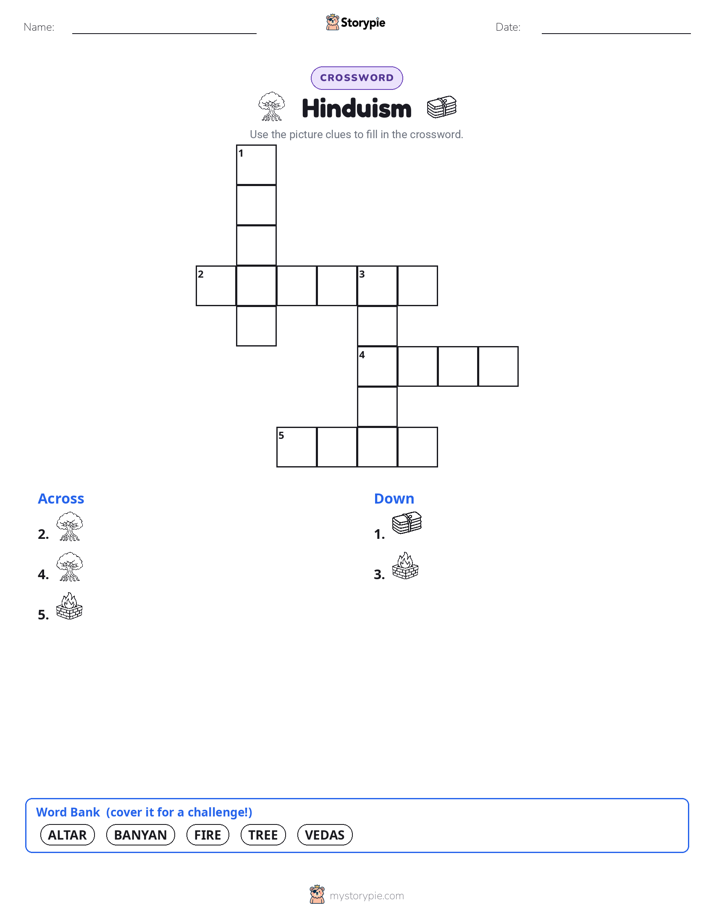
- Printable worksheets & coloring pages

Why Storypie for Schools
Students engaged. Prep in seconds. Evenings back to you.
- Worksheets & Quizzes
- Classroom Management
- Formative Assessment
- Custom Curriculum & Lesson Plans
- 27 Languages

Why Storypie for Homeschool
Curriculum done. They'll ask for more. Hours back in your day.
- Worksheet Generator
- First-Person Audio Stories
- Built-in Comprehension Quizzes
- Custom Curriculum & Lesson Plans
- Print & Go Activities