English

Igneous Rock
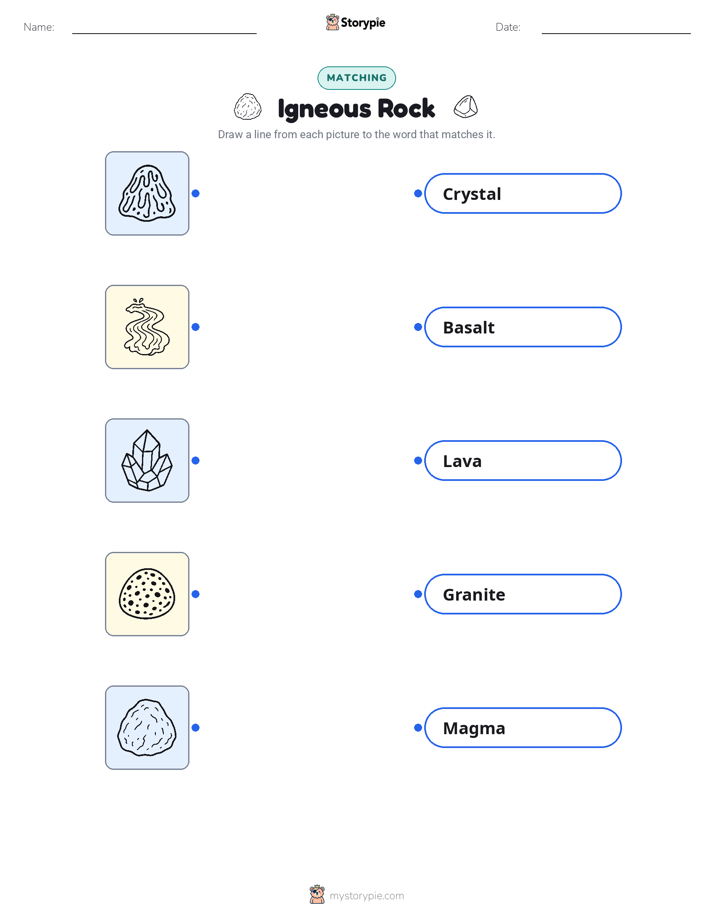
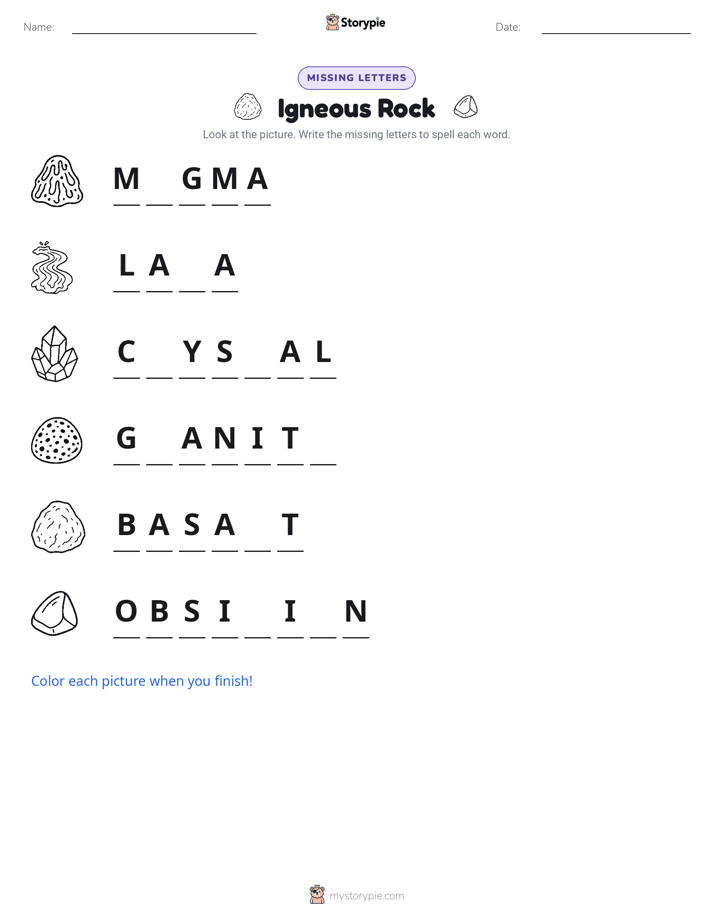
Igneous rocks are one of the three main rock types…
Reads at Grades 3–5 Listens at Grades 1–5
Print & create
Answer keys·No prep·Free with an account
28 worksheets · answer keys · full story · quiz · Ages 8-10 · CEFR B1
Plus adds 244,000+ more stories in 27 languages, audio for every one, and printables for all of them.
Just want Igneous Rock?
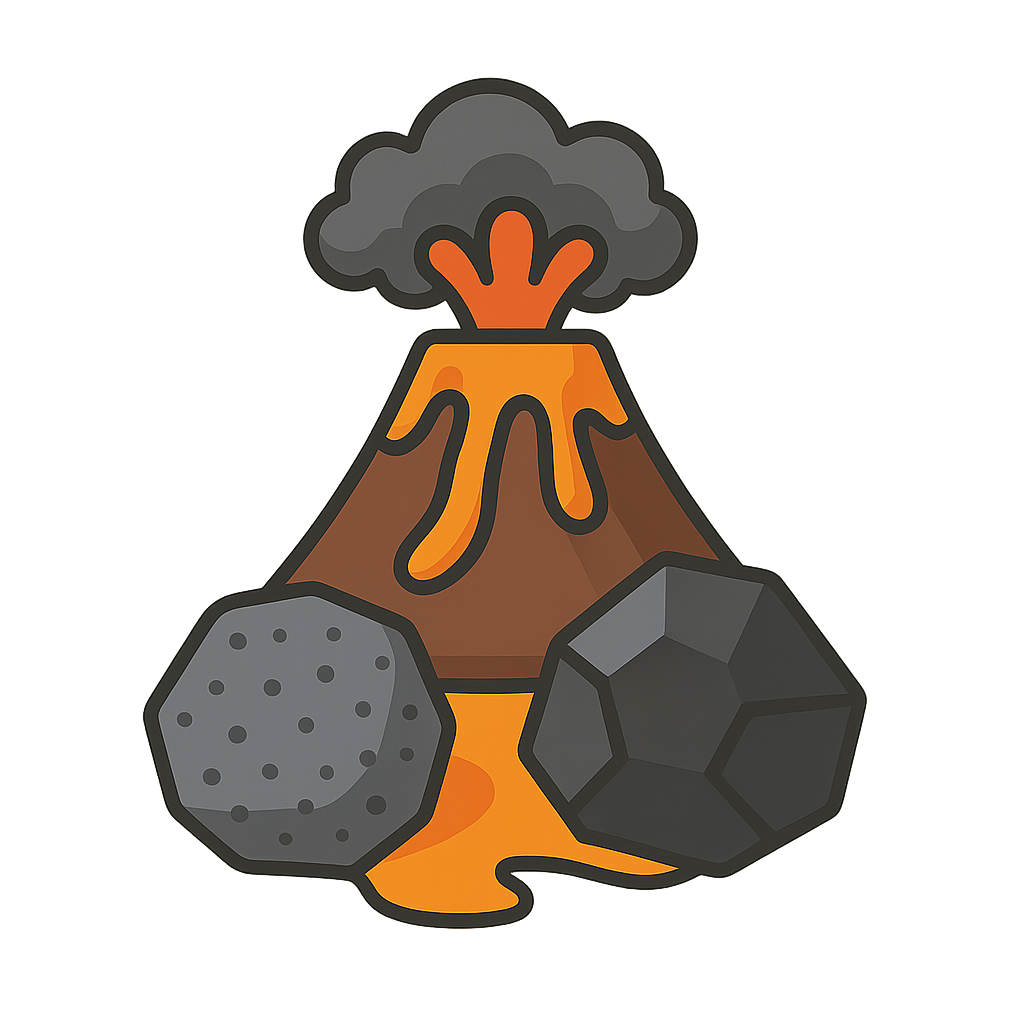
Can you imagine being born from heat so intense it could melt the world. That’s how my life begins, deep inside the Earth where everything is glowing and gooey. I start as melted rock called magma, and I swirl and bubble under incredible pressure. Sometimes, I slowly push my way up toward the surface but decide to stay cozy underground. I take my time cooling down, and as I do, I grow beautiful, sparkly crystals inside me. You might see me as a strong, speckled rock peeking out of a mountainside. Other times, I get a burst of energy and shoot right out of a volcano as fiery lava. Whoosh. I fly through the air and cool down super fast, becoming smooth and glassy without any time to grow big crystals. I am strong, solid, and can be found all over the world. Hello. You can call me Igneous Rock. My name comes from a Latin word, 'ignis,' which means fire, because that’s where I begin my life.
For thousands and thousands of years, people saw me and used me, but they didn’t know my secret story. Can you imagine a world without metal tools. During the Stone Age, people discovered that one of my forms, a dark and glassy rock called obsidian, could be shaped into the sharpest tools you could imagine. They carefully chipped away at me to make arrowheads for hunting and knives for cutting. They also used another of my forms, the tough and speckled rock called granite, to build amazing monuments and temples that still stand tall today. They knew I was useful, but my fiery birth was a complete mystery. It wasn't until much later, in the 18th century, that a curious man from Scotland began to piece my story together. His name was James Hutton, and he loved hiking through the mountains, looking closely at the clues the Earth left behind. Around the year 1788, after studying cliffs and valleys, he had a brilliant idea. He saw how granite veins cut through other rocks and realized I must have started as a hot liquid that pushed its way in and cooled down. Before him, many people believed rocks like me were formed from water. James Hutton showed the world that I was born from melted rock. His idea changed everything and helped create the science of geology.
The Fiery Story of Igneous Rock
Can you imagine being born from heat so intense it could melt the world. That’s how my life begins, deep inside the Earth where everything is glowing and gooey. I start as melted rock called magma, and I swirl and bubble under incredible pressure. Sometimes, I slowly push my way up toward the surface but decide to stay cozy underground. I take my time cooling down, and as I do, I grow beautiful, sparkly crystals inside me. You might see me as a strong, speckled rock peeking out of a mountainside. Other times, I get a burst of energy and shoot right out of a volcano as fiery lava. Whoosh. I fly through the air and cool down super fast, becoming smooth and glassy without any time to grow big crystals. I am strong, solid, and can be found all over the world. Hello. You can call me Igneous Rock. My name comes from a Latin word, 'ignis,' which means fire, because that’s where I begin my life.
For thousands and thousands of years, people saw me and used me, but they didn’t know my secret story. Can you imagine a world without metal tools. During the Stone Age, people discovered that one of my forms, a dark and glassy rock called obsidian, could be shaped into the sharpest tools you could imagine. They carefully chipped away at me to make arrowheads for hunting and knives for cutting. They also used another of my forms, the tough and speckled rock called granite, to build amazing monuments and temples that still stand tall today. They knew I was useful, but my fiery birth was a complete mystery. It wasn't until much later, in the 18th century, that a curious man from Scotland began to piece my story together. His name was James Hutton, and he loved hiking through the mountains, looking closely at the clues the Earth left behind. Around the year 1788, after studying cliffs and valleys, he had a brilliant idea. He saw how granite veins cut through other rocks and realized I must have started as a hot liquid that pushed its way in and cooled down. Before him, many people believed rocks like me were formed from water. James Hutton showed the world that I was born from melted rock. His idea changed everything and helped create the science of geology.
Today, you don’t have to be a scientist or a mountain climber to find me. I am all around you. That shiny, speckled countertop in your kitchen where you make sandwiches. That might be my granite form. The dark gravel that makes roads strong enough for cars and buses to drive on. That’s often my basalt form, crushed into small pieces. I even have a silly side. There's a type of me called pumice that is so full of air bubbles from its fast, foamy birth that it can float on water. People use me to soften their skin. I help modern scientists understand what’s happening deep inside our planet by studying my crystals and my chemistry. I am a constant reminder of Earth’s amazing, fiery power. I show how something wild and hot can become something beautiful, strong, and helpful. I am one of the main building blocks of our world, and I'm still being made today, deep in the heart of the Earth and in fiery volcanoes, waiting for my next adventure.
Wow facts
About
Igneous rocks are one of the three main rock types, formed through the cooling and solidification of magma or lava. Their name derives from the Latin word 'ignis,' meaning fire.
Take a Quiz
Question 1 of 5
Who was the person from Scotland who figured out how granite was formed?
Explore next





Want to do even more?
Go beyond exploring. Unlock tools that turn every story into real learning.

Storypie Plus for families
Full stories, quizzes, and printables. Nights and car rides, sorted.
- Unlimited audio stories
- Create Mode: your child stars in the story
- Offline downloads
- Printable worksheets & coloring pages

Why Storypie for Schools
Students engaged. Prep in seconds. Evenings back to you.
- Worksheets & Quizzes
- Classroom Management
- Formative Assessment
- Custom Curriculum & Lesson Plans
- 27 Languages

Why Storypie for Homeschool
Curriculum done. They'll ask for more. Hours back in your day.
- Worksheet Generator
- First-Person Audio Stories
- Built-in Comprehension Quizzes
- Custom Curriculum & Lesson Plans
- Print & Go Activities