English

IUCN Endangered Species
A system of classifying species at high risk of global extinction…
Reads at Grades 6–8 Listens at Grades 4–8
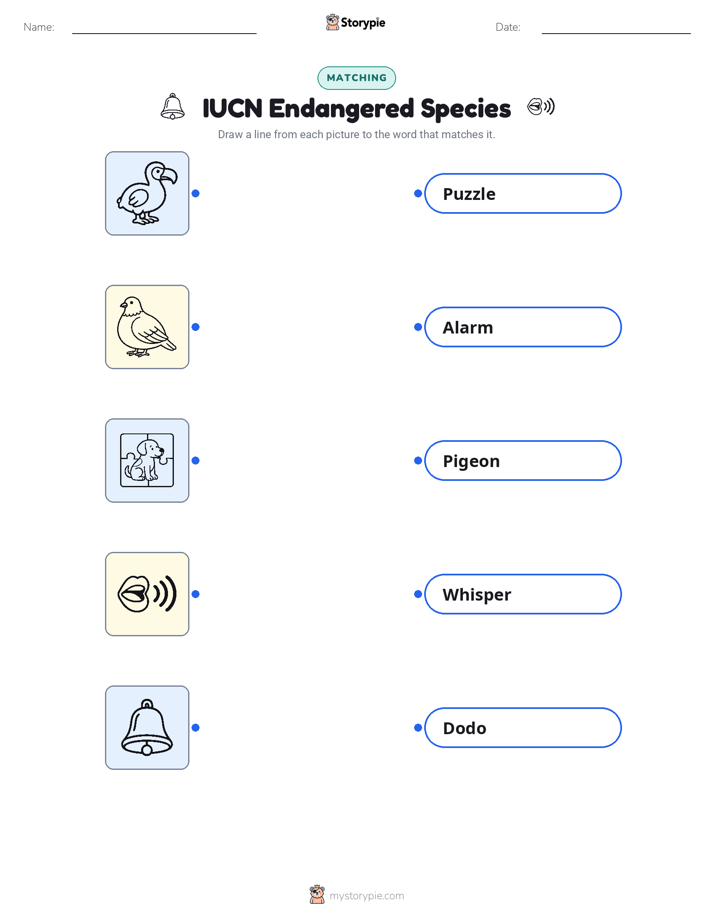
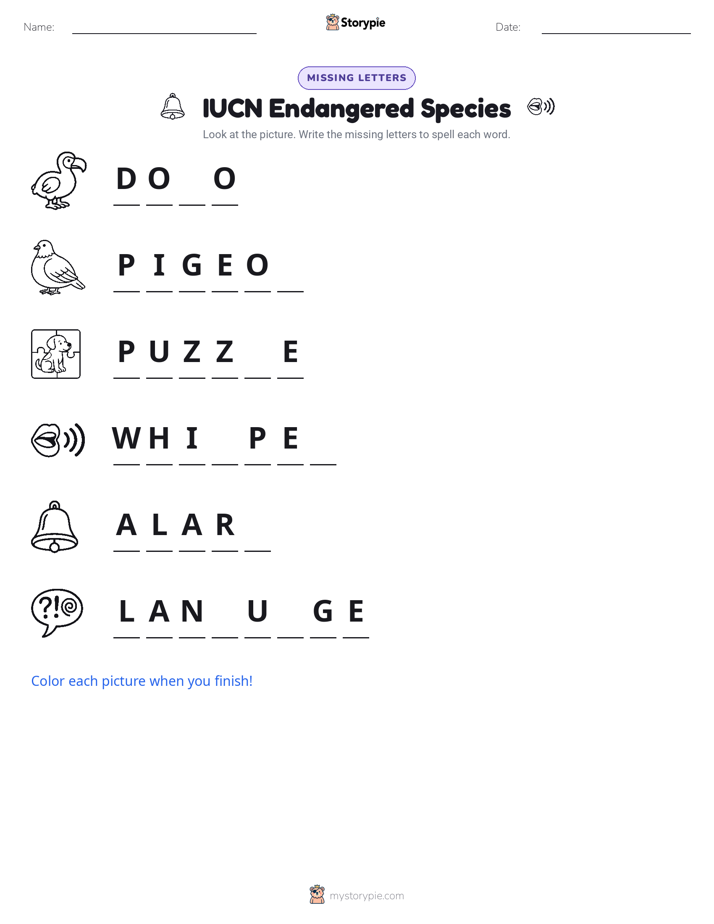
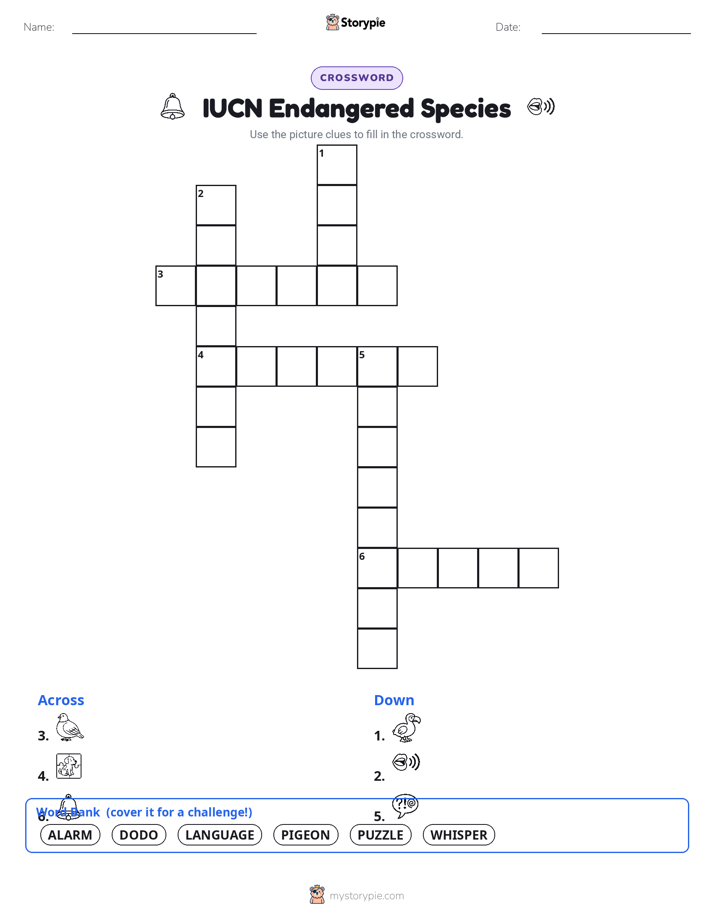
Print & create
Answer keys·No prep·Free with an account
28 worksheets · answer keys · full story · quiz · Ages 10-12 · CEFR B2
Plus adds 244,000+ more stories in 27 languages, audio for every one, and printables for all of them.
Just want IUCN Endangered Species?
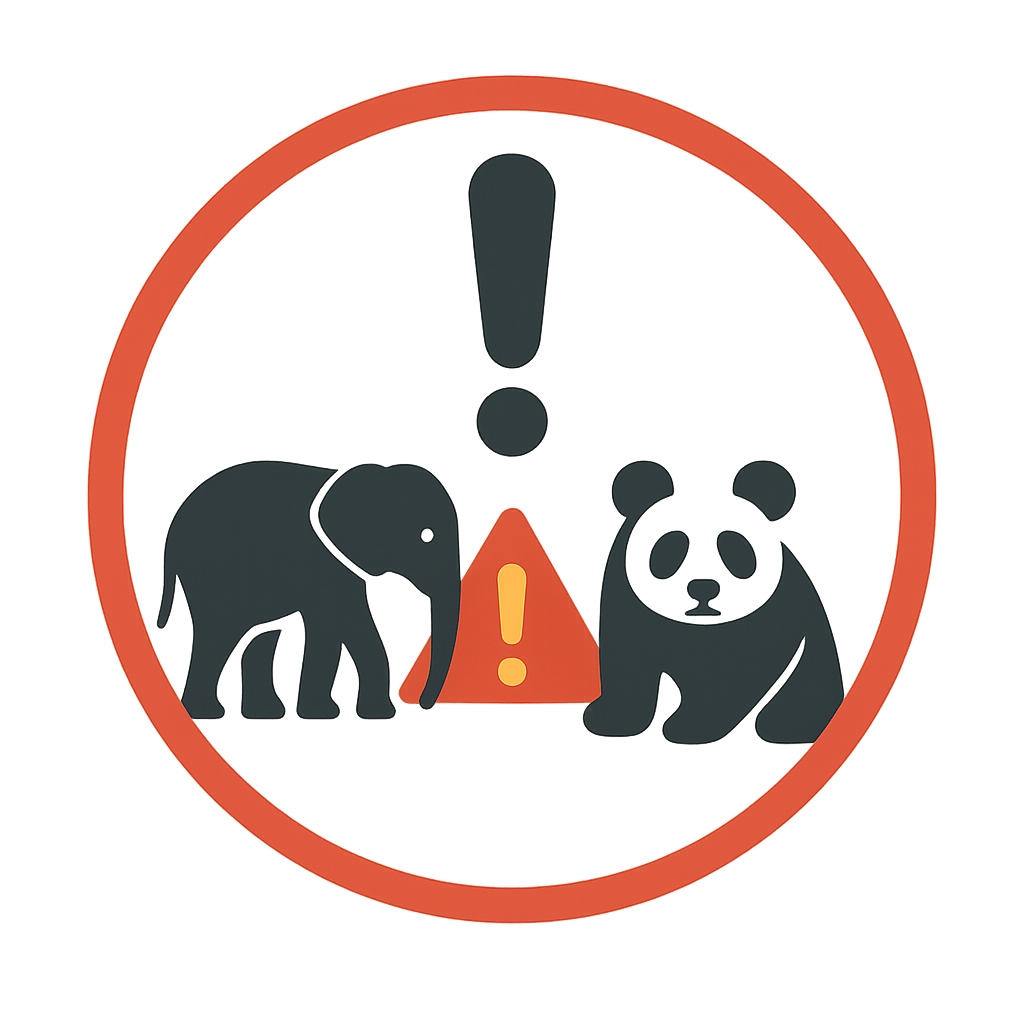
Have you ever felt a small ache in your heart when you hear a story about an animal you will never get to see. I am that feeling, that quiet worry you get when you think about the dodo bird, or the passenger pigeon, whose songs no one will ever hear again. For centuries, people saw these disappearances happen. They witnessed the last of a kind, like a lonely bird named Martha, the very last passenger pigeon, who passed away in a zoo on September 1st, 1914. Her passing was mourned, a symbol of a great loss, but the world lacked a unified voice to prevent such tragedies. There was no shared, global system to track which creatures were slipping away, no universal alarm to ring before it was too late. Individuals and small groups tried their best, but their efforts were scattered, like whispers in a storm. I was born from the need to turn those whispers into a clear, powerful shout that everyone could hear. I am that alarm, a universal language for caring about our planet’s magnificent creatures. I am the world's official list of Endangered Species, a chronicle of vulnerability and a catalyst for hope.
For a long time, trying to save animals was like attempting to solve a massive, planetary puzzle with most of the pieces missing. Conservationists in one country might not know about a critical threat facing the same species halfway around the world. There was no single, reliable picture of which animals were in the most trouble globally. But after the turmoil and division of World War II, a new spirit of collaboration began to emerge. Scientists and world leaders recognized that the health of the planet was a shared responsibility. On October 5th, 1948, they came together to form a new organization called the International Union for Conservation of Nature, or IUCN. Their mission was clear and ambitious: to use the power of science to protect the natural world. One of their most significant and enduring ideas was to create me. The first official version, called the Red List of Threatened Species, was carefully compiled and published in 1964. A dedicated conservationist named Sir Peter Scott was a key leader in this monumental project. He understood that risk wasn't a simple 'safe' or 'gone' switch. He helped design my system not as a single, grim list, but as a spectrum of risk, like a warning system with different levels of urgency. I categorize species as 'Critically Endangered' for those on the very brink of extinction, 'Endangered' for those in severe danger, and 'Vulnerable' for those whose populations are declining and need close monitoring. This detailed system allows scientists and governments to focus their limited resources and urgent efforts where they are needed most, transforming a feeling of helpless worry into a strategic plan for action.
The World's Watchlist
Have you ever felt a small ache in your heart when you hear a story about an animal you will never get to see. I am that feeling, that quiet worry you get when you think about the dodo bird, or the passenger pigeon, whose songs no one will ever hear again. For centuries, people saw these disappearances happen. They witnessed the last of a kind, like a lonely bird named Martha, the very last passenger pigeon, who passed away in a zoo on September 1st, 1914. Her passing was mourned, a symbol of a great loss, but the world lacked a unified voice to prevent such tragedies. There was no shared, global system to track which creatures were slipping away, no universal alarm to ring before it was too late. Individuals and small groups tried their best, but their efforts were scattered, like whispers in a storm. I was born from the need to turn those whispers into a clear, powerful shout that everyone could hear. I am that alarm, a universal language for caring about our planet’s magnificent creatures. I am the world's official list of Endangered Species, a chronicle of vulnerability and a catalyst for hope.
For a long time, trying to save animals was like attempting to solve a massive, planetary puzzle with most of the pieces missing. Conservationists in one country might not know about a critical threat facing the same species halfway around the world. There was no single, reliable picture of which animals were in the most trouble globally. But after the turmoil and division of World War II, a new spirit of collaboration began to emerge. Scientists and world leaders recognized that the health of the planet was a shared responsibility. On October 5th, 1948, they came together to form a new organization called the International Union for Conservation of Nature, or IUCN. Their mission was clear and ambitious: to use the power of science to protect the natural world. One of their most significant and enduring ideas was to create me. The first official version, called the Red List of Threatened Species, was carefully compiled and published in 1964. A dedicated conservationist named Sir Peter Scott was a key leader in this monumental project. He understood that risk wasn't a simple 'safe' or 'gone' switch. He helped design my system not as a single, grim list, but as a spectrum of risk, like a warning system with different levels of urgency. I categorize species as 'Critically Endangered' for those on the very brink of extinction, 'Endangered' for those in severe danger, and 'Vulnerable' for those whose populations are declining and need close monitoring. This detailed system allows scientists and governments to focus their limited resources and urgent efforts where they are needed most, transforming a feeling of helpless worry into a strategic plan for action.
Today, you should not think of me as just a collection of sad stories. I am a tool for action and a powerful source of hope. When a species is placed in one of my high-risk categories, it sends a signal across the entire globe. It is a call to action that inspires governments to create protective laws, motivates scientists to launch new studies, and encourages people everywhere to contribute to conservation efforts. I have been the starting point for some incredible comeback stories. The Bald Eagle, the proud symbol of North America, was once nearly wiped out by pesticides. The Giant Panda in China was on the brink of vanishing due to habitat loss. Because both were officially listed as Endangered, people worked together with fierce determination. They protected their habitats, banned harmful chemicals, and established breeding programs. Now, their populations are much healthier and more stable. I am not a static, dusty book on a shelf. I am a living document, constantly being updated by the work of thousands of dedicated scientists who assess data from all corners of the Earth. I am a dynamic reflection of the challenges our planet faces, but I am also living proof that when we decide to work together, we can change the story from one of loss to one of recovery. I am a constant reminder that every species has a vital role to play, and that you, right now, have the power to help write a future filled with many more success stories.
Wow facts
About
A system of classifying species at high risk of global extinction, maintained by the International Union for Conservation of Nature (IUCN) through its Red List of Threatened Species.
Take a Quiz
Question 1 of 5
According to the story, what major world event encouraged scientists and leaders to work together on conservation?
Explore next



Want to do even more?
Go beyond exploring. Unlock tools that turn every story into real learning.

Storypie Plus for families
Full stories, quizzes, and printables. Nights and car rides, sorted.
- Unlimited audio stories
- Create Mode: your child stars in the story
- Offline downloads
- Printable worksheets & coloring pages

Why Storypie for Schools
Students engaged. Prep in seconds. Evenings back to you.
- Worksheets & Quizzes
- Classroom Management
- Formative Assessment
- Custom Curriculum & Lesson Plans
- 27 Languages

Why Storypie for Homeschool
Curriculum done. They'll ask for more. Hours back in your day.
- Worksheet Generator
- First-Person Audio Stories
- Built-in Comprehension Quizzes
- Custom Curriculum & Lesson Plans
- Print & Go Activities