English

Jim Crow Laws
Jim Crow laws were a collection of state and local rules that made it okay to keep people of different races…
Reads at Grades 6–8 Listens at Grades 4–8
Print & create
Answer keys·No prep·Free with an account
28 worksheets · answer keys · full story · quiz · Ages 10-12 · CEFR B2
Plus adds 102,000+ more stories in 27 languages, audio for every one, and printables for all of them.
Just want Jim Crow Laws?
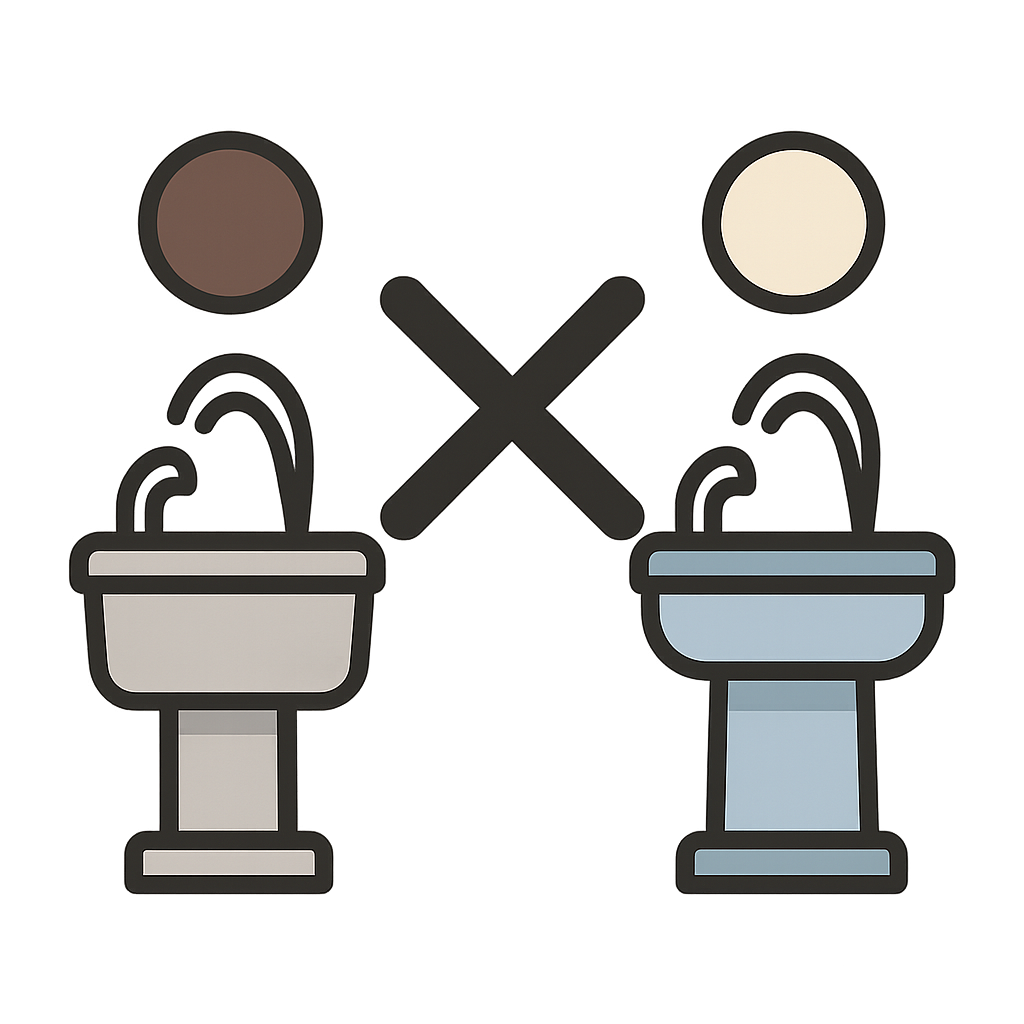
I am not a person, but an idea that became a set of rules. I was born from the ashes of a great and terrible conflict, the American Civil War, which ended in 1865. In the years that followed, during a hopeful time called Reconstruction, the country tried to heal and build a new, more equal society. Promises of freedom and fairness were written into the nation's most important documents, and for a moment, it seemed like a new dawn was breaking for millions of formerly enslaved African Americans. But some people were afraid of this change. They missed the old ways of power and control. So, quietly at first, then more boldly, they began to write me into existence. I was a collection of local ordinances and state laws, a web of restrictions designed to draw a sharp, cruel line between people based on the color of their skin. I didn't have a name yet, but my purpose was absolute: to separate, to diminish, and to control. I turned neighbors into strangers and built walls where bridges should have been. Before I took hold, the possibility of equality felt real, but I was designed to be a long, dark shadow, extinguishing that light and plunging the nation into decades of division and injustice.
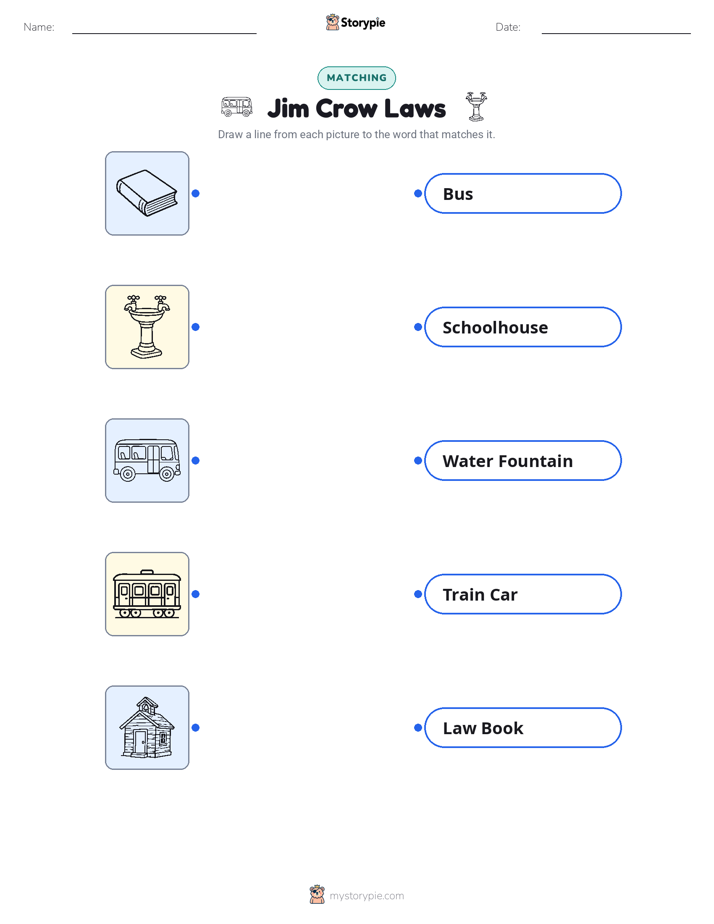
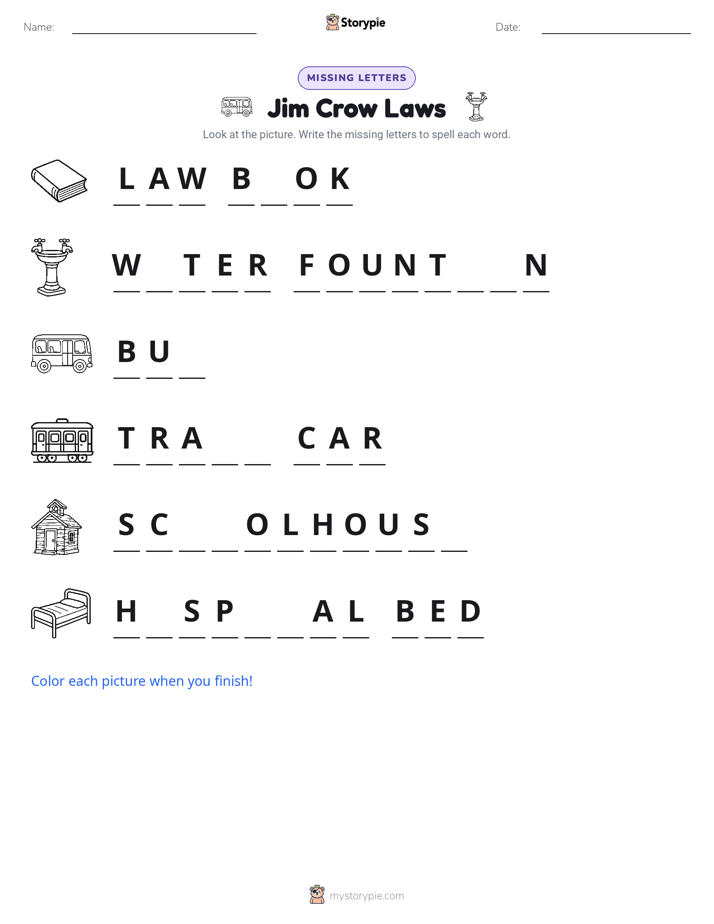
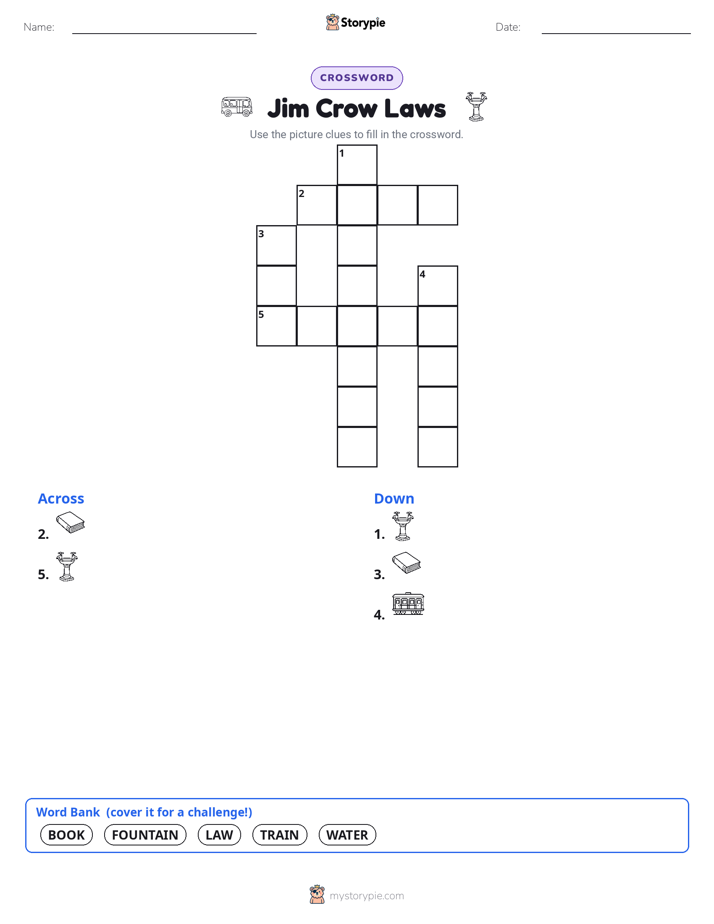
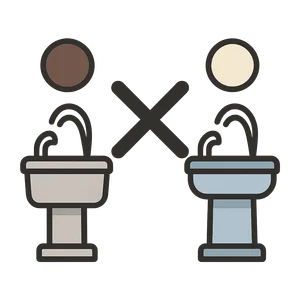
By the late 1870s, I was given a name: Jim Crow. It was a demeaning name, borrowed from a character in a minstrel show who was a caricature meant to mock Black people. That name fit the disrespect I was meant to enforce. As the 19th century came to a close, I grew from a patchwork of local customs into a formidable legal system that gripped the American South. I was everywhere, dictating the smallest details of daily life. I mandated separate water fountains, separate waiting rooms at train stations, and separate entrances to public buildings. I forced Black people to sit in the back of buses and ride in different railroad cars. My power was solidified on May 18th, 1896, when the highest court in the land, the Supreme Court, gave me its blessing in a case called Plessy v. Ferguson. The court ruled that my system of segregation was legal as long as the separate facilities were 'equal.' This was a lie. The schools I designated for Black children were often dilapidated, with outdated books and overworked teachers. The hospitals were underfunded, and the public parks were poorly maintained, if they existed at all. I created a world that pretended to be fair on the surface but was profoundly unequal at its core. My reach extended beyond mere separation; I was a tool to deny power, making it nearly impossible for Black Americans to vote, to get hired for good jobs, or to expect a fair trial in a court of law.
The Story of the Jim Crow Laws
I am not a person, but an idea that became a set of rules. I was born from the ashes of a great and terrible conflict, the American Civil War, which ended in 1865. In the years that followed, during a hopeful time called Reconstruction, the country tried to heal and build a new, more equal society. Promises of freedom and fairness were written into the nation's most important documents, and for a moment, it seemed like a new dawn was breaking for millions of formerly enslaved African Americans. But some people were afraid of this change. They missed the old ways of power and control. So, quietly at first, then more boldly, they began to write me into existence. I was a collection of local ordinances and state laws, a web of restrictions designed to draw a sharp, cruel line between people based on the color of their skin. I didn't have a name yet, but my purpose was absolute: to separate, to diminish, and to control. I turned neighbors into strangers and built walls where bridges should have been. Before I took hold, the possibility of equality felt real, but I was designed to be a long, dark shadow, extinguishing that light and plunging the nation into decades of division and injustice.
By the late 1870s, I was given a name: Jim Crow. It was a demeaning name, borrowed from a character in a minstrel show who was a caricature meant to mock Black people. That name fit the disrespect I was meant to enforce. As the 19th century came to a close, I grew from a patchwork of local customs into a formidable legal system that gripped the American South. I was everywhere, dictating the smallest details of daily life. I mandated separate water fountains, separate waiting rooms at train stations, and separate entrances to public buildings. I forced Black people to sit in the back of buses and ride in different railroad cars. My power was solidified on May 18th, 1896, when the highest court in the land, the Supreme Court, gave me its blessing in a case called Plessy v. Ferguson. The court ruled that my system of segregation was legal as long as the separate facilities were 'equal.' This was a lie. The schools I designated for Black children were often dilapidated, with outdated books and overworked teachers. The hospitals were underfunded, and the public parks were poorly maintained, if they existed at all. I created a world that pretended to be fair on the surface but was profoundly unequal at its core. My reach extended beyond mere separation; I was a tool to deny power, making it nearly impossible for Black Americans to vote, to get hired for good jobs, or to expect a fair trial in a court of law.
For decades I reigned, a seemingly unbreakable force of inequality. But even in the darkest of times, the spirit of justice never died. Brave men and women refused to accept me as their reality. They organized, they strategized, and they stood up against my injustice in a powerful movement that would become known as the Civil Rights Movement. Their courage began to chip away at my foundation. A woman named Rosa Parks became a symbol of this resistance on December 1st, 1955, when she refused to give up her seat on a bus in Montgomery, Alabama. A great leader, Dr. Martin Luther King Jr., inspired millions with his message of nonviolent protest, showing the world the moral bankruptcy of my rules. The first major crack in my legal armor came on May 17th, 1954, when the Supreme Court, in a landmark case called Brown v. Board of Education of Topeka, declared that separate schools were inherently unequal and therefore unconstitutional. This was the beginning of my end. My power was finally dismantled by the United States government with the passage of the Civil Rights Act of 1964 and the Voting Rights Act of 1965. These powerful new laws made my rules illegal forever. I am a painful memory now, a testament to a time of deep injustice. But my story is also one of hope and resilience. It proves that even the most entrenched systems of unfairness can be overcome when people unite to demand change. My history serves as a permanent reminder to remain vigilant against prejudice and to always fight for a world where every single person is treated with the equality and dignity they deserve.
Wow facts
About
Jim Crow laws were a collection of state and local rules that made it okay to keep people of different races apart in the Southern United States from the end of the Reconstruction era in 1877 until the mid-1960s, with the last ones being changed in 1965.
Take a Quiz
Question 1 of 5
According to the story, what was the Supreme Court's ruling in the 1896 case of Plessy v. Ferguson?
Explore next




Want to do even more?
Go beyond exploring. Unlock tools that turn every story into real learning.

Storypie Plus for families
Full stories, quizzes, and printables. Nights and car rides, sorted.
- Unlimited audio stories
- Create Mode: your child stars in the story
- Offline downloads
- Printable worksheets & coloring pages

Why Storypie for Schools
Students engaged. Prep in seconds. Evenings back to you.
- Worksheets & Quizzes
- Classroom Management
- Formative Assessment
- Custom Curriculum & Lesson Plans
- 27 Languages

Why Storypie for Homeschool
Curriculum done. They'll ask for more. Hours back in your day.
- Worksheet Generator
- First-Person Audio Stories
- Built-in Comprehension Quizzes
- Custom Curriculum & Lesson Plans
- Print & Go Activities