English

Jim Crow Laws
Jim Crow laws were a collection of state and local rules that made it okay to keep people of different races…
Reads at Grades 3–5 Listens at Grades 1–5
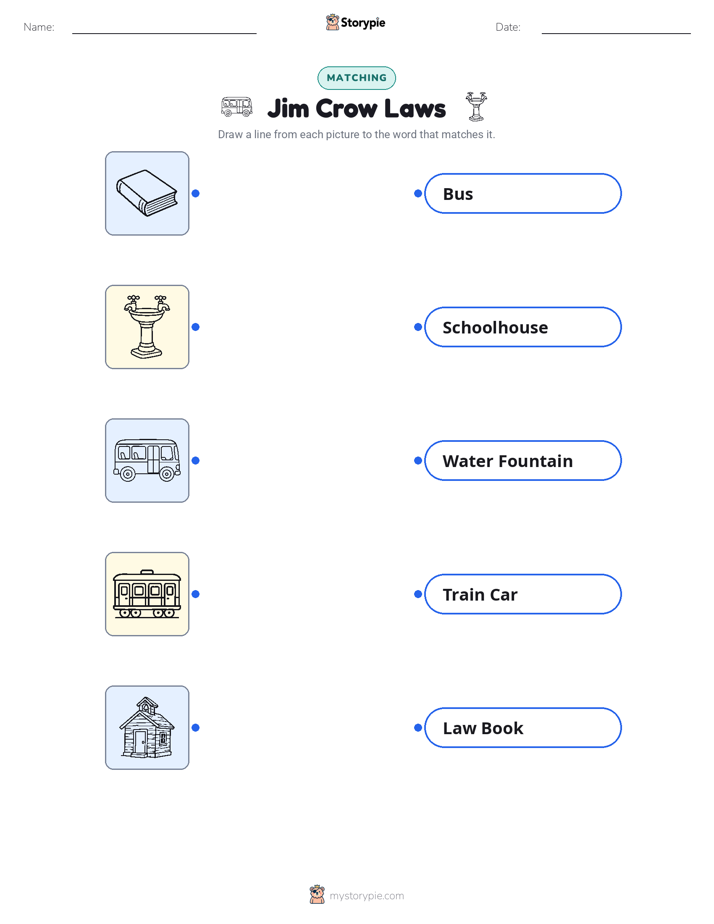
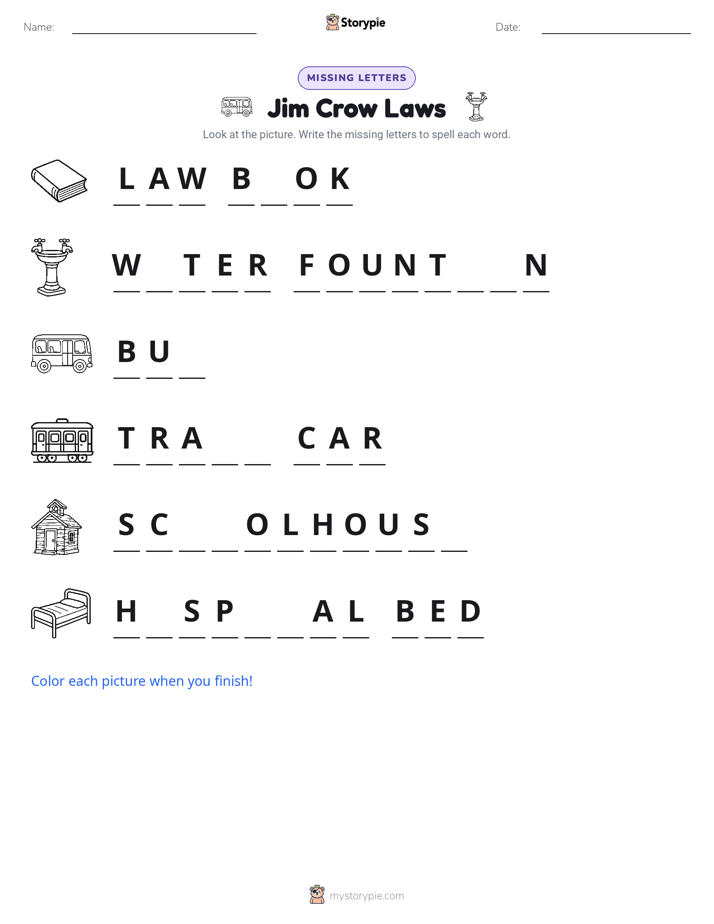
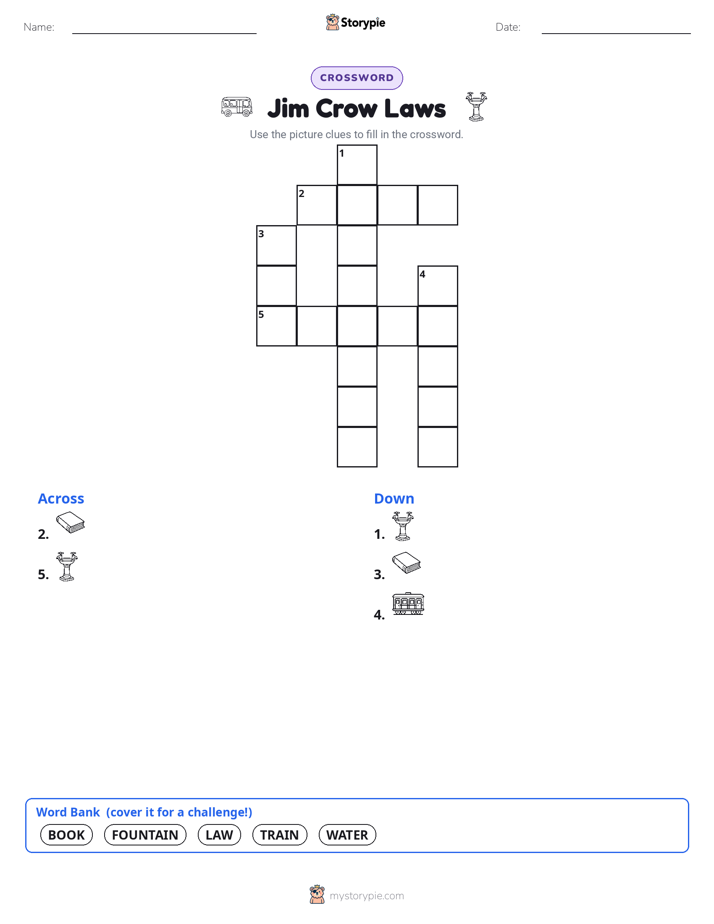
Print & create
Answer keys·No prep·Free with an account
28 worksheets · answer keys · full story · quiz · Ages 8-10 · CEFR B1
Plus adds 102,000+ more stories in 27 languages, audio for every one, and printables for all of them.
Just want Jim Crow Laws?
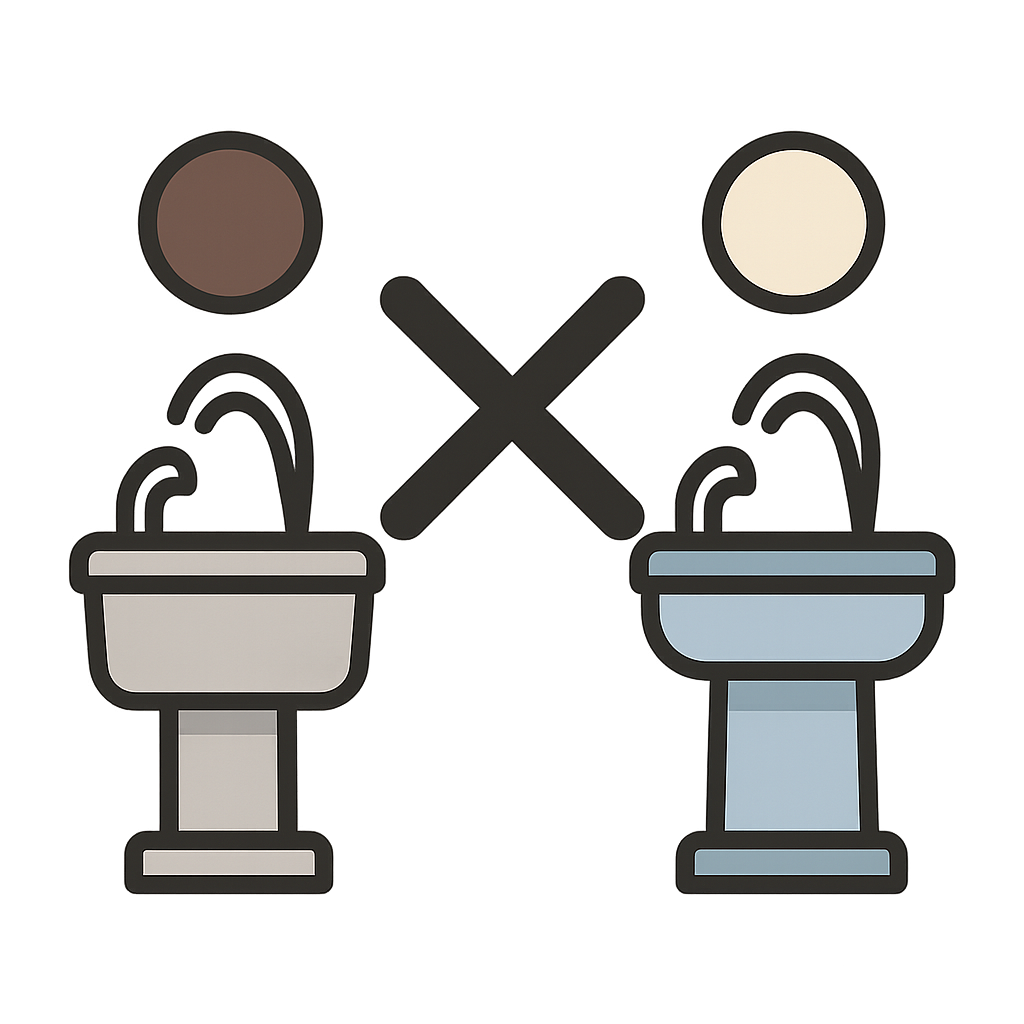
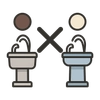
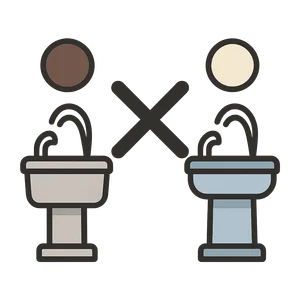
I want you to imagine an invisible wall. You can’t see it, but it told you where you could go, what you could do, and even who you could be friends with. For a long time, I was that wall. Before anyone knew my name, they just felt my presence. I made it so that in some towns, a child with brown skin had to drink from a different water fountain than a child with white skin. I made them go to separate schools, sit in different parts of a bus, and play in separate parks. Can you imagine that? It felt confusing and deeply unfair, because the only reason for these rules was the color of someone’s skin. I wasn't a wall made of bricks or stones; I was a wall made of bad ideas and hurtful rules that separated people who could have been neighbors and the best of friends.
People eventually gave me a name. They called me the Jim Crow Laws. I wasn't just one rule; I was a whole collection of them that spread across the southern part of the United States after a time called Reconstruction ended around 1877. My power grew much stronger on May 18th, 1896, when the highest court in the land made a decision in a case called Plessy v. Ferguson. They said it was okay to keep people separate as long as things were 'separate but equal.' But things were almost never equal. The schools for Black children were often older and had fewer books. The train cars were smaller, and the hospitals didn't have the same tools. My rules were written down in law books, telling people they couldn't share a table at a restaurant or even get a haircut in the same shop. My very name, 'Jim Crow,' came from a character in an old show that made fun of Black people, and my existence was just as mean and hurtful as that character.
The Invisible Wall
I want you to imagine an invisible wall. You can’t see it, but it told you where you could go, what you could do, and even who you could be friends with. For a long time, I was that wall. Before anyone knew my name, they just felt my presence. I made it so that in some towns, a child with brown skin had to drink from a different water fountain than a child with white skin. I made them go to separate schools, sit in different parts of a bus, and play in separate parks. Can you imagine that? It felt confusing and deeply unfair, because the only reason for these rules was the color of someone’s skin. I wasn't a wall made of bricks or stones; I was a wall made of bad ideas and hurtful rules that separated people who could have been neighbors and the best of friends.
People eventually gave me a name. They called me the Jim Crow Laws. I wasn't just one rule; I was a whole collection of them that spread across the southern part of the United States after a time called Reconstruction ended around 1877. My power grew much stronger on May 18th, 1896, when the highest court in the land made a decision in a case called Plessy v. Ferguson. They said it was okay to keep people separate as long as things were 'separate but equal.' But things were almost never equal. The schools for Black children were often older and had fewer books. The train cars were smaller, and the hospitals didn't have the same tools. My rules were written down in law books, telling people they couldn't share a table at a restaurant or even get a haircut in the same shop. My very name, 'Jim Crow,' came from a character in an old show that made fun of Black people, and my existence was just as mean and hurtful as that character.
But walls, even ones made of powerful laws, can be knocked down. Brave people decided they had enough of my unfairness. They organized marches, they held meetings, and they spoke out with powerful voices, demanding change. On May 17th, 1954, the Supreme Court made a new, powerful decision in a case called Brown v. Board of Education. They declared that separate schools were not equal at all, and that my rules had no place in America's classrooms. This was a huge crack in my wall. Leaders like Dr. Martin Luther King Jr. inspired millions of people to believe in a better, fairer world. Finally, big new laws like the Civil Rights Act of 1964 and the Voting Rights Act of 1965 were passed, and my time as a wall was officially over. My story is a sad one, but it is also a powerful reminder. It shows that even the biggest, most unfair walls can crumble when people work together for what is right. It teaches us to always be watchful for unfairness and to build bridges of friendship and understanding, not walls.
Wow facts
About
Jim Crow laws were a collection of state and local rules that made it okay to keep people of different races apart in the Southern United States from the end of the Reconstruction era in 1877 until the mid-1960s, with the last ones being changed in 1965.
Take a Quiz
Question 1 of 5
The story says the wall was made of 'bad ideas and hurtful rules.' What does this really mean?
Explore next




Want to do even more?
Go beyond exploring. Unlock tools that turn every story into real learning.

Storypie Plus for families
Full stories, quizzes, and printables. Nights and car rides, sorted.
- Unlimited audio stories
- Create Mode: your child stars in the story
- Offline downloads
- Printable worksheets & coloring pages

Why Storypie for Schools
Students engaged. Prep in seconds. Evenings back to you.
- Worksheets & Quizzes
- Classroom Management
- Formative Assessment
- Custom Curriculum & Lesson Plans
- 27 Languages

Why Storypie for Homeschool
Curriculum done. They'll ask for more. Hours back in your day.
- Worksheet Generator
- First-Person Audio Stories
- Built-in Comprehension Quizzes
- Custom Curriculum & Lesson Plans
- Print & Go Activities