English

Metamorphosis
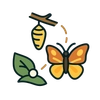
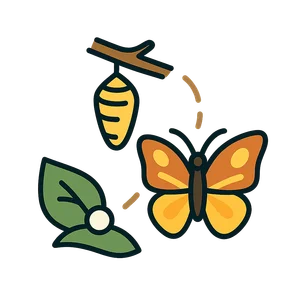
Metamorphosis is a biological process by which an animal physically develops after birth or hatching…
Reads at Grades 6–8 Listens at Grades 4–8
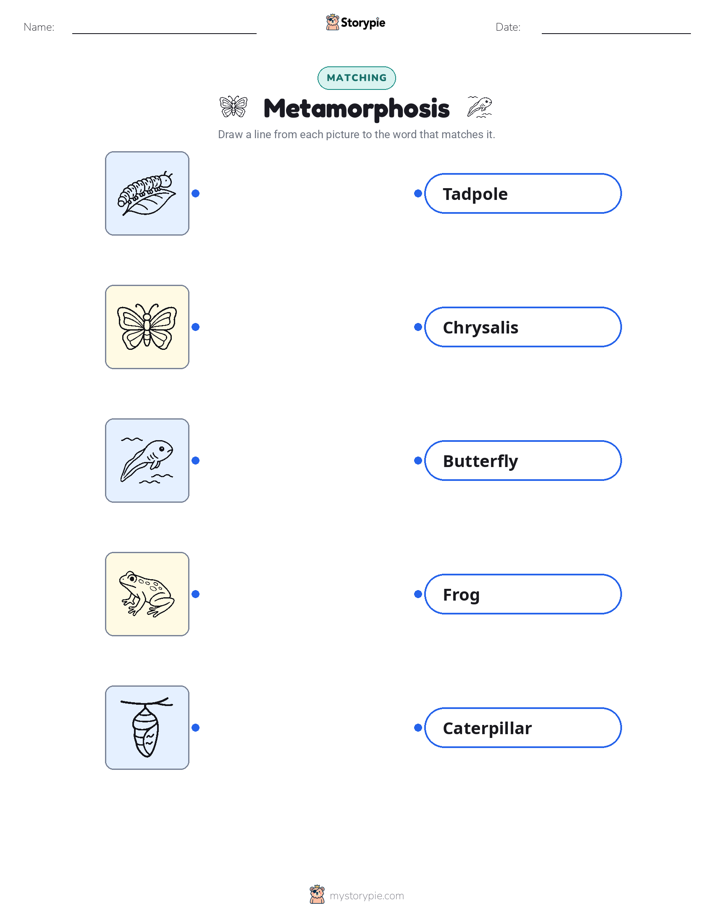
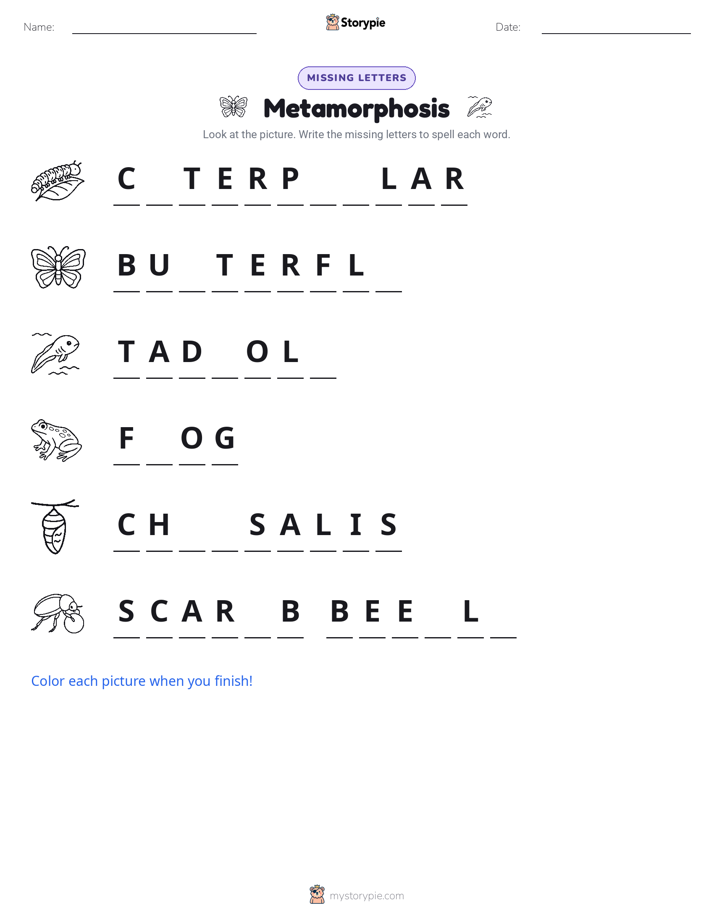
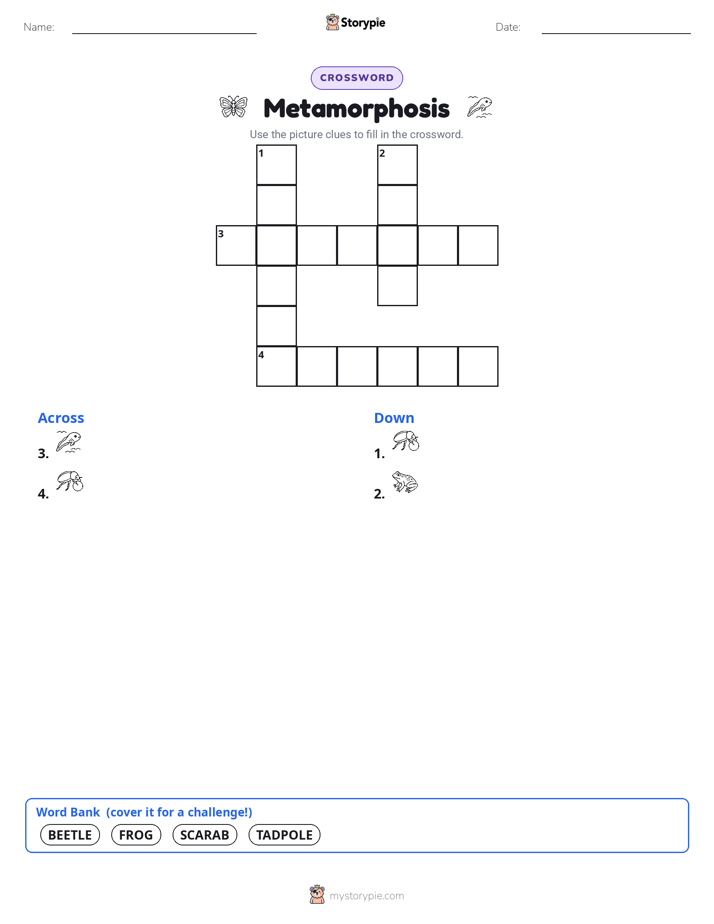
Print & create
Answer keys·No prep·Free with an account
28 worksheets · answer keys · full story · quiz · Ages 10-12 · CEFR B2
Plus adds 164,000+ more stories in 27 languages, audio for every one, and printables for all of them.
Just want Metamorphosis?
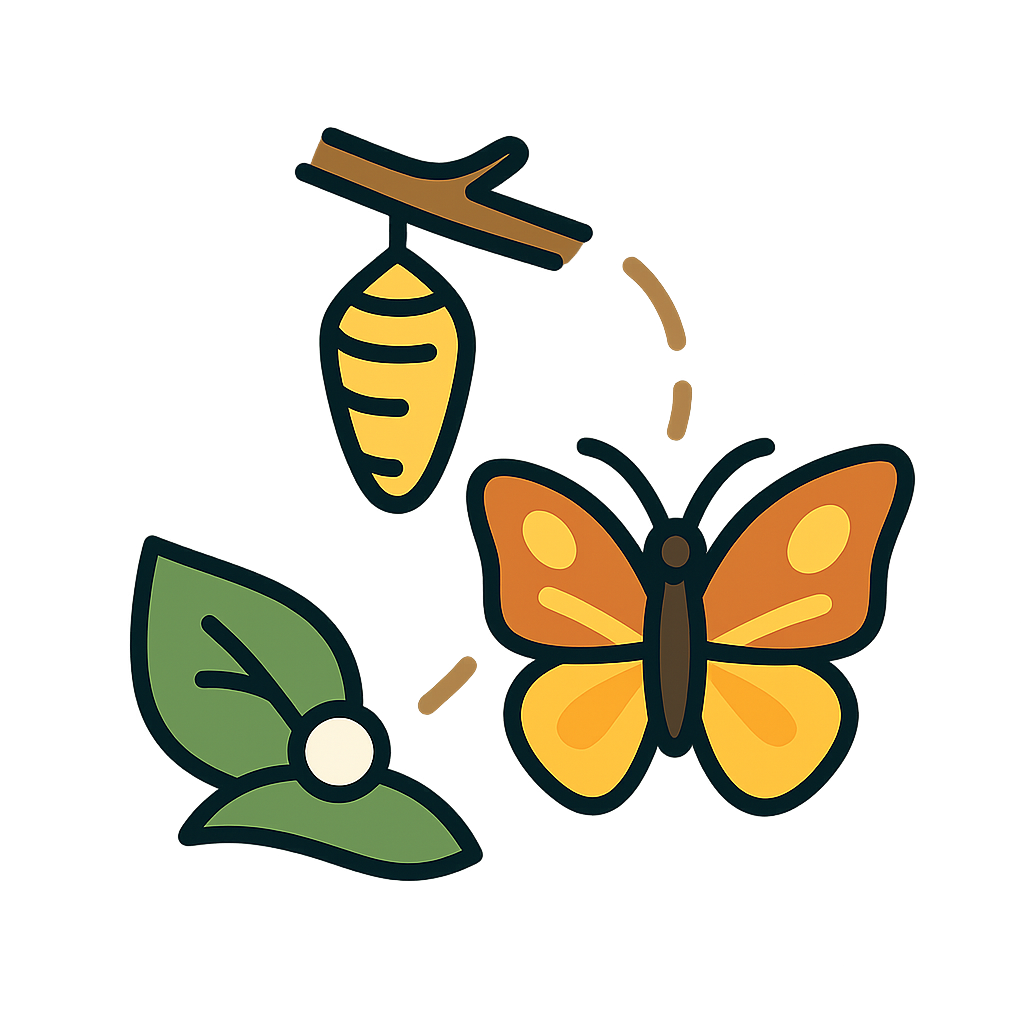
Have you ever watched a fuzzy caterpillar inching along a leaf and wondered how it could possibly become a butterfly with paper-thin, colorful wings? Or have you seen a tiny, fish-like tadpole swimming in a pond and tried to imagine it hopping on land as a frog? Before you knew the secret, it must have seemed like pure magic, a disappearing act and a miraculous appearance all in one. I am the force behind that magic. I am the hidden instruction, the secret blueprint that tells a creature it is time to completely redesign itself. I am the quiet, patient waiting inside a chrysalis, and the dramatic, world-changing moment of breaking free. I am the journey from one body into a totally new one, a promise that what you are now is not all you will ever be. I am that amazing journey. I am the grand redesign. My name is Metamorphosis.
For thousands of years, humans watched me work with a sense of awe and wonder. In ancient Egypt, around 3000 BCE, people saw the scarab beetle roll a ball of dung, bury it, and then later, a new beetle would emerge. To them, it looked like life appearing from nothing, and they saw me as a powerful symbol of rebirth. They connected the beetle’s journey to their most important god, Ra, the sun god, who they believed was reborn every single morning. I wasn't just a part of nature; I was a part of their deepest beliefs. Much later, in ancient Greece, a brilliant thinker named Aristotle decided to look at me with a more scientific eye. Around 350 BCE, he spent countless hours observing insects. In his book, ‘History of Animals,’ he was one of the first people to describe the different life stages of insects, moving beyond myth to careful documentation. Then, in the Roman Empire, a poet named Ovid saw my power for storytelling. In his famous work ‘Metamorphoses,’ written around the 8th of CE, he told epic tales of gods, goddesses, and mortals transforming into animals, trees, and stars. He used me to explore ideas of love, loss, and power, proving that my story of change was as fascinating to artists as it was to scientists.
The Story of Metamorphosis
Have you ever watched a fuzzy caterpillar inching along a leaf and wondered how it could possibly become a butterfly with paper-thin, colorful wings? Or have you seen a tiny, fish-like tadpole swimming in a pond and tried to imagine it hopping on land as a frog? Before you knew the secret, it must have seemed like pure magic, a disappearing act and a miraculous appearance all in one. I am the force behind that magic. I am the hidden instruction, the secret blueprint that tells a creature it is time to completely redesign itself. I am the quiet, patient waiting inside a chrysalis, and the dramatic, world-changing moment of breaking free. I am the journey from one body into a totally new one, a promise that what you are now is not all you will ever be. I am that amazing journey. I am the grand redesign. My name is Metamorphosis.
For thousands of years, humans watched me work with a sense of awe and wonder. In ancient Egypt, around 3000 BCE, people saw the scarab beetle roll a ball of dung, bury it, and then later, a new beetle would emerge. To them, it looked like life appearing from nothing, and they saw me as a powerful symbol of rebirth. They connected the beetle’s journey to their most important god, Ra, the sun god, who they believed was reborn every single morning. I wasn't just a part of nature; I was a part of their deepest beliefs. Much later, in ancient Greece, a brilliant thinker named Aristotle decided to look at me with a more scientific eye. Around 350 BCE, he spent countless hours observing insects. In his book, ‘History of Animals,’ he was one of the first people to describe the different life stages of insects, moving beyond myth to careful documentation. Then, in the Roman Empire, a poet named Ovid saw my power for storytelling. In his famous work ‘Metamorphoses,’ written around the 8th of CE, he told epic tales of gods, goddesses, and mortals transforming into animals, trees, and stars. He used me to explore ideas of love, loss, and power, proving that my story of change was as fascinating to artists as it was to scientists.
For centuries, the details of my process remained a mystery. But then, during the Scientific Revolution, new inventions allowed people to see the world in a completely new way. In the 1660s, a Dutch scientist named Jan Swammerdam pointed a new tool, the microscope, at insects. He didn't just look at them; he performed incredibly delicate dissections. What he found was breathtaking. He proved that a caterpillar, a pupa, and a butterfly were not three different creatures, but stages of the very same animal. He could see the butterfly’s wings, legs, and antennae tucked away and developing inside the caterpillar long before the change began. Then, a brave artist and naturalist named Maria Sibylla Merian took my story to the world. From 1699 to 1701, she journeyed to the jungles of Suriname in South America, a daring trip for a woman at the time. She didn't just collect insects; she watched them, studying which plants they ate and how they lived. She then painted them in stunning detail, creating illustrations that showed the caterpillar, the chrysalis, and the adult butterfly all together on their host plant. Her book, ‘The Metamorphosis of the Insects of Suriname,’ published in 1705, was revolutionary. For the first time, people could see my entire, beautiful process in one single image.
Even with these amazing discoveries, a crucial question remained unanswered: what was the trigger? What internal signal told the caterpillar to stop eating and begin its incredible transformation? The secret remained hidden until the 20th century. In the 1930s, a British biologist named Vincent Wigglesworth finally found the answer. Through a series of brilliant experiments with blood-sucking insects, he discovered the secret recipe: hormones. He realized that these special chemicals inside an insect’s body act like a director, sending messages that control the timing of my entire performance. One hormone signals it is time to grow and molt, while another signals that the final, dramatic change into an adult can begin. Wigglesworth uncovered the science behind the magic, explaining how an animal's own body orchestrates its complete and total redesign.
My story isn't just about insects and amphibians. It is about you, too. I am a powerful idea that represents the incredible changes we all go through in our lives. Growing from a child into a teenager, learning a difficult new skill, or finding the courage to overcome a challenge—these are all a kind of metamorphosis. I am a living reminder that periods of quiet and struggle can lead to something beautiful and strong. Just like a butterfly emerges from its chrysalis, completely transformed and ready to fly, you have the potential within you to grow, to change, and to discover amazing new strengths you never even knew you had.
Wow facts
About
Metamorphosis is a biological process by which an animal physically develops after birth or hatching, involving a conspicuous and relatively abrupt change in the animal's body structure.
Take a Quiz
Question 1 of 5
What was the major contribution of Jan Swammerdam in the 1660s, according to the story?
Explore next


Want to do even more?
Go beyond exploring. Unlock tools that turn every story into real learning.

Storypie Plus for families
Full stories, quizzes, and printables. Nights and car rides, sorted.
- Unlimited audio stories
- Create Mode: your child stars in the story
- Offline downloads
- Printable worksheets & coloring pages

Why Storypie for Schools
Students engaged. Prep in seconds. Evenings back to you.
- Worksheets & Quizzes
- Classroom Management
- Formative Assessment
- Custom Curriculum & Lesson Plans
- 27 Languages

Why Storypie for Homeschool
Curriculum done. They'll ask for more. Hours back in your day.
- Worksheet Generator
- First-Person Audio Stories
- Built-in Comprehension Quizzes
- Custom Curriculum & Lesson Plans
- Print & Go Activities