English

Misinformation (How to Spot Fake News)
A first-person story about misinformation…
Reads at Grades 6–8 Listens at Grades 4–8
Print & create
Answer keys·No prep·Free with an account
28 worksheets · answer keys · full story · quiz · Ages 10-12 · CEFR B2
Plus adds 244,000+ more stories in 27 languages, audio for every one, and printables for all of them.
Just want Misinformation (How to Spot Fake News)?
Have you ever read a story online that made your eyes go wide? Maybe it was about a secret city found in the Amazon, or a new law that says homework is banned forever! It feels exciting, but sometimes a little voice in your head might ask, 'Wait...is that really true?' That little voice? That's me. I'm the superpower that helps you tell the difference between a real story and a tricky one. I don't have a cool cape or a secret identity, but I am your very own built-in fact-checker, your truth detective. I live in your curiosity, in the part of your brain that loves asking 'why?' and 'how do you know?' Before you share that amazing story, I'm the one who whispers, 'Let's investigate first!' I help you look for clues, follow the trail of evidence, and become a champion for the truth. You see, stories are powerful, but not all of them are built to be helpful. Some are designed to trick you, and that's where I come in. My job is to give you the tools to see through the tricks.
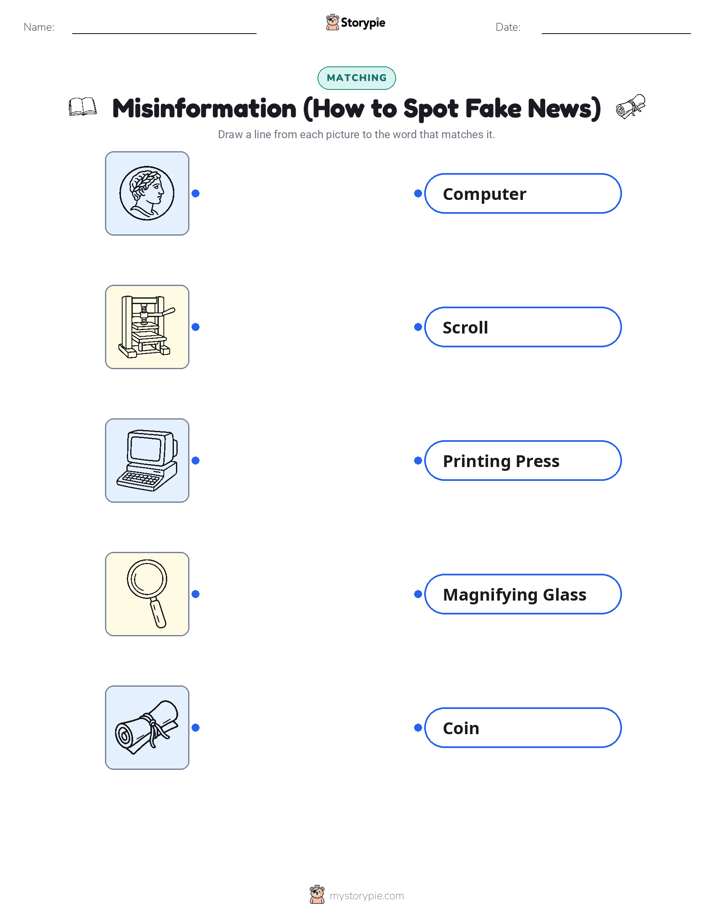
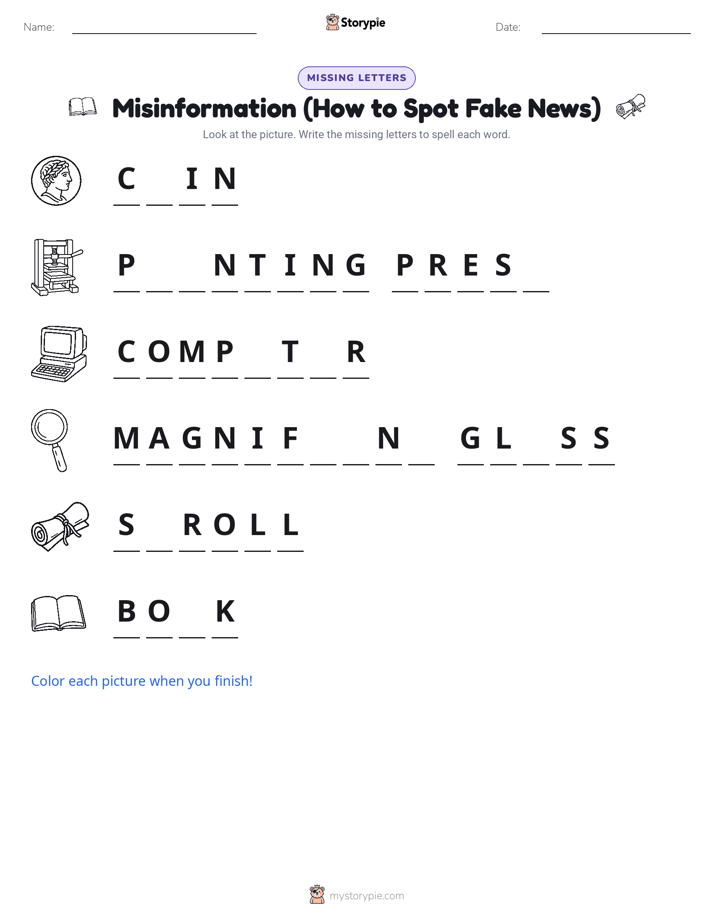
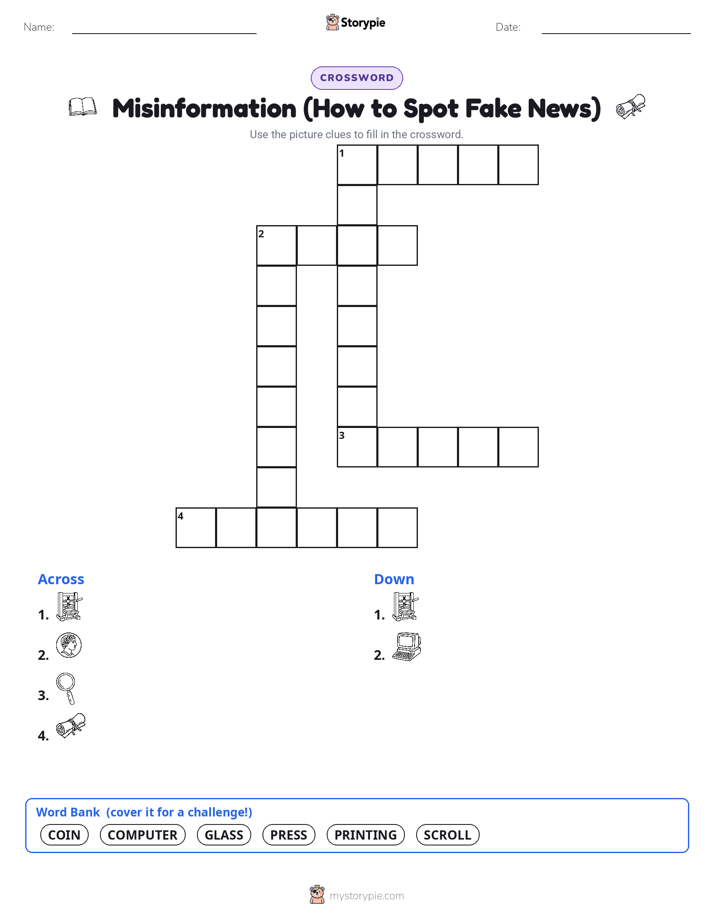
My biggest challenge, my oldest foe, is Misinformation. It’s a fancy word for false stories that are shared, whether people know they're fake or not. And believe me, Misinformation is not new. Long before computers, way back in Ancient Rome around 30 BCE, a powerful leader named Octavian wanted everyone to dislike his rival, Mark Antony. He spread stories and even put short, catchy, and misleading slogans on coins—like an ancient version of a mean tweet—to make Mark Antony look bad. Misinformation got a major speed boost around the year 1440 when a clever man named Johannes Gutenberg invented the printing press. Suddenly, books and papers could be made quickly, spreading knowledge to more people than ever before. But this also meant that rumors and lies could travel faster and farther, too. For example, on August 25th, 1835, a newspaper in New York City called 'The Sun' published a series of articles claiming that astronomers had discovered life on the moon, including bat-like humanoids and blue unicorns! It was a complete hoax, but people were fascinated, and the newspaper sold more copies than ever. This kind of sensational, often untrue, reporting became known as 'yellow journalism' in the late 1890s. During big events like World War I and World War II, governments used posters and news reports called 'propaganda' to make their own side look heroic and the enemy look evil. These messages were designed to play on people's emotions and weren't always truthful. Then came the internet. When the World Wide Web was made public in 1991, it changed everything again. Now, anyone could publish anything and share it with the world in seconds. While that's amazing for connecting and learning, it also means Misinformation can spread like wildfire.
The Truth Detective
Have you ever read a story online that made your eyes go wide? Maybe it was about a secret city found in the Amazon, or a new law that says homework is banned forever! It feels exciting, but sometimes a little voice in your head might ask, 'Wait...is that really true?' That little voice? That's me. I'm the superpower that helps you tell the difference between a real story and a tricky one. I don't have a cool cape or a secret identity, but I am your very own built-in fact-checker, your truth detective. I live in your curiosity, in the part of your brain that loves asking 'why?' and 'how do you know?' Before you share that amazing story, I'm the one who whispers, 'Let's investigate first!' I help you look for clues, follow the trail of evidence, and become a champion for the truth. You see, stories are powerful, but not all of them are built to be helpful. Some are designed to trick you, and that's where I come in. My job is to give you the tools to see through the tricks.
My biggest challenge, my oldest foe, is Misinformation. It’s a fancy word for false stories that are shared, whether people know they're fake or not. And believe me, Misinformation is not new. Long before computers, way back in Ancient Rome around 30 BCE, a powerful leader named Octavian wanted everyone to dislike his rival, Mark Antony. He spread stories and even put short, catchy, and misleading slogans on coins—like an ancient version of a mean tweet—to make Mark Antony look bad. Misinformation got a major speed boost around the year 1440 when a clever man named Johannes Gutenberg invented the printing press. Suddenly, books and papers could be made quickly, spreading knowledge to more people than ever before. But this also meant that rumors and lies could travel faster and farther, too. For example, on August 25th, 1835, a newspaper in New York City called 'The Sun' published a series of articles claiming that astronomers had discovered life on the moon, including bat-like humanoids and blue unicorns! It was a complete hoax, but people were fascinated, and the newspaper sold more copies than ever. This kind of sensational, often untrue, reporting became known as 'yellow journalism' in the late 1890s. During big events like World War I and World War II, governments used posters and news reports called 'propaganda' to make their own side look heroic and the enemy look evil. These messages were designed to play on people's emotions and weren't always truthful. Then came the internet. When the World Wide Web was made public in 1991, it changed everything again. Now, anyone could publish anything and share it with the world in seconds. While that's amazing for connecting and learning, it also means Misinformation can spread like wildfire.
Fighting Misinformation might seem tough, but that's why I'm here to give you your official Truth Detective Toolkit. These are the five key questions you should always ask when you see a piece of information that seems surprising or makes you feel a strong emotion. First: Who made this? Is it a person, a news company, or a random account? Look for an 'About Us' page or information on the author. Reputable sources are proud to tell you who they are. Second: What is the evidence? Does the story include facts, data, or quotes from experts? Does it link to original sources? If a story just says 'scientists say' without naming them, that's a red flag. Third: What's the bigger picture? Don't just read the headline! Headlines are designed to grab your attention and can be misleading. Read the whole article to get the full story. Also, check to see if other reliable news sources are reporting the same thing. If only one website is reporting a huge event, be suspicious. Fourth: Why was this made? Was it created to inform you, to make you laugh, to sell you something, or to make you angry or scared? Understanding the purpose can help you judge the information. Misinformation often tries to trigger strong emotions to stop you from thinking critically. Fifth, and most importantly: When in doubt, ask for help! Talk to a trusted adult like a parent, a teacher, or a librarian. They can help you investigate and figure out what’s real and what’s not.
Every time you use your toolkit, you do more than just find the truth for yourself. You become a guardian of the truth for everyone. You help stop the spread of rumors that can confuse or hurt people. By thinking critically and sharing wisely, you make the internet a smarter, safer, and more reliable place. Being a truth detective is one of the most important skills you can have in the modern world. It helps you learn, make good decisions, and understand others. So keep asking questions, keep checking sources, and stay curious. Together, we can make sure the best stories—the true ones—are the ones that get shared the most.
Wow facts
About
A first-person story about misinformation, explaining its history from ancient Rome to the internet and teaching children how to become 'truth detectives.'
Take a Quiz
Question 1 of 5
What is the main role of the narrator, who calls itself the 'Truth Detective'?
Explore next






Want to do even more?
Go beyond exploring. Unlock tools that turn every story into real learning.

Storypie Plus for families
Full stories, quizzes, and printables. Nights and car rides, sorted.
- Unlimited audio stories
- Create Mode: your child stars in the story
- Offline downloads
- Printable worksheets & coloring pages

Why Storypie for Schools
Students engaged. Prep in seconds. Evenings back to you.
- Worksheets & Quizzes
- Classroom Management
- Formative Assessment
- Custom Curriculum & Lesson Plans
- 27 Languages

Why Storypie for Homeschool
Curriculum done. They'll ask for more. Hours back in your day.
- Worksheet Generator
- First-Person Audio Stories
- Built-in Comprehension Quizzes
- Custom Curriculum & Lesson Plans
- Print & Go Activities