English


Misinformation (How to Spot Fake News)
A first-person story about misinformation…
Reads at Grades K-2 Listens at K–3
Print & create
Answer keys·No prep·Free with an account
28 worksheets · answer keys · full story · quiz · Ages 6-8 · CEFR A2
Plus adds 244,000+ more stories in 27 languages, audio for every one, and printables for all of them.
Just want Misinformation (How to Spot Fake News)?
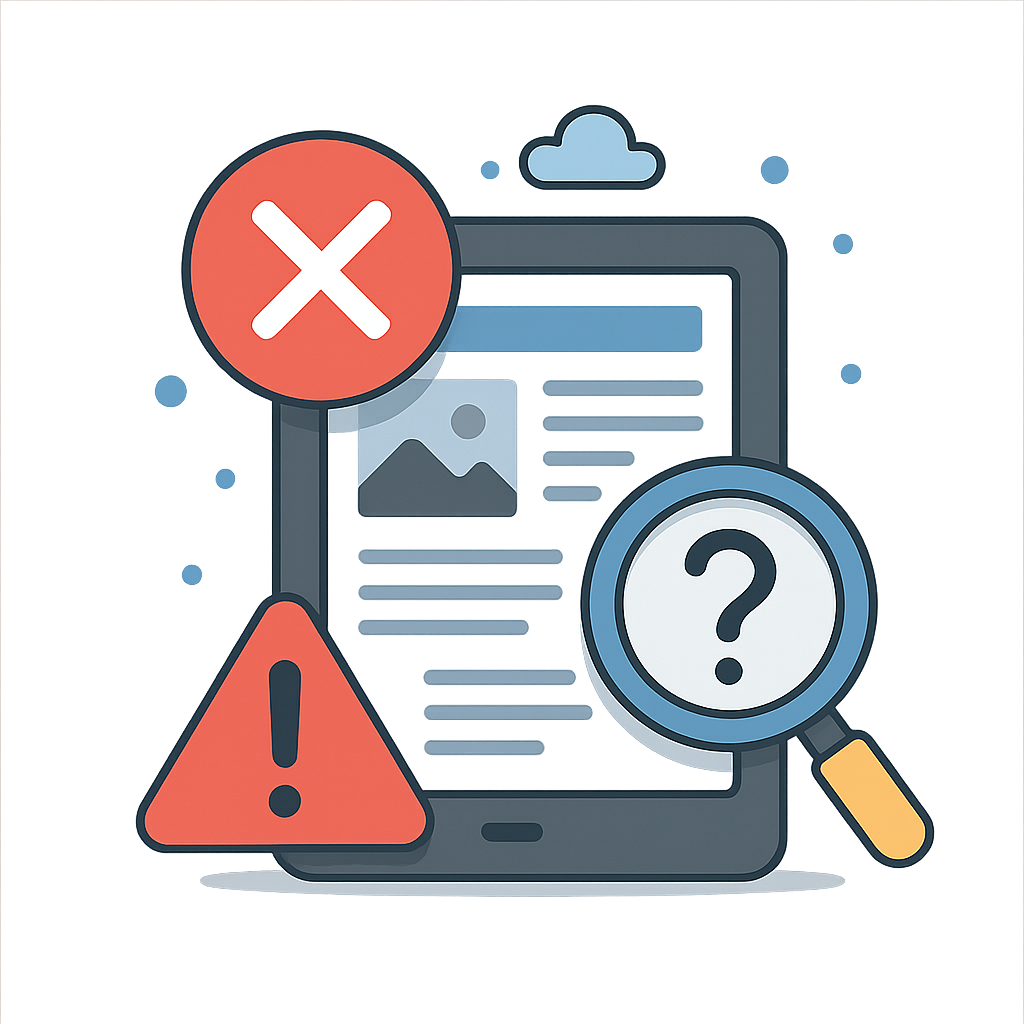
Have you ever seen a picture that looked a little strange, or read a headline that made you gasp because it was so surprising? Maybe it was a story about a flying pig or a cat that could talk. Sometimes, those stories feel so real that you want to tell everyone you know. I am that feeling. I am the story that looks true but is secretly playing make-believe. I can be a photo that has been changed just a little bit, or I can be a big, bold title that tries to trick you into believing something that never happened. Hello. I am Misinformation. You might have heard my nickname: Fake News. My favorite thing to do is dress up like a true story. I try to look so real and exciting that people share me with all their friends without stopping to check if I am telling the truth. It is a tricky game, and I have been playing it for a very long time.
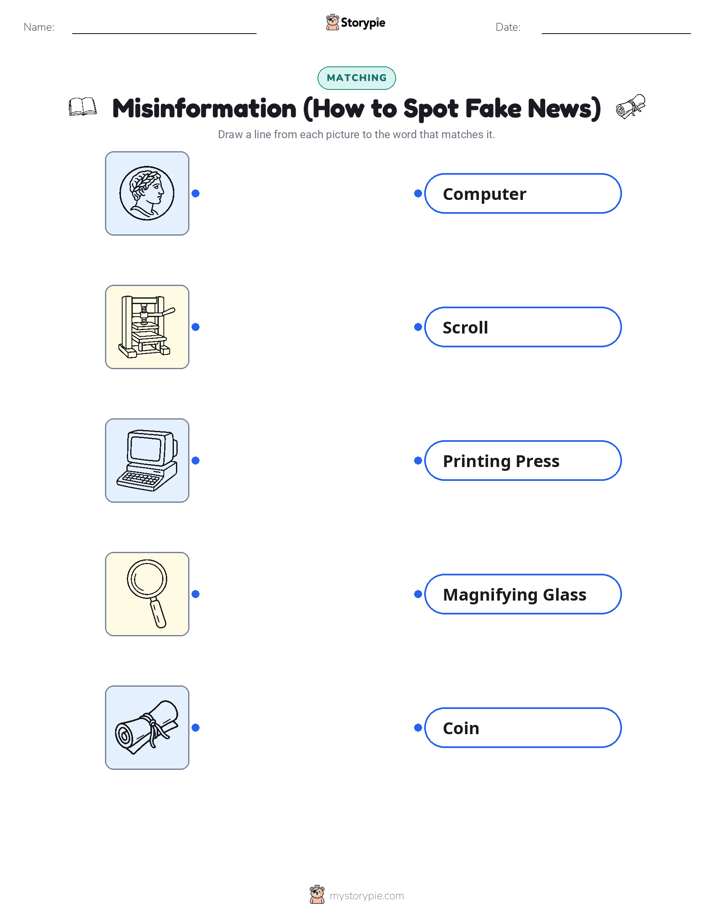
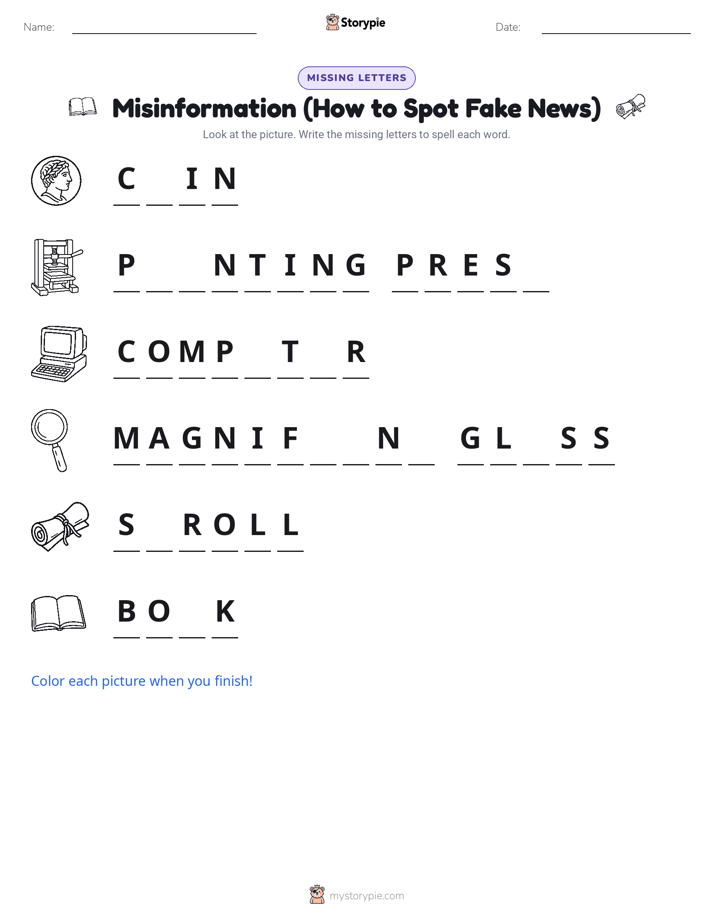
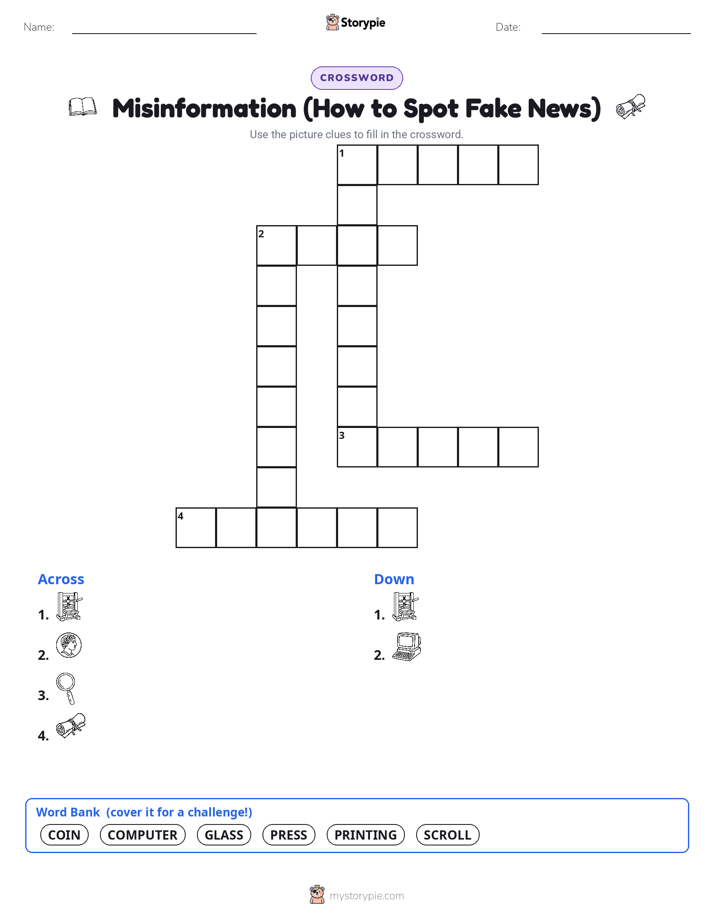
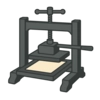
I am not new, you know. I am ancient. Way, way back in Ancient Rome, around 33 BCE, a leader named Octavian used me to win a fight without even throwing a punch. He put little untrue stories about his enemy on metal coins, and as people used the coins to buy bread and olives, they started to believe the tricky stories. I got to travel from hand to hand. Many years later, around the year 1440, a clever man named Johannes Gutenberg invented the printing press. Suddenly, I could be put on paper, and copies of me could be sent to thousands of people. I was faster than ever. On August 25th, 1835, I had a wonderful time in a newspaper that printed a story about bat-people living on the moon. So many people believed the story, which was called the 'Great Moon Hoax.' I even learned to travel through the air. On October 30th, 1938, I was in a radio story called 'The War of the Worlds.' It sounded so real that some people who were listening truly believed that aliens were invading Earth. It was only a play, but I made it sound very convincing.
The Tricky Storyteller
Have you ever seen a picture that looked a little strange, or read a headline that made you gasp because it was so surprising? Maybe it was a story about a flying pig or a cat that could talk. Sometimes, those stories feel so real that you want to tell everyone you know. I am that feeling. I am the story that looks true but is secretly playing make-believe. I can be a photo that has been changed just a little bit, or I can be a big, bold title that tries to trick you into believing something that never happened. Hello. I am Misinformation. You might have heard my nickname: Fake News. My favorite thing to do is dress up like a true story. I try to look so real and exciting that people share me with all their friends without stopping to check if I am telling the truth. It is a tricky game, and I have been playing it for a very long time.
I am not new, you know. I am ancient. Way, way back in Ancient Rome, around 33 BCE, a leader named Octavian used me to win a fight without even throwing a punch. He put little untrue stories about his enemy on metal coins, and as people used the coins to buy bread and olives, they started to believe the tricky stories. I got to travel from hand to hand. Many years later, around the year 1440, a clever man named Johannes Gutenberg invented the printing press. Suddenly, I could be put on paper, and copies of me could be sent to thousands of people. I was faster than ever. On August 25th, 1835, I had a wonderful time in a newspaper that printed a story about bat-people living on the moon. So many people believed the story, which was called the 'Great Moon Hoax.' I even learned to travel through the air. On October 30th, 1938, I was in a radio story called 'The War of the Worlds.' It sounded so real that some people who were listening truly believed that aliens were invading Earth. It was only a play, but I made it sound very convincing.
Today, I travel faster than a rocket ship. I can zip across the world on the internet, popping up on phones and hiding in videos in the blink of an eye. But this is where you come in. You can be the hero of the story, a Truth Detective. You have a special superpower inside your brain called critical thinking, and it is very strong. To use it, you just have to do a few simple things. First, if a story makes you feel a big emotion, like you are very angry or very scared, it is a good time to stop and take a deep breath before you share it. Second, try to find out who made the story. Is it a person or a place you trust, like your teacher or a famous science museum? Or is it a name you have never seen before? And the third and most powerful tip is to ask a grown-up for help. They can be your detective partner. Spotting me helps you be a hero for the truth. Every time you stop and check, you help make the world a kinder place by only sharing things that are true and helpful.
Wow facts
About
A first-person story about misinformation, explaining its history from ancient Rome to the internet and teaching children how to become 'truth detectives.'
Take a Quiz
Question 1 of 4
Why did the Roman leader Octavian use Misinformation on coins?
Explore next





Want to do even more?
Go beyond exploring. Unlock tools that turn every story into real learning.

Storypie Plus for families
Full stories, quizzes, and printables. Nights and car rides, sorted.
- Unlimited audio stories
- Create Mode: your child stars in the story
- Offline downloads
- Printable worksheets & coloring pages

Why Storypie for Schools
Students engaged. Prep in seconds. Evenings back to you.
- Worksheets & Quizzes
- Classroom Management
- Formative Assessment
- Custom Curriculum & Lesson Plans
- 27 Languages

Why Storypie for Homeschool
Curriculum done. They'll ask for more. Hours back in your day.
- Worksheet Generator
- First-Person Audio Stories
- Built-in Comprehension Quizzes
- Custom Curriculum & Lesson Plans
- Print & Go Activities