English


Misinformation (How to Spot Fake News)
A first-person story about misinformation…
Reads at Grades 3–5 Listens at Grades 1–5
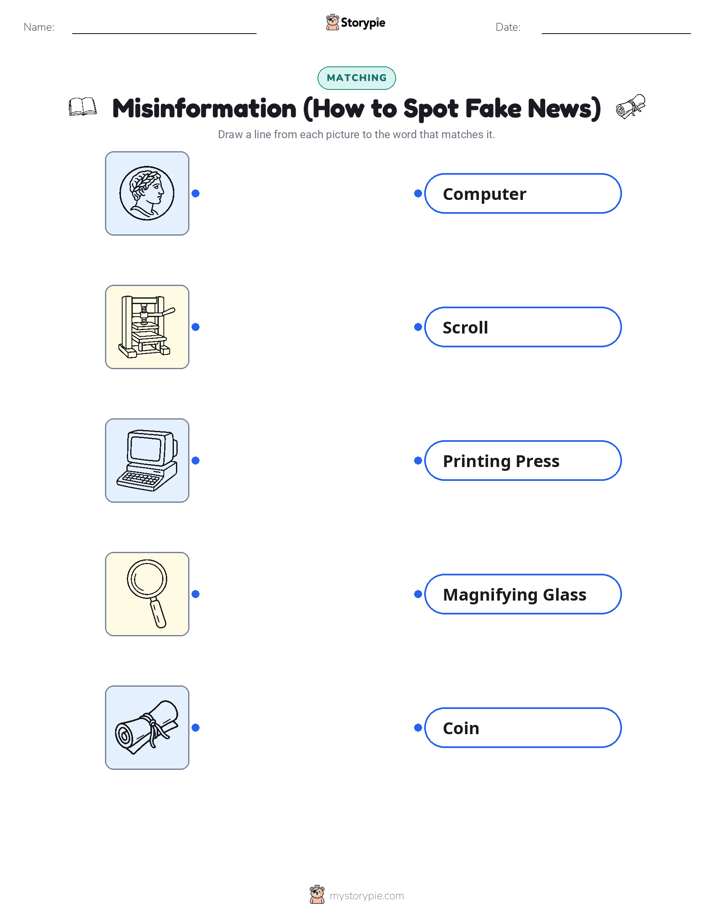
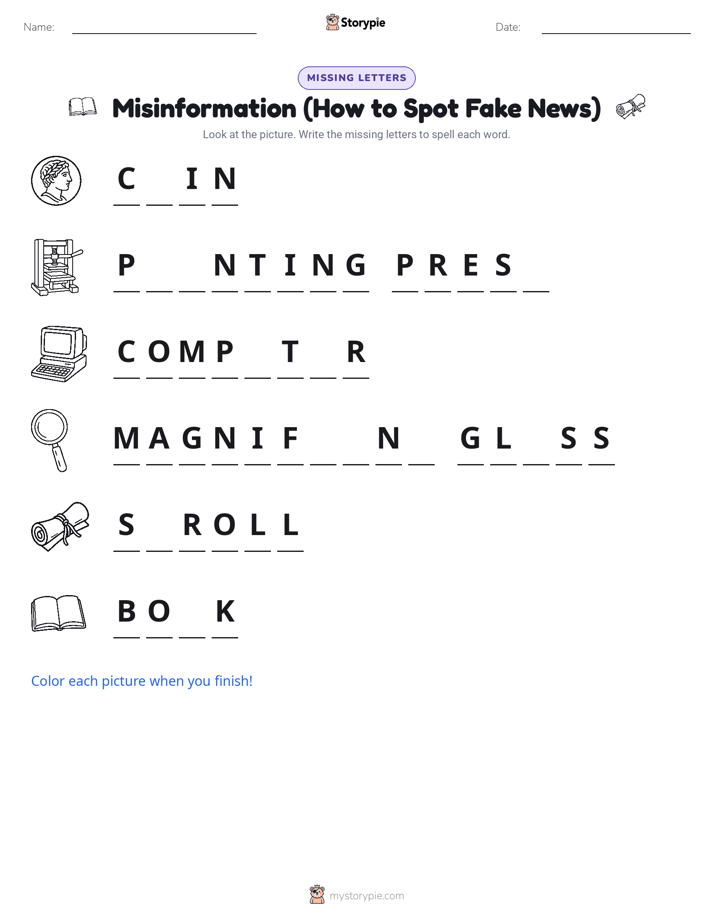
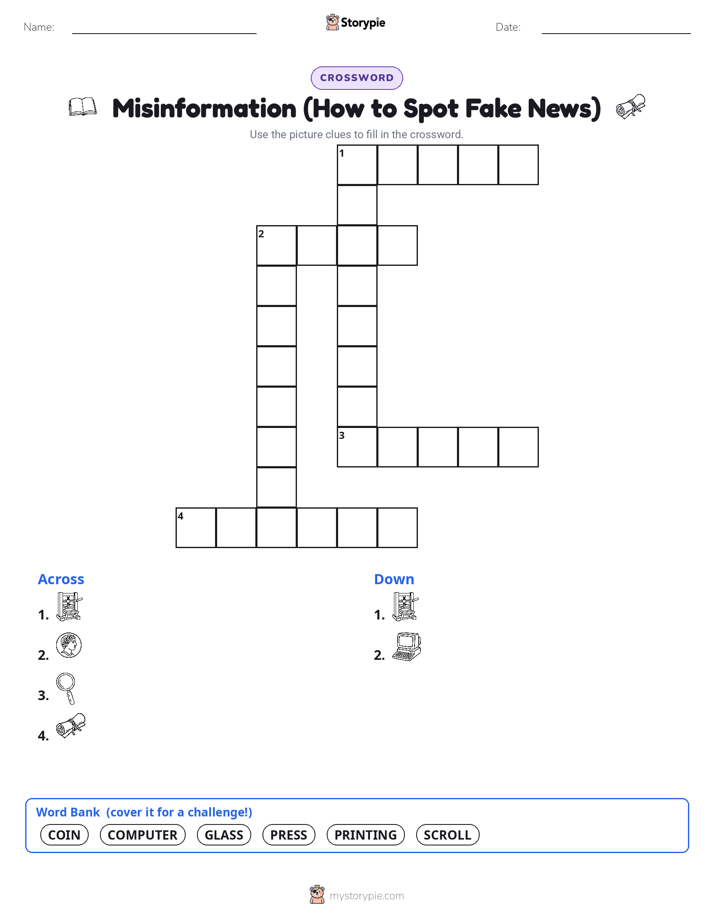
Print & create
Answer keys·No prep·Free with an account
28 worksheets · answer keys · full story · quiz · Ages 8-10 · CEFR B1
Plus adds 244,000+ more stories in 27 languages, audio for every one, and printables for all of them.
Just want Misinformation (How to Spot Fake News)?

Have you ever been scrolling online and seen a picture that made you gasp? Maybe it was a photo of a two-headed puppy or a headline that screamed, “Scientists Discover Candy is Good for Your Teeth!”. It looked real, it sounded exciting, and it made you want to show everyone you know. I love that feeling. It’s my favorite way to introduce myself. I am a story in disguise, a tale that has been twisted, stretched, or sometimes just completely made-up to make you feel a certain way—surprised, angry, or even silly. I can look just like a real piece of news, with important-looking words and convincing pictures. But I’m hiding a secret. I look like news. I sound like news. But I'm actually Truth's tricky cousin. My name is Misinformation.
I’m not new, though. In fact, I am very, very old—as old as stories themselves. Long before computers or even books, I traveled on the wind, passed from person to person in whispers and rumors. Can you imagine a busy market square in Ancient Rome? That was one of my favorite places to hang out. Let me tell you about a time way back around 32 BCE. There were two very powerful leaders, Octavian and Mark Antony, who were rivals. Octavian wanted everyone to be on his side, so he started whispering things about Mark Antony—that he was lazy, that he didn't care about Rome, that he was under the spell of a foreign queen. None of it was the whole truth, but I did my job. The whispers spread from soldier to senator, from merchant to mother, until enough people believed them. Back then, I could only travel as fast as a person could talk or a horse could run. It was slow work, but I’ve always been very patient.
The Story of Misinformation
Have you ever been scrolling online and seen a picture that made you gasp? Maybe it was a photo of a two-headed puppy or a headline that screamed, “Scientists Discover Candy is Good for Your Teeth!”. It looked real, it sounded exciting, and it made you want to show everyone you know. I love that feeling. It’s my favorite way to introduce myself. I am a story in disguise, a tale that has been twisted, stretched, or sometimes just completely made-up to make you feel a certain way—surprised, angry, or even silly. I can look just like a real piece of news, with important-looking words and convincing pictures. But I’m hiding a secret. I look like news. I sound like news. But I'm actually Truth's tricky cousin. My name is Misinformation.
I’m not new, though. In fact, I am very, very old—as old as stories themselves. Long before computers or even books, I traveled on the wind, passed from person to person in whispers and rumors. Can you imagine a busy market square in Ancient Rome? That was one of my favorite places to hang out. Let me tell you about a time way back around 32 BCE. There were two very powerful leaders, Octavian and Mark Antony, who were rivals. Octavian wanted everyone to be on his side, so he started whispering things about Mark Antony—that he was lazy, that he didn't care about Rome, that he was under the spell of a foreign queen. None of it was the whole truth, but I did my job. The whispers spread from soldier to senator, from merchant to mother, until enough people believed them. Back then, I could only travel as fast as a person could talk or a horse could run. It was slow work, but I’ve always been very patient.
For centuries, I had to travel by word of mouth or in letters that were copied by hand, one at a time. It was slow going. But then, everything changed for me. Around the year 1440, a brilliant German inventor named Johannes Gutenberg created something amazing: the printing press. Before him, making a book took months. After him, hundreds of pages could be printed in a single day. Suddenly, I didn't have to be a quiet whisper anymore. I could be a loud, bold headline on a printed pamphlet. I could hide inside books and newspapers, and hundreds, then thousands, of copies of me could be sent all over Europe. I could travel faster and farther than ever before. This was my first big superpower, and I was just getting started.
Let’s jump forward a few hundred years to a time of bustling cities and newsboys shouting on street corners. In the late 1800s, especially around 1898 in America, some newspapers were in a huge competition to sell the most copies. This was the era of “yellow journalism.” Newspaper owners like William Randolph Hearst and Joseph Pulitzer knew that shocking, sensational stories sold better than plain facts. So, they would print wild headlines and exaggerated tales to grab people's attention. I was having the time of my life. Then, a new invention came along: the radio. I learned to travel through the air. One of my most famous moments was on the night of October 30th, 1938. An actor named Orson Welles and his crew performed a radio play of a book called 'The War of the Worlds.' They made it sound like a real news broadcast about aliens invading Earth. It was just a story, but it sounded so real that some people panicked. I had learned to use a new voice, and it was more powerful than ever.
But nothing, and I mean nothing, compares to my favorite new home: the internet. With the rise of computers in the late 20th century and social media in the 2000s, I was given the ultimate playground. I can now put on any costume I want. I can look like a real news website, a scientific report, or a video taken by an eyewitness. And my speed? I can travel across the entire world in less than a second. A single click, a “like,” or a “share” can send me on a journey to millions of people before anyone has time to check if I’m telling the truth. It's easy for me to spread, which makes it very hard for people to know what’s real and what’s not.
Even though I’m very good at my job, I have a weakness. You have a superpower that can stop me in my tracks: your curious brain. You can become a Truth Detective. When you see a story that seems too wild, too shocking, or too good to be true, you can put on your detective hat and start investigating. Ask a few simple questions: Who made this story? Why did they make it? Is there another, more reliable place where I can find this same information? Every time you pause, think, and ask those questions, you shine a bright light on me, and I shrink away. By being a Truth Detective, you help keep real stories shining bright and make the world a more honest place for everyone.
Wow facts
About
A first-person story about misinformation, explaining its history from ancient Rome to the internet and teaching children how to become 'truth detectives.'
Take a Quiz
Question 1 of 5
The story says, 'This was the time of yellow journalism.' Based on the story, what does 'yellow journalism' most likely mean?
Explore next





Want to do even more?
Go beyond exploring. Unlock tools that turn every story into real learning.

Storypie Plus for families
Full stories, quizzes, and printables. Nights and car rides, sorted.
- Unlimited audio stories
- Create Mode: your child stars in the story
- Offline downloads
- Printable worksheets & coloring pages

Why Storypie for Schools
Students engaged. Prep in seconds. Evenings back to you.
- Worksheets & Quizzes
- Classroom Management
- Formative Assessment
- Custom Curriculum & Lesson Plans
- 27 Languages

Why Storypie for Homeschool
Curriculum done. They'll ask for more. Hours back in your day.
- Worksheet Generator
- First-Person Audio Stories
- Built-in Comprehension Quizzes
- Custom Curriculum & Lesson Plans
- Print & Go Activities