English


Oral Tradition
Oral Tradition is the method by which a society's cultural and historical information is passed down from one…
Reads at Grades 3–5 Listens at Grades 1–5
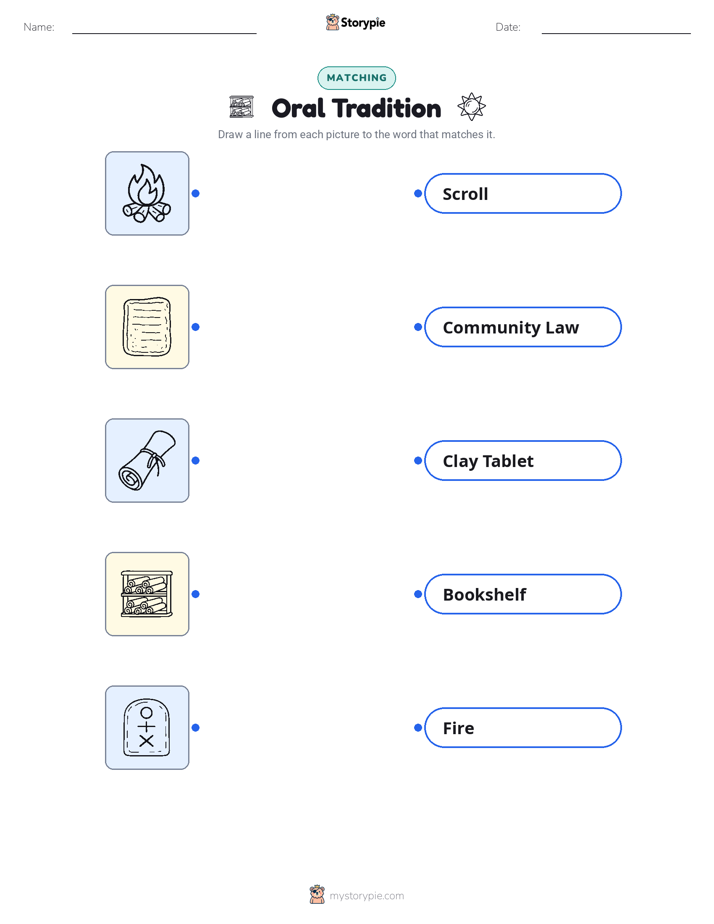
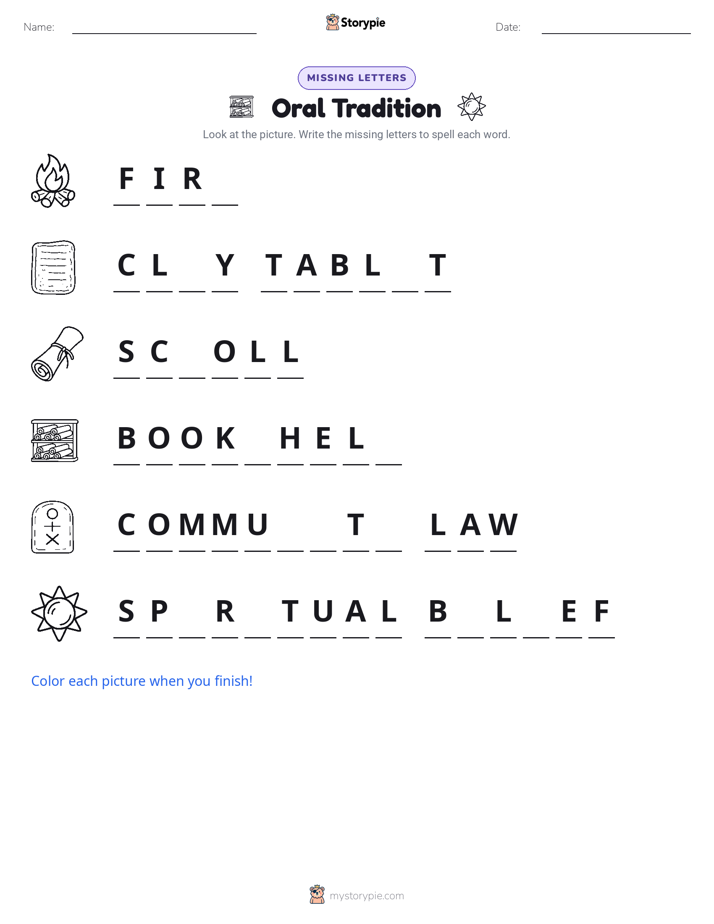
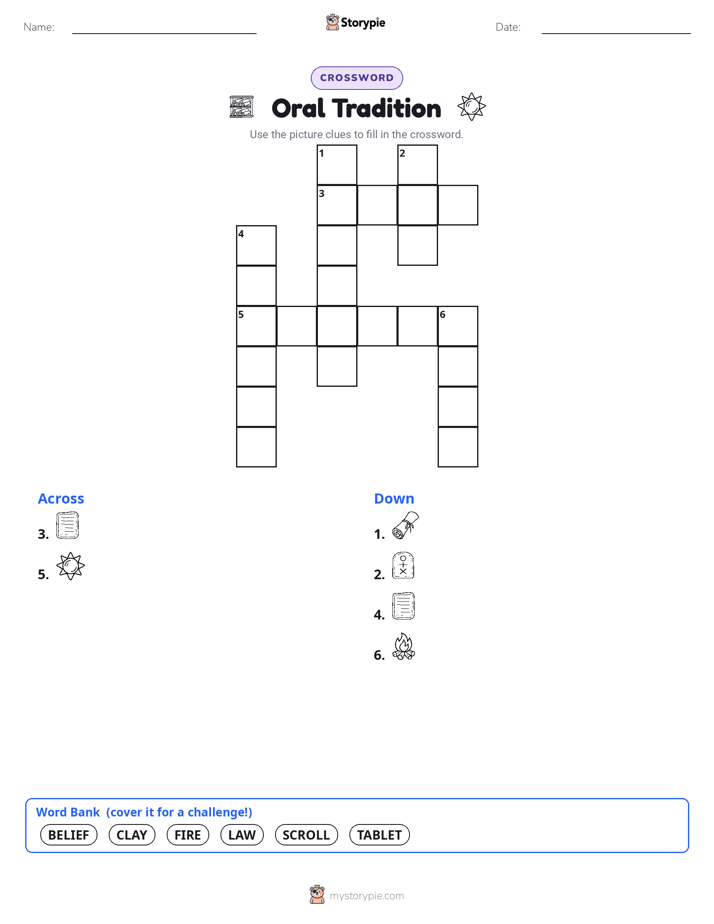
Print & create
Answer keys·No prep·Free with an account
28 worksheets · answer keys · full story · quiz · Ages 8-10 · CEFR B1
Plus adds 102,000+ more stories in 27 languages, audio for every one, and printables for all of them.
Just want Oral Tradition?

I am the shiver you feel when a spooky story is whispered in the dark. I am the rhythm of a clapping game you play at recess and the melody of a lullaby your grandmother sang to your parent, who now sings it to you. Before there were books, screens, or even paper, there was me. I lived in the breath of people, in the memories they held, and in the voices they used to share everything they knew. I carried the history of entire peoples, the secrets of how to hunt or find water, and the epic tales of heroes and gods. I was the world's very first library, and my shelves were human minds. Can you guess who I am. My name is Oral Tradition.
For thousands upon thousands of years, I was the only way to pass knowledge through time. Since the dawn of human language, long before 3000 BCE when my cousin Writing was invented, I was there. I helped early humans share which berries were safe to eat and how to make fire. In ancient India, starting around 1500 BCE, I was trusted to carry very important sacred poems called the Vedas. For more than a thousand years, priests memorized every single word and sound perfectly, passing them from teacher to student without a single mistake, long before anyone wrote them down. I wasn't just for facts; I was for fun, too. I carried the world's first jokes, riddles, and songs, connecting families and building communities around a shared campfire of stories.
Some of my storytellers became famous. In ancient Greece, around the 8th century BCE, poets called bards would sing my stories for hours, telling of brave warriors and clever queens. A poet named Homer is famous for the epic poems the Iliad and the Odyssey, but he was part of a long line of storytellers who had been singing those tales for generations before him. Across the world in West Africa, I had special keepers called Griots, or Jali. For centuries, they have been the living libraries of their communities. One of their most famous stories is the Epic of Sundiata, which tells the true story of the great king Sundiata Keita, who founded the Mali Empire in the 13th century. The Griots memorized every detail—every name, battle, and important event—to make sure their history would never be lost.
The Voice of History
I am the shiver you feel when a spooky story is whispered in the dark. I am the rhythm of a clapping game you play at recess and the melody of a lullaby your grandmother sang to your parent, who now sings it to you. Before there were books, screens, or even paper, there was me. I lived in the breath of people, in the memories they held, and in the voices they used to share everything they knew. I carried the history of entire peoples, the secrets of how to hunt or find water, and the epic tales of heroes and gods. I was the world's very first library, and my shelves were human minds. Can you guess who I am. My name is Oral Tradition.
For thousands upon thousands of years, I was the only way to pass knowledge through time. Since the dawn of human language, long before 3000 BCE when my cousin Writing was invented, I was there. I helped early humans share which berries were safe to eat and how to make fire. In ancient India, starting around 1500 BCE, I was trusted to carry very important sacred poems called the Vedas. For more than a thousand years, priests memorized every single word and sound perfectly, passing them from teacher to student without a single mistake, long before anyone wrote them down. I wasn't just for facts; I was for fun, too. I carried the world's first jokes, riddles, and songs, connecting families and building communities around a shared campfire of stories.
Some of my storytellers became famous. In ancient Greece, around the 8th century BCE, poets called bards would sing my stories for hours, telling of brave warriors and clever queens. A poet named Homer is famous for the epic poems the Iliad and the Odyssey, but he was part of a long line of storytellers who had been singing those tales for generations before him. Across the world in West Africa, I had special keepers called Griots, or Jali. For centuries, they have been the living libraries of their communities. One of their most famous stories is the Epic of Sundiata, which tells the true story of the great king Sundiata Keita, who founded the Mali Empire in the 13th century. The Griots memorized every detail—every name, battle, and important event—to make sure their history would never be lost.
You might think that when writing, printing presses, and computers came along, I would disappear. But I am stronger than ever. I am still with you every day. I am there when you tell your friend about what happened at school, when your family shares stories about when they were young, or when you sing 'Happy Birthday' at a party. Every folktale, fairy tale, and myth that you love once lived inside me, passed from person to person. I am the living, breathing part of a story that connects you directly to the person telling it and to all the people who have ever told it before. So the next time you share a story aloud, remember me. You are taking part in a tradition as old as humanity itself, keeping history and imagination alive with the power of your own voice.
Wow facts
About
Oral Tradition is the method by which a society's cultural and historical information is passed down from one generation to the next primarily through spoken words, but in literate societies, it often coexists with written records.
Take a Quiz
Question 1 of 5
In the story, the Griots are called 'living libraries.' What does this phrase mean?
Explore next



Want to do even more?
Go beyond exploring. Unlock tools that turn every story into real learning.

Storypie Plus for families
Full stories, quizzes, and printables. Nights and car rides, sorted.
- Unlimited audio stories
- Create Mode: your child stars in the story
- Offline downloads
- Printable worksheets & coloring pages

Why Storypie for Schools
Students engaged. Prep in seconds. Evenings back to you.
- Worksheets & Quizzes
- Classroom Management
- Formative Assessment
- Custom Curriculum & Lesson Plans
- 27 Languages

Why Storypie for Homeschool
Curriculum done. They'll ask for more. Hours back in your day.
- Worksheet Generator
- First-Person Audio Stories
- Built-in Comprehension Quizzes
- Custom Curriculum & Lesson Plans
- Print & Go Activities