English

The Iliad
An ancient Greek epic poem, traditionally attributed to Homer…
Reads at Grades 3–5 Listens at Grades 1–5
 Screen-free speaker. Built for your kids.
No card, no commitment. One email when there is real news, and one click to stop.
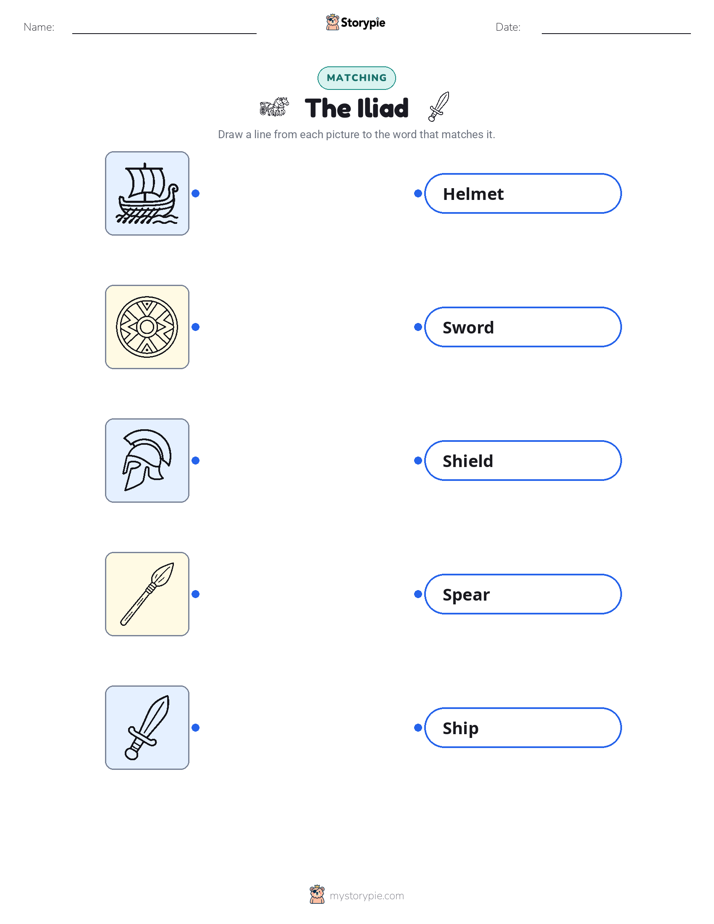
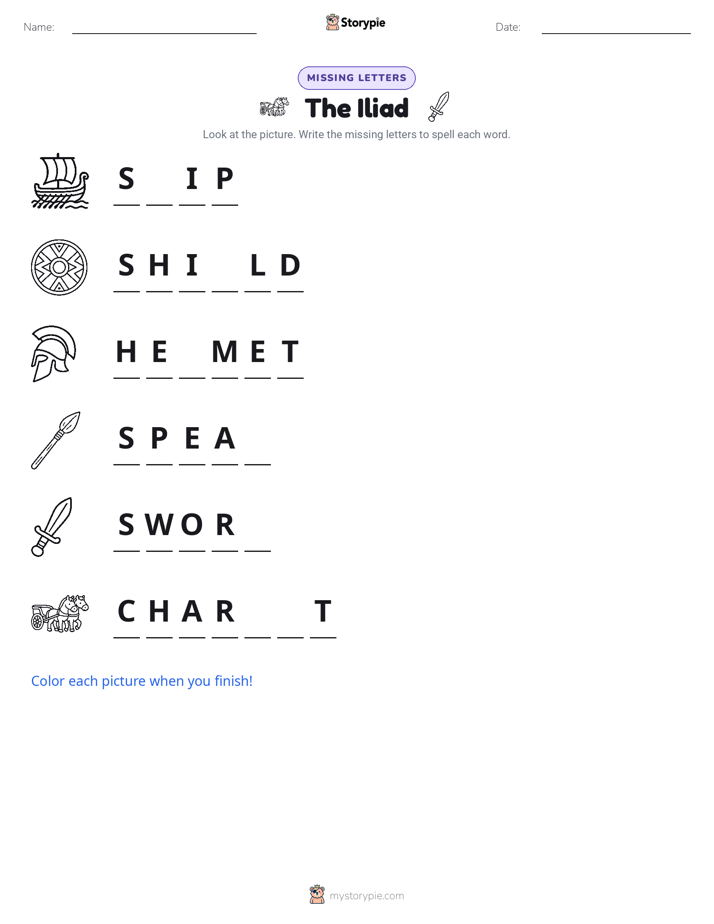
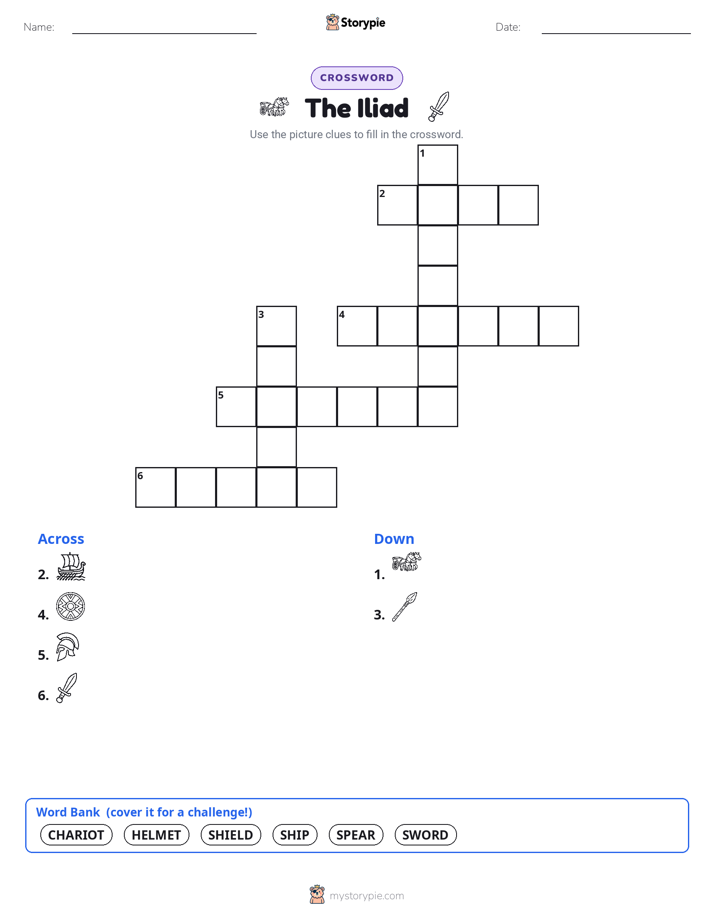
Print & create
Answer keys·No prep·Free with an account
28 worksheets · answer keys · full story · quiz · Ages 8-10 · CEFR B1
Plus adds 102,000+ more stories in 27 languages, audio for every one, and printables for all of them.
Just want The Iliad?
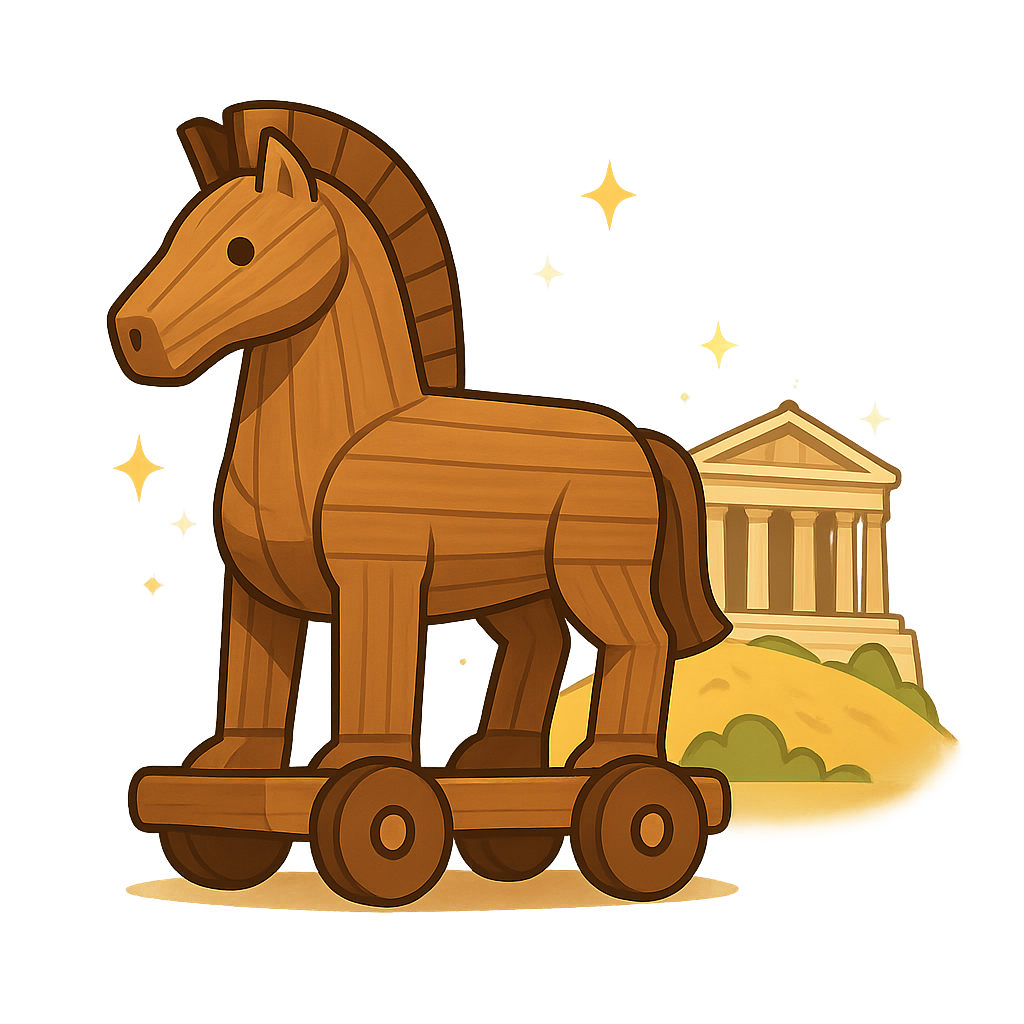
My name is Odysseus, and for ten long years, the dust of the Trojan plain was my home. I saw the sun rise and set over the great walls of Troy, a city that shimmered like a jewel we could never quite reach, while our Greek ships lined the shore like a forest of masts. Our camp was a city of its own, filled with homesick soldiers and proud kings, all there for a single reason: a promise made to bring back the beautiful Queen Helen, who had been taken by the Trojan prince, Paris. This is the story of the final, furious year of that struggle, a tale of heroes and gods, of anger and honor. It is the story that the great poet Homer would one day sing for all to hear, the one you now call the Iliad. In that tenth year, tensions were as high as Troy's walls. We were tired, and our greatest warrior, Achilles, was as unpredictable as the sea. The gods on Mount Olympus watched us like a game, choosing sides and whispering in the ears of kings and heroes. The fate of two great nations rested on the courage of its warriors and the pride of its leaders, and everything was about to change because of a single argument.
The trouble began not with a sword, but with words. Our leader, King Agamemnon, made a proud and foolish choice. He insulted Achilles, the fiercest warrior the world had ever known, and took away his prize of war, a captive girl named Briseis. Achilles’s pride was wounded, and his anger burned hotter than any forge. He declared he would no longer fight for Agamemnon or the Greeks. He and his soldiers, the Myrmidons, stayed in their tents by the ships, and without his strength, the tide of the war turned against us. The Trojans, led by their brave prince Hector, pushed us back toward the sea. Hector was a great man, a loving father and a loyal son, who fought only to protect his city. He was their best, and with Achilles gone, we had no one who could match him. I tried to use my wits, and other heroes fought with all their might, but we were losing. Seeing our desperation, Achilles’s dearest friend, Patroclus, begged to borrow his armor to inspire the troops. Achilles agreed but warned him not to go too far. But in the heat of battle, Patroclus forgot the warning and was slain by Hector. When Achilles heard the news, his grief was a terrible storm. Can you imagine an anger so big it could stop an army, then turn into a grief so deep it could shake the world? His anger at Agamemnon was replaced by a furious desire for revenge against Hector. The god Hephaestus forged him a new set of magnificent armor, and Achilles returned to the battlefield, a whirlwind of destruction. The final duel between Achilles and Hector was a fight for the ages, a clash of the two greatest heroes of the war, but in the end, Achilles’s divine power and burning rage were too much for the noble prince of Troy.
The Iliad: A Hero's Rage
My name is Odysseus, and for ten long years, the dust of the Trojan plain was my home. I saw the sun rise and set over the great walls of Troy, a city that shimmered like a jewel we could never quite reach, while our Greek ships lined the shore like a forest of masts. Our camp was a city of its own, filled with homesick soldiers and proud kings, all there for a single reason: a promise made to bring back the beautiful Queen Helen, who had been taken by the Trojan prince, Paris. This is the story of the final, furious year of that struggle, a tale of heroes and gods, of anger and honor. It is the story that the great poet Homer would one day sing for all to hear, the one you now call the Iliad. In that tenth year, tensions were as high as Troy's walls. We were tired, and our greatest warrior, Achilles, was as unpredictable as the sea. The gods on Mount Olympus watched us like a game, choosing sides and whispering in the ears of kings and heroes. The fate of two great nations rested on the courage of its warriors and the pride of its leaders, and everything was about to change because of a single argument.
The trouble began not with a sword, but with words. Our leader, King Agamemnon, made a proud and foolish choice. He insulted Achilles, the fiercest warrior the world had ever known, and took away his prize of war, a captive girl named Briseis. Achilles’s pride was wounded, and his anger burned hotter than any forge. He declared he would no longer fight for Agamemnon or the Greeks. He and his soldiers, the Myrmidons, stayed in their tents by the ships, and without his strength, the tide of the war turned against us. The Trojans, led by their brave prince Hector, pushed us back toward the sea. Hector was a great man, a loving father and a loyal son, who fought only to protect his city. He was their best, and with Achilles gone, we had no one who could match him. I tried to use my wits, and other heroes fought with all their might, but we were losing. Seeing our desperation, Achilles’s dearest friend, Patroclus, begged to borrow his armor to inspire the troops. Achilles agreed but warned him not to go too far. But in the heat of battle, Patroclus forgot the warning and was slain by Hector. When Achilles heard the news, his grief was a terrible storm. Can you imagine an anger so big it could stop an army, then turn into a grief so deep it could shake the world? His anger at Agamemnon was replaced by a furious desire for revenge against Hector. The god Hephaestus forged him a new set of magnificent armor, and Achilles returned to the battlefield, a whirlwind of destruction. The final duel between Achilles and Hector was a fight for the ages, a clash of the two greatest heroes of the war, but in the end, Achilles’s divine power and burning rage were too much for the noble prince of Troy.
After his victory, Achilles’s grief still controlled him, and he treated Hector’s body with great disrespect, which saddened the gods. But then, something incredible happened. Hector’s father, the old King Priam of Troy, disguised himself and came alone, in the dead of night, to our enemy camp. He knelt before Achilles, the man who had defeated his son, and begged for the chance to give Hector a proper funeral. Seeing the brave, heartbroken old king, Achilles saw the image of his own father, waiting for him at home. In that moment, his rage finally cooled, and he was reminded of our shared humanity. He saw not a Trojan enemy, but a grieving father. He agreed to return Hector’s body, and he called a truce so the Trojans could honor their fallen hero. The Iliad doesn’t end with the end of the war—it ends with this moment of empathy and understanding between two enemies. The story, first told by traveling poets like Homer, wasn't just about fighting. It was about what it means to be a hero, the terrible cost of anger, and the importance of compassion. For thousands of years, this myth has inspired people to think about courage and friendship. It lives on in books, paintings, and movies, reminding us that even in the middle of a great conflict, a single act of kindness can show us the humanity we all share.
Wow facts
About
An ancient Greek epic poem, traditionally attributed to Homer, that tells the story of the final year of the ten-year Trojan War, focusing on the wrath of the hero Achilles.
Take a Quiz
Question 1 of 5
In the story, Odysseus says Achilles was 'as unpredictable as the sea.' What does the word 'unpredictable' mean here?
Explore next



Want to do even more?
Go beyond exploring. Unlock tools that turn every story into real learning.

Storypie Plus for families
Full stories, quizzes, and printables. Nights and car rides, sorted.
- Unlimited audio stories
- Create Mode: your child stars in the story
- Offline downloads
- Printable worksheets & coloring pages

Why Storypie for Schools
Students engaged. Prep in seconds. Evenings back to you.
- Worksheets & Quizzes
- Classroom Management
- Formative Assessment
- Custom Curriculum & Lesson Plans
- 27 Languages

Why Storypie for Homeschool
Curriculum done. They'll ask for more. Hours back in your day.
- Worksheet Generator
- First-Person Audio Stories
- Built-in Comprehension Quizzes
- Custom Curriculum & Lesson Plans
- Print & Go Activities