English

Roman Republic
A system of government in ancient Rome where citizens elected officials to rule on their behalf.
Reads at Grades 6–8 Listens at Grades 4–8
Print & create
Answer keys·No prep·Free with an account
28 worksheets · answer keys · full story · quiz · Ages 10-12 · CEFR B2
Plus adds 102,000+ more stories in 27 languages, audio for every one, and printables for all of them.
Just want Roman Republic?
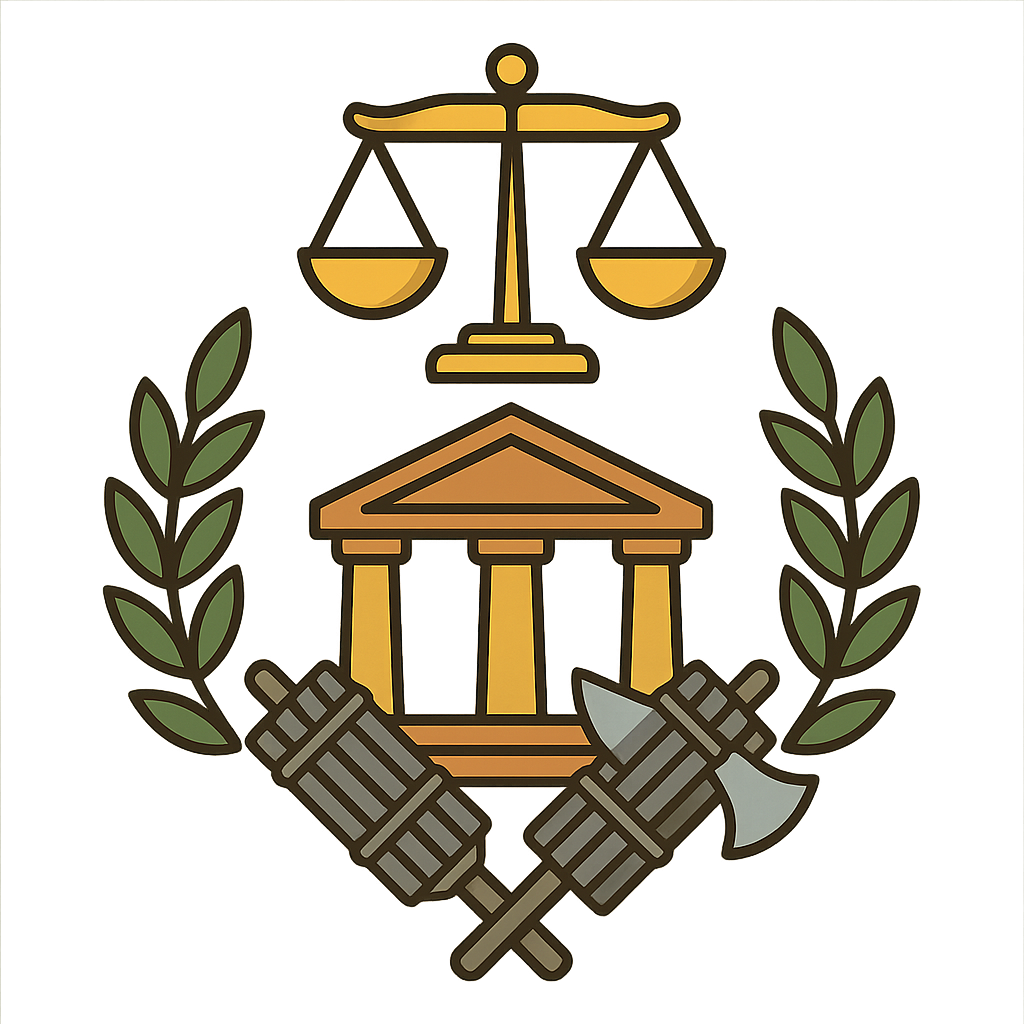
Imagine a bustling city built on seven hills, where for hundreds of years, a king made all the rules. The people had to do whatever he said, whether it was fair or not. They were subjects, not citizens, and their fate was in the hands of one man. But what if they didn't want a king anymore? What if they believed that the people themselves should hold the power to shape their own destiny? That is where I was born, not from stone or clay, but from a powerful idea. I am the belief that a nation should be a 'public thing,' something that belongs to everyone, not just a ruler. In the year 509 BCE, the people of Rome, inspired by a leader named Lucius Junius Brutus, decided they had suffered enough under their last king, a tyrant named Lucius Tarquinius Superbus. They cast him out of the city and chose to build something entirely new, something based on shared responsibility and civic duty. They decided to try me. They gave me a name: Res Publica Romana. You know me today as the Roman Republic.
My early years were a grand and difficult experiment. The Romans were determined to prevent any single person from ever gaining absolute power again. Instead of one king, the people elected two leaders called consuls to govern, but only for a single year. This ensured a constant rotation of leadership. To guide the consuls and make important decisions, I had a council of respected elders called the Senate. But my system was not perfect at first. Power was concentrated in the hands of the wealthy, land-owning families known as the patricians. The common people, the plebeians, who did most of the work and fighting, felt their voices were not heard. This led to a long and tense argument that historians call the 'Struggle of the Orders.' It was a political tug-of-war that lasted for nearly 200 years. The plebeians were clever; they refused to work or serve in the army until their demands were met. This struggle, though challenging, made me stronger and fairer. Around the year 450 BCE, the plebeians won a major victory. They demanded that the laws be written down for all to see. The result was the Twelve Tables, my very first written legal code, which was inscribed on bronze tablets and displayed in the Roman Forum. This was a monumental step forward. It meant that justice was no longer a secret known only to the powerful. The rules applied to everyone, and leaders could not simply invent them to suit their whims. This promise of justice became a core part of my identity.
I Am the Roman Republic
Imagine a bustling city built on seven hills, where for hundreds of years, a king made all the rules. The people had to do whatever he said, whether it was fair or not. They were subjects, not citizens, and their fate was in the hands of one man. But what if they didn't want a king anymore? What if they believed that the people themselves should hold the power to shape their own destiny? That is where I was born, not from stone or clay, but from a powerful idea. I am the belief that a nation should be a 'public thing,' something that belongs to everyone, not just a ruler. In the year 509 BCE, the people of Rome, inspired by a leader named Lucius Junius Brutus, decided they had suffered enough under their last king, a tyrant named Lucius Tarquinius Superbus. They cast him out of the city and chose to build something entirely new, something based on shared responsibility and civic duty. They decided to try me. They gave me a name: Res Publica Romana. You know me today as the Roman Republic.
My early years were a grand and difficult experiment. The Romans were determined to prevent any single person from ever gaining absolute power again. Instead of one king, the people elected two leaders called consuls to govern, but only for a single year. This ensured a constant rotation of leadership. To guide the consuls and make important decisions, I had a council of respected elders called the Senate. But my system was not perfect at first. Power was concentrated in the hands of the wealthy, land-owning families known as the patricians. The common people, the plebeians, who did most of the work and fighting, felt their voices were not heard. This led to a long and tense argument that historians call the 'Struggle of the Orders.' It was a political tug-of-war that lasted for nearly 200 years. The plebeians were clever; they refused to work or serve in the army until their demands were met. This struggle, though challenging, made me stronger and fairer. Around the year 450 BCE, the plebeians won a major victory. They demanded that the laws be written down for all to see. The result was the Twelve Tables, my very first written legal code, which was inscribed on bronze tablets and displayed in the Roman Forum. This was a monumental step forward. It meant that justice was no longer a secret known only to the powerful. The rules applied to everyone, and leaders could not simply invent them to suit their whims. This promise of justice became a core part of my identity.
With my system of shared power and written laws providing stability, Rome became organized and incredibly strong. My legions, which were disciplined armies of citizen-soldiers who felt they were fighting for their own state, began to expand my influence beyond the city walls. First, I brought the entire Italian peninsula under my control, uniting its various peoples. Then, I looked across the sea and met my greatest rival: the powerful trading city of Carthage in North Africa. For over a century, we fought for control of the Mediterranean world in three devastating conflicts known as the Punic Wars, which raged from 264 BCE to 146 BCE. It was a fight for survival and supremacy. Carthage’s general, Hannibal, was a military genius who famously marched an army with war elephants over the snowy Alps to attack me in my own backyard. It was a terrifying time, but Roman resilience and brilliant generals of my own, like Scipio Africanus, ultimately secured victory. After the final defeat of Carthage, I was the undisputed master of the Mediterranean Sea. I built incredible roads that connected distant lands, aqueducts that brought fresh water to cities, and my laws and Latin language spread, creating a common culture across a vast territory. I was no longer just a city; I was a sprawling, multicultural republic, a tapestry of many different peoples woven together by my ideals.
But my enormous size and power brought new, dangerous problems. My government, which was designed for a small city-state, struggled to manage a huge territory with diverse populations. Wealth flowed into Rome, but it often ended up in the hands of a few, creating a vast gap between the rich and the poor. Ambitious generals, commanding armies that were more loyal to them than to me, began to compete for ultimate power. Men like the famous Julius Caesar conquered new lands and became heroes to their soldiers and the common people, but their power threatened the very balance I was built on. This rivalry led to terrible civil wars that tore me apart from the inside. The arguments in the Senate were replaced by battles in the fields. After decades of chaos and bloodshed, the people of Rome longed for peace and stability, even if it meant giving up some of the freedoms they had fought for. In 27 BCE, after defeating all his rivals, Julius Caesar’s adopted son, Octavian, was given the title 'Augustus' by the Senate. He became the first Roman Emperor, and my time as a republic officially came to an end. I transformed into the Roman Empire. But even though my form changed, my spirit never truly died. My ideas about electing leaders, balancing power, the importance of written laws, and a citizen's duty to their country have echoed through history. Centuries later, the founders of new nations, including the United States of America, would study my successes and my failures as they designed their own governments. My story became a blueprint for freedom and self-government, proving that the idea of a 'public thing'—a government of, by, and for the people—is one of the most powerful in the world.
Wow facts
About
A system of government in ancient Rome where citizens elected officials to rule on their behalf. The Roman Republic lasted from the overthrow of the monarchy in 509 BCE until the establishment of the Roman Empire in 27 BCE.
Take a Quiz
Question 1 of 5
Summarize the 'Struggle of the Orders' and explain what important change came out of it.
Explore next


Want to do even more?
Go beyond exploring. Unlock tools that turn every story into real learning.

Storypie Plus for families
Full stories, quizzes, and printables. Nights and car rides, sorted.
- Unlimited audio stories
- Create Mode: your child stars in the story
- Offline downloads
- Printable worksheets & coloring pages

Why Storypie for Schools
Students engaged. Prep in seconds. Evenings back to you.
- Worksheets & Quizzes
- Classroom Management
- Formative Assessment
- Custom Curriculum & Lesson Plans
- 27 Languages

Why Storypie for Homeschool
Curriculum done. They'll ask for more. Hours back in your day.
- Worksheet Generator
- First-Person Audio Stories
- Built-in Comprehension Quizzes
- Custom Curriculum & Lesson Plans
- Print & Go Activities