English

Samurai
The Samurai were the military nobility and officer caste of medieval and early-modern Japan from the 12th…
Reads at Grades 3–5 Listens at Grades 1–5
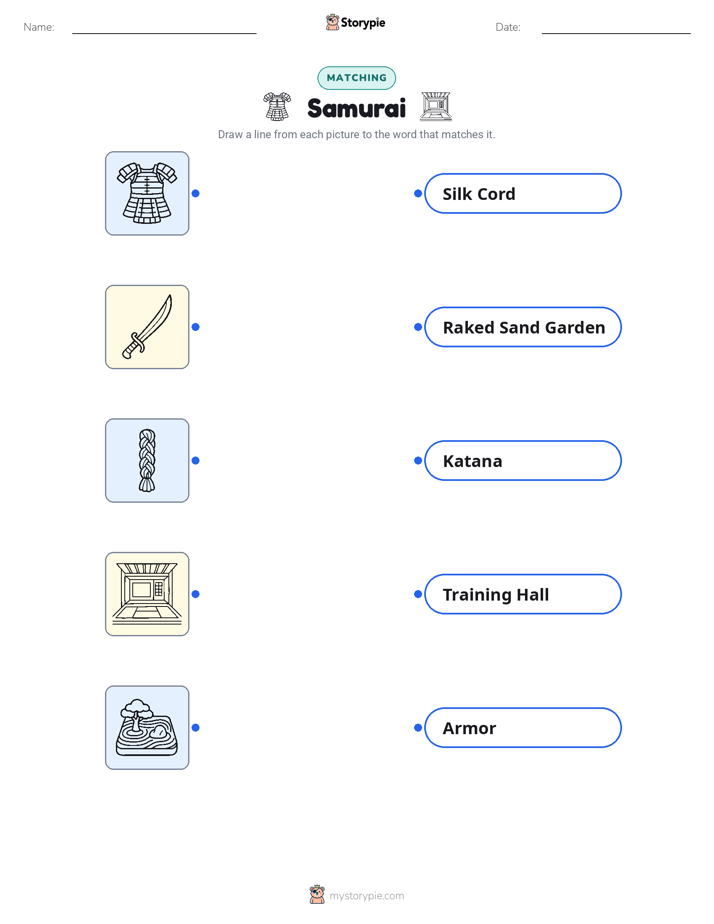
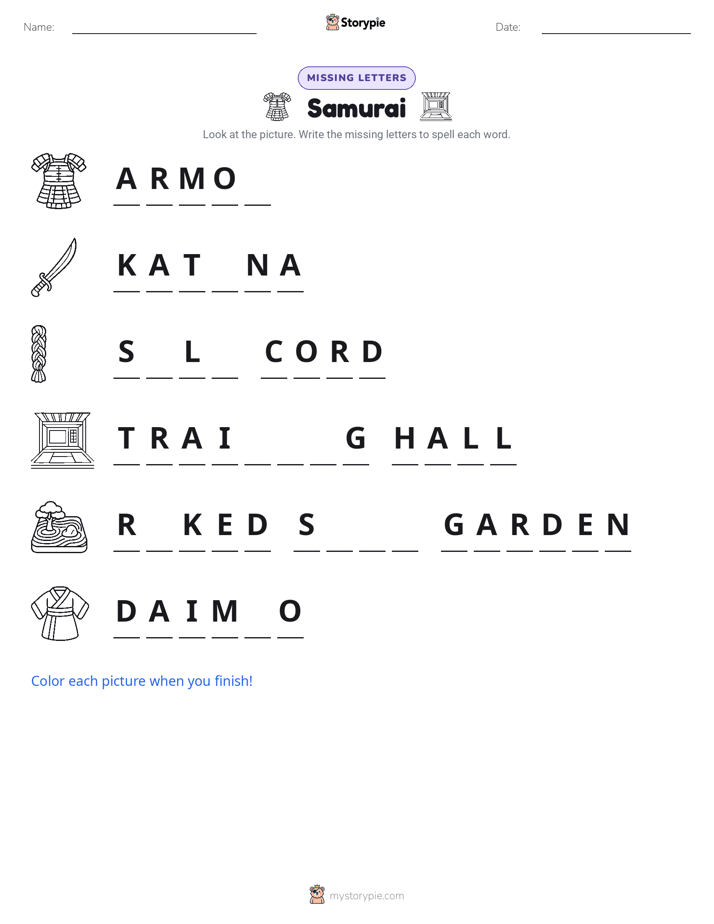
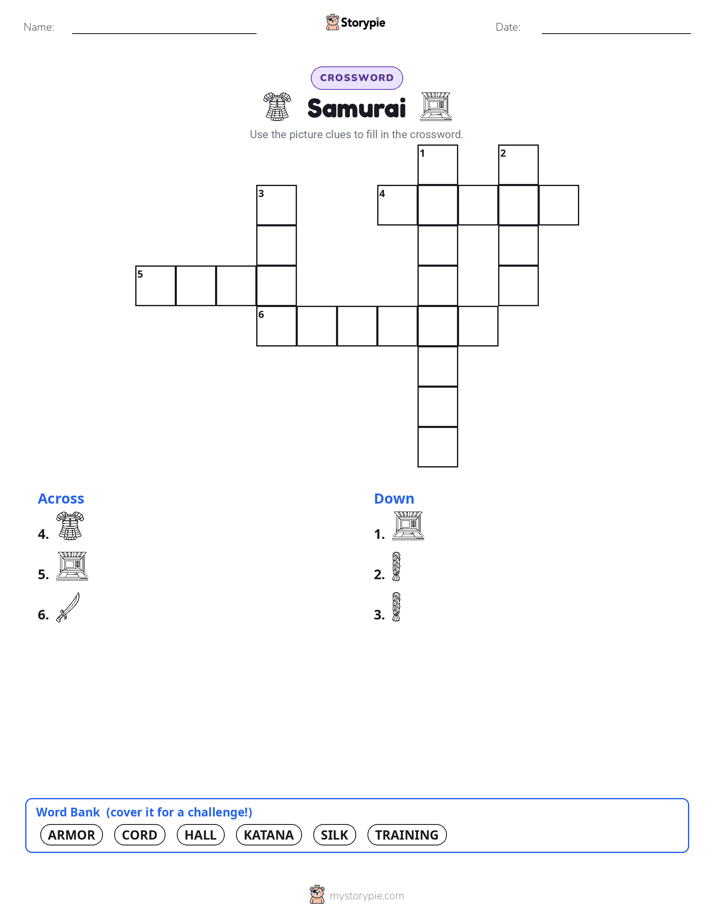
Print & create
Answer keys·No prep·Free with an account
28 worksheets · answer keys · full story · quiz · Ages 8-10 · CEFR B1
Plus adds 102,000+ more stories in 27 languages, audio for every one, and printables for all of them.
Just want Samurai?
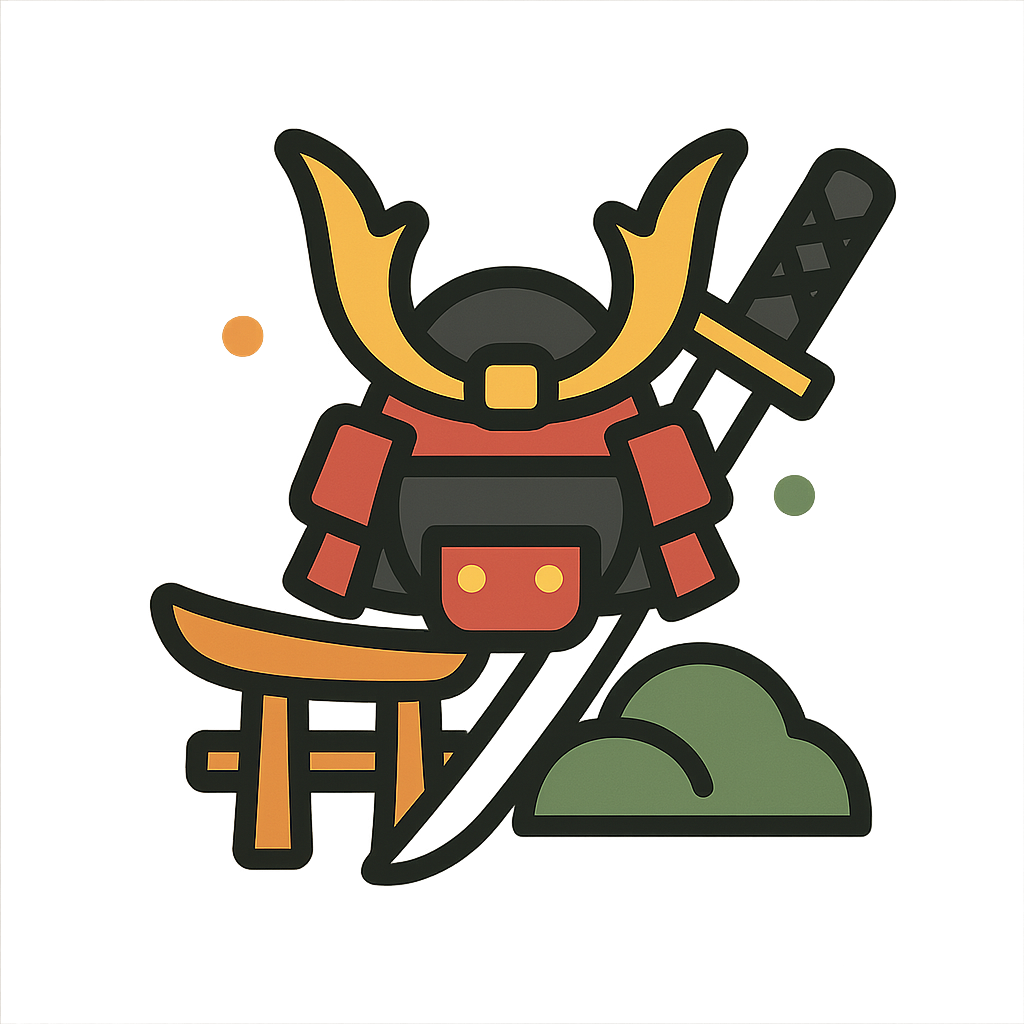
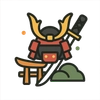
Imagine the feeling of soft silk robes layered beneath polished armor made of leather and steel. Feel the weight of a special helmet, carefully crafted to protect your head, and the quiet power in your straight, steady posture. All around you, the air is still. Giant castles with sloping roofs rise toward the sky, and in the gardens, pink cherry blossoms drift like snow. It is a beautiful world, but one that needs protecting. My job was to serve a master with perfect loyalty, to be brave in the face of danger, and to live by a strict set of rules that guided my every move. I am more than just a warrior. I am a way of life, an idea of honor that has lasted for centuries. I am the spirit of the Samurai.
My story began a very long time ago in Japan, during a time called the Heian period, which started around the 8th century. Back then, I was a humble guard, hired by wealthy noble families to protect their homes and lands. But as time went on, my importance grew. Can you imagine a country ruled not by an emperor, but by its most powerful warrior? That’s what happened in the year 1185, at the start of the Kamakura period. A great military leader, called a Shogun, took control of Japan. I served the Shogun and the powerful lords, known as Daimyo, who ruled different parts of the country. I became their most trusted protector. My tools were my soul. I carried two swords, a long, curved one called a katana for big battles, and a shorter one called a wakizashi for close fighting. I was also an expert with a bow and arrow, able to hit a target from far away while riding a horse. But I was not just about fighting. I lived by a code called Bushido, which means 'the way of the warrior'. It taught me to be brave, to be completely loyal to my lord, to be honest, and to show compassion to others. It was a guide for how to live an honorable life.
The Spirit of the Samurai
Imagine the feeling of soft silk robes layered beneath polished armor made of leather and steel. Feel the weight of a special helmet, carefully crafted to protect your head, and the quiet power in your straight, steady posture. All around you, the air is still. Giant castles with sloping roofs rise toward the sky, and in the gardens, pink cherry blossoms drift like snow. It is a beautiful world, but one that needs protecting. My job was to serve a master with perfect loyalty, to be brave in the face of danger, and to live by a strict set of rules that guided my every move. I am more than just a warrior. I am a way of life, an idea of honor that has lasted for centuries. I am the spirit of the Samurai.
My story began a very long time ago in Japan, during a time called the Heian period, which started around the 8th century. Back then, I was a humble guard, hired by wealthy noble families to protect their homes and lands. But as time went on, my importance grew. Can you imagine a country ruled not by an emperor, but by its most powerful warrior? That’s what happened in the year 1185, at the start of the Kamakura period. A great military leader, called a Shogun, took control of Japan. I served the Shogun and the powerful lords, known as Daimyo, who ruled different parts of the country. I became their most trusted protector. My tools were my soul. I carried two swords, a long, curved one called a katana for big battles, and a shorter one called a wakizashi for close fighting. I was also an expert with a bow and arrow, able to hit a target from far away while riding a horse. But I was not just about fighting. I lived by a code called Bushido, which means 'the way of the warrior'. It taught me to be brave, to be completely loyal to my lord, to be honest, and to show compassion to others. It was a guide for how to live an honorable life.
For over two hundred and fifty years, from 1603 until 1868, Japan was in a time of great peace called the Edo period. There were very few battles to fight, so what was a warrior like me to do? I had to find a new way to be strong, a strength that came from my mind instead of just my muscles. I put down my sword more often and picked up a pen. I became a scholar, studying history and philosophy. I became a poet, writing short poems called haiku that captured a single, beautiful moment in nature. I became an artist, practicing calligraphy, where every stroke of the ink brush had to be perfect and full of meaning. Of course, I always carried my two swords at my side; they were a symbol of who I was. But my focus had shifted to discipline of the mind. My journey as a special warrior class, however, came to an end. In the year 1868, during what was called the Meiji Restoration, Japan's leaders decided to create a modern army like those in other parts of the world. My official role was over.
Even though I no longer walk the stone paths of castles or ride across the fields of Japan in my armor, my spirit is not gone. It is very much alive today. You can see it in the incredible focus and discipline of martial arts like kendo, where people practice swordsmanship with bamboo swords, or judo, which teaches respect and control. You can feel my spirit in the quiet beauty of Japanese art and gardens, which require patience and a calm mind to create. And you can find it in the deep cultural respect for honor, loyalty, and working hard to be the best you can be. My story teaches a lesson for everyone: true strength isn't just about being a great fighter. It comes from having a disciplined mind and an honorable heart, a spirit that anyone, anywhere, can find inside themselves.
Wow facts
About
The Samurai were the military nobility and officer caste of medieval and early-modern Japan from the 12th century to their abolition in the 1870s. They followed a strict code of honor and were known for their skill in swordsmanship.
Take a Quiz
Question 1 of 5
In the story, the Samurai says their two swords were their 'soul'. What does this really mean?
Explore next




Want to do even more?
Go beyond exploring. Unlock tools that turn every story into real learning.

Storypie Plus for families
Full stories, quizzes, and printables. Nights and car rides, sorted.
- Unlimited audio stories
- Create Mode: your child stars in the story
- Offline downloads
- Printable worksheets & coloring pages

Why Storypie for Schools
Students engaged. Prep in seconds. Evenings back to you.
- Worksheets & Quizzes
- Classroom Management
- Formative Assessment
- Custom Curriculum & Lesson Plans
- 27 Languages

Why Storypie for Homeschool
Curriculum done. They'll ask for more. Hours back in your day.
- Worksheet Generator
- First-Person Audio Stories
- Built-in Comprehension Quizzes
- Custom Curriculum & Lesson Plans
- Print & Go Activities