English

Seagrass
Seagrasses are marine flowering plants that form underwater meadows…
Reads at Grades 6–8 Listens at Grades 4–8
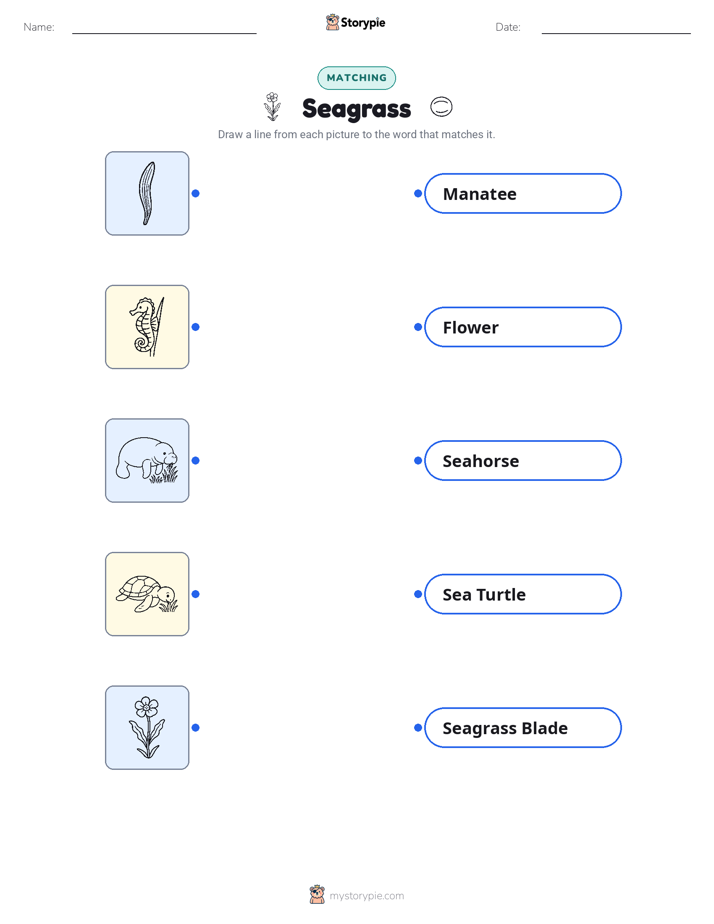
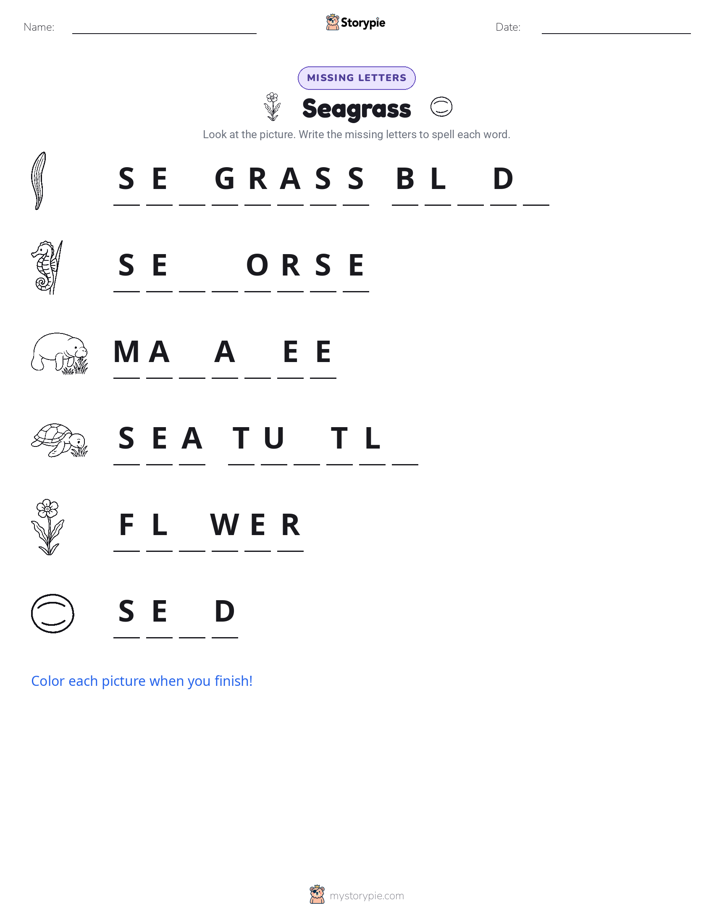
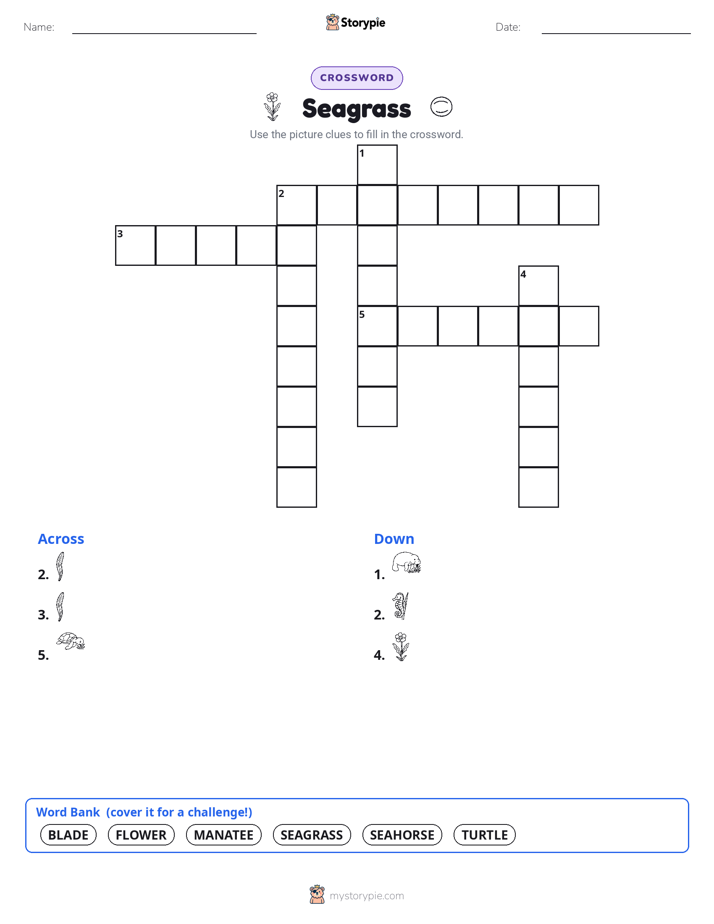
Print & create
Answer keys·No prep·Free with an account
28 worksheets · answer keys · full story · quiz · Ages 10-12 · CEFR B2
Plus adds 164,000+ more stories in 27 languages, audio for every one, and printables for all of them.
Just want Seagrass?
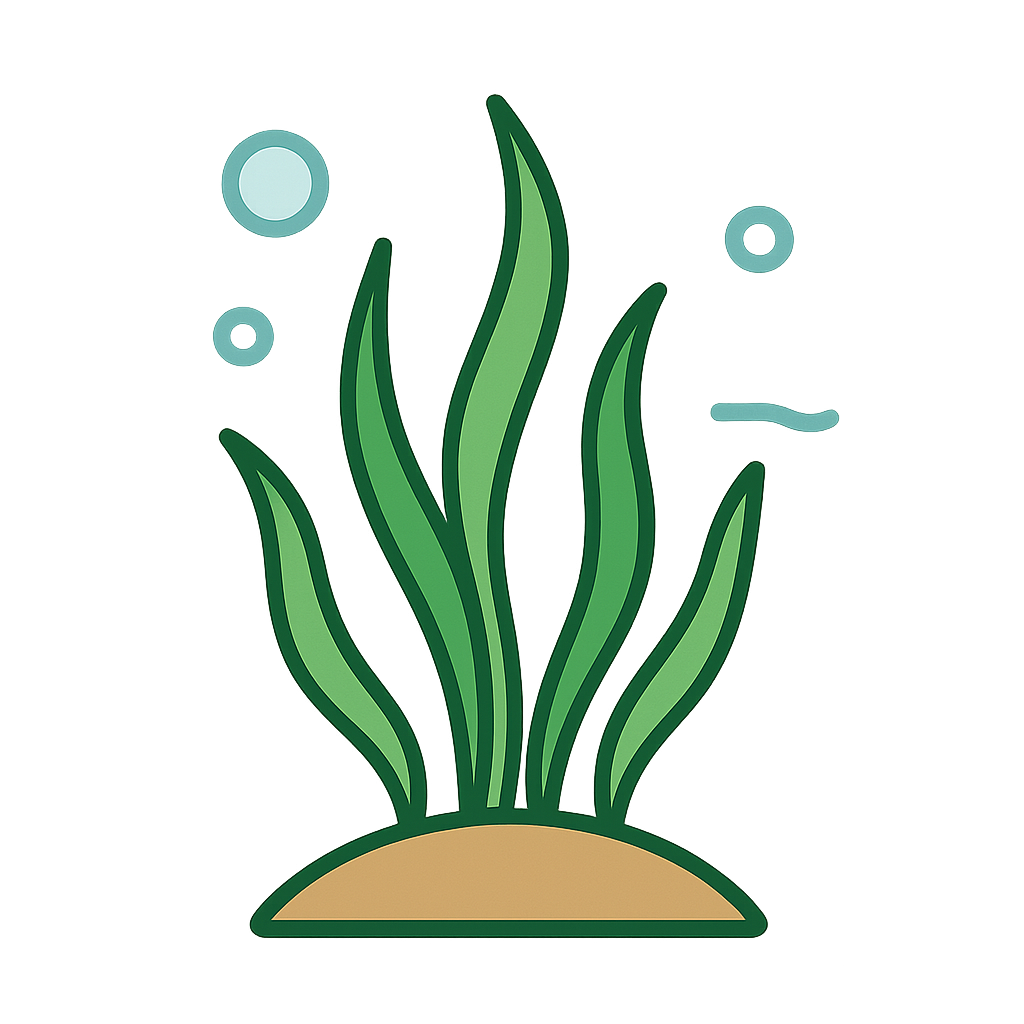
Imagine a meadow swaying not in the wind, but in the gentle push and pull of the ocean. Sunlight streams down through the clear, shallow water, making everything shimmer. My long, green blades dance together in the currents, a vast, flowing field of green and gold. I feel the tickle of tiny seahorses clinging to my leaves, their delicate tails wrapped tight as they hide from bigger fish. I am a safe maze for baby fish, who dart between my stems, playing a game of hide-and-seek with the world. I am also a restaurant, where gentle, slow-moving manatees and green sea turtles graze on my leaves for lunch. I am a home, a shield, and a banquet all in one, a secret garden hidden just beneath the waves. My roots anchor me to the sandy floor, creating a stable, peaceful world teeming with life. I am a quiet, powerful force in the coastal waters of every continent except Antarctica. I am Seagrass.
Don’t be confused by my name or where I live; I am not a seaweed. Seaweeds are algae, simple organisms that just float or cling to rocks. I am much more complex. I am a true flowering plant, with roots that dig deep, sturdy stems, and long leaves. I even produce tiny, delicate flowers and seeds right here under the water. My story began a very, very long time ago, around 100 million years ago, when dinosaurs still walked the Earth. My ancestors were actually land plants, brave pioneers who decided to leave the shore and move back into the sea. It was a remarkable journey of adaptation, learning to live in a world of salt and currents. For many centuries, people who lived by the sea knew me well, though they didn't understand my ancient history. They saw me as a gift. When storms washed my broken leaves ashore, they would gather me. They dried my tough, fibrous blades and used them to stuff mattresses, weave into roofing, and insulate their homes against the cold. They even used me to fertilize their gardens. I was a practical and humble part of their daily lives. But it wasn't until the 18th century that my true identity began to be understood. A brilliant botanist from Sweden named Carl Linnaeus was busy creating a system to classify all living things. He looked at me closely, studied my structure, and realized I wasn't an alga at all. He recognized my roots, my veins, and my ability to produce flowers, placing me firmly in the plant kingdom alongside my cousins on land. My journey went from being a useful material to a subject of scientific wonder.
The Secret Garden Under the Sea
Imagine a meadow swaying not in the wind, but in the gentle push and pull of the ocean. Sunlight streams down through the clear, shallow water, making everything shimmer. My long, green blades dance together in the currents, a vast, flowing field of green and gold. I feel the tickle of tiny seahorses clinging to my leaves, their delicate tails wrapped tight as they hide from bigger fish. I am a safe maze for baby fish, who dart between my stems, playing a game of hide-and-seek with the world. I am also a restaurant, where gentle, slow-moving manatees and green sea turtles graze on my leaves for lunch. I am a home, a shield, and a banquet all in one, a secret garden hidden just beneath the waves. My roots anchor me to the sandy floor, creating a stable, peaceful world teeming with life. I am a quiet, powerful force in the coastal waters of every continent except Antarctica. I am Seagrass.
Don’t be confused by my name or where I live; I am not a seaweed. Seaweeds are algae, simple organisms that just float or cling to rocks. I am much more complex. I am a true flowering plant, with roots that dig deep, sturdy stems, and long leaves. I even produce tiny, delicate flowers and seeds right here under the water. My story began a very, very long time ago, around 100 million years ago, when dinosaurs still walked the Earth. My ancestors were actually land plants, brave pioneers who decided to leave the shore and move back into the sea. It was a remarkable journey of adaptation, learning to live in a world of salt and currents. For many centuries, people who lived by the sea knew me well, though they didn't understand my ancient history. They saw me as a gift. When storms washed my broken leaves ashore, they would gather me. They dried my tough, fibrous blades and used them to stuff mattresses, weave into roofing, and insulate their homes against the cold. They even used me to fertilize their gardens. I was a practical and humble part of their daily lives. But it wasn't until the 18th century that my true identity began to be understood. A brilliant botanist from Sweden named Carl Linnaeus was busy creating a system to classify all living things. He looked at me closely, studied my structure, and realized I wasn't an alga at all. He recognized my roots, my veins, and my ability to produce flowers, placing me firmly in the plant kingdom alongside my cousins on land. My journey went from being a useful material to a subject of scientific wonder.
In the modern world, scientists have discovered my superpowers, and they are more incredible than anyone in the 18th century could have imagined. Just like the trees in a rainforest, I perform photosynthesis. I soak up the sun’s energy, breathe in carbon dioxide from the water, and release precious oxygen. My vast underwater meadows produce so much oxygen that some scientists call me the 'lungs of the sea.' I am a champion in the fight against climate change. The carbon dioxide I absorb doesn't just disappear. I trap the carbon and store it in my roots and the sediment below me, locking it away for centuries. This process is called 'blue carbon,' and I am exceptionally good at it, capturing carbon much faster than a tropical rainforest. I am also one of the most important nurseries in the ocean. My dense meadows provide the perfect shelter for countless species of young fish, crabs, and shrimp. They hide from predators and find plenty of food, allowing them to grow up strong. It’s estimated that my meadows support about 20% of the world's biggest fisheries. Without me, many of the fish that people rely on for food would have no safe place to begin their lives. And my work doesn't stop there. My roots form a thick, tangled net under the sand, holding the seafloor together like glue. When big storms roll in and powerful waves crash toward the shore, my meadows slow the water down and my roots prevent the sand from washing away. I am a living shield, protecting coastlines from erosion.
So you see, I am your underwater ally. My quiet, sprawling meadows are vital for the health of the ocean and the entire planet. My existence means the water is cleaner, the coastlines are safer, and the sea is full of life. It’s true that I face challenges. Pollution can cloud the water, blocking the sunlight I need to survive, and development along the coasts can damage my home. But there is reason for hope. People all over the world are working harder than ever to protect me. Scientists and volunteers are planting new meadows, restoring areas that were lost, and creating protected zones where I can thrive. They understand that a healthy planet needs a healthy ocean, and a healthy ocean needs me. I want to inspire you to learn more about the amazing world beneath the waves. Appreciate the quiet, hardworking ecosystems like mine that do so much for everyone, both in the sea and on land. When you see a healthy coastline, think of me, holding it all together. I am a sign of a vibrant ocean and a powerful, hopeful partner for our future.
Wow facts
About
Seagrasses are marine flowering plants that form underwater meadows, providing critical habitat for marine life, protecting coastlines from erosion, and capturing significant amounts of carbon.
Take a Quiz
Question 1 of 5
What is the main idea of the section 'The Lungs of the Sea'?
Explore next




Want to do even more?
Go beyond exploring. Unlock tools that turn every story into real learning.

Storypie Plus for families
Full stories, quizzes, and printables. Nights and car rides, sorted.
- Unlimited audio stories
- Create Mode: your child stars in the story
- Offline downloads
- Printable worksheets & coloring pages

Why Storypie for Schools
Students engaged. Prep in seconds. Evenings back to you.
- Worksheets & Quizzes
- Classroom Management
- Formative Assessment
- Custom Curriculum & Lesson Plans
- 27 Languages

Why Storypie for Homeschool
Curriculum done. They'll ask for more. Hours back in your day.
- Worksheet Generator
- First-Person Audio Stories
- Built-in Comprehension Quizzes
- Custom Curriculum & Lesson Plans
- Print & Go Activities