English

Shinto
Shinto is the traditional, indigenous faith of Japan…
Reads at Grades 3–5 Listens at Grades 1–5
Print & create
Answer keys·No prep·Free with an account
28 worksheets · answer keys · full story · quiz · Ages 8-10 · CEFR B1
Plus adds 102,000+ more stories in 27 languages, audio for every one, and printables for all of them.
Just want Shinto?
Have you ever walked deep into a quiet forest and seen a giant, ancient tree wrapped in a special rope of straw. Or have you looked up at a mountain so tall its peak was hidden in the clouds and felt a shiver of excitement. Can you imagine standing before a roaring waterfall and feeling its power. I am that feeling of wonder and respect. I am the quiet whisper in your heart that tells you this place is special and full of life. Before people in the beautiful island country of Japan had a word for me, they felt my presence all around them. I was in the rustling leaves of the bamboo groves, the powerful rivers that carved through the valleys, and the warm sunshine that helped their rice grow tall. I was the invisible thread that connected the people to the beautiful, powerful land they called home.
Hello there. My name is Shinto, which means 'the way of the kami.' But what is a kami, you ask. A kami is a spirit, a divine being, and they are everywhere. You might find a kami in a powerful mountain that touches the sky, a winding river that gives life, a wise old tree that has seen centuries pass, or even in the kitchen stove that cooks your family’s food. Your ancestors can be kami, too, watching over you from the spirit world. The most famous kami is my dear friend, Amaterasu Omikami, the great goddess of the sun, who makes the world bright and warm every single day. I have been with the people of Japan for a very, very long time, since at least the Yayoi period, which started all the way back around 300 BCE. For many hundreds of years, people didn't need a name for me. I was just their natural way of showing respect for the world and all the amazing spirits within it.
The Way of the Kami
Have you ever walked deep into a quiet forest and seen a giant, ancient tree wrapped in a special rope of straw. Or have you looked up at a mountain so tall its peak was hidden in the clouds and felt a shiver of excitement. Can you imagine standing before a roaring waterfall and feeling its power. I am that feeling of wonder and respect. I am the quiet whisper in your heart that tells you this place is special and full of life. Before people in the beautiful island country of Japan had a word for me, they felt my presence all around them. I was in the rustling leaves of the bamboo groves, the powerful rivers that carved through the valleys, and the warm sunshine that helped their rice grow tall. I was the invisible thread that connected the people to the beautiful, powerful land they called home.
Hello there. My name is Shinto, which means 'the way of the kami.' But what is a kami, you ask. A kami is a spirit, a divine being, and they are everywhere. You might find a kami in a powerful mountain that touches the sky, a winding river that gives life, a wise old tree that has seen centuries pass, or even in the kitchen stove that cooks your family’s food. Your ancestors can be kami, too, watching over you from the spirit world. The most famous kami is my dear friend, Amaterasu Omikami, the great goddess of the sun, who makes the world bright and warm every single day. I have been with the people of Japan for a very, very long time, since at least the Yayoi period, which started all the way back around 300 BCE. For many hundreds of years, people didn't need a name for me. I was just their natural way of showing respect for the world and all the amazing spirits within it.
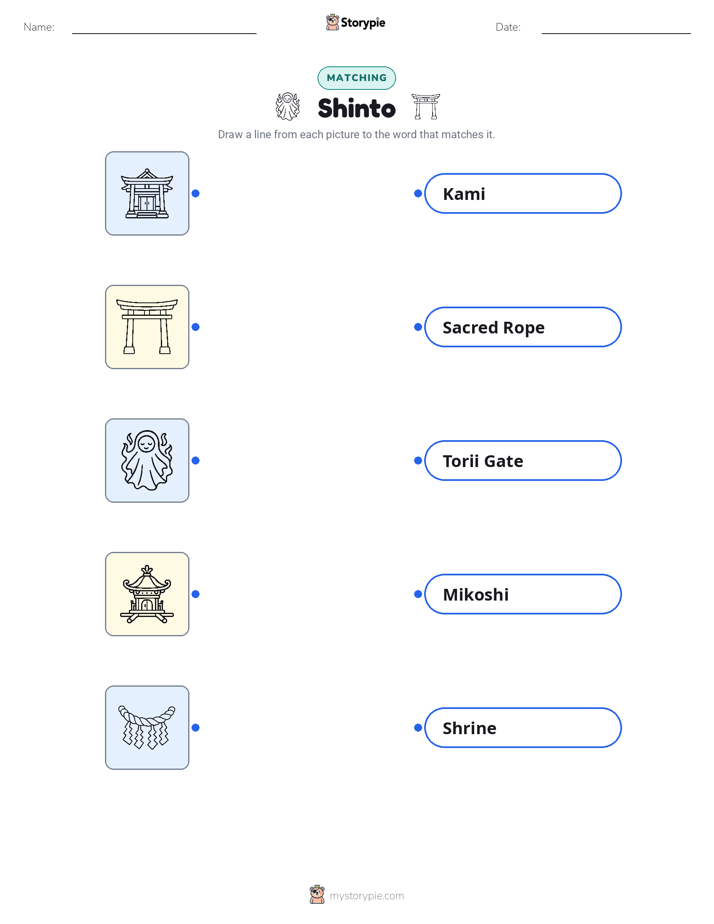
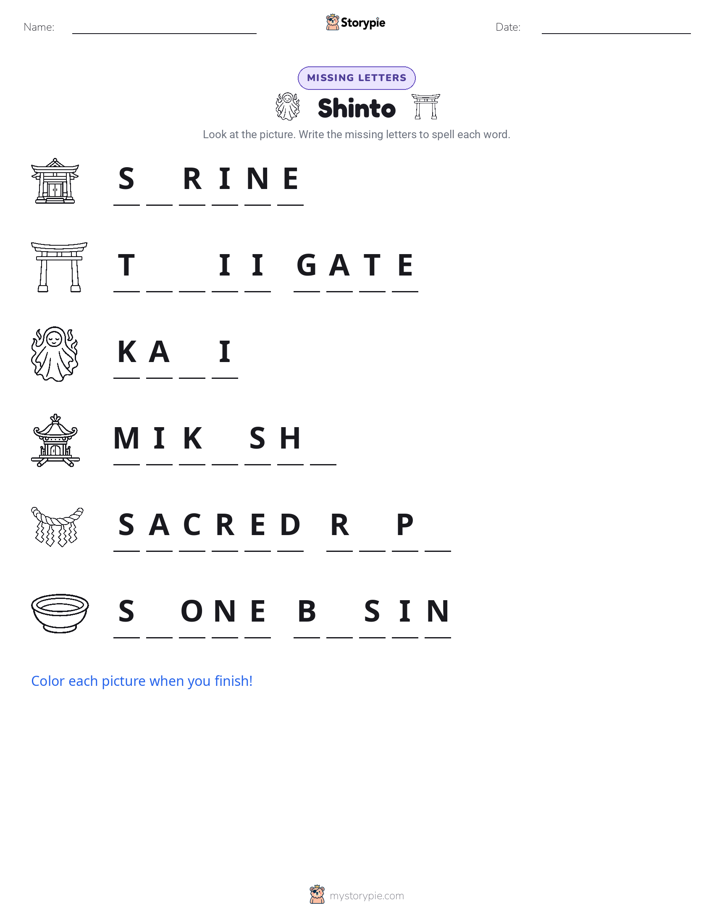
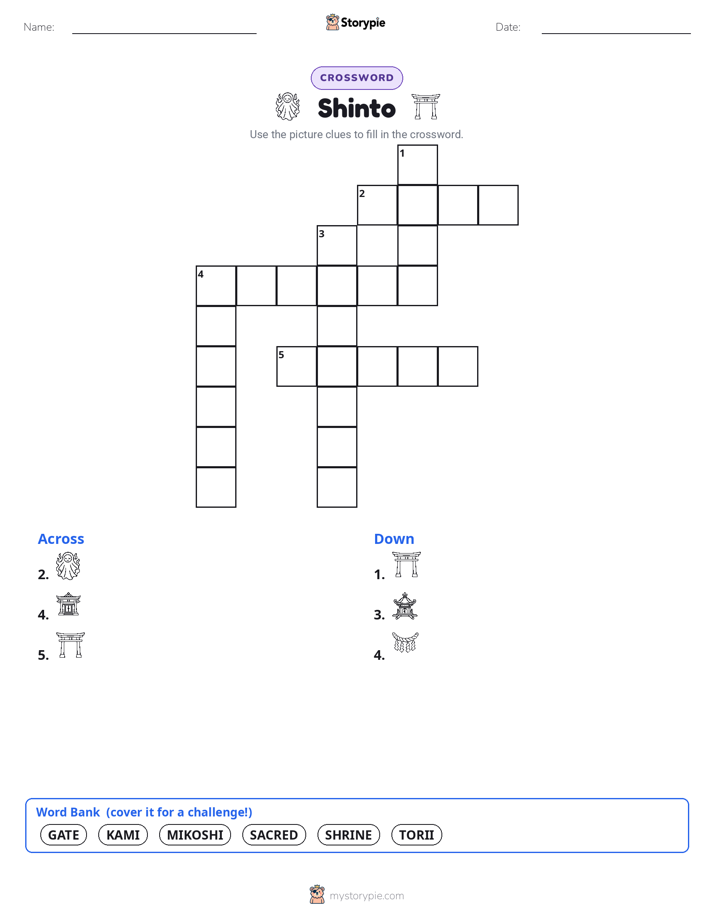
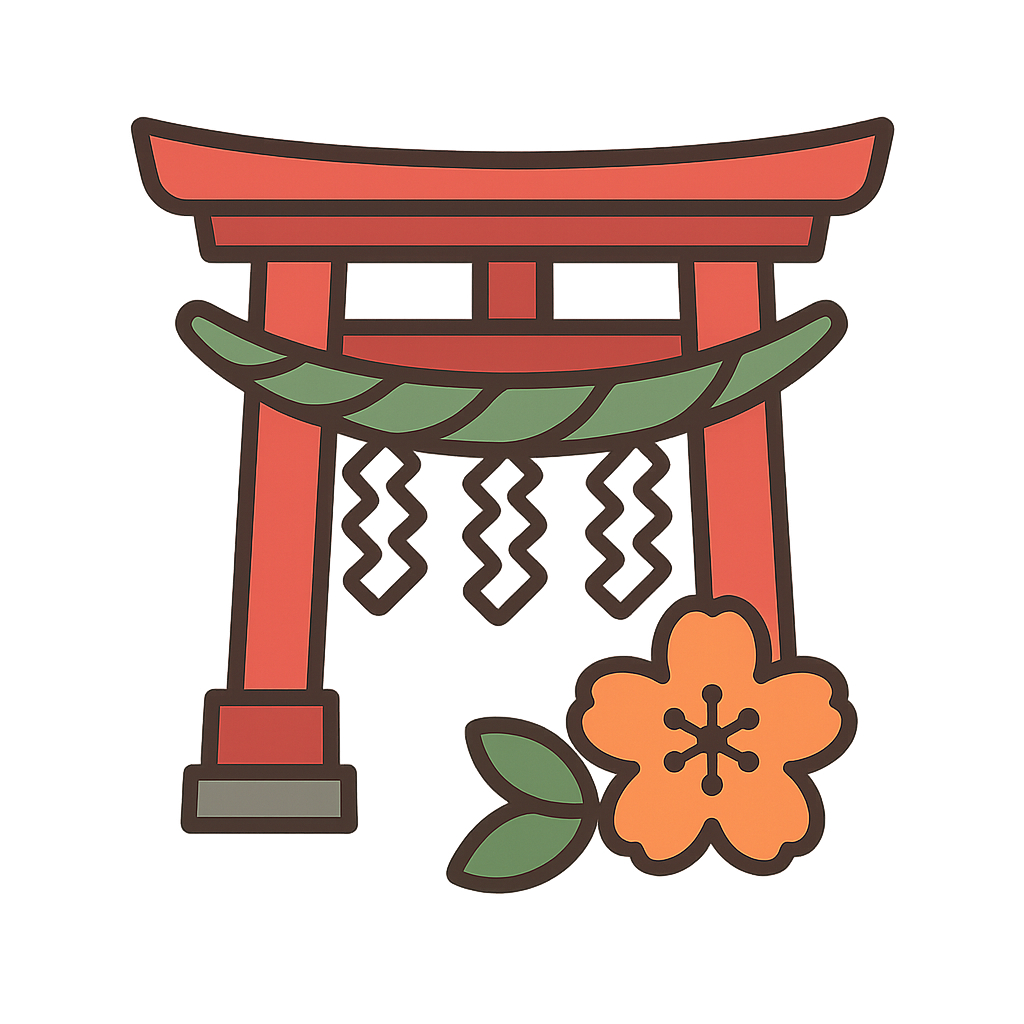
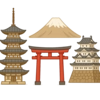
As people wanted to find more ways to show their thanks and respect to the kami, they began building special homes for them called shrines, or 'jinja' in Japanese. You always know you are arriving at a shrine because you first pass under a beautiful, simple gate called a 'torii.' It’s often painted a bright vermilion red, and it acts like a doorway between your everyday world and the sacred home of a kami. It’s a sign to be respectful and quiet. Before you go in to say hello to the kami, it’s very important to be clean. People stop at a special fountain called a 'chōzuya' to wash their hands and rinse their mouths with fresh water. This shows they are pure in body and spirit. For a long, long time, I was the main way people in Japan connected with the spiritual world. Then, around the 6th century CE, another way of thinking called Buddhism arrived from other parts of Asia. It was then that people gave me my name, 'Shinto,' to describe the ancient way of Japan. But we didn’t become enemies. Instead, many people found that Buddhism and I could be friends. They learned from both of us, showing that different beliefs can live together in peace.
Today, I am still a joyful part of life all across Japan. You can see me in the big city festivals, called 'matsuri,' with huge, colorful floats and cheerful music celebrating the local kami. You can find me in quiet family moments, like when a new baby is brought to a shrine for their very first blessing, or when students visit to pray for good luck on their school exams. For a short time, during what is called the Meiji period starting in 1868 CE, the government tried to make me the official religion for the whole country. But after 1945 CE, I went back to being a peaceful part of community and family life, just as I had always been. My main job has never changed. I am here to remind people to be thankful for their food and family, to live in harmony with nature, and to see the magic and spirit in the world all around them. So whenever you feel a sense of wonder looking at a beautiful sunset or a tall mountain, you are feeling a little piece of me.
Wow facts
About
Shinto is the traditional, indigenous faith of Japan, a set of beliefs and practices centered on the worship of kami (divine spirits) found in nature, ancestors, and objects.
Take a Quiz
Question 1 of 5
What is a 'kami' according to the story?
Explore next


Want to do even more?
Go beyond exploring. Unlock tools that turn every story into real learning.

Storypie Plus for families
Full stories, quizzes, and printables. Nights and car rides, sorted.
- Unlimited audio stories
- Create Mode: your child stars in the story
- Offline downloads
- Printable worksheets & coloring pages

Why Storypie for Schools
Students engaged. Prep in seconds. Evenings back to you.
- Worksheets & Quizzes
- Classroom Management
- Formative Assessment
- Custom Curriculum & Lesson Plans
- 27 Languages

Why Storypie for Homeschool
Curriculum done. They'll ask for more. Hours back in your day.
- Worksheet Generator
- First-Person Audio Stories
- Built-in Comprehension Quizzes
- Custom Curriculum & Lesson Plans
- Print & Go Activities