English

Solstice
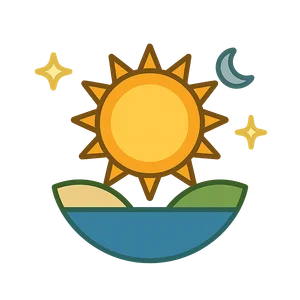
The solstice is an astronomical event occurring twice a year when the Sun reaches its highest or lowest point…
Reads at Grades 3–5 Listens at Grades 1–5
Print & create
Answer keys·No prep·Free with an account
28 worksheets · answer keys · full story · quiz · Ages 8-10 · CEFR B1
Plus adds 164,000+ more stories in 27 languages, audio for every one, and printables for all of them.
Just want Solstice?
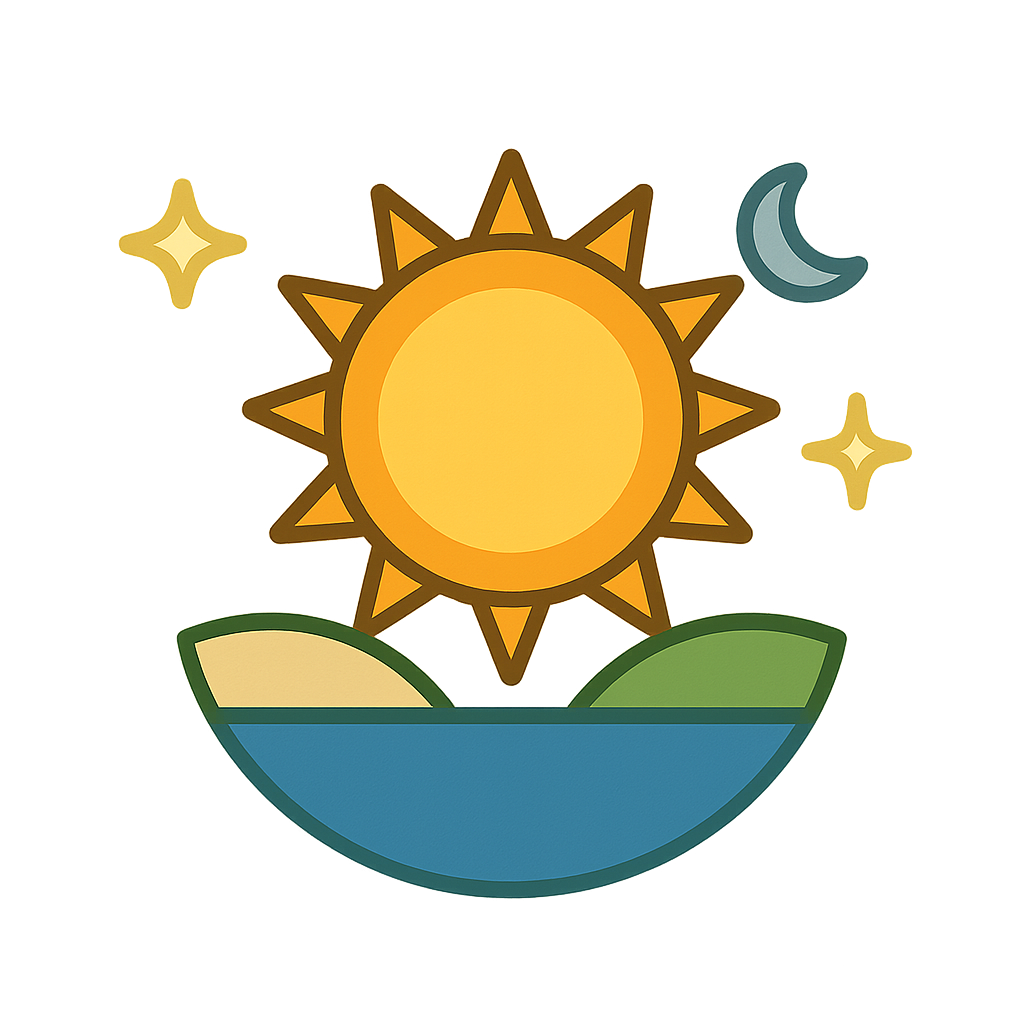
Have you ever had a summer day that felt like it would never end? The sun hangs high in the sky, giving you extra hours to play outside, chase fireflies, and feel the warm air long after dinner. And what about a winter day, when it feels like the sun barely wakes up? Darkness sneaks in early, wrapping around your windows and inviting you to get cozy indoors with a book and a warm drink. These aren't just any days. They are special days, the longest and the shortest of the whole year. They are days when the planet seems to take a deep breath, holding perfectly still for just a moment before tilting back the other way. Have you ever noticed these magical turning points? I am the Earth's great pause, the moment of most light and most shadow. I am the Solstice.
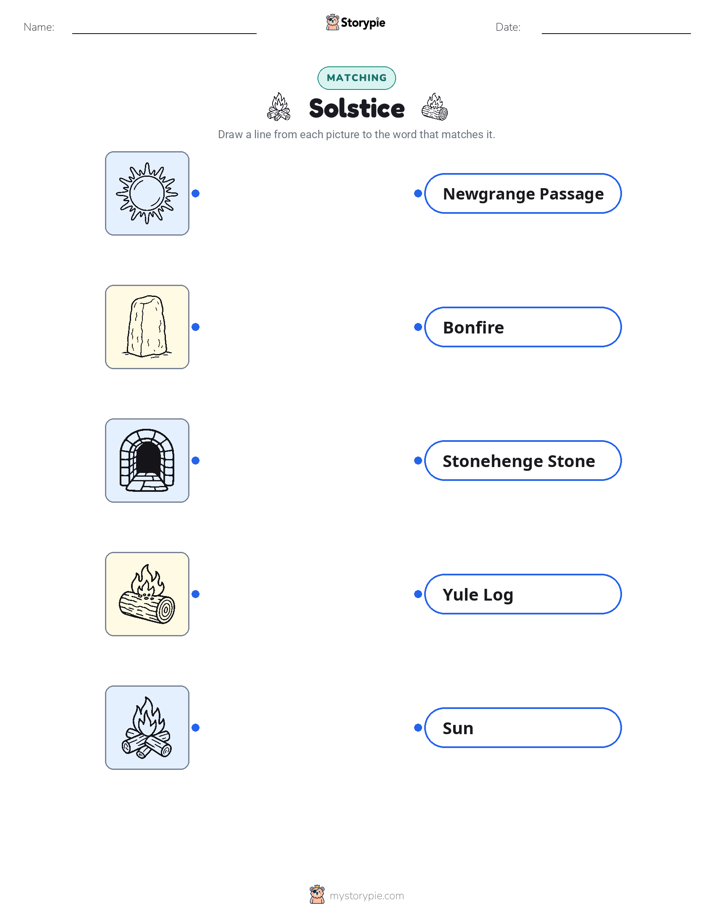
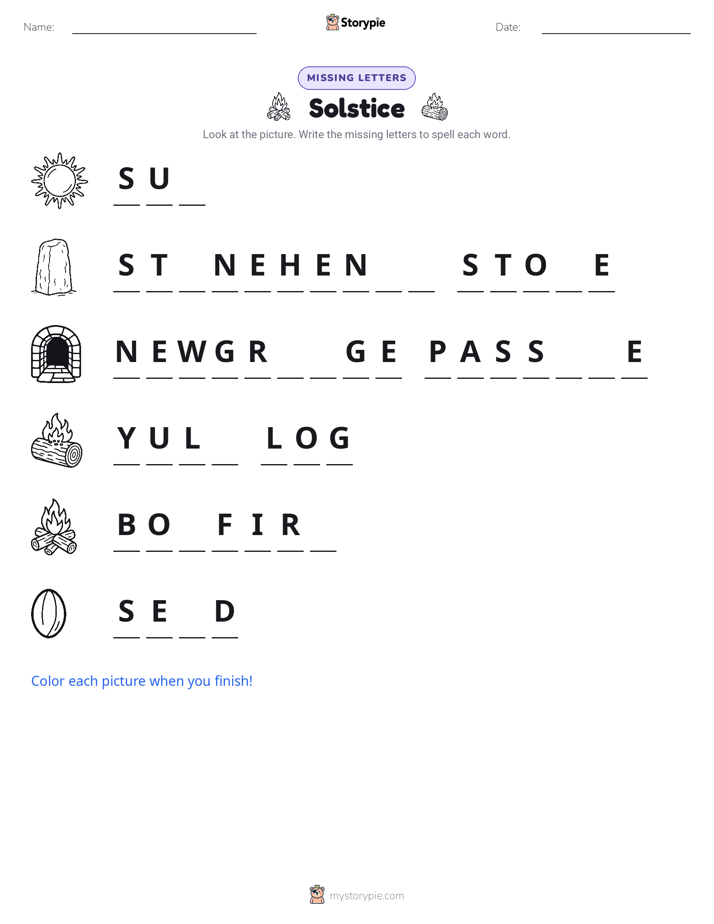
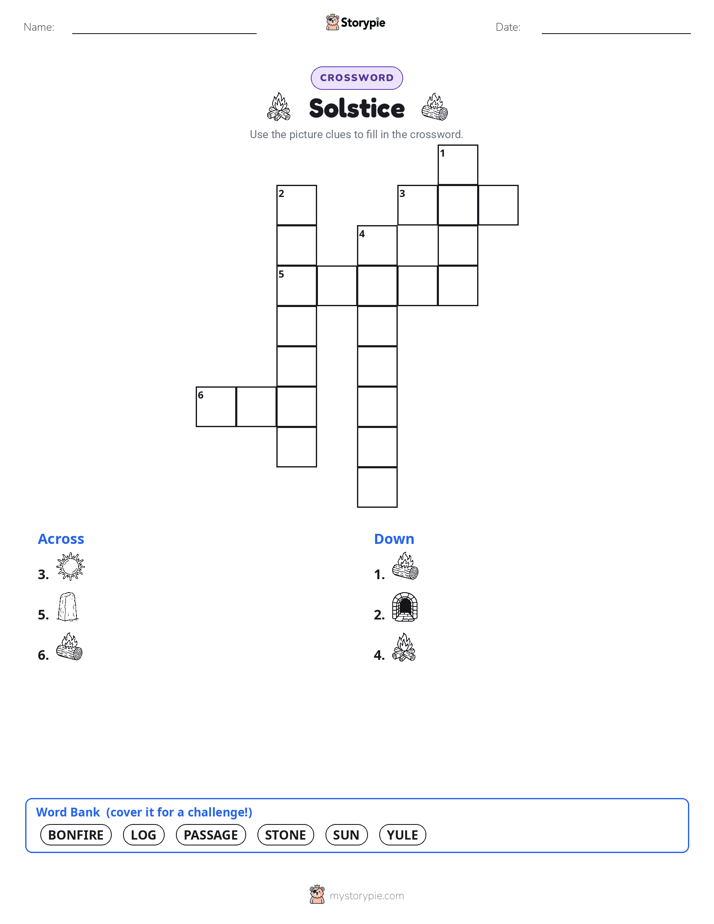
Long, long ago, before anyone had calendars on their walls or clocks on their wrists, people knew me. They were expert watchers of the sky. Farmers, hunters, and builders spent their lives under the open sky, and they noticed how the sun made a different journey each day. They saw it rise and set in a slightly different spot along the horizon. They watched its path creep higher in the sky toward summer and sink lower toward winter. They noticed that on two days every year, the sun seemed to stop its journey north or south. It would rise in the same spot for a few days before turning back. That’s how I got my name. It comes from the old Latin words ‘sol’ for sun, and ‘sistere,’ which means ‘to stand still.’ To them, it looked like the sun was standing still. To mark this important moment, they built incredible structures. In Ireland, around 3200 BCE, people built a huge earthen mound called Newgrange. It has a long, dark stone hallway, and only on the morning of the winter solstice does a single beam of sunlight travel all the way down the passage to light up the inner chamber. In England, builders began creating Stonehenge around 3000 BCE, dragging giant stones to form a perfect circle that aligns with the sunrise on the summer solstice. Can you imagine their cheer as the first rays of light shone exactly where they planned?
The Sun's Great Pause
Have you ever had a summer day that felt like it would never end? The sun hangs high in the sky, giving you extra hours to play outside, chase fireflies, and feel the warm air long after dinner. And what about a winter day, when it feels like the sun barely wakes up? Darkness sneaks in early, wrapping around your windows and inviting you to get cozy indoors with a book and a warm drink. These aren't just any days. They are special days, the longest and the shortest of the whole year. They are days when the planet seems to take a deep breath, holding perfectly still for just a moment before tilting back the other way. Have you ever noticed these magical turning points? I am the Earth's great pause, the moment of most light and most shadow. I am the Solstice.
Long, long ago, before anyone had calendars on their walls or clocks on their wrists, people knew me. They were expert watchers of the sky. Farmers, hunters, and builders spent their lives under the open sky, and they noticed how the sun made a different journey each day. They saw it rise and set in a slightly different spot along the horizon. They watched its path creep higher in the sky toward summer and sink lower toward winter. They noticed that on two days every year, the sun seemed to stop its journey north or south. It would rise in the same spot for a few days before turning back. That’s how I got my name. It comes from the old Latin words ‘sol’ for sun, and ‘sistere,’ which means ‘to stand still.’ To them, it looked like the sun was standing still. To mark this important moment, they built incredible structures. In Ireland, around 3200 BCE, people built a huge earthen mound called Newgrange. It has a long, dark stone hallway, and only on the morning of the winter solstice does a single beam of sunlight travel all the way down the passage to light up the inner chamber. In England, builders began creating Stonehenge around 3000 BCE, dragging giant stones to form a perfect circle that aligns with the sunrise on the summer solstice. Can you imagine their cheer as the first rays of light shone exactly where they planned?
For these ancient people, watching me wasn't just about science; it was a reason to celebrate. They knew my arrival meant a change was coming. In ancient Rome, people celebrated a joyful festival called Saturnalia around the winter solstice. It was a time for huge feasts, decorating homes with green plants, and giving gifts to friends and family. It was a week of fun and laughter during the darkest time of year. Far away in the Southern Hemisphere, in the mighty Inca Empire, people celebrated their winter solstice in June. They called it Inti Raymi, the festival of the sun, and it was one of their most important ceremonies to honor their sun god. For them, and for so many others, the winter solstice was a powerful promise. It was the shortest, darkest day of the year, but they didn't see it as an end. They saw it as a beginning. They knew that from that day forward, the light would begin its slow journey back, promising longer days, the return of warmth, and the new life of spring.
Thousands of years have passed, but I am still here. You can find me on your calendar, marking the official first day of summer and the first day of winter. I haven't changed, and neither has the wonder I bring. Even today, people gather at Stonehenge on a chilly June morning to watch the sun rise between those ancient stones, feeling connected to the people who stood in that very same spot so long ago. I am a beautiful reminder of the Earth’s rhythm, a steady beat in a busy world. I am a chance to pause and notice the world around you, whether you are celebrating the bright, energetic light of summer or the quiet, restful peace of winter. I am a pattern that you can always count on. And I carry the same message of hope that I did for the ancient builders and farmers: just as the seasons turn, I show that after the darkest moments, the light always returns.
Wow facts
About
The solstice is an astronomical event occurring twice a year when the Sun reaches its highest or lowest point in the sky at noon, resulting in the longest and shortest days of the year.
Take a Quiz
Question 1 of 5
The story says the word 'solstice' comes from Latin words meaning 'sun' and 'to stand still.' What does the sun appear to 'stand still' from doing?
Explore next

Want to do even more?
Go beyond exploring. Unlock tools that turn every story into real learning.

Storypie Plus for families
Full stories, quizzes, and printables. Nights and car rides, sorted.
- Unlimited audio stories
- Create Mode: your child stars in the story
- Offline downloads
- Printable worksheets & coloring pages

Why Storypie for Schools
Students engaged. Prep in seconds. Evenings back to you.
- Worksheets & Quizzes
- Classroom Management
- Formative Assessment
- Custom Curriculum & Lesson Plans
- 27 Languages

Why Storypie for Homeschool
Curriculum done. They'll ask for more. Hours back in your day.
- Worksheet Generator
- First-Person Audio Stories
- Built-in Comprehension Quizzes
- Custom Curriculum & Lesson Plans
- Print & Go Activities