English

Underground Railroad
The Underground Railroad was a network of secret routes and safe houses established in the United States…
Reads at Grades 3–5 Listens at Grades 1–5
Print & create
Answer keys·No prep·Free with an account
28 worksheets · answer keys · full story · quiz · Ages 8-10 · CEFR B1
Plus adds 102,000+ more stories in 27 languages, audio for every one, and printables for all of them.
Just want Underground Railroad?
I wasn't a real railroad with clanging bells or powerful steam engines. I had no metal tracks laid across the countryside and I never sold a single ticket. I was something far more important. I was a secret, a promise whispered in the dark corners of plantations and in the quiet fields under a moonless sky. Can you imagine a world where some people were not free? That was the world I was born into. I am the Underground Railroad. In the early 19th century, long before the great Civil War, I came to be from the courage of people who believed that everyone deserved to be free. I was a network of hidden paths through thick forests, quiet barns filled with sweet-smelling hay, and secret rooms behind false walls, all connected by the burning hope for freedom. I was the silent footsteps in the woods at midnight, the soft rustle of leaves that meant a friend was near. I was the flicker of a lantern in a distant window, a signal of safety. And I was the comforting words of a stranger who offered a warm meal and a safe place to rest. My job was a serious one: to guide people from the darkness of slavery into the bright light of a new life.
Soon, people gave me my name. The Underground Railroad. It was a clever code that helped keep me safe. It sounded like a real train system, which confused those who wanted to stop me. The brave men and women who guided the escaping people were my "conductors." They knew the secret routes and the safest ways to travel. The safe houses—the barns, basements, and even churches where people could hide—were my "stations." And the people I helped, the ones making the long and dangerous journey, were called "passengers" or sometimes "cargo." One of my most famous conductors was Harriet Tubman, a woman of incredible courage. She had escaped from slavery herself around the year 1849, but she didn't just stay in the safety of the North. She returned again and again, risking her own life to guide hundreds of others to freedom. My passengers traveled mostly by night, using the stars to guide them. They learned to look for the Drinking Gourd, which is what they called the Big Dipper constellation, because it pointed to the North Star, the star that always led north toward freedom. The journey was filled with danger, especially after a law called the Fugitive Slave Act was passed in 1850. This law meant that even in the free Northern states, people could be captured and sent back to slavery. It made my work much harder, but it also made the people who helped—abolitionists, Quakers, and brave members of free Black communities—even more determined to keep my secret paths open.
The Secret Railroad of Hope
I wasn't a real railroad with clanging bells or powerful steam engines. I had no metal tracks laid across the countryside and I never sold a single ticket. I was something far more important. I was a secret, a promise whispered in the dark corners of plantations and in the quiet fields under a moonless sky. Can you imagine a world where some people were not free? That was the world I was born into. I am the Underground Railroad. In the early 19th century, long before the great Civil War, I came to be from the courage of people who believed that everyone deserved to be free. I was a network of hidden paths through thick forests, quiet barns filled with sweet-smelling hay, and secret rooms behind false walls, all connected by the burning hope for freedom. I was the silent footsteps in the woods at midnight, the soft rustle of leaves that meant a friend was near. I was the flicker of a lantern in a distant window, a signal of safety. And I was the comforting words of a stranger who offered a warm meal and a safe place to rest. My job was a serious one: to guide people from the darkness of slavery into the bright light of a new life.
Soon, people gave me my name. The Underground Railroad. It was a clever code that helped keep me safe. It sounded like a real train system, which confused those who wanted to stop me. The brave men and women who guided the escaping people were my "conductors." They knew the secret routes and the safest ways to travel. The safe houses—the barns, basements, and even churches where people could hide—were my "stations." And the people I helped, the ones making the long and dangerous journey, were called "passengers" or sometimes "cargo." One of my most famous conductors was Harriet Tubman, a woman of incredible courage. She had escaped from slavery herself around the year 1849, but she didn't just stay in the safety of the North. She returned again and again, risking her own life to guide hundreds of others to freedom. My passengers traveled mostly by night, using the stars to guide them. They learned to look for the Drinking Gourd, which is what they called the Big Dipper constellation, because it pointed to the North Star, the star that always led north toward freedom. The journey was filled with danger, especially after a law called the Fugitive Slave Act was passed in 1850. This law meant that even in the free Northern states, people could be captured and sent back to slavery. It made my work much harder, but it also made the people who helped—abolitionists, Quakers, and brave members of free Black communities—even more determined to keep my secret paths open.
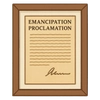
For every person I helped, the long, terrifying journey ended with a single, beautiful moment: their first breath of truly free air. Can you imagine how that must have felt? For some, this moment happened in the northern United States, in states like Ohio or Pennsylvania. For many others, true safety meant crossing the border all the way into Canada, where slavery was illegal and the Fugitive Slave Act could not reach them. I operated for many years, but my busiest time was between 1810 and 1850, when thousands of people risked everything to travel along my routes. My work began to slow down when the Civil War started in 1861, as the entire country was fighting over the issue of slavery. Then, in 1863, President Abraham Lincoln issued the Emancipation Proclamation. This was a powerful order that declared that enslaved people in the rebelling Southern states were now free. It was a huge step, but the work wasn't finished. Finally, on December 6th, 1865, the 13th Amendment to the Constitution was passed. This officially ended slavery everywhere in the United States, forever. My secret paths and hidden stations were no longer needed in the same way. My long, difficult job was done.
Though my secret routes have faded into history and the barns that once served as my stations are now just old buildings, my story is more important than ever. I am a powerful reminder of what people can achieve when they work together against something that is wrong. I represent the incredible bravery of those who risked everything for a chance at freedom and the quiet kindness of those who opened their homes and their hearts to help them along the way. My spirit lives on in every person who stands up for what is right, who helps a neighbor in need, and who believes in a world where everyone can be safe and free. I am the proof that even in the darkest of times, courage and hope can build a secret path to the light.
Wow facts
About
The Underground Railroad was a network of secret routes and safe houses established in the United States during the early to mid-19th century. It was used by enslaved African Americans to escape into free states and Canada with the aid of abolitionists and allies who were sympathetic to their cause.
Take a Quiz
Question 1 of 5
In the story, the safe houses were called 'stations.' What is another word for a 'station' in this context?
Explore next
Want to do even more?
Go beyond exploring. Unlock tools that turn every story into real learning.

Storypie Plus for families
Full stories, quizzes, and printables. Nights and car rides, sorted.
- Unlimited audio stories
- Create Mode: your child stars in the story
- Offline downloads
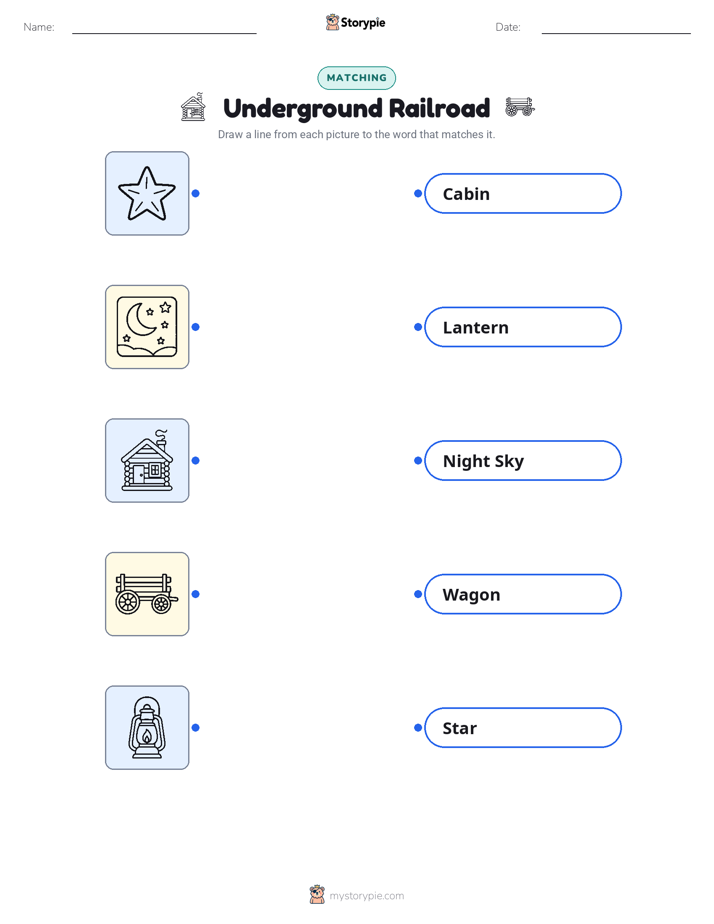
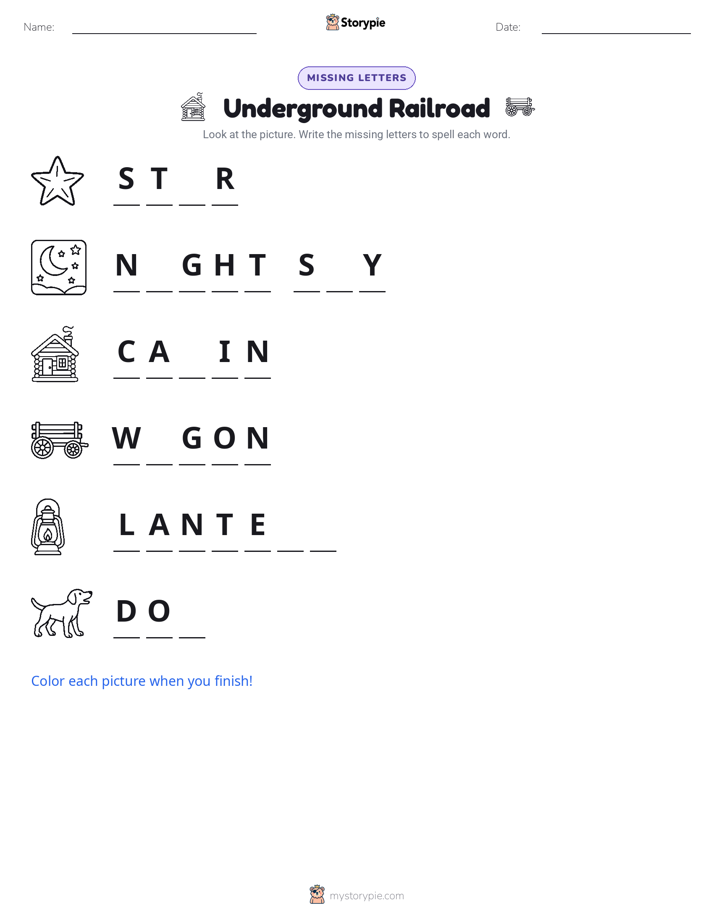
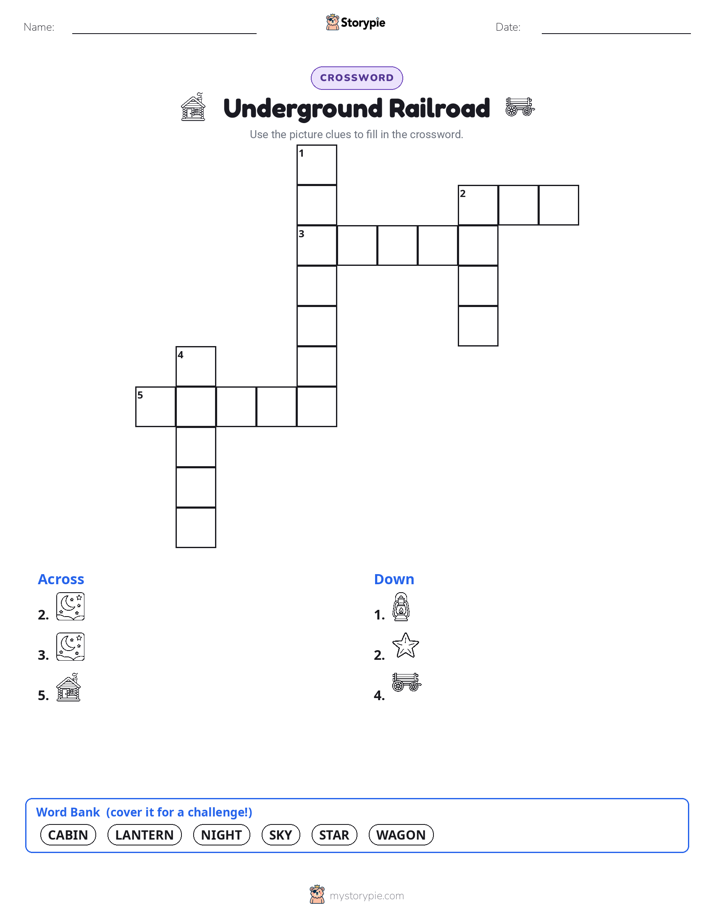
- Printable worksheets & coloring pages

Why Storypie for Schools
Students engaged. Prep in seconds. Evenings back to you.
- Worksheets & Quizzes
- Classroom Management
- Formative Assessment
- Custom Curriculum & Lesson Plans
- 27 Languages

Why Storypie for Homeschool
Curriculum done. They'll ask for more. Hours back in your day.
- Worksheet Generator
- First-Person Audio Stories
- Built-in Comprehension Quizzes
- Custom Curriculum & Lesson Plans
- Print & Go Activities