English

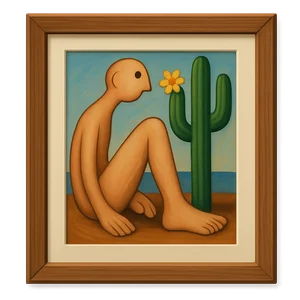
Abaporu
A 1928 oil painting by Brazilian artist Tarsila do Amaral…
Reads at Grades 3–5 Listens at Grades 1–5
Print & create
Answer keys·No prep·Free with an account
28 worksheets · answer keys · full story · quiz · Ages 8-10 · CEFR B1
Plus adds 164,000+ more stories in 27 languages, audio for every one, and printables for all of them.
Just want Abaporu?
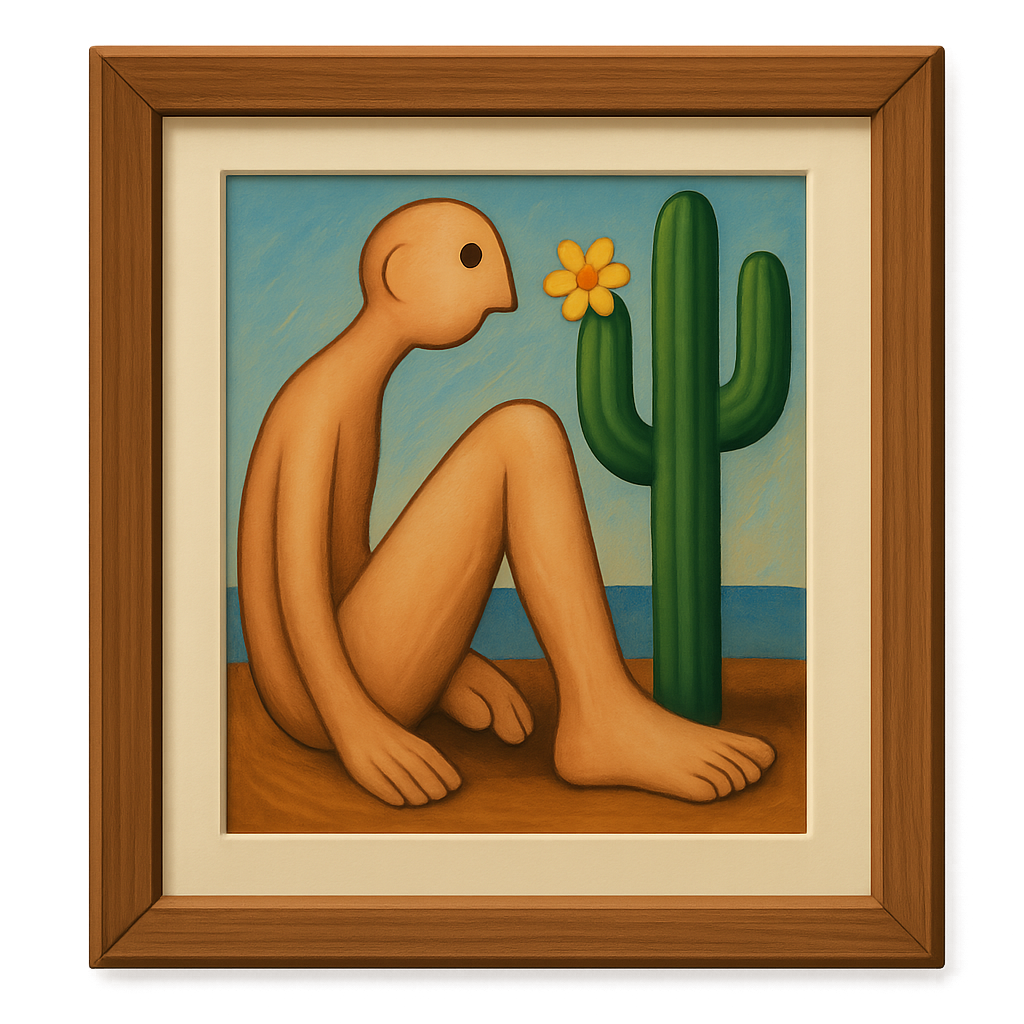
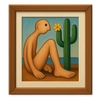
Can you picture me? I sit under a bright, lemon-yellow sun in a world with a single, cheerful green cactus. The sky behind me is a perfect, peaceful blue. It’s a quiet place, my home. But I am not so quiet. I am a puzzle made of paint. I have one enormous foot planted firmly on the warm earth, and my body flows like a long, soft river. One of my arms is bent, resting near my face, while my tiny head is tilted, as if I am lost in a very deep thought. People look at my giant feet and my tiny head and wonder, “Who is this person? What are they dreaming about?”. It's a good question. I am a feeling more than a person, a daydream painted onto a canvas for the whole world to see. I wasn't made to look exactly like a person you might meet on the street. I was made to make you feel something, to make you curious about the world inside your own imagination.
Now, I can tell you my secret. My name is Abaporu. I was born from the brilliant imagination of a painter in Brazil named Tarsila do Amaral. In the year 1928, she mixed her sunny yellows, earthy browns, and sky blues and brought me to life with her paintbrush. She painted me as a secret birthday gift for her husband, a writer named Oswald de Andrade. Can you imagine keeping such a colorful secret? On January 11th, 1928, she finally showed me to him. His eyes grew wide with surprise and then with happiness. He said I was the most original and powerful painting he had ever seen. Tarsila explained her idea to him. She made my head very small to show that while thinking is important, it isn’t everything. She made my feet and body huge to show that being connected to the earth, to your home, and to your feelings is even more powerful. I was a new kind of giant, one whose strength came from the land itself.
The Story of Abaporu
Can you picture me? I sit under a bright, lemon-yellow sun in a world with a single, cheerful green cactus. The sky behind me is a perfect, peaceful blue. It’s a quiet place, my home. But I am not so quiet. I am a puzzle made of paint. I have one enormous foot planted firmly on the warm earth, and my body flows like a long, soft river. One of my arms is bent, resting near my face, while my tiny head is tilted, as if I am lost in a very deep thought. People look at my giant feet and my tiny head and wonder, “Who is this person? What are they dreaming about?”. It's a good question. I am a feeling more than a person, a daydream painted onto a canvas for the whole world to see. I wasn't made to look exactly like a person you might meet on the street. I was made to make you feel something, to make you curious about the world inside your own imagination.
Now, I can tell you my secret. My name is Abaporu. I was born from the brilliant imagination of a painter in Brazil named Tarsila do Amaral. In the year 1928, she mixed her sunny yellows, earthy browns, and sky blues and brought me to life with her paintbrush. She painted me as a secret birthday gift for her husband, a writer named Oswald de Andrade. Can you imagine keeping such a colorful secret? On January 11th, 1928, she finally showed me to him. His eyes grew wide with surprise and then with happiness. He said I was the most original and powerful painting he had ever seen. Tarsila explained her idea to him. She made my head very small to show that while thinking is important, it isn’t everything. She made my feet and body huge to show that being connected to the earth, to your home, and to your feelings is even more powerful. I was a new kind of giant, one whose strength came from the land itself.
Oswald was so inspired by my strange and wonderful shape that he gave me my name, 'Abaporu'. It’s a special name from the language of the native Tupi-Guarani people of Brazil, and it means 'man who eats'. Now, that might sound a little scary, but it was actually a very big and clever idea. Oswald wrote a famous text called the 'Anthropophagite Manifesto' in 1928, and I was the picture right on the cover. His big idea was that artists in Brazil shouldn't just copy art from other places, like Europe. Instead, he thought they should 'eat' or digest all those outside ideas, mix them up with their own unique Brazilian culture—the colors, the stories, the music—and create something brand new and strong that was all their own. I became the symbol of this idea, which was called the Anthropophagy Movement. I showed everyone that it was amazing to be different and to be proud of where you come from.
For many years, I traveled far from my home in Brazil. I visited different countries and was shown in many galleries, sharing my story and my bright colors with people all over the world. But a traveler eventually needs a place to rest. Today, I live in a beautiful museum in Buenos Aires, Argentina, called MALBA. People of all ages, from little kids to grandparents, come to visit me every day. They stand in front of me, look at my giant foot, my tiny head, and my sunny world, and they smile. I remind them that art can be anything you can imagine. It can be silly, it can be serious, it can be strange, and it can be beautiful, all at the same time. I am more than just a painting. I am an invitation to dream, to be proud of who you are, and to create something new from all the wonderful things the world has to offer.
Wow facts
About
A 1928 oil painting by Brazilian artist Tarsila do Amaral, considered a masterpiece of the modernist movement in Brazil and the inspiration for the Anthropophagy Movement.
Take a Quiz
Question 1 of 5
What does the name 'Abaporu' mean in the Tupi-Guarani language?
Explore next


Want to do even more?
Go beyond exploring. Unlock tools that turn every story into real learning.

Storypie Plus for families
Full stories, quizzes, and printables. Nights and car rides, sorted.
- Unlimited audio stories
- Create Mode: your child stars in the story
- Offline downloads
- Printable worksheets & coloring pages

Why Storypie for Schools
Students engaged. Prep in seconds. Evenings back to you.
- Worksheets & Quizzes
- Classroom Management
- Formative Assessment
- Custom Curriculum & Lesson Plans
- 27 Languages

Why Storypie for Homeschool
Curriculum done. They'll ask for more. Hours back in your day.
- Worksheet Generator
- First-Person Audio Stories
- Built-in Comprehension Quizzes
- Custom Curriculum & Lesson Plans
- Print & Go Activities