English

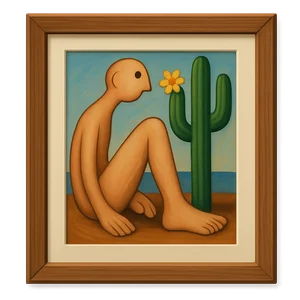
Abaporu
A 1928 oil painting by Brazilian artist Tarsila do Amaral…
Reads at Grades K-2 Listens at K–3
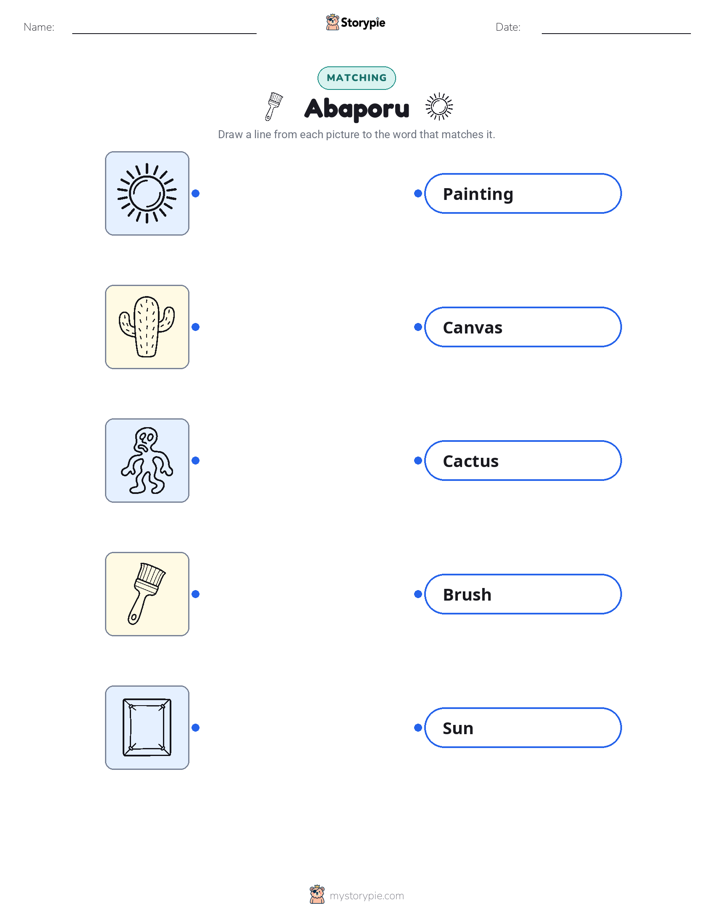
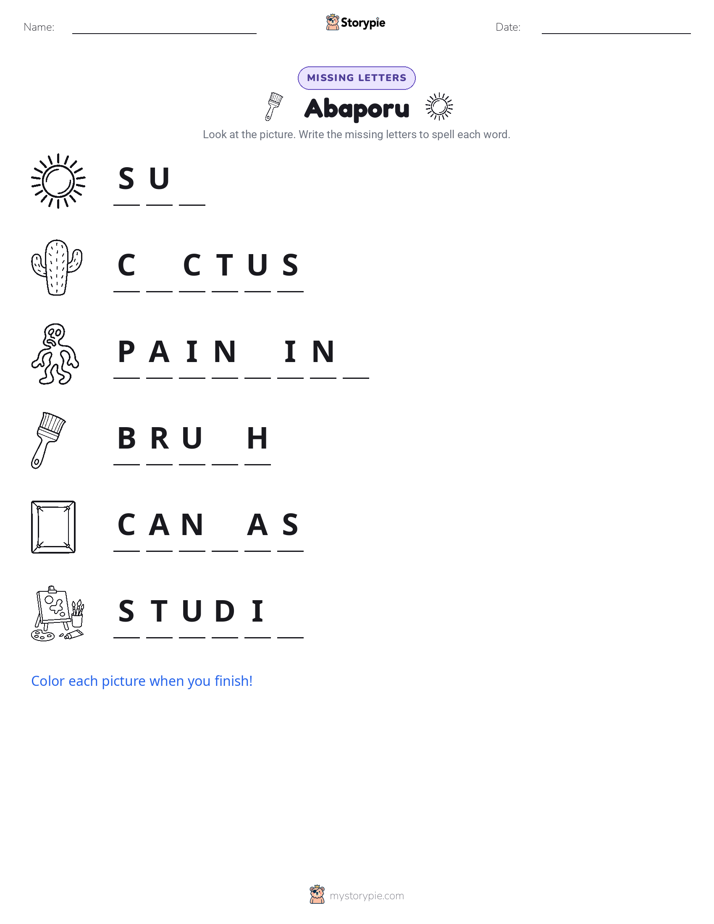
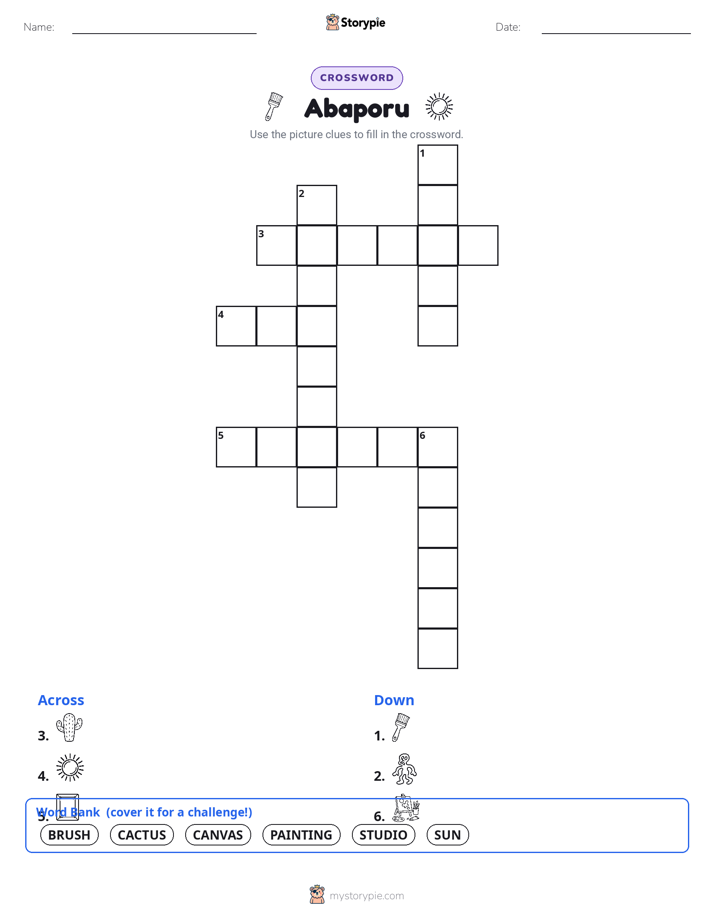
Print & create
Answer keys·No prep·Free with an account
28 worksheets · answer keys · full story · quiz · Ages 6-8 · CEFR A2
Plus adds 164,000+ more stories in 27 languages, audio for every one, and printables for all of them.
Just want Abaporu?
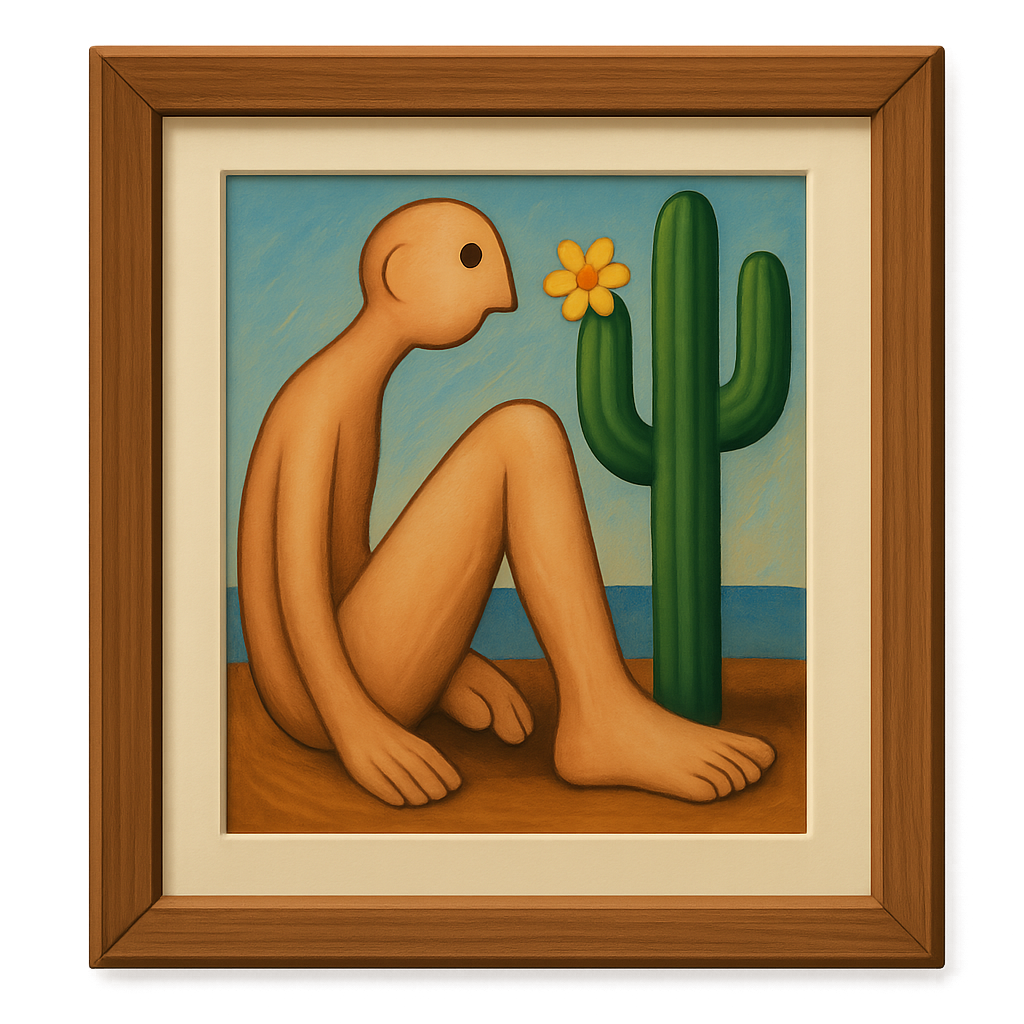
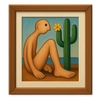
My world is full of bright, happy colors. A big, yellow sun, like a giant lemon drop, hangs in a calm blue sky. I have only one plant for a friend, a spiky green cactus that stands up straight and tall. But what about me. I'm a funny sight. I have one gigantic foot that feels the warm ground, a body that can stretch like slime, and a teeny-tiny head. My head is so small, I have to rest it on my hand, like I'm thinking a very deep thought. Before you even learn my name, you see my silly, wonderful shape. I am a painting, a dream from a sunny place called Brazil. My name is Abaporu.
My story began in a busy room called a studio, in a big city in Brazil named São Paulo. A very talented artist, Tarsila do Amaral, brought me to life. She dipped her brushes into globs of bright, beautiful paint and carefully painted me onto a canvas. She worked with love because I was a secret. On a special day, January 11th, 1928, I was finished. Tarsila gave me as a birthday surprise to her husband, Oswald de Andrade, who was a famous writer. When Oswald unwrapped me, his jaw dropped. He had never, ever seen a person in a painting who looked like me. He was so surprised and excited. He and one of his friends decided to give me a special name from the language of the Tupi-Guarani people who first lived in Brazil. They called me 'Abaporu,' which means 'the man who eats.' It sounds a little strange, but it was their way of saying I was powerful and full of big ideas.
Seeing my giant foot and tiny head gave Oswald a super big idea. He thought, 'What if artists in Brazil could be like Abaporu.'. In that same year, 1928, he wrote a famous paper called the 'Anthropophagic Manifesto.' That’s a big word, but the idea was simple. He said that Brazilian artists could look at art from other countries, 'eat' all the ideas they liked, and then use them to make something brand new and special that was all their own, just like Brazil. I got to be the star of this idea. My painting became a symbol, a picture that showed everyone it was awesome to be different. I helped artists feel brave enough to create things that came from their own hearts and home.
The Story of Abaporu
My world is full of bright, happy colors. A big, yellow sun, like a giant lemon drop, hangs in a calm blue sky. I have only one plant for a friend, a spiky green cactus that stands up straight and tall. But what about me. I'm a funny sight. I have one gigantic foot that feels the warm ground, a body that can stretch like slime, and a teeny-tiny head. My head is so small, I have to rest it on my hand, like I'm thinking a very deep thought. Before you even learn my name, you see my silly, wonderful shape. I am a painting, a dream from a sunny place called Brazil. My name is Abaporu.
My story began in a busy room called a studio, in a big city in Brazil named São Paulo. A very talented artist, Tarsila do Amaral, brought me to life. She dipped her brushes into globs of bright, beautiful paint and carefully painted me onto a canvas. She worked with love because I was a secret. On a special day, January 11th, 1928, I was finished. Tarsila gave me as a birthday surprise to her husband, Oswald de Andrade, who was a famous writer. When Oswald unwrapped me, his jaw dropped. He had never, ever seen a person in a painting who looked like me. He was so surprised and excited. He and one of his friends decided to give me a special name from the language of the Tupi-Guarani people who first lived in Brazil. They called me 'Abaporu,' which means 'the man who eats.' It sounds a little strange, but it was their way of saying I was powerful and full of big ideas.
Seeing my giant foot and tiny head gave Oswald a super big idea. He thought, 'What if artists in Brazil could be like Abaporu.'. In that same year, 1928, he wrote a famous paper called the 'Anthropophagic Manifesto.' That’s a big word, but the idea was simple. He said that Brazilian artists could look at art from other countries, 'eat' all the ideas they liked, and then use them to make something brand new and special that was all their own, just like Brazil. I got to be the star of this idea. My painting became a symbol, a picture that showed everyone it was awesome to be different. I helped artists feel brave enough to create things that came from their own hearts and home.
After I was created, I went on many adventures, traveling to different cities and living in different homes. It was exciting to be seen by so many people. Then, in 1995, I found a forever home. I was brought to a wonderful museum in Buenos Aires, a city in Argentina. This is where I live today. Children and grown-ups come from all over the world to visit me. They smile at my big foot and my thoughtful little head. I love sharing my sunny world and reminding everyone that a single idea in a painting can help change the world.
Wow facts
About
A 1928 oil painting by Brazilian artist Tarsila do Amaral, considered a masterpiece of the modernist movement in Brazil and the inspiration for the Anthropophagy Movement.
Take a Quiz
Question 1 of 4
What does the name 'Abaporu' mean in the Tupi-Guarani language?
Explore next



Want to do even more?
Go beyond exploring. Unlock tools that turn every story into real learning.

Storypie Plus for families
Full stories, quizzes, and printables. Nights and car rides, sorted.
- Unlimited audio stories
- Create Mode: your child stars in the story
- Offline downloads
- Printable worksheets & coloring pages

Why Storypie for Schools
Students engaged. Prep in seconds. Evenings back to you.
- Worksheets & Quizzes
- Classroom Management
- Formative Assessment
- Custom Curriculum & Lesson Plans
- 27 Languages

Why Storypie for Homeschool
Curriculum done. They'll ask for more. Hours back in your day.
- Worksheet Generator
- First-Person Audio Stories
- Built-in Comprehension Quizzes
- Custom Curriculum & Lesson Plans
- Print & Go Activities