English

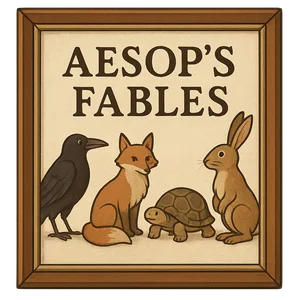
Aesop's Fables
A collection of fables traditionally credited to Aesop…
Reads at Grades 3–5 Listens at Grades 1–5
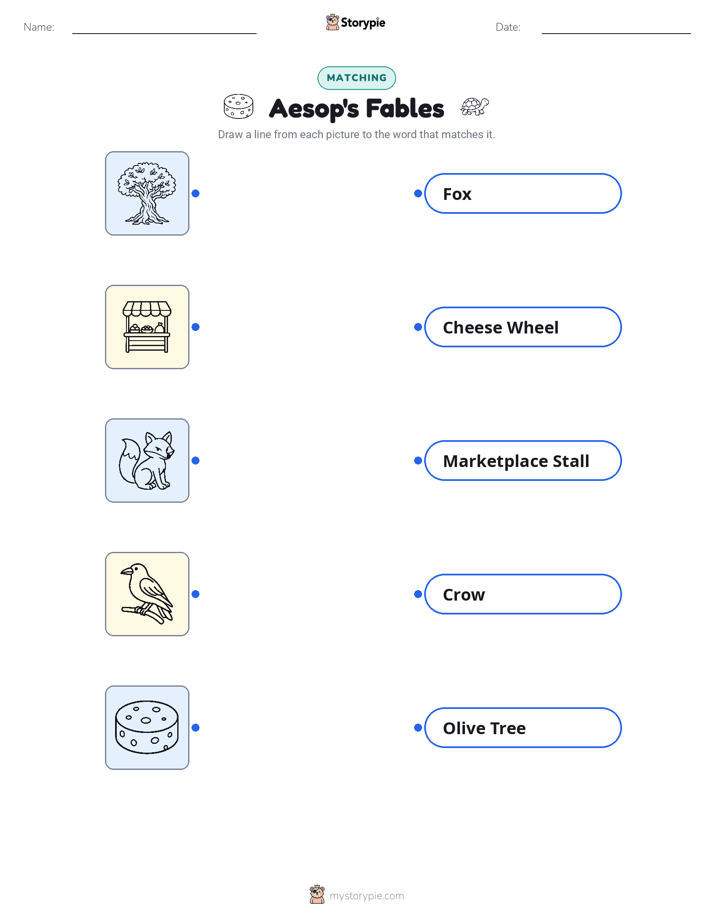
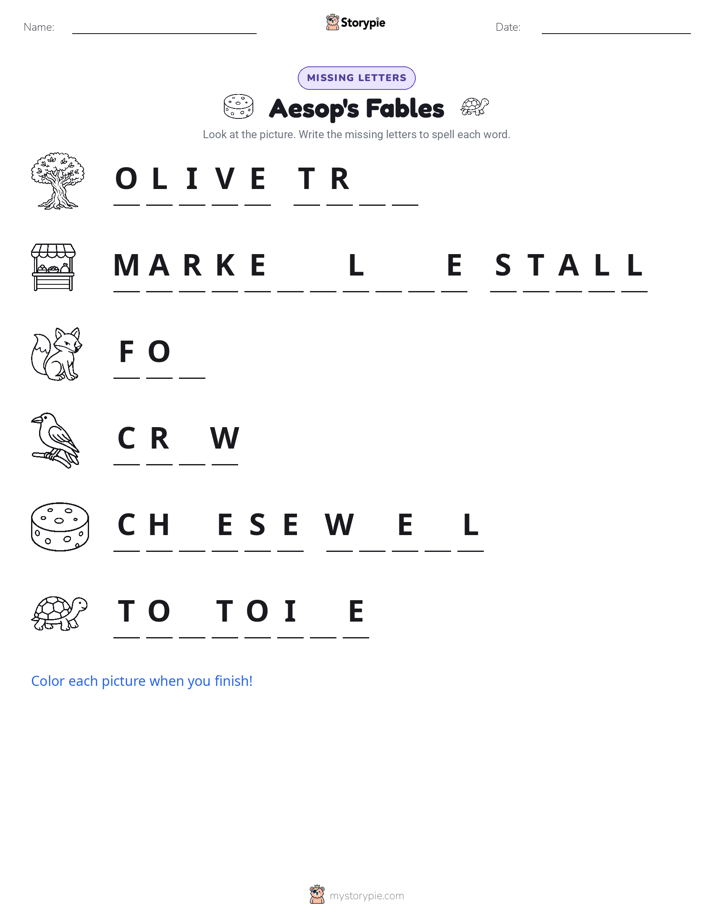
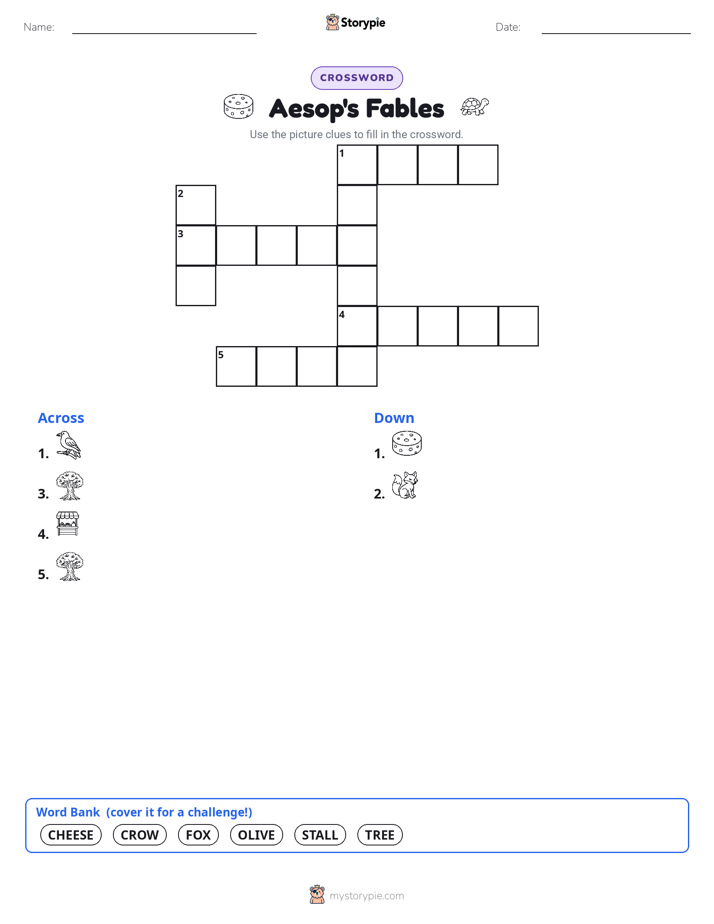
Print & create
Answer keys·No prep·Free with an account
28 worksheets · answer keys · full story · quiz · Ages 8-10 · CEFR B1
Plus adds 102,000+ more stories in 27 languages, audio for every one, and printables for all of them.
Just want Aesop's Fables?
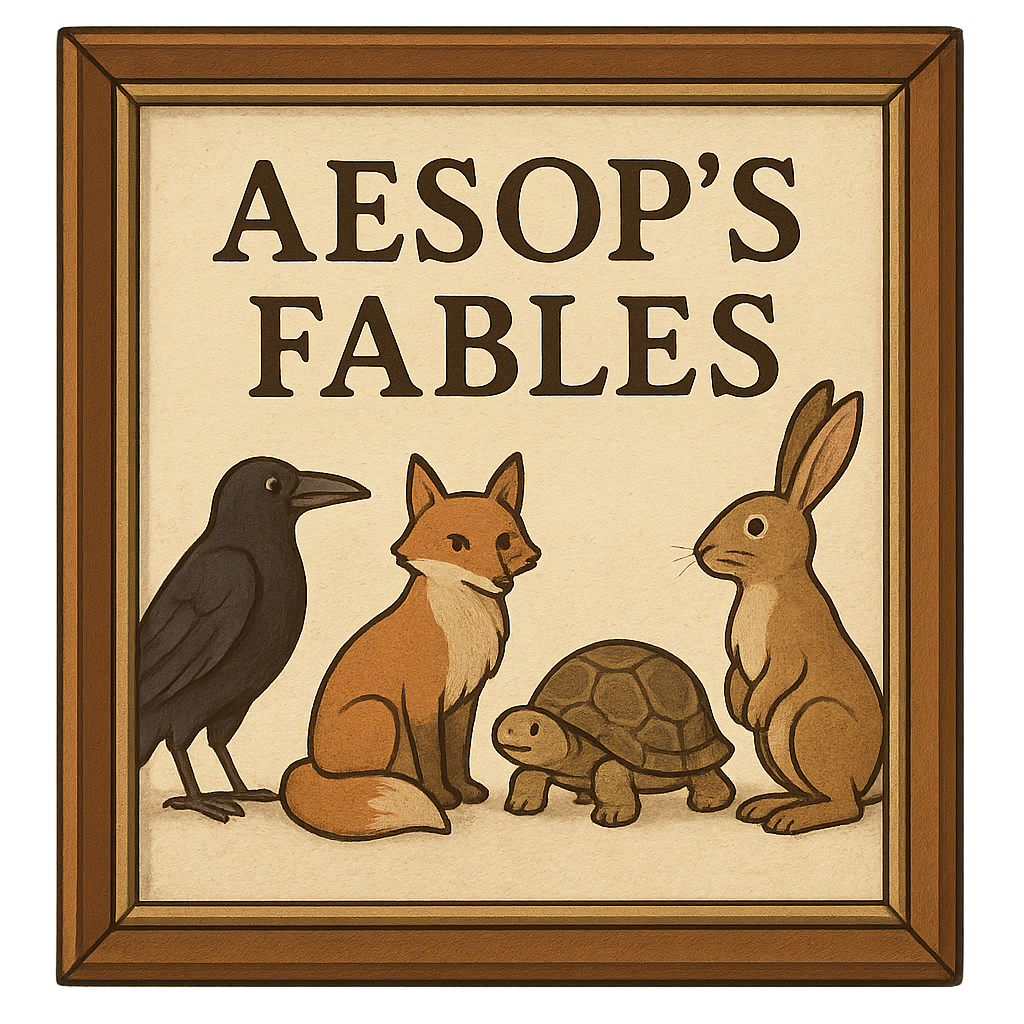
My world is not one you can visit on a map. It has no stone walls or painted ceilings. Instead, my world is built from whispers and imagination, filled with clever foxes, slow-but-steady tortoises, proud lions, and tiny mice who can perform great deeds. In my realm, animals talk, think, and feel just like people, and every adventure they have teaches a little lesson about life. They might argue or play tricks on one another, but they always show you something true about the world. I am not just one story, but hundreds of them, passed from person to person for thousands of years. I am a collection of tales that have echoed through time. I am Aesop's Fables.
My life began not on paper, but on the breath of a storyteller long, long ago in Ancient Greece, around the 6th century BCE. My first voice belonged to a man named Aesop. History tells us he was a slave, but his mind was incredibly sharp and clever. Back then, it could be dangerous to speak your mind freely, especially to powerful people. So, Aesop used me. He used my stories of talking animals to share his wisdom and give advice in a way that was safe. Can you imagine telling a king he is foolish. That would be very risky. But telling a story about a foolish lion who learns a lesson was a much safer way to share the same idea. For centuries, I traveled this way, passed from parents to their children and shared by travelers on long journeys. I existed only in memory until a Greek scholar named Demetrius of Phalerum decided my tales were too important to be forgotten. Around the year 300 BCE, he gathered my stories and wrote them down for the first time. Later, in the great Roman Empire, writers like Phaedrus in the 1st century CE and Babrius in the 2nd century CE lovingly turned my simple tales into beautiful poetry, helping me travel even further across the world.
The Whispering Wisdom of Aesop's Fables
My world is not one you can visit on a map. It has no stone walls or painted ceilings. Instead, my world is built from whispers and imagination, filled with clever foxes, slow-but-steady tortoises, proud lions, and tiny mice who can perform great deeds. In my realm, animals talk, think, and feel just like people, and every adventure they have teaches a little lesson about life. They might argue or play tricks on one another, but they always show you something true about the world. I am not just one story, but hundreds of them, passed from person to person for thousands of years. I am a collection of tales that have echoed through time. I am Aesop's Fables.
My life began not on paper, but on the breath of a storyteller long, long ago in Ancient Greece, around the 6th century BCE. My first voice belonged to a man named Aesop. History tells us he was a slave, but his mind was incredibly sharp and clever. Back then, it could be dangerous to speak your mind freely, especially to powerful people. So, Aesop used me. He used my stories of talking animals to share his wisdom and give advice in a way that was safe. Can you imagine telling a king he is foolish. That would be very risky. But telling a story about a foolish lion who learns a lesson was a much safer way to share the same idea. For centuries, I traveled this way, passed from parents to their children and shared by travelers on long journeys. I existed only in memory until a Greek scholar named Demetrius of Phalerum decided my tales were too important to be forgotten. Around the year 300 BCE, he gathered my stories and wrote them down for the first time. Later, in the great Roman Empire, writers like Phaedrus in the 1st century CE and Babrius in the 2nd century CE lovingly turned my simple tales into beautiful poetry, helping me travel even further across the world.
Have you ever heard the story of 'The Tortoise and the Hare'. That's one of my most famous adventures, and it teaches that 'slow and steady wins the race'. Or what about 'The Lion and the Mouse'. That tale shows how an act of kindness is never wasted and that even the smallest friend can be the greatest ally. Each of my tales ends with a special message like this, called a 'moral'. These morals are like little treasures of advice about being kind, honest, clever, and wise. They teach you not to brag like the hare, not to give up when things are hard, and to be thoughtful about the choices you make. Because these lessons are helpful to everyone, people have shared my stories all over the world for more than 2,500 years. I have been translated into hundreds of languages, so children in almost every country can learn from the mouse, the lion, the fox, and the tortoise.
Even though I am ancient, you can still hear my voice everywhere today. If you hear someone talk about 'sour grapes' when they pretend not to want something they can't have, they are quoting my story about the fox and the grapes. When someone warns another person about 'crying wolf,' they are remembering my tale about the shepherd boy who told too many fibs. My stories have inspired countless books, plays, cartoons, and movies. I live on because the lessons I share are timeless. The world changes, with new cities and new inventions, but the importance of friendship, honesty, and hard work never does. I am a reminder that we can learn from everyone and everything—even a talking tortoise—and that a simple story can carry wisdom across thousands of years, connecting us all in a great, worldwide family of listeners and learners.
Wow facts
About
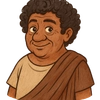
A collection of fables traditionally credited to Aesop, a storyteller believed to have lived in ancient Greece between 620 and 564 BCE. These stories typically use animal characters to convey moral lessons. However, these fables were part of an oral tradition and were not written down until about three hundred years after Aesop's death.
Take a Quiz
Question 1 of 5
In the story, I say my lessons are 'timeless.' What does the word 'timeless' mean in this sentence?
Explore next



Want to do even more?
Go beyond exploring. Unlock tools that turn every story into real learning.

Storypie Plus for families
Full stories, quizzes, and printables. Nights and car rides, sorted.
- Unlimited audio stories
- Create Mode: your child stars in the story
- Offline downloads
- Printable worksheets & coloring pages

Why Storypie for Schools
Students engaged. Prep in seconds. Evenings back to you.
- Worksheets & Quizzes
- Classroom Management
- Formative Assessment
- Custom Curriculum & Lesson Plans
- 27 Languages

Why Storypie for Homeschool
Curriculum done. They'll ask for more. Hours back in your day.
- Worksheet Generator
- First-Person Audio Stories
- Built-in Comprehension Quizzes
- Custom Curriculum & Lesson Plans
- Print & Go Activities