English

America the Beautiful
A beloved American patriotic song…
Reads at Grades 6–8 Listens at Grades 4–8
Print & create
Answer keys·No prep·Free with an account
28 worksheets · answer keys · full story · quiz · Ages 10-12 · CEFR B2
Plus adds 280,000+ more stories in 27 languages, audio for every one, and printables for all of them.
Just want America the Beautiful?
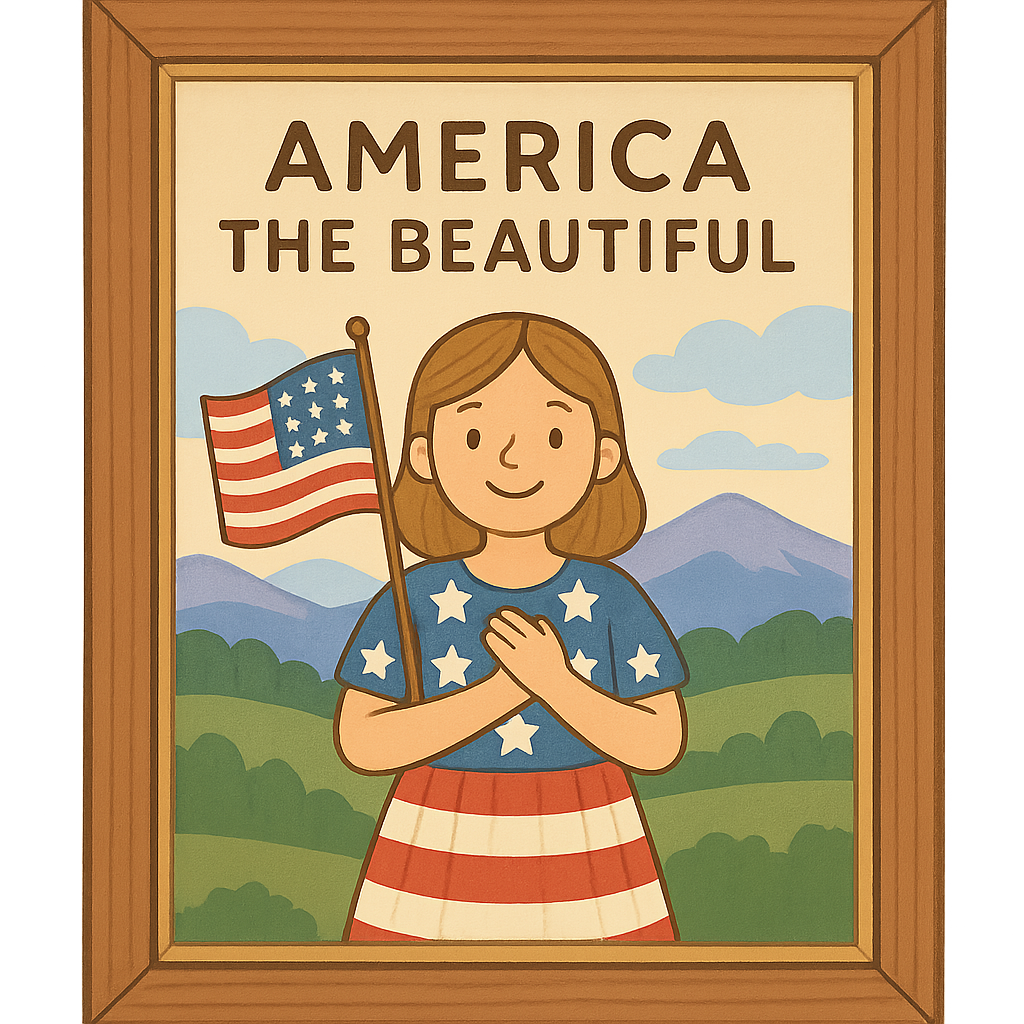
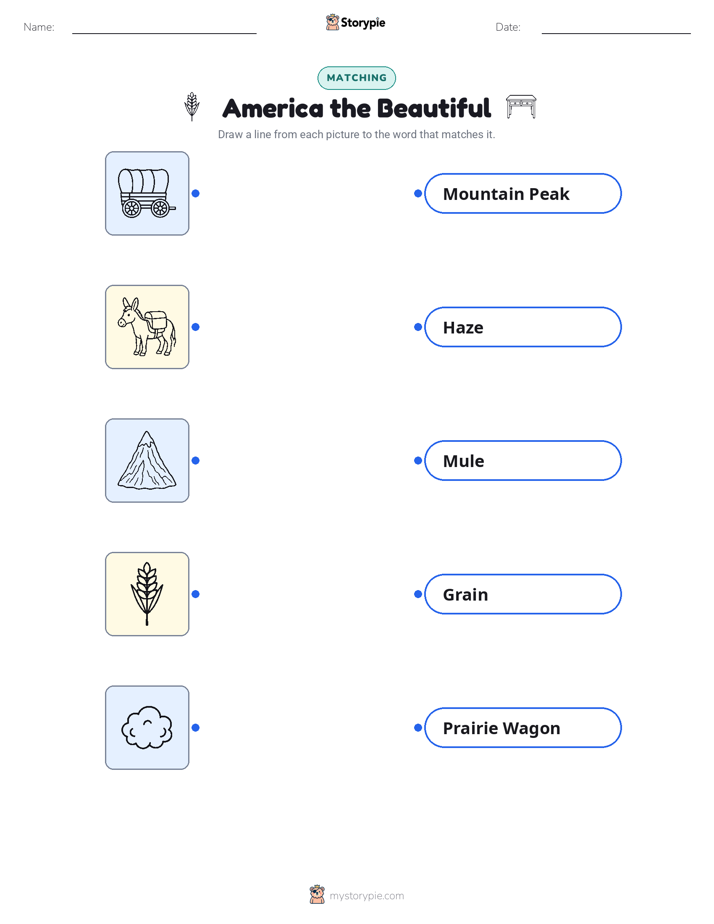
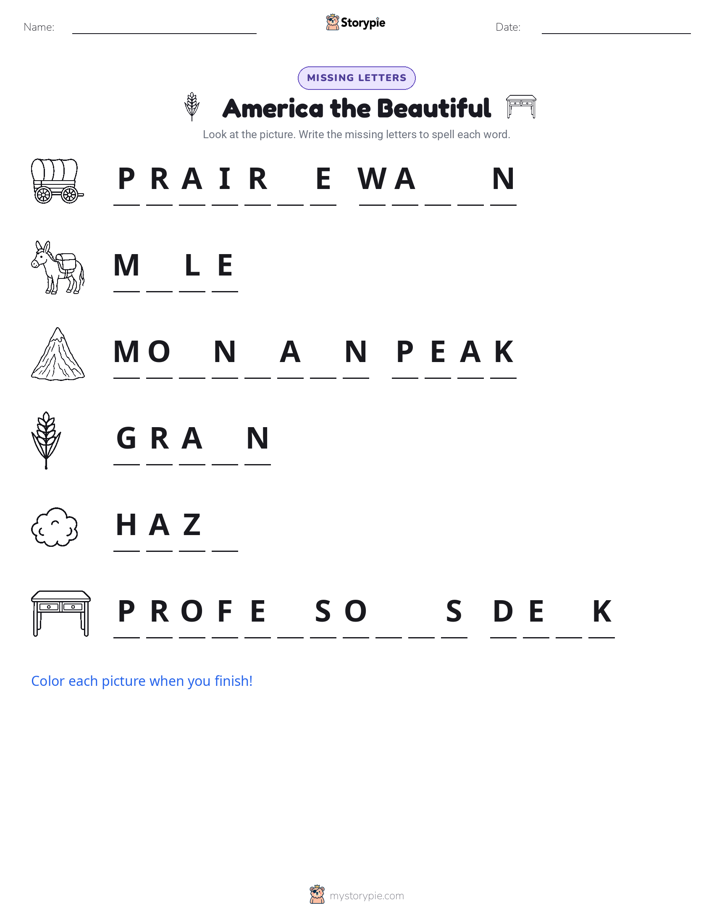
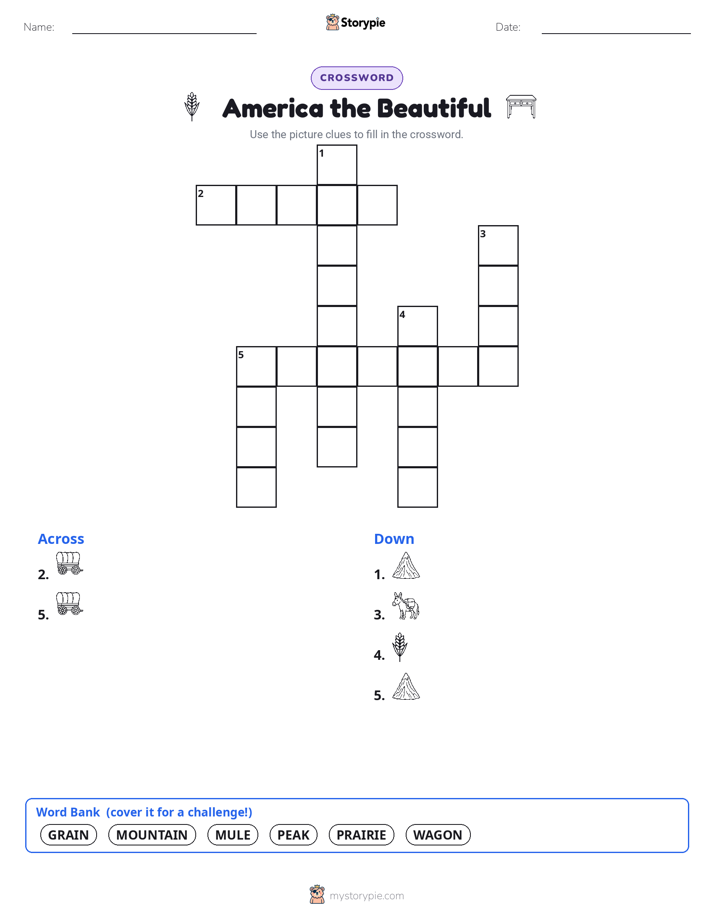
Before I had a name, I was just a feeling, a breathtaking sight from a mountaintop. It was the summer of 1893, high atop Pikes Peak in Colorado. Imagine standing there, looking out at a world that seems to go on forever. Below you, golden plains stretch out like a vast sea of sunshine, rippling under the wind. In the distance, other mountains stand majestic and silent, their peaks cloaked in a soft, purple haze. This was the view that filled the heart of a woman named Katharine Lee Bates. She was an English professor who had traveled all the way up the 14,115-foot peak by prairie wagon and mule. When she saw this magnificent landscape, words began to form inside her, phrases about spacious skies, amber waves of grain, and purple mountain majesties. At that moment, I wasn't yet a song people could sing. I was a poem taking shape, an idea born from the overwhelming beauty and promise of a country. I am 'America the Beautiful'.
Katharine carried my words with her for two years, refining them until they felt just right. I wasn't rushed into the world; I was carefully crafted. On July 4th, 1895, I finally made my debut in a weekly journal called *The Congregationalist*. People who read me appreciated the vision I presented, a picture of America painted with words. But I was still silent. I had no voice, no melody to lift my lines into the air. Katharine knew I wasn't quite finished, so she revised my stanzas in 1904 and then made final changes in 1911, perfecting the message she wanted to share. Meanwhile, an entirely separate story was unfolding that would eventually complete me. Years earlier, back in 1882, a church organist and choirmaster in Newark, New Jersey, named Samuel A. Ward had composed a beautiful, flowing melody for a hymn. He called his tune 'Materna'. Samuel never met Katharine. He passed away in 1903, never knowing the incredible destiny his music was about to have. It wasn't until 1910 that someone had the brilliant idea to pair Katharine's patriotic poem with Samuel's soaring melody. The fit was perfect. His music gave my words wings, and at last, I became the complete song you know today.
America the Beautiful: A Song's Story
Before I had a name, I was just a feeling, a breathtaking sight from a mountaintop. It was the summer of 1893, high atop Pikes Peak in Colorado. Imagine standing there, looking out at a world that seems to go on forever. Below you, golden plains stretch out like a vast sea of sunshine, rippling under the wind. In the distance, other mountains stand majestic and silent, their peaks cloaked in a soft, purple haze. This was the view that filled the heart of a woman named Katharine Lee Bates. She was an English professor who had traveled all the way up the 14,115-foot peak by prairie wagon and mule. When she saw this magnificent landscape, words began to form inside her, phrases about spacious skies, amber waves of grain, and purple mountain majesties. At that moment, I wasn't yet a song people could sing. I was a poem taking shape, an idea born from the overwhelming beauty and promise of a country. I am 'America the Beautiful'.
Katharine carried my words with her for two years, refining them until they felt just right. I wasn't rushed into the world; I was carefully crafted. On July 4th, 1895, I finally made my debut in a weekly journal called The Congregationalist. People who read me appreciated the vision I presented, a picture of America painted with words. But I was still silent. I had no voice, no melody to lift my lines into the air. Katharine knew I wasn't quite finished, so she revised my stanzas in 1904 and then made final changes in 1911, perfecting the message she wanted to share. Meanwhile, an entirely separate story was unfolding that would eventually complete me. Years earlier, back in 1882, a church organist and choirmaster in Newark, New Jersey, named Samuel A. Ward had composed a beautiful, flowing melody for a hymn. He called his tune 'Materna'. Samuel never met Katharine. He passed away in 1903, never knowing the incredible destiny his music was about to have. It wasn't until 1910 that someone had the brilliant idea to pair Katharine's patriotic poem with Samuel's soaring melody. The fit was perfect. His music gave my words wings, and at last, I became the complete song you know today.
Once my words and music were joined, my journey truly began. I started to travel across the country, not because of an official government decree, but because people chose to sing me. I became a song of the people, an unofficial national anthem that resonated in their hearts. My verses describe the incredible diversity of the American landscape, from the Atlantic to the Pacific, the 'sea to shining sea'. But I am more than just a musical map. My lyrics also speak of history and ideals. They remember the heroes who dreamed of liberty and the sacrifices made for freedom. More importantly, they express a deep hope for the nation's future—a prayer for America to 'crown thy good with brotherhood'. This idea of unity and mutual respect became my central message. People began to sing me at school assemblies, in town squares on national holidays, and before major sporting events. For millions, I became a song of both pride and reflection, a reminder of the nation's beauty and its ongoing work to live up to its highest principles.
More than a century has passed since Katharine Lee Bates stood on that mountain and was moved to write. My melody has been performed by legendary singers on grand stages and sung with pure heart by schoolchildren in classrooms. I have been present at moments of great national celebration and in times of quiet, solemn remembrance. I continue to exist as a thread of music that connects generations of Americans. I am a reminder of the stunning beauty of the natural world and of the noble ideals a nation strives to achieve. I live on as an invitation for everyone to see the beauty in their home and in each other, and to keep dreaming of a country that is as good, as generous, and as beautiful as its promise. And to think, it all started with a single, awe-inspiring view from a mountaintop.
Wow facts
About
A beloved American patriotic song, with lyrics from a poem by Katharine Lee Bates and music from a hymn tune by Samuel A. Ward.
Take a Quiz
Question 1 of 5
In your own words, summarize how the words and music for 'America the Beautiful' were created and brought together.
Explore next





Want to do even more?
Go beyond exploring. Unlock tools that turn every story into real learning.

Storypie Plus for families
Full stories, quizzes, and printables. Nights and car rides, sorted.
- Unlimited audio stories
- Create Mode: your child stars in the story
- Offline downloads
- Printable worksheets & coloring pages

Why Storypie for Schools
Students engaged. Prep in seconds. Evenings back to you.
- Worksheets & Quizzes
- Classroom Management
- Formative Assessment
- Custom Curriculum & Lesson Plans
- 27 Languages

Why Storypie for Homeschool
Curriculum done. They'll ask for more. Hours back in your day.
- Worksheet Generator
- First-Person Audio Stories
- Built-in Comprehension Quizzes
- Custom Curriculum & Lesson Plans
- Print & Go Activities