English

Bharatanatyam
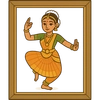
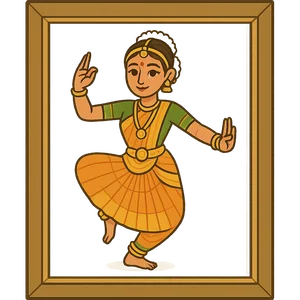
Bharatanatyam is a major form of Indian classical dance that originated in the temples of Tamil Nadu.
Reads at Grades 6–8 Listens at Grades 4–8
Print & create
Answer keys·No prep·Free with an account
28 worksheets · answer keys · full story · quiz · Ages 10-12 · CEFR B2
Plus adds 164,000+ more stories in 27 languages, audio for every one, and printables for all of them.
Just want Bharatanatyam?
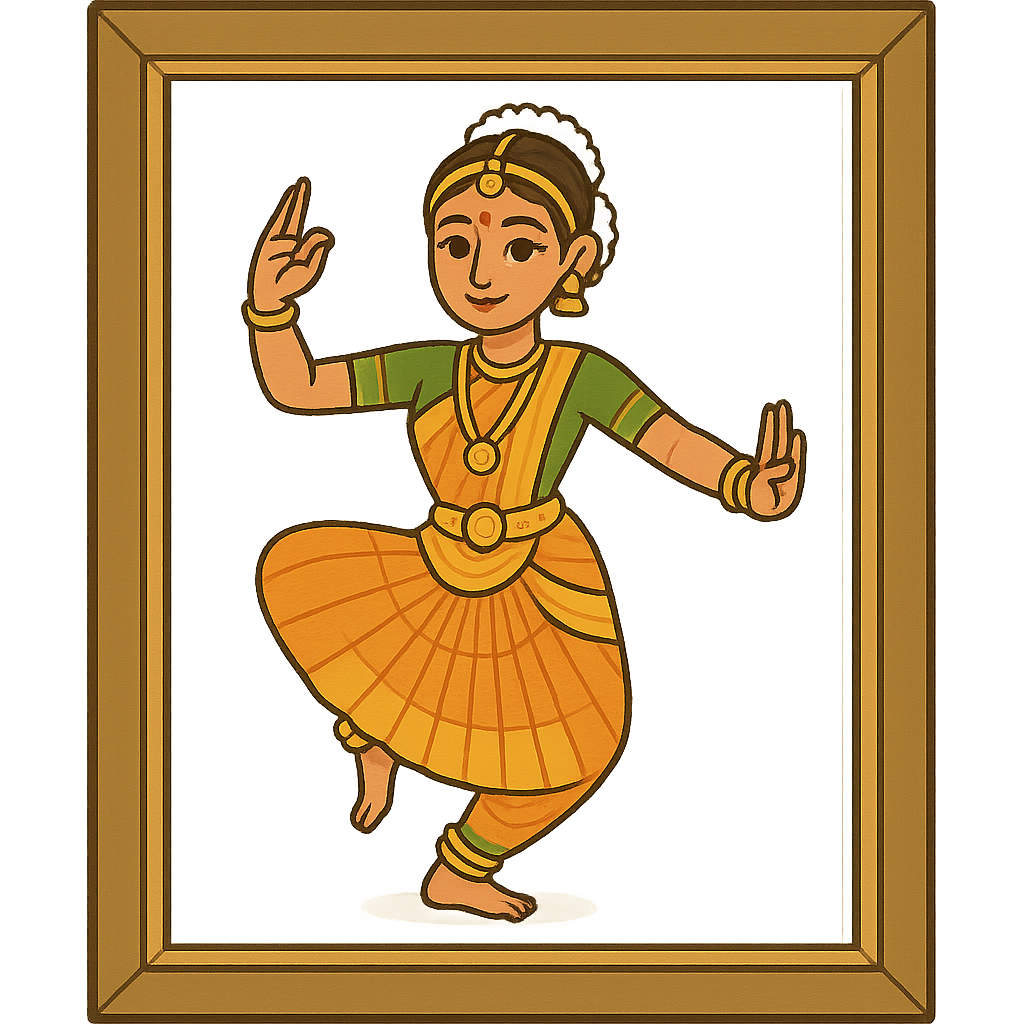
Listen closely. Can you hear the jingle of ankle bells, a hundred tiny sounds chiming with every step. See the flash of a bright silk costume, edged in gold, as a body moves with impossible grace under the warm stage lights. Feel the sharp, rhythmic stamp of a foot on the wooden floor, a beat that seems to come from the very heart of the earth. I am a story that does not use a single spoken word. Instead, I speak through the precise bend of a knee, the elegant curve of an arm, and expressive eyes that can tell epic tales of gods, goddesses, heroes, and demons. I am a living sculpture, a carefully crafted poem, a prayer in motion. My language is made of gestures and expressions, each one holding a universe of meaning. I am not just a performance. I am a tradition, a history, and a sacred art carried forward through generations. My name is Bharatanatyam, and I am one of India’s oldest and most cherished classical dances.
My spirit was first captured in words long, long ago, in a magnificent book called the 'Natya Shastra'. This incredible text, my blueprint, was written by a great sage named Bharata Muni sometime between the 2nd century BCE and the 2nd century CE. It is an enormous guide that details everything about me, from the subtlest flick of an eyebrow to the most powerful leap. It describes every hand gesture, known as a 'mudra,' and every emotional expression, or 'abhinaya,' that a dancer uses to tell my stories. With this guide, I came to life not on a stage, but within the stone walls of great temples in Southern India, especially in the region we now call Tamil Nadu. There, dedicated temple dancers known as Devadasis performed my intricate movements as a sacred offering to the gods. They were my first storytellers, my keepers. If you visit those ancient temples today, you can still see me. My poses are carved right into the stone pillars and walls, frozen in time, a permanent record of the devotion and artistry that gave me my start. I am literally a part of the architecture of my homeland.
A Story in Motion
Listen closely. Can you hear the jingle of ankle bells, a hundred tiny sounds chiming with every step. See the flash of a bright silk costume, edged in gold, as a body moves with impossible grace under the warm stage lights. Feel the sharp, rhythmic stamp of a foot on the wooden floor, a beat that seems to come from the very heart of the earth. I am a story that does not use a single spoken word. Instead, I speak through the precise bend of a knee, the elegant curve of an arm, and expressive eyes that can tell epic tales of gods, goddesses, heroes, and demons. I am a living sculpture, a carefully crafted poem, a prayer in motion. My language is made of gestures and expressions, each one holding a universe of meaning. I am not just a performance. I am a tradition, a history, and a sacred art carried forward through generations. My name is Bharatanatyam, and I am one of India’s oldest and most cherished classical dances.
My spirit was first captured in words long, long ago, in a magnificent book called the 'Natya Shastra'. This incredible text, my blueprint, was written by a great sage named Bharata Muni sometime between the 2nd century BCE and the 2nd century CE. It is an enormous guide that details everything about me, from the subtlest flick of an eyebrow to the most powerful leap. It describes every hand gesture, known as a 'mudra,' and every emotional expression, or 'abhinaya,' that a dancer uses to tell my stories. With this guide, I came to life not on a stage, but within the stone walls of great temples in Southern India, especially in the region we now call Tamil Nadu. There, dedicated temple dancers known as Devadasis performed my intricate movements as a sacred offering to the gods. They were my first storytellers, my keepers. If you visit those ancient temples today, you can still see me. My poses are carved right into the stone pillars and walls, frozen in time, a permanent record of the devotion and artistry that gave me my start. I am literally a part of the architecture of my homeland.
For centuries, I thrived in my temple home, my bells echoing in sacred halls. But history is full of change, and a difficult time was coming for me. During the 19th and early 20th centuries, India came under British rule, and my new rulers did not understand me or my purpose. They saw me not as a sacred art form, but as something strange and improper. Slowly, I was pushed out of the temples where I had been born and nurtured. The respect I once commanded began to fade, replaced by prejudice and misunderstanding. The Devadasis who had protected me for generations were looked down upon, and my very existence was threatened. The situation grew so dire that in 1910, the Madras Presidency officially passed a law that banned dancing in the temples. For a time, my bells fell silent. My stories were almost lost, and my intricate movements were nearly forgotten. It was a lonely and frightening period, as if I were fading into a forgotten memory, my vibrant spirit trapped in silence.
Just when it seemed I might disappear forever, heroes emerged to fight for my survival. My grand reawakening began in the 20th century, led by passionate artists and scholars who knew my true value. One of the first champions was a man named E. Krishna Iyer, a lawyer and freedom fighter who recognized my beauty and importance. To challenge the social stigma against me, he bravely learned the dance himself and performed on stage dressed as a female dancer, forcing people to reconsider their prejudices. But my most celebrated savior was a remarkable woman named Rukmini Devi Arundale. She was not born into a family of dancers, but she fell in love with my grace and spiritual depth. She saw past the controversy and recognized me as a profound art form that deserved to be preserved with honor. In 1936, she founded a special school called the Kalakshetra Foundation in Chennai. It was a place where I could be taught with dignity and artistic rigor. Rukmini Devi also carefully redesigned my costumes to be more elegant and suitable for the modern stage and choreographed new pieces that brought my ancient stories to audiences around the world. She transformed me from a nearly-lost temple ritual into a respected classical art form for all to learn and admire.
Today, I am dancing again, more vibrantly than ever. I am no longer confined to the temples of Southern India or the stages of my homeland. My rhythms and stories are shared by people of all ages, backgrounds, and nationalities across the globe. Each dancer who learns my steps and gestures lends me their body to tell my ancient tales in a new and personal way. They connect with a history that stretches back thousands of years, becoming part of a long, unbroken chain of storytellers. I am a living bridge that connects the past to the present, a thread of culture woven through time. My survival is proof that art is resilient, that it can endure hardship, adapt to new eras, and continue to bring joy, meaning, and beauty to the world. When you see me performed, you are not just watching a dance. you are witnessing the poetry of history, created right there in the air.
Wow facts
About
Bharatanatyam is a major form of Indian classical dance that originated in the temples of Tamil Nadu. It is known for its fixed upper torso, bent legs and knees, spectacular footwork, and a sophisticated vocabulary of sign language based on gestures of hands, eyes, and face muscles.
Explore next





Want to do even more?
Go beyond exploring. Unlock tools that turn every story into real learning.

Storypie Plus for families
Full stories, quizzes, and printables. Nights and car rides, sorted.
- Unlimited audio stories
- Create Mode: your child stars in the story
- Offline downloads
- Printable worksheets & coloring pages

Why Storypie for Schools
Students engaged. Prep in seconds. Evenings back to you.
- Worksheets & Quizzes
- Classroom Management
- Formative Assessment
- Custom Curriculum & Lesson Plans
- 27 Languages

Why Storypie for Homeschool
Curriculum done. They'll ask for more. Hours back in your day.
- Worksheet Generator
- First-Person Audio Stories
- Built-in Comprehension Quizzes
- Custom Curriculum & Lesson Plans
- Print & Go Activities