English

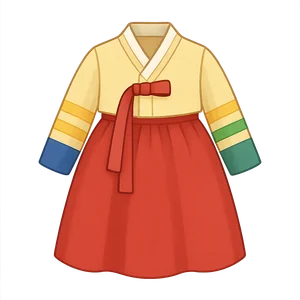
Hanbok
The Hanbok is the traditional attire of the Korean people, known for its vibrant colors, graceful lines…
Reads at Grades 6–8 Listens at Grades 4–8
Print & create
Answer keys·No prep·Free with an account
28 worksheets · answer keys · full story · quiz · Ages 10-12 · CEFR B2
Plus adds 164,000+ more stories in 27 languages, audio for every one, and printables for all of them.
Just want Hanbok?
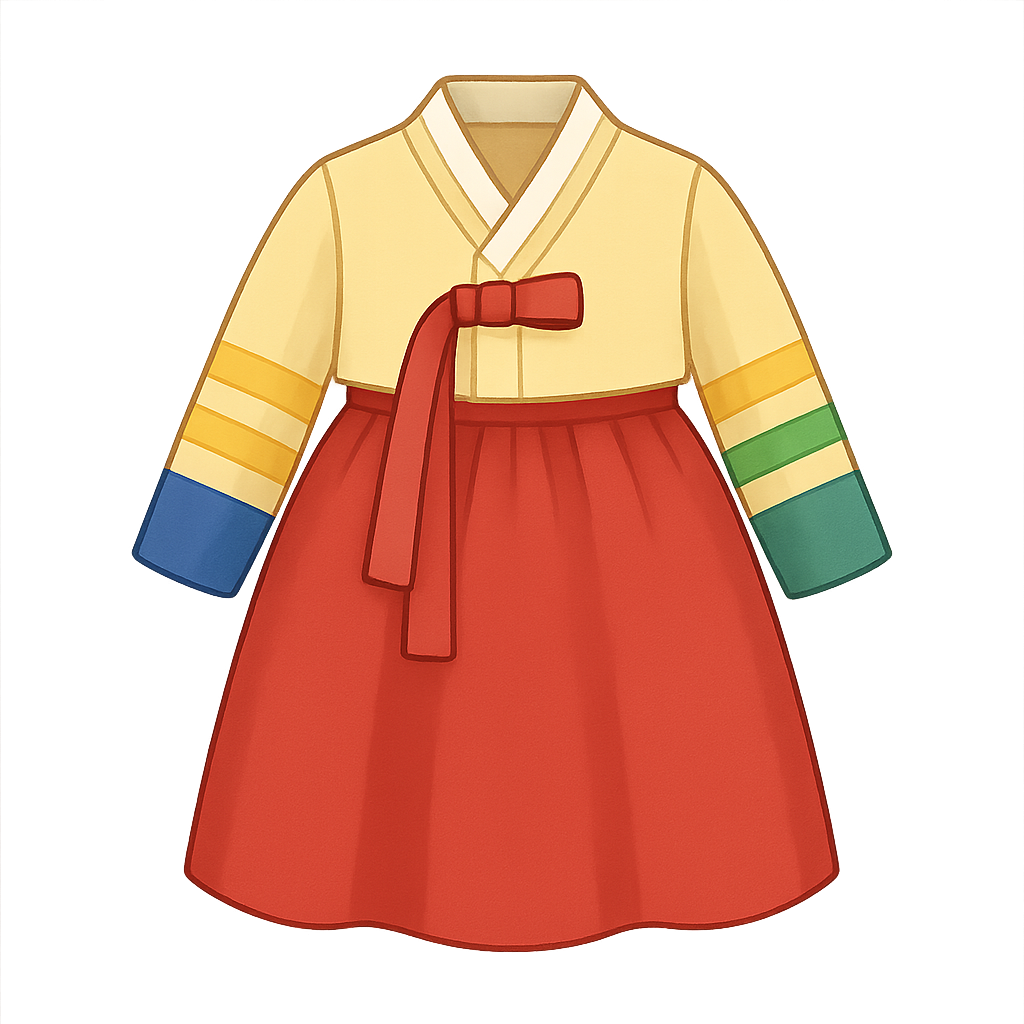
Imagine the gentle rustle of a full, sweeping skirt and the soft touch of silk against your skin. I am a whisper of color, a splash of sunset pinks, deep ocean blues, and fresh spring greens all at once. I am there for the most important moments. I hear the joyful laughter at a family celebration and feel the quiet dignity of a formal ceremony. My lines are a study in grace, flowing with every step, and my layers tell a story of tradition and artistry passed down through countless hands. For centuries, I have been more than just something to wear; I have been a part of the Korean soul, a vibrant expression of its heart and history. I am a story woven in thread, a piece of history you can wear. I am Hanbok.
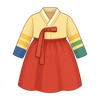
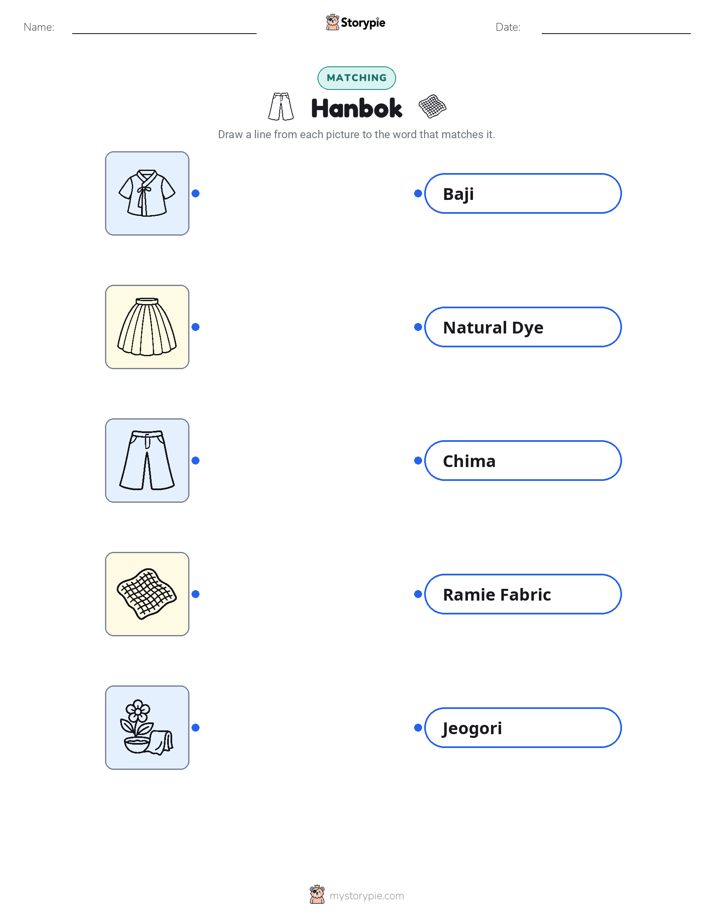
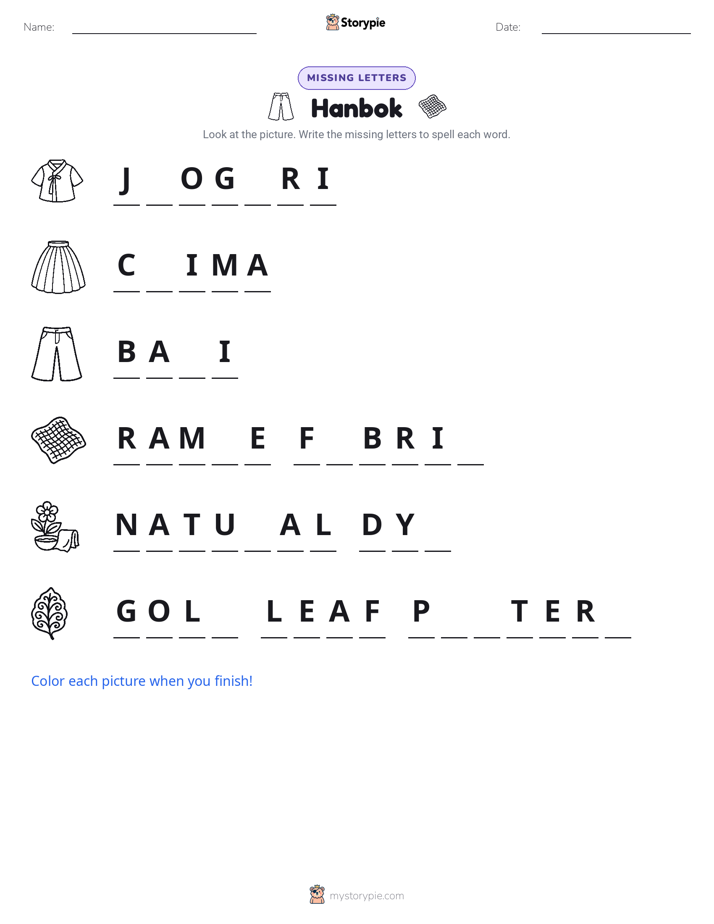
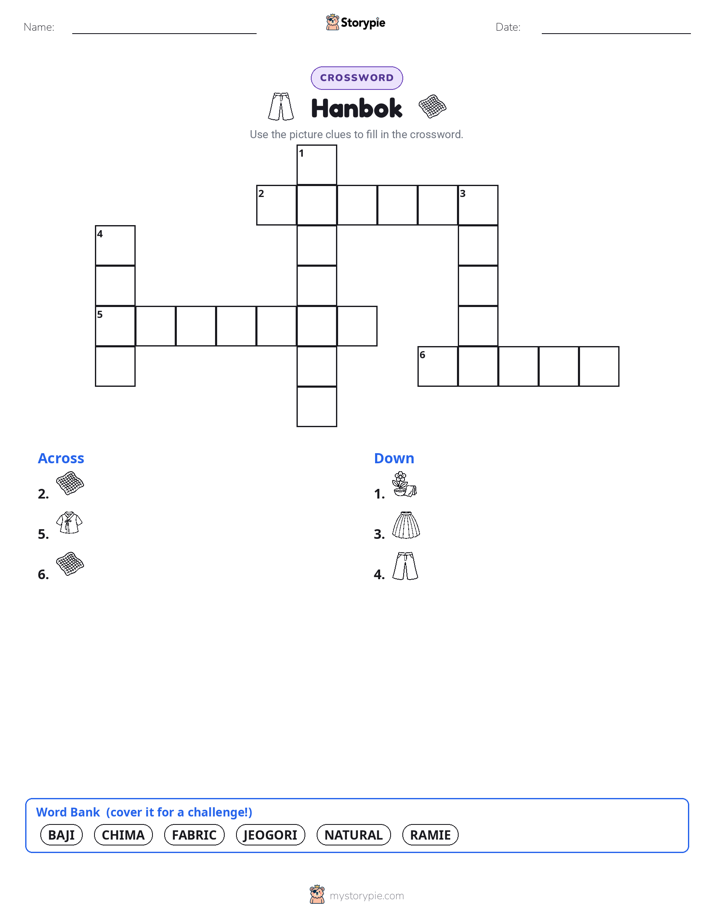
My story begins a very long time ago, woven into the very fabric of ancient Korea during the Three Kingdoms period, which started around the 1st century BCE. You can see my earliest ancestors painted on the walls of ancient tombs, their simple, practical forms hinting at the elegance I would one day become. From these early days, my fundamental structure was born. I consist of a few key pieces that work in harmony. For women, there is the 'jeogori,' a short upper jacket that ties gracefully at the chest, and the 'chima,' a full, high-waisted skirt that flows to the ground. For men, the jeogori is paired with 'baji,' comfortable, wide-legged trousers designed for ease of movement. The philosophy behind my design is a deep connection to nature and balance. My straight lines in the jacket represent integrity, while the gentle curves of the skirt and sleeves reflect beauty and grace. Korean artisans chose their materials carefully, using breathable ramie and cotton for everyday wear and lustrous silk for special occasions. The colors they used were a gift from the earth itself, derived from flowers, roots, and bark to create dyes that were both beautiful and meaningful.
I Am Hanbok: A Story Woven in Thread
Imagine the gentle rustle of a full, sweeping skirt and the soft touch of silk against your skin. I am a whisper of color, a splash of sunset pinks, deep ocean blues, and fresh spring greens all at once. I am there for the most important moments. I hear the joyful laughter at a family celebration and feel the quiet dignity of a formal ceremony. My lines are a study in grace, flowing with every step, and my layers tell a story of tradition and artistry passed down through countless hands. For centuries, I have been more than just something to wear; I have been a part of the Korean soul, a vibrant expression of its heart and history. I am a story woven in thread, a piece of history you can wear. I am Hanbok.
My story begins a very long time ago, woven into the very fabric of ancient Korea during the Three Kingdoms period, which started around the 1st century BCE. You can see my earliest ancestors painted on the walls of ancient tombs, their simple, practical forms hinting at the elegance I would one day become. From these early days, my fundamental structure was born. I consist of a few key pieces that work in harmony. For women, there is the 'jeogori,' a short upper jacket that ties gracefully at the chest, and the 'chima,' a full, high-waisted skirt that flows to the ground. For men, the jeogori is paired with 'baji,' comfortable, wide-legged trousers designed for ease of movement. The philosophy behind my design is a deep connection to nature and balance. My straight lines in the jacket represent integrity, while the gentle curves of the skirt and sleeves reflect beauty and grace. Korean artisans chose their materials carefully, using breathable ramie and cotton for everyday wear and lustrous silk for special occasions. The colors they used were a gift from the earth itself, derived from flowers, roots, and bark to create dyes that were both beautiful and meaningful.
My most celebrated era, where my form truly blossomed into the iconic silhouette recognized today, was during the long and influential Joseon Dynasty, which lasted from 1392 to 1897. It was during these centuries that my 'jeogori' became shorter and more fitted, while the 'chima' grew fuller and more voluminous, creating an elegant, bell-shaped silhouette that was both modest and majestic. More than just clothing, I became a sophisticated visual language. The colors I wore, the materials I was made from, and the patterns that adorned me all communicated a person’s social status, age, and marital standing. A young, unmarried woman might wear bright yellows and reds, while a married woman would choose more subdued, deeper tones. Royalty wore the most magnificent versions of me, crafted from the finest silk and decorated with 'geumbak,' delicate patterns of pressed gold leaf. Their robes were embroidered with powerful symbols like dragons for the king and phoenixes for the queen. In contrast, commoners wore me in simpler forms, often made of undyed cotton. I also had special ceremonial roles, like the 'hwalot,' a breathtakingly ornate robe worn by a bride on her wedding day, covered in intricate embroidery symbolizing happiness, wealth, and many children.
As history moved forward into the late 19th and early 20th centuries, my role began to change. Western clothing became more common for daily life, and I was carefully folded away, reserved for only the most special occasions. But my story was far from over. Today, I am experiencing a wonderful revival. Families wear me with great pride to celebrate important holidays like Seollal, the Lunar New Year, and Chuseok, the autumn harvest festival. Young people have fallen in love with me all over again, renting vibrant versions to walk through the historic palaces of Seoul, connecting with their heritage in a fun and beautiful way. My timeless design continues to inspire modern fashion designers, who reinterpret my graceful lines for runways around the world. You can see my influence in the stunning outfits of K-pop artists and in the costumes of historical films that capture the world’s imagination. I am not just an echo of the past, but a living piece of culture that connects generations and shares the story of Korean beauty and spirit with everyone. I am a thread that ties the past to the future, forever weaving a story of elegance and identity.
Wow facts
About
The Hanbok is the traditional attire of the Korean people, known for its vibrant colors, graceful lines, and historical significance, with designs that date back centuries. The term 'hanbok' emerged in the late Joseon period to distinguish Korean traditional attire from Japanese and Western clothes.
Take a Quiz
Question 1 of 5
In your own words, retell the story of the Hanbok, focusing on its journey from ancient times to the modern day.
Explore next


Want to do even more?
Go beyond exploring. Unlock tools that turn every story into real learning.

Storypie Plus for families
Full stories, quizzes, and printables. Nights and car rides, sorted.
- Unlimited audio stories
- Create Mode: your child stars in the story
- Offline downloads
- Printable worksheets & coloring pages

Why Storypie for Schools
Students engaged. Prep in seconds. Evenings back to you.
- Worksheets & Quizzes
- Classroom Management
- Formative Assessment
- Custom Curriculum & Lesson Plans
- 27 Languages

Why Storypie for Homeschool
Curriculum done. They'll ask for more. Hours back in your day.
- Worksheet Generator
- First-Person Audio Stories
- Built-in Comprehension Quizzes
- Custom Curriculum & Lesson Plans
- Print & Go Activities