English

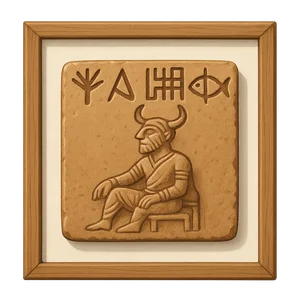
Indus Script
The Indus script is a corpus of symbols produced by the Indus Valley Civilisation that remains undeciphered.
Reads at Grades 6–8 Listens at Grades 4–8
Print & create
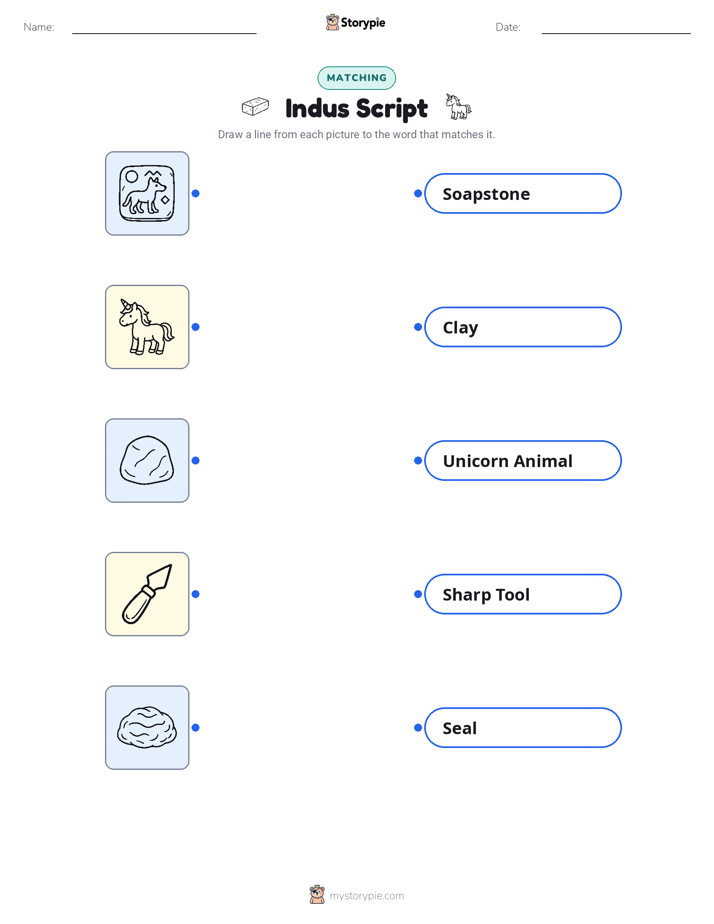
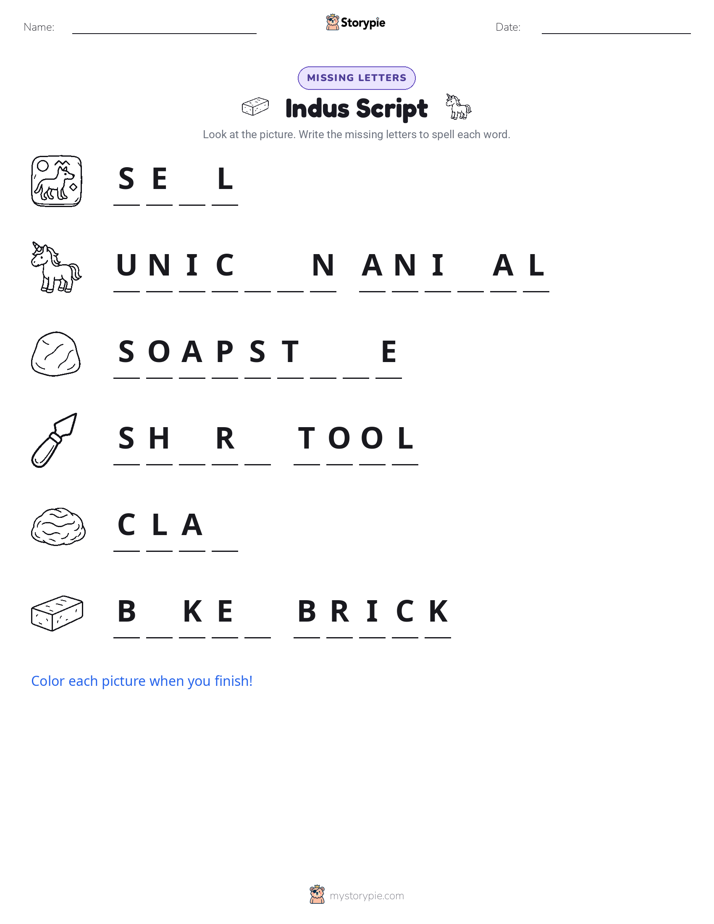
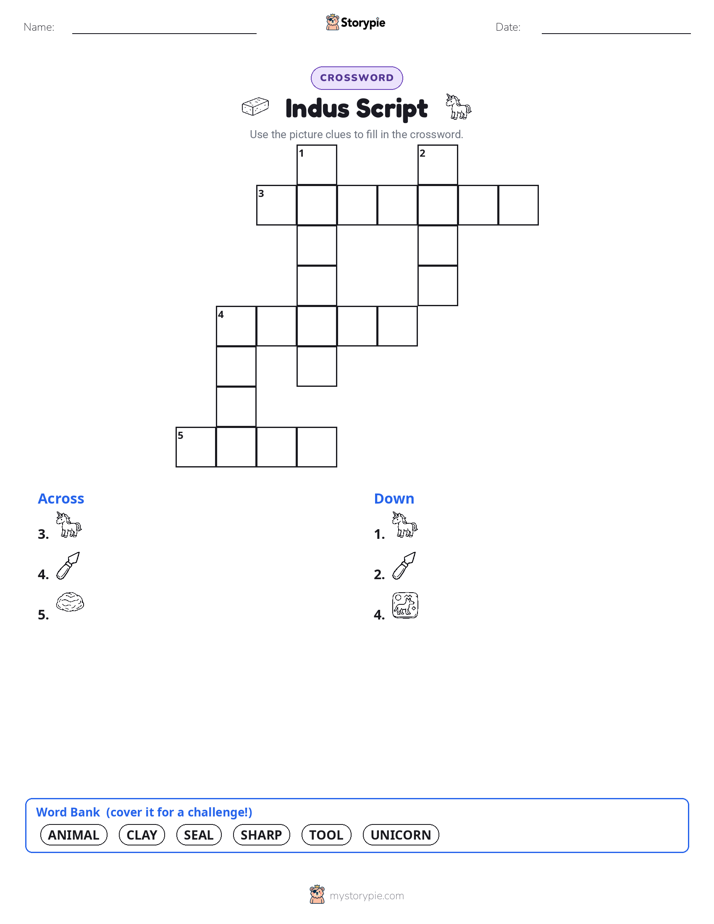
Answer keys·No prep·Free with an account
28 worksheets · answer keys · full story · quiz · Ages 10-12 · CEFR B2
Plus adds 244,000+ more stories in 27 languages, audio for every one, and printables for all of them.
Just want Indus Script?
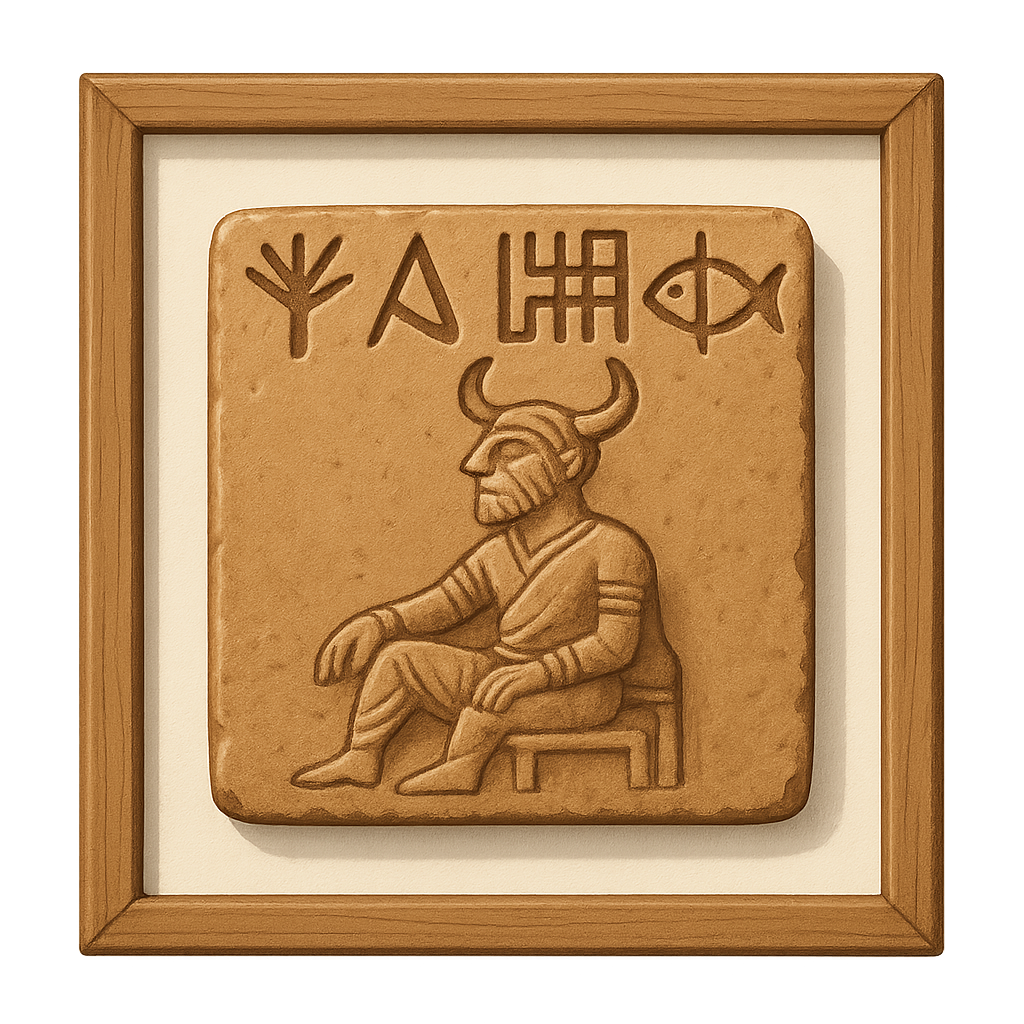
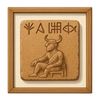
Before I was a puzzle, I was a mark of trust. I was born from a steady hand, a sharp tool, and a cool, smooth piece of soapstone. I am a collection of tiny, elegant symbols, each one carved with purpose. Sometimes I am a fish, its scales perfectly etched. Other times, I am a jar, a person in a yoga-like pose, or a simple grid. Most famously, I am accompanied by a magnificent animal, a creature with a single, curving horn that you might call a unicorn. My purpose was to be pressed into soft clay, leaving behind my impression—a seal. This mark might have closed a letter, claimed a bundle of goods, or served as a promise. For centuries, my meaning was as clear as the impression I left behind. But the world that understood me vanished, and I became a secret locked in stone. I am the writing of a lost world. You call me the Indus Script.
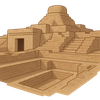
My world was a marvel of planning and ingenuity. I thrived between approximately 2600 BCE and 1900 BCE in a place you now call the Indus Valley Civilization. I witnessed life in some of the world's earliest and most impressive cities. From my place on a tiny seal, I saw the sprawling city of Mohenjo-Daro, its streets laid out in a perfect grid. I saw Harappa, where merchants bustled through marketplaces filled with goods from faraway lands. The homes were made of standardized, baked bricks, and beneath the streets ran one of the most advanced drainage and sewer systems of the ancient world. Skilled artisans were my creators. They sat in workshops, carefully carving my symbols onto thousands of seals like the one I was part of. But what was I saying? That is the great question. Was I the name of a merchant, ensuring his cotton reached its destination? Was I an accounting ledger, keeping track of grain for the city's leaders? Or perhaps I was a prayer, a sacred message intended for the gods? The people who made me were organized, peaceful, and deeply creative. I am the last remaining voice of their great urban society, and I hold the story of their lives within my tiny lines.
The Secret of the Seals
Before I was a puzzle, I was a mark of trust. I was born from a steady hand, a sharp tool, and a cool, smooth piece of soapstone. I am a collection of tiny, elegant symbols, each one carved with purpose. Sometimes I am a fish, its scales perfectly etched. Other times, I am a jar, a person in a yoga-like pose, or a simple grid. Most famously, I am accompanied by a magnificent animal, a creature with a single, curving horn that you might call a unicorn. My purpose was to be pressed into soft clay, leaving behind my impression—a seal. This mark might have closed a letter, claimed a bundle of goods, or served as a promise. For centuries, my meaning was as clear as the impression I left behind. But the world that understood me vanished, and I became a secret locked in stone. I am the writing of a lost world. You call me the Indus Script.
My world was a marvel of planning and ingenuity. I thrived between approximately 2600 BCE and 1900 BCE in a place you now call the Indus Valley Civilization. I witnessed life in some of the world's earliest and most impressive cities. From my place on a tiny seal, I saw the sprawling city of Mohenjo-Daro, its streets laid out in a perfect grid. I saw Harappa, where merchants bustled through marketplaces filled with goods from faraway lands. The homes were made of standardized, baked bricks, and beneath the streets ran one of the most advanced drainage and sewer systems of the ancient world. Skilled artisans were my creators. They sat in workshops, carefully carving my symbols onto thousands of seals like the one I was part of. But what was I saying? That is the great question. Was I the name of a merchant, ensuring his cotton reached its destination? Was I an accounting ledger, keeping track of grain for the city's leaders? Or perhaps I was a prayer, a sacred message intended for the gods? The people who made me were organized, peaceful, and deeply creative. I am the last remaining voice of their great urban society, and I hold the story of their lives within my tiny lines.
A time came when the rivers changed their course and the climate grew drier. Slowly, quietly, the great cities of the Indus Valley began to empty. Around 1900 BCE, the civilization faded. The people moved away, and as generations passed, the knowledge of how to read my symbols was lost. I fell into a long, deep sleep, buried under layers of earth and the dust of forgotten time. For thousands of years, I lay in silence, my secrets held tight. Millennia passed. Then, in the 19th century, a few of my scattered pieces were found by officials of the British Raj. But my true awakening came later. In the 1920s, an archaeologist named Sir John Marshall led major excavations at Harappa and Mohenjo-Daro. His teams carefully brushed away the dirt of ages, and suddenly, I was in the light again. The lost cities, with their brick houses and wide streets, were revealed to a stunned world. And there I was, on thousands of seals and tablets, a mysterious voice from a distant past, ready to speak again—if only someone could understand me.
Today, I remain one of history's greatest unsolved puzzles. Brilliant minds from all over the world, armed with powerful computers and a deep knowledge of ancient languages, have tried to unlock my meaning. Yet, I keep my secrets. The main challenge is that my messages are very short, usually only four or five symbols long. There are no long paragraphs to provide context. More importantly, no one has ever found a bilingual text—a sort of Indus Valley Rosetta Stone—that shows my symbols written alongside a known language. Without that key, deciphering me is like trying to solve a crossword puzzle with no clues. But this mystery is also my gift. I am a direct link to a sophisticated civilization that flourished over four thousand years ago. I represent the enduring thrill of discovery, reminding you that history is not a closed book. There are still incredible stories from our shared human past waiting to be unlocked, and I am one of them, patiently waiting for the day my voice can be fully heard once more.
Wow facts
About
The Indus script is a corpus of symbols produced by the Indus Valley Civilisation that remains undeciphered. Most inscriptions are extremely short, making it difficult to judge whether or not they recorded a language.
Take a Quiz
Question 1 of 5
In your own words, retell the main events of the Indus Script's 'life' from its creation to its modern-day status.
Explore next



Want to do even more?
Go beyond exploring. Unlock tools that turn every story into real learning.

Storypie Plus for families
Full stories, quizzes, and printables. Nights and car rides, sorted.
- Unlimited audio stories
- Create Mode: your child stars in the story
- Offline downloads
- Printable worksheets & coloring pages

Why Storypie for Schools
Students engaged. Prep in seconds. Evenings back to you.
- Worksheets & Quizzes
- Classroom Management
- Formative Assessment
- Custom Curriculum & Lesson Plans
- 27 Languages

Why Storypie for Homeschool
Curriculum done. They'll ask for more. Hours back in your day.
- Worksheet Generator
- First-Person Audio Stories
- Built-in Comprehension Quizzes
- Custom Curriculum & Lesson Plans
- Print & Go Activities