English

Kabuki Theater
Kabuki is a classical form of Japanese theater known for its highly stylized performances…
Reads at Grades 3–5 Listens at Grades 1–5
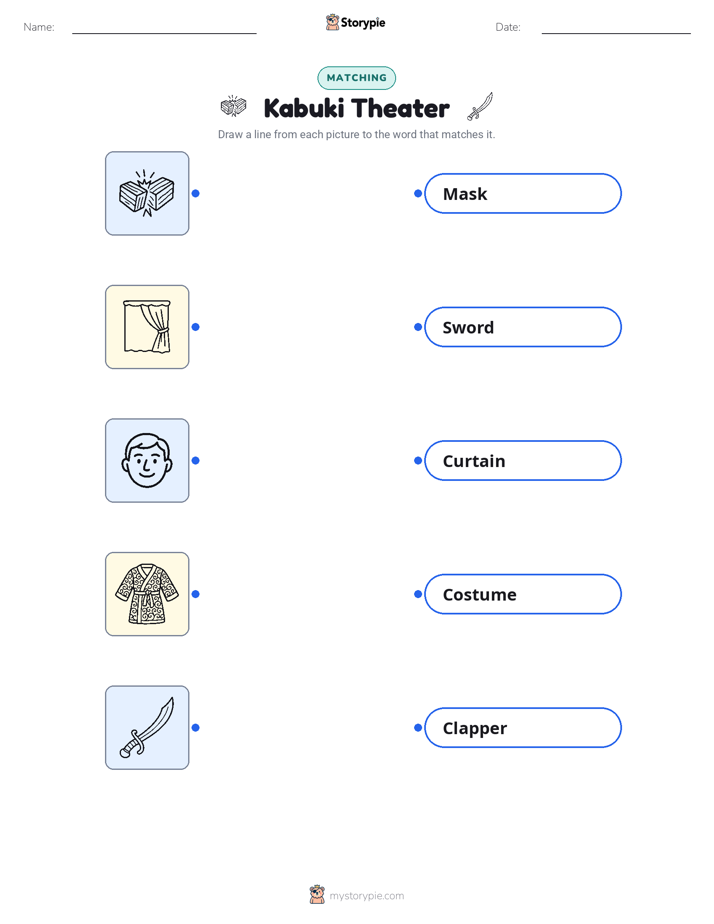
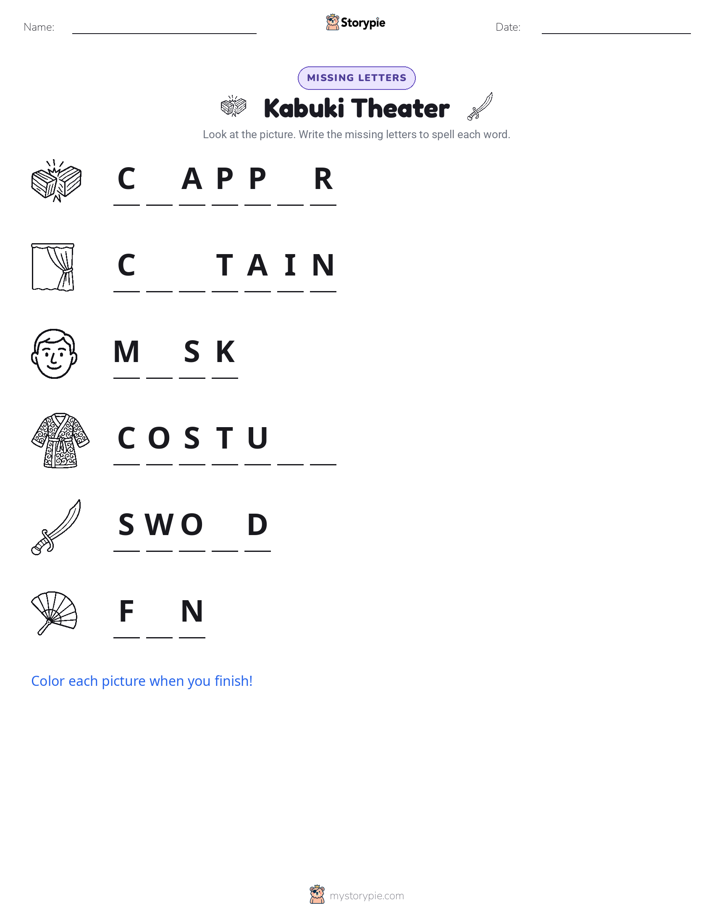
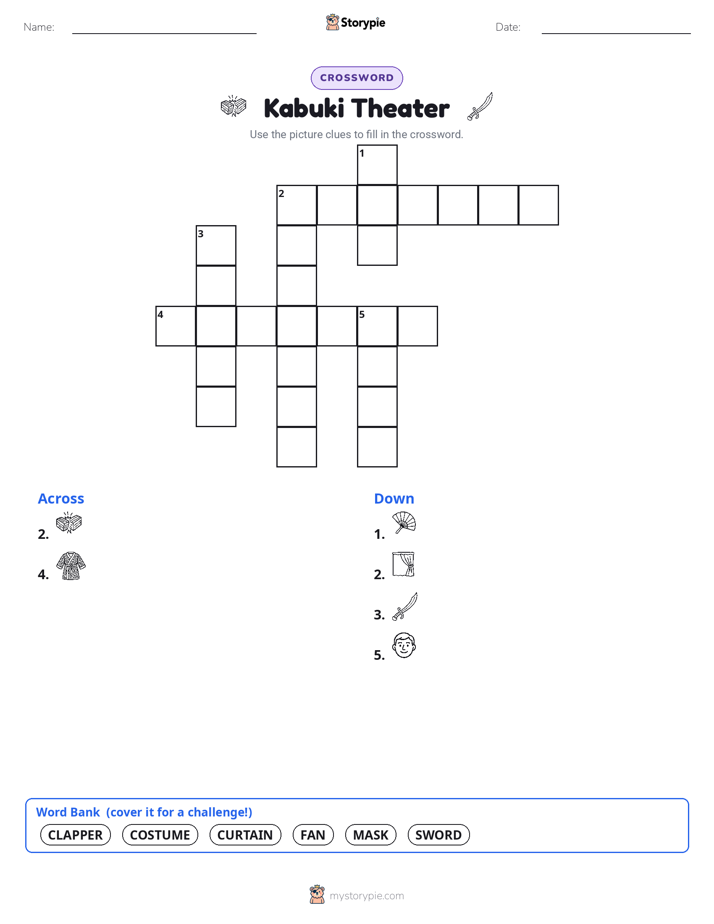
Print & create
Answer keys·No prep·Free with an account
28 worksheets · answer keys · full story · quiz · Ages 8-10 · CEFR B1
Plus adds 164,000+ more stories in 27 languages, audio for every one, and printables for all of them.
Just want Kabuki Theater?
Listen closely. Can you hear it. It starts with the sharp *clack-clack* of wooden blocks, a sound that tells everyone a story is about to begin. Then comes the dramatic twang of a shamisen, a three-stringed instrument that can sound both sad and exciting. In the audience, a hush falls as people lean forward, their eyes wide with anticipation. On my stage, you would see actors in vibrant silk costumes swirling like paintings come to life, their faces decorated with bold red and blue lines that tell you if they are a hero or a villain. They don't just walk; they move with a powerful, graceful style that is unlike anything else. Can you imagine a world built from color, sound, and movement. I am not just a building or a simple play. I am a whole world of stories, a tradition of breathtaking drama. I am Kabuki Theater.
My story began a very long time ago, around the year 1603, in the city of Kyoto. It wasn't in a fancy building but on a dry riverbed where a talented dancer named Izumo no Okuni and her troupe of all-female performers set up a simple wooden stage. Okuni was brilliant. She took popular songs and dances and mixed them with short, funny plays about everyday life. Her performances were new, bold, and a little wild. People loved them because they were so different from the serious, formal plays that were common at the time. The name they gave this new style was 'kabuki,' which meant 'out of the ordinary' or 'avant-garde'. It was a perfect name. Soon, crowds of townspeople, merchants, and even samurai would gather at the riverbank to watch Okuni and her troupe. For the first time, theater was not just for the rich and powerful; it was for everyone.
I Am Kabuki Theater
Listen closely. Can you hear it. It starts with the sharp clack-clack of wooden blocks, a sound that tells everyone a story is about to begin. Then comes the dramatic twang of a shamisen, a three-stringed instrument that can sound both sad and exciting. In the audience, a hush falls as people lean forward, their eyes wide with anticipation. On my stage, you would see actors in vibrant silk costumes swirling like paintings come to life, their faces decorated with bold red and blue lines that tell you if they are a hero or a villain. They don't just walk; they move with a powerful, graceful style that is unlike anything else. Can you imagine a world built from color, sound, and movement. I am not just a building or a simple play. I am a whole world of stories, a tradition of breathtaking drama. I am Kabuki Theater.
My story began a very long time ago, around the year 1603, in the city of Kyoto. It wasn't in a fancy building but on a dry riverbed where a talented dancer named Izumo no Okuni and her troupe of all-female performers set up a simple wooden stage. Okuni was brilliant. She took popular songs and dances and mixed them with short, funny plays about everyday life. Her performances were new, bold, and a little wild. People loved them because they were so different from the serious, formal plays that were common at the time. The name they gave this new style was 'kabuki,' which meant 'out of the ordinary' or 'avant-garde'. It was a perfect name. Soon, crowds of townspeople, merchants, and even samurai would gather at the riverbank to watch Okuni and her troupe. For the first time, theater was not just for the rich and powerful; it was for everyone.
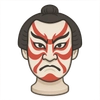
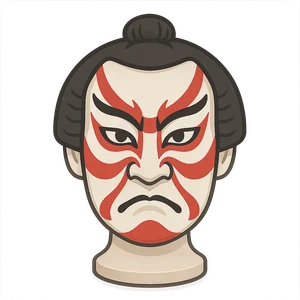
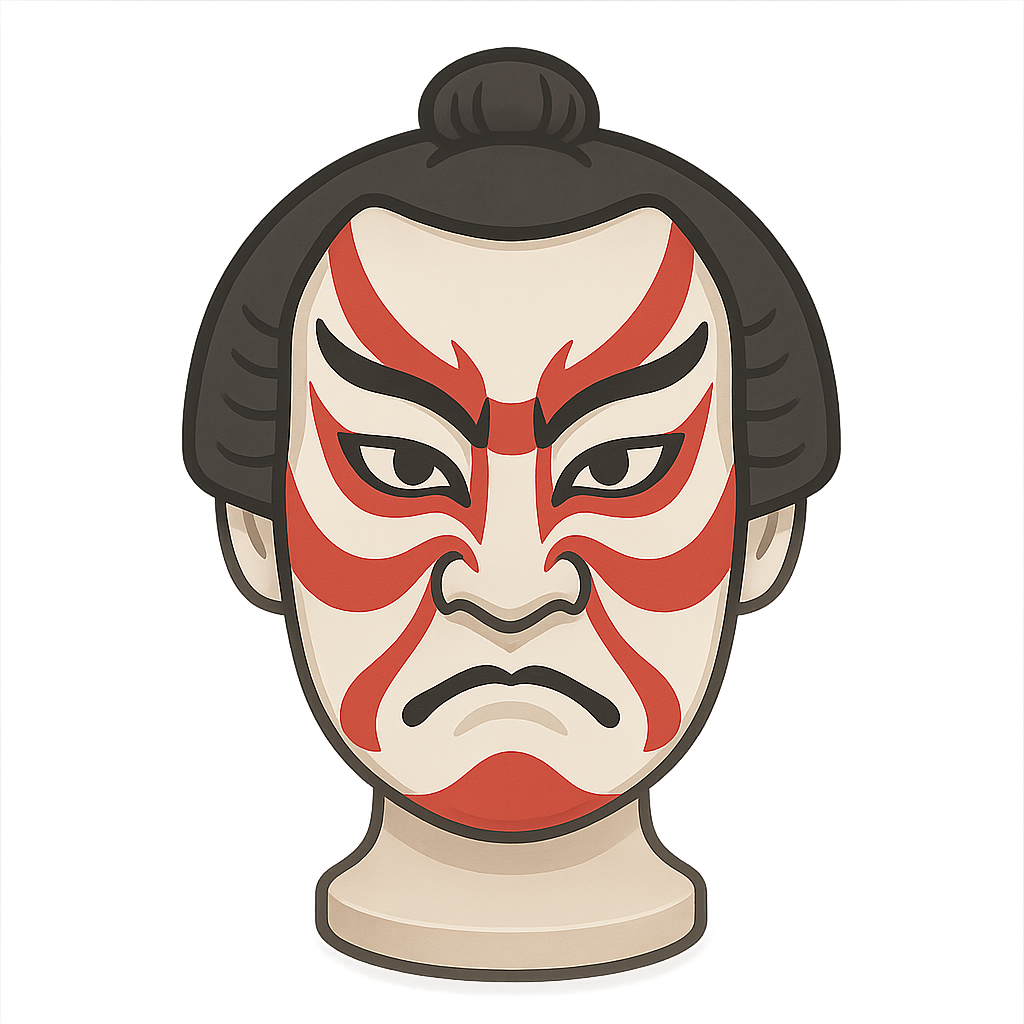
But my life has been full of great changes. In 1629, the government, led by the Tokugawa Shogunate, made a new rule: women were no longer allowed to perform on stage. It was a shocking moment for me. The very performers who had created me were now forbidden to be a part of me. Can you imagine a soccer team suddenly being told they couldn't use a soccer ball. But I am strong, and I adapted. To keep my stories alive, male actors stepped in to play all the roles, including the female ones. These actors were called 'onnagata,' and they were incredible. They dedicated their entire lives to mastering the art of portraying women, from the graceful way they walked in a kimono to the gentle tilt of their head. At the same time, another amazing art form grew: 'kumadori' makeup. The actors' faces became like canvases. A few bold strokes of color could tell the audience everything they needed to know about a character. Bright red lines meant a brave and powerful hero. Dark blue showed a cunning and evil villain. Green or brown might mean you were looking at a ghost or a monster.
My stage itself is a house of magic, designed to surprise and delight you. I have secrets built right into my floorboards. One of my most famous tricks is the 'mawari-butai,' a giant revolving platform in the center of the stage. With just a few people pushing from below, a whole scene—a forest, a castle, a village street—can spin around and change into something completely new in just a few seconds. Then there are my trap doors, called 'seri'. An actor playing a ninja or a magical fox can suddenly appear from a hidden lift in the floor or vanish just as quickly. But perhaps the most exciting part of my design is the 'hanamichi,' which means 'flower path'. It's a long walkway that runs from the main stage right through the middle of the audience. Actors use it to make dramatic entrances and exits, bringing the action so close you feel like you are part of the story.
For over 400 years, I have been telling Japan's favorite stories of brave samurai, clever princesses, and dramatic family conflicts. I have survived fires, earthquakes, and changing times. Today, I am recognized by the whole world as an Intangible Cultural Heritage, a special treasure that must be protected. My story is a living piece of history, passed down from one generation of actors to the next. I want to show everyone that stories can be told not just with words, but with brilliant color, breathtaking movement, and soul-stirring music. I am a celebration of human imagination, and as long as there are tales to tell and people who want to see them, my stage will always be bright.
Wow facts
About
Kabuki is a classical form of Japanese theater known for its highly stylized performances, elaborate makeup and costumes, and dramatic storytelling. Originating in the 17th century, it remains a significant part of Japan's cultural heritage.
Take a Quiz
Question 1 of 5
In the story, what does the word 'kabuki' mean?
Explore next






Want to do even more?
Go beyond exploring. Unlock tools that turn every story into real learning.

Storypie Plus for families
Full stories, quizzes, and printables. Nights and car rides, sorted.
- Unlimited audio stories
- Create Mode: your child stars in the story
- Offline downloads
- Printable worksheets & coloring pages

Why Storypie for Schools
Students engaged. Prep in seconds. Evenings back to you.
- Worksheets & Quizzes
- Classroom Management
- Formative Assessment
- Custom Curriculum & Lesson Plans
- 27 Languages

Why Storypie for Homeschool
Curriculum done. They'll ask for more. Hours back in your day.
- Worksheet Generator
- First-Person Audio Stories
- Built-in Comprehension Quizzes
- Custom Curriculum & Lesson Plans
- Print & Go Activities